Alberta Rules for Crossing a Highway
There's nothing quite like the freedom of exploring Alberta's incredible backcountry on your ATV or side-by-side. But let's be real, a common headache for many of us is navigating those stretches of highway or paved road that sometimes stand between us and the next amazing trail system. It can feel like a minefield trying to figure out where you can and can't ride, especially when a quick hop across a main road seems like the only sensible route. This guide is here to untangle the confusion surrounding Alberta's rules for crossing a highway with your off-highway vehicle, helping you ride smarter and avoid those dreaded tickets.
The Core Principle: OHVs and Alberta Highways Don't Mix (Generally)
Let's cut to the chase: Alberta's Traffic Safety Act is pretty clear that Off-Highway Vehicles (OHVs) are generally not permitted on public highways. This can be a tough pill to swallow when you're just trying to connect two pieces of trail, but the law prioritizes the safety of all road users. OHVs simply aren't designed for the speeds, traffic, or braking requirements of paved roads, and mixing them with cars and trucks creates a significant hazard.
What "Highway" Really Means in Alberta Law
One of the biggest misunderstandings for many riders is what "highway" actually encompasses in Alberta. When the law talks about a "highway," it's not just referring to the paved, multi-lane thoroughfare you might be thinking of. The legal definition is far broader and includes a lot more than just the asphalt. According to the Traffic Safety Act, a "highway" includes "any thoroughfare, street, road, trail, avenue, parkway, driveway, viaduct, lane, alley, square, bridge, causeway, trestleway or other place, whether publicly or privately owned, that the public is ordinarily entitled or permitted to use for the passage or parking of vehicles."
That's a mouthful, but the key takeaway for OHV riders is that this definition often includes areas you might assume are fair game for off-roading. Yes, that means the shoulder of the road, the ditch alongside it, and even a rural alleyway can all be legally considered part of the "highway." This expanded definition is why you can get into trouble even when you're seemingly "off" the main road. Understanding [What the Traffic Safety Act Calls a Highway] is the first step to staying compliant. It's not just about the pavement; it's about any public right-of-way where vehicles operate. Many riders get caught out thinking the ditch is a safe zone, but unfortunately, [Why the Legal Definition of Highway Includes the Ditch] is a reality you need to face.
Why Crossing is Such a Gray Area
We all know the practical reality: sometimes, to get from one great riding spot to another, you have to interact with a paved road. It might be a small country road, a busy provincial highway, or even just a short gravel access road. The law's general prohibition against OHVs on highways creates this tricky "gray area" where riders are left wondering if there's any way to legally make that connection. It's frustrating when common sense dictates a quick crossing would be the most efficient and sometimes safest route, rather than attempting to bushwhack through private land or sensitive environmental areas.
The core of the issue is that OHVs are fundamentally different from street-legal vehicles. Their suspension, tires, gearing, and lack of standard safety features like turn signals, horn, and DOT-approved headlights (unless specifically modified for off-road visibility, not road legality) mean they don't meet the requirements for highway travel. Even if you've kitted out your machine with all sorts of fantastic aftermarket parts, perhaps from a brand like SuperATV, thinking these will make your machine compliant for general road use, Alberta law doesn't recognize an OHV as a street-legal vehicle just by adding a few accessories. The law has specific provisions, but they are very limited and specific to crossing, not prolonged travel.
Specific Conditions for Lawful Highway Crossings
While the general rule is "no OHVs on highways," there are very specific, narrow conditions under which you can cross a public highway in Alberta. These aren't loopholes; they are explicit exceptions designed to allow reasonable access while minimizing risk.
Crossing at a Right Angle
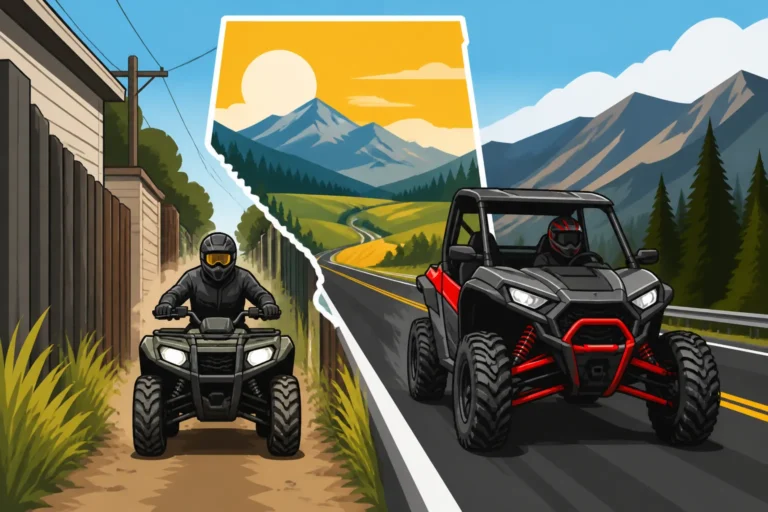
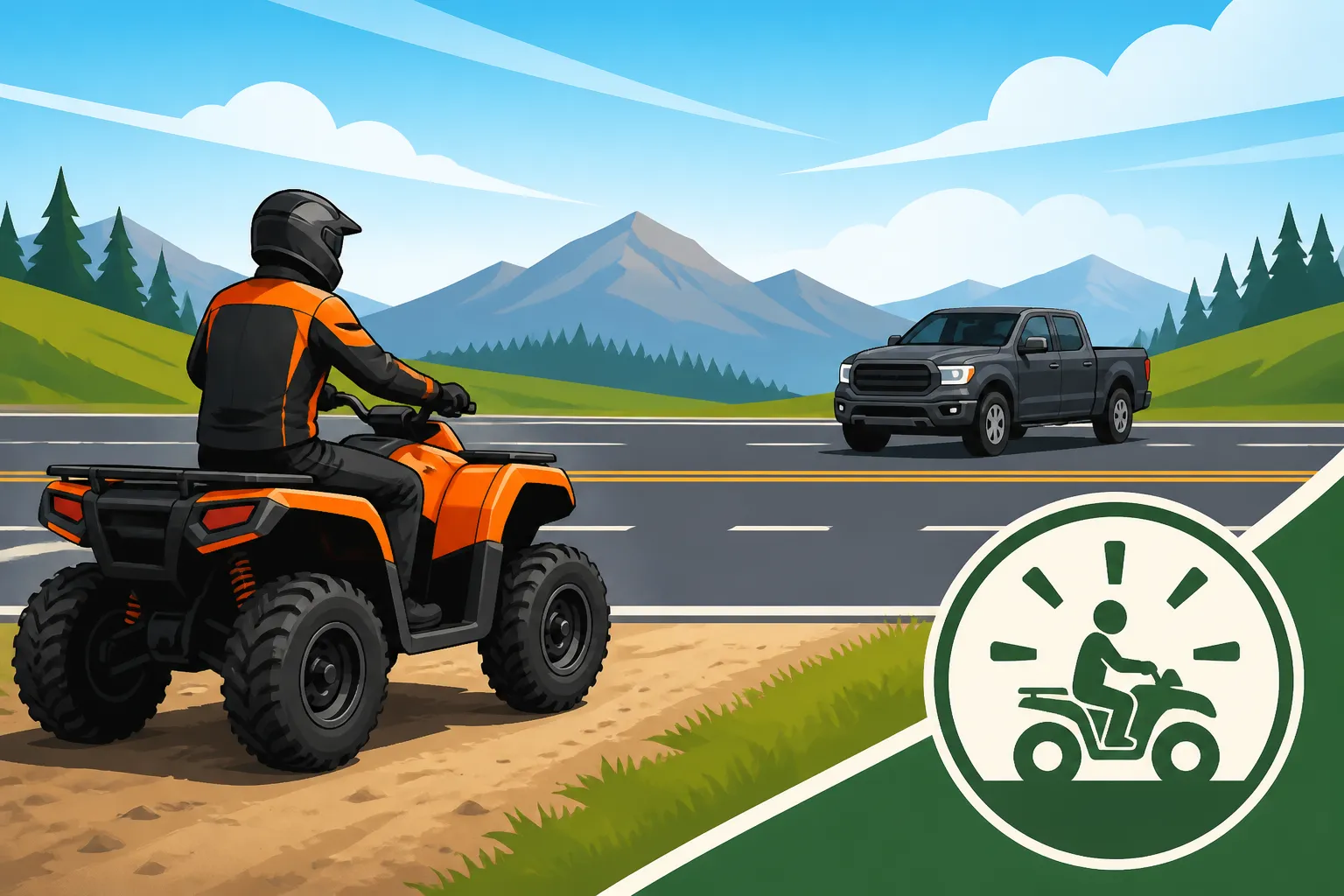
The most common and widely recognized exception allows an OHV to cross a highway at a right angle. This isn't permission to ride along the shoulder for a kilometre to find a better crossing spot. It means taking the shortest, most direct route from one side of the road to the other, perpendicular to the flow of traffic. Think of it as drawing a straight line directly across the lanes.
When you're making this kind of crossing, you must exercise extreme caution. You are required to yield the right-of-way to all other vehicles and pedestrians on the highway. This means coming to a complete stop, looking both ways multiple times, and only proceeding when it is absolutely safe to do so. Speed is not your friend here; you need to cross efficiently but safely. Never assume other drivers see you or will slow down. Your safety is paramount. This rule is at the heart of Alberta Rules for Crossing a Highway safely and legally.
The "Shortest Distance" Rule and Designated Crossings
Hand-in-hand with the "right angle" rule is the underlying principle of taking the "shortest distance" possible. The intent is to minimize the amount of time your OHV spends on the highway, reducing exposure to faster-moving traffic. You're not meant to weave or make long diagonal crossings; it's about getting off the public road surface as quickly as possible.
While less common for ATVs and UTVs than for snowmobiles, some municipalities or specific Public Land Use Zones (PLUZs) might have designated OHV crossing points. These are areas clearly marked where it is explicitly permitted for OHVs to cross a road. Always check local bylaws and signage. Don't assume a crossing is designated unless you see official markers. Remember, [Alberta ATV Road Rules: Bylaws Decide] much of what you can and can't do on or near public roads, and this includes specific crossing points. If a local council has opened roads, it will be detailed in their bylaws, as explained in [Alberta Municipalities That Opened Roads].
Equipment Requirements for Crossing
Even for the briefest legal highway crossing, your OHV must meet certain basic equipment requirements for safety and visibility. These aren't just suggestions; they are legal necessities. Your machine needs working head and tail lights, especially if visibility is poor or you're crossing at dusk or dawn. [Alberta Requires Working Head and Tail Lights] not just for night riding on trails, but for any moment you might be visible to other traffic.
Additionally, your machine must be equipped with a spark arrestor. While this doesn't directly relate to highway crossing safety, it's a general requirement for OHVs operating on public land or areas where fire is a concern, and you're technically on public property when crossing a highway. [Alberta Requires a Spark Arrestor] to prevent wildfires, and an officer can still ticket you for its absence during a crossing.
What to Avoid: Common Mistakes and Misconceptions
It's easy to fall into traps when you're trying to figure out how to get your machine where it needs to go. Many riders make assumptions that can lead to fines, collisions, or even vehicle seizure.
Riding the Ditch or Shoulder
This is perhaps the most common mistake riders make, often believing it's a "safe" way to stay off the main paved surface. As we discussed, the ditch, the shoulder, and even the median are all considered part of the "highway" under Alberta's Traffic Safety Act. Riding along these areas for any distance is illegal and can result in significant penalties. An officer seeing you doing this will consider it the same as riding on the paved road itself.
We see it all the time: a rider wants to go a few hundred metres down the road to an access point, so they duck into the ditch. This seems logical to avoid traffic, but it's a clear violation. [Alberta Rules for Riding a Ditch] are not what many people assume, and unfortunately, [Why a Highway Ditch Counts as Public Land] means it's regulated just like the driving lanes. Don't risk it; if you can't cross directly, you need to find an alternative route.
Thinking Aftermarket Parts Make You Street Legal
This is a big one. Many riders, in an effort to make their machines safer or more versatile, install aftermarket accessories like mirrors, turn signals, or horns. These parts are excellent for increasing safety and visibility on the trails and are highly recommended. For instance, an LED light bar from SuperATV can dramatically improve your vision on a dark trail, and their heavy-duty bumpers offer great protection. However, adding these items does not convert your OHV into a street-legal vehicle in Alberta.
The fundamental design of an OHV (its chassis, suspension, braking, lack of a differential in many cases, and specific tires) does not meet the Canadian Motor Vehicle Safety Standards required for road registration. You cannot simply add a signal kit or a horn and expect to be able to ride down Highway 2. While products from a company like SuperATV can enhance your off-road experience and make you a safer rider off the pavement, they don't grant you permission to ride on public roads. The law looks at the vehicle's original classification and design, not just bolted-on accessories.
Ignoring Local Bylaws
While the provincial Traffic Safety Act sets the overall framework, individual municipalities (counties, towns, and even some villages) have the authority to enact their own bylaws regarding OHV use within their boundaries. Some may have specific bylaws that open certain low-traffic roads or designate routes for OHV access. Others might have bylaws that are even more restrictive than provincial law.
It is your responsibility as a rider to know the local bylaws of the area you're riding in. Ignorance is not an excuse for breaking the law. Before you plan a trip that involves any interaction with roads in a new area, do your homework. A quick call to the local municipal office or a check of their website can save you a lot of grief. Unfortunately, you can't assume that if one county allows something, the next one will. Always refer to [Alberta Bylaw Lookups Before You Ride] and check for information specific to [Alberta Counties With OHV Bylaws] you plan to traverse.
The Risks and Penalties of Non-Compliance
The consequences of ignoring Alberta's rules for OHV highway interaction can range from a costly fine to losing your machine entirely, not to mention the immense safety risks. It's simply not worth it.
Tickets, Fines, and Vehicle Seizure
If you're caught riding your OHV illegally on a highway, even for a short distance, you can face substantial fines. These tickets are issued under the Traffic Safety Act and can quickly add up. Beyond the financial hit, in more serious or repeat offenses, an officer has the authority to seize your off-highway vehicle. Imagine having your prized quad or side-by-side impounded, requiring you to pay towing and storage fees on top of any fines, just to get it back. It's a logistical nightmare that many riders unfortunately experience.
For example, a ticket for operating an OHV on a highway can set you back hundreds of dollars. Add to that towing fees and daily storage fees if your machine is seized, and suddenly that "quick hop" across the road becomes a very expensive mistake. Understanding [Alberta Ticket Costs for a Riding Violation] and the very real possibility of [Alberta Vehicle Seizure for Riders] should give anyone pause.
Insurance Implications
Operating your OHV on a highway in contravention of the law can also have serious implications for your insurance coverage. Most OHV insurance policies are specifically designed for off-road use and often contain clauses that will deny coverage if you're involved in an accident while operating the machine illegally on a public road.
This means if you have a collision with a car while crossing a highway improperly, your insurance company might refuse to cover the damages to your machine, the other vehicle, or any personal injuries. This could leave you personally liable for potentially massive costs. It's a huge gamble. Always ensure you understand [Alberta Insurance Requirements on Public Land] and what your specific policy covers – and more importantly, what it doesn't cover when it comes to road use. While [Alberta Insurance Cost for an ATV] might seem like just another expense, it's there to protect you in legal riding situations. Don't inadvertently void it.
Safety First: Preventing Collisions
Ultimately, the primary reason for these strict rules is safety. OHVs handle very differently than road vehicles. They have a higher centre of gravity, different braking characteristics, and are generally less visible to other drivers, especially on high-speed roads. The risk of a serious or fatal collision when an OHV interacts with highway traffic is extremely high.
Even when making a legal, right-angle crossing, you must be hyper-aware of your surroundings. Drivers in cars and trucks aren't expecting an OHV to suddenly appear in their path. Don't rely solely on your machine's standard lights; consider wearing bright, high-visibility gear, especially if conditions are less than ideal. Your life, and the lives of others, depend on your caution and adherence to the rules.
Table: OHV Highway Interaction Legality in Alberta
To help clarify the dos and don'ts, here’s a quick overview of common OHV interactions with highways in Alberta.
| Action | Legality for OHVs in Alberta (Generally) | Key Considerations |
|---|---|---|
| Riding along a paved highway | Illegal | High risk of collision, severe penalties including fines and potential vehicle seizure. Never attempt. |
| Riding along the ditch/shoulder | Illegal | Ditch/shoulder is legally part of the highway. Still a traffic violation with same penalties. Avoid this misconception. |
| Crossing a highway at a right angle | Permitted (under strict conditions) | Must be the shortest, most direct route. Yield to all traffic. Ensure high visibility and extreme caution. |
| Crossing a paved highway at an intersection | Permitted (under strict conditions) | Follow all traffic signals and signs. Yield to traffic. Quick and direct crossing only. |
| Riding a designated municipal road | Varies by local bylaw (check first) | Only if a specific municipal bylaw explicitly permits it. Always verify with local authorities before riding. |
| Riding an OHV equipped with aftermarket "street legal" kit | Illegal for highway use | Aftermarket parts (e.g., SuperATV turn signals) do not make an OHV street legal in Alberta. Only for off-road safety. |
Disclaimer
This article is for general informational purposes only and does not constitute professional advice. Laws, prices and regulations vary by location and change over time. Consult a qualified professional for guidance on your specific situation.