Alberta ATV Age Requirements
If you're a parent in Alberta looking to get your kids into the exciting world of off-highway vehicles (OHVs) like ATVs, quads, or side-by-sides, you're probably navigating a confusing maze of rules and regulations. It’s tough to know exactly what’s allowed, especially when your child might be a fantastic rider who’s been on a machine since they were tiny. This guide is here to clear up the most common questions and frustrations around Alberta ATV age requirements, so you can ride confidently and legally with your family.
Understanding Alberta's Core Age Rule: 14 on Public Land
Let's cut right to the chase because this is the rule that trips up most parents: in Alberta, no one under the age of 14 is legally permitted to operate an off-highway vehicle on public land without direct adult supervision. This isn't just a suggestion; it's enshrined in the Traffic Safety Act and the Off-Highway Vehicle Regulation 319/2002. The provincial government put this rule in place for safety, recognizing that younger riders might not have the cognitive development or physical strength to handle all the hazards that come with public land riding.
You might be thinking, "But my 10-year-old rides better than most adults!" And while that might be true in your backyard, public land presents a whole different set of challenges. You've got varied terrain, unpredictable conditions, other riders, and potentially wildlife. The law is designed to create a baseline of safety for everyone. Ignoring this rule can lead to significant penalties, not just for the young rider but for the supervising adult as well. We're talking about fines, and in some serious cases, even vehicle seizure, especially if other violations like no insurance are present. It's a heavy price to pay for what might seem like an innocent ride.
What exactly counts as "public land" in Alberta? It's a broader definition than you might expect. It includes designated OHV trails like those in McLean Creek, forestry roads, undeveloped Crown land, pipeline rights-of-way, and even highway ditches. Yes, even a seemingly innocuous ditch along a country road is considered part of the highway right-of-way and therefore public land. This means that if your child is under 14 and riding solo in any of these areas, you're breaking the law. It’s a common mistake many people make, assuming that if it’s not a paved road, anything goes. It definitely doesn't. If you're ever unsure about where you can ride legally, it's always best to err on the side of caution or consult local bylaws. For more on what counts, check out [Alberta's Minimum Age of 14 on Public Land].
The Ins and Outs of Supervision for Young Riders
So, what if your child is under 14 but desperately wants to ride on public land? This is where the supervision rule comes into play. If a rider is under 14 but at least 10 years old, they can ride on public land, but only under "close supervision" by an adult who is 18 years or older. This isn't just about having an adult nearby; it's a specific legal definition.
"Close supervision" means the adult must be able to see and directly monitor the young rider at all times, and be able to intervene immediately if needed. This usually translates to riding on another machine right alongside or directly behind the youth. It doesn’t mean the adult is in the staging area having coffee while the kids are out of sight on the trails. It’s about active, continuous oversight. The idea is that the supervising adult is there to guide them through hazards, make judgment calls, and ensure the young rider is operating safely. For instance, if a tricky creek crossing comes up, the adult is right there to help the child navigate it or instruct them on the best approach. They're also there to reinforce the importance of wearing proper safety gear like a [Alberta ATV Helmet Law Explained] and to make sure the machine itself is equipped with things like a [Alberta Requires a Spark Arrestor].
It's also crucial to consider the machine itself. While there's no specific rule about which machine a young rider under supervision must be on, it's generally understood that they should be on a machine appropriate for their size and skill level. Many manufacturers offer youth-specific ATVs with smaller engines, lower top speeds, and safety features. While you might be tempted to put your child on a full-sized machine they'll "grow into," it's often safer to start them on something they can comfortably control, especially when navigating tougher terrain. A smaller, lighter machine is easier to handle, stop, and maneuver. Companies like SuperATV offer a range of accessories that can enhance safety and comfort for younger riders, such as youth-specific windshields for side-by-sides, or grab handles that provide extra stability. You can also explore options like [Alberta Rules for a Youth Quad].
Private Property: Where the Rules Shift (But Responsibility Doesn't)
Now, let's talk about private property. This is where many parents feel a sense of relief because the provincial age restrictions for public land do not apply when you're riding on private land that you own or have explicit permission to use. This means if you have a large acreage, a farm, or a cabin with lots of open space, your child, regardless of age, can technically ride an OHV there without needing to meet the provincial age requirements or having constant adult supervision by law.
However, "legally allowed" doesn't mean "risk-free" or "responsibility-free." As a parent or landowner, you still have a massive responsibility to ensure the safety of anyone, especially a child, operating an OHV on that property. This means making sure the child is competent, the machine is safe, and the riding environment is free from undue hazards. Think about the terrain – are there hidden obstacles, ditches, or water bodies? Are other vehicles or people present? Is the machine in good working order? What about helmets? While not legally required on private land by provincial statute, wearing a CSA-approved helmet is always a smart choice for safety, regardless of the land you're on. Many people forget that liability still exists. If an accident happens, even on private land, you could still be held accountable through civil law if negligence is proven.
Many farm families rely on ATVs for daily tasks, and their kids learn to ride from a very young age. This is perfectly fine on their own land, whether it’s helping move cattle or simply getting around the property. This is covered by [Alberta Farmer-Owned Machines on Private Land]. The key is that the land must be genuinely private and you must have permission to be there. Riding on someone else's private land without permission, even if it seems remote and unused, is trespassing and can lead to serious legal trouble. Always, always get explicit permission from the landowner before you or your child ride on their property. This often means a verbal agreement, but a written one can be even better, especially if you're regularly accessing the land.
Here’s a simple way to look at the difference:
| Category | Public Land (e.g., PLUZ, ditch) | Private Land (e.g., your farm, friend's acreage) |
|---|---|---|
| Minimum Age to Ride Solo | 14 years old | No provincial minimum age |
| Age 10-13 | Requires close supervision (18+ adult) | No provincial supervision requirement (parental discretion) |
| Under Age 10 | Not permitted to operate | No provincial restriction (parental discretion) |
| Helmet Law | Mandatory CSA-approved helmet for all riders | Not provincially mandatory (highly recommended) |
| Registration/Plate | Mandatory (unless exempt) | Not mandatory if never leaves private land |
| Insurance | Mandatory on public land | Not provincially mandatory (highly recommended) |
This table helps illustrate the significant differences in regulations between public and private land. Always remember that while private land offers more flexibility, your moral and ethical responsibilities for safety remain paramount. It's also worth noting that while you might not need to [Registering an ATV in Alberta Online] for a machine that only ever sees private land, if it touches public land even for a second, it needs to be registered and insured.
Different Machines, Different Considerations for Young Riders
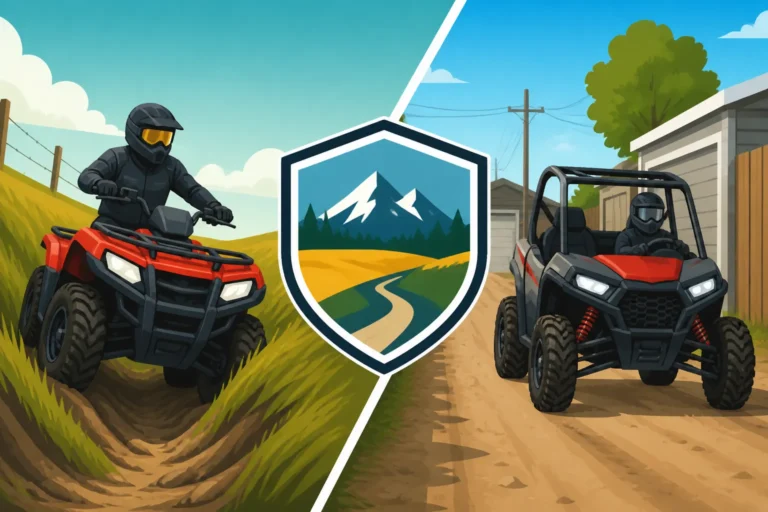
The world of OHVs isn't just ATVs; it includes dirt bikes, snowmobiles, and side-by-sides (UTVs). While the core age rules generally apply across these categories, there are some specific nuances, particularly with side-by-sides and youth models.
Youth ATVs and Dirt Bikes: Many manufacturers like Polaris, Honda, Yamaha, and even brands with a strong aftermarket presence like SuperATV, produce specific youth models. These machines are designed with features that make them safer and easier for younger, less experienced riders. This includes throttles that can be limited to control speed, lighter frames, and smaller engine displacements. When you buy one of these, it usually comes with a manufacturer-recommended age range (e.g., "for riders 6 and up" or "for riders 10 and up"). While these are guidelines, they're not always legal requirements on private land. However, they are excellent indicators of what's appropriate from a safety and control perspective. For instance, a 10-year-old might handle a 90cc youth quad comfortably, but putting them on a 700cc utility ATV would be highly irresponsible, even on private land.
Side-by-Sides (UTVs): Side-by-sides are popular for family outings because they often have multiple seats, seatbelts, and roll cages. This can give parents a false sense of security regarding age requirements. While passengers in a side-by-side are generally subject to [Alberta Passenger Rules on an OHV], the operator still needs to meet the age requirements. So, if your child is under 14, they cannot legally drive a side-by-side on public land, even if they're buckled in and you feel it's safer than an open quad. If they are between 10 and 13, they can drive it under close adult supervision.
The passenger rules for children in side-by-sides also deserve attention. While many side-by-sides come with multiple seats, often the manufacturer will specify age or height requirements for passengers, particularly in front seats. Always consult your machine's manual. Moreover, all occupants of a side-by-side on public land must wear a CSA-approved helmet, even if they have a roll cage and seatbelts, unless specific exemptions apply (like being completely enclosed with a windshield and roof, or having rollover protection systems that meet certain standards). It's always best to assume everyone needs a helmet. You can also explore [Alberta Rules for a Child Passenger].
What About Rider Competence and Safety Courses?
Alberta does not have a mandatory OHV safety course for riders of any age. However, taking a voluntary course, especially one geared towards youth, is an excellent idea. Organizations like the Canada Safety Council offer ATV RiderCourses that teach essential skills, safety procedures, and responsible riding habits. These courses are invaluable for building confidence and competence, helping young riders understand the dynamics of their machine and how to react to different terrains. Even if your child is an experienced private-land rider, a formal course can polish their skills and introduce them to best practices they might not have learned otherwise. Investing in training is an investment in safety. For more information, check out [Alberta Voluntary Rider Courses].
Ultimately, the age requirements in Alberta for OHVs are designed to keep everyone safe. They might seem restrictive to some, especially those who have seen generations of kids grow up riding quads on the farm. But public land introduces variables that private property often doesn't, necessitating a more regulated approach. By understanding these rules, ensuring proper supervision, and prioritizing safety gear and appropriate machines, you can help foster a love for off-roading in your children that is both thrilling and responsible.
Disclaimer
This article is for general informational purposes only and does not constitute professional advice. Laws, prices and regulations vary by location and change over time. Consult a qualified professional for guidance on your specific situation.