Alberta Farm and Ranch Work Exemption
It's a common dilemma for anyone operating a farm or ranch in Alberta: you rely on your quad or side-by-side every single day for essential tasks, but the rules around registering and insuring off-highway vehicles can feel like they're written for weekend warriors, not hardworking producers. The good news is, Alberta does offer specific exemptions for farm and ranch work. This comprehensive guide will walk you through what those exemptions entail, who qualifies, and most importantly, where the lines are drawn so you can stay compliant without unnecessary headaches.
Understanding the Core of the Exemption: What it Means for You
For many years, the question of whether a workhorse ATV or UTV needed to be registered and plated felt like a grey area for producers. The province understands that these machines are essential tools, not just recreational toys, for the agricultural sector. That's why the Alberta government introduced specific provisions within the [Off-Highway Vehicle Regulation 319/2002] and the Traffic Safety Act to create exemptions for certain farm and ranch operations. These exemptions are designed to ease the administrative and financial burden on those who depend on their OHVs for their livelihood.
More Than Just a "Farm Plate" Idea
It's important to clarify that this isn't about getting a special "farm plate" that looks different from a regular OHV plate. Instead, it's an exemption from the requirement to have any plate or registration at all, provided very specific conditions are met. This distinction is crucial because it means you aren't applying for a different type of registration; you're operating outside the general registration requirements entirely. The focus is squarely on the purpose and location of the vehicle's use, rather than the vehicle itself. This approach acknowledges that a machine used solely for moving hay bales on private land has a different operational profile than one used for trail riding in a public land use zone.
This interpretation also helps reduce confusion about what to do if you own multiple machines used for different purposes. If one quad is dedicated to checking fences on your ranch and never leaves, it falls under the exemption. If another identical quad is used for recreational rides with the family on public trails, it absolutely needs full registration. The exemption simplifies life for the farmer but places the responsibility on the operator to understand and abide by its limitations.
Key Exemptions: Registration, Plate, and Often Insurance
The primary benefit of this exemption is relief from the burden of regular OHV registration and the requirement to display an [Alberta Issues a Plate, Not a Sticker]. This means no annual trips to the registry, no fees for that piece of plastic, and less administrative overhead for vehicles exclusively used for agricultural purposes. Imagine the time saved not having to track renewal dates for several work machines, especially during peak seasons when every minute counts.
However, it’s vital to understand that while registration might be off the table, other requirements can still apply, particularly regarding insurance. When your off-highway vehicle is used exclusively on private land owned or leased by your farm or ranch, the requirement for third-party liability insurance often falls into a grey area under the provincial OHV regulations. Many farmers operate without formal insurance policies for these specific machines, relying instead on their general farm liability insurance, if it covers such eventualities. However, the moment that OHV touches any public land, even a ditch, then proof of valid third-party liability insurance becomes an absolute legal necessity. This distinction highlights the critical importance of knowing your boundaries, both literally and legally, as this can be a common pitfall leading to fines.
Defining "Farm and Ranch Work" and Eligible Users
The Alberta Farm and Ranch Work Exemption isn't a carte blanche for any activity that happens to occur on agricultural land. It's narrowly defined to ensure it genuinely supports the industry it's intended for. Understanding what constitutes eligible work and who qualifies to perform it under the exemption is key to avoiding missteps.
What Constitutes Eligible Work?
The exemption specifically applies to activities directly related to the operation and maintenance of a farm or ranch. Think of it as tasks that are integral to agricultural production – the kind of daily grind that keeps the operation running efficiently and productively. This includes tasks like tending to crops, such as spraying for weeds or inspecting fields; feeding animals, moving livestock between pastures, or hauling feed bales; mending fences, transporting tools, or scouting for lost animals. Basically, if it's a necessary chore to keep your farm or ranch operational, it likely falls under "farm work."
What it doesn't include, importantly, is purely recreational riding, even if it happens on your own property. Taking your quad out for a joyride after chores, or letting your kids tear around the back forty for fun, while perfectly acceptable on private land, isn't covered by the farm work exemption. That distinction might seem subtle, but it's vital for understanding the intent of the law. The rule is about supporting agricultural output, not providing an untaxed, unregistered recreational vehicle. Companies like SuperATV offer a huge range of accessories that can enhance a UTV's utility for these exact farm tasks, from plows to sprayers, clearly aligning with the exemption's intent.
Who Can Benefit from This Exemption?
The exemption is tied directly to the agricultural enterprise itself, meaning the owner of the farm or ranch, their immediate family members involved in the operation, and their employees are typically the ones who can legally operate an OHV under this provision. It's about legitimate agricultural labour, not just anyone who happens to be on the property. So, if your spouse is driving the quad to check the herd, or your hired hand is using the side-by-side to fix a water line, they are generally covered.
However, if your city cousin comes to visit for the weekend and wants to take your quad for a spin purely for enjoyment, they would not be operating it under the farm work exemption, even if they stay on your land. The exemption focuses on the purpose of the operation and the relationship of the operator to the farm's legitimate activities. This ensures the spirit of the exemption, which is to support the industry, is maintained and not misused for general recreational purposes by visitors or others not directly involved in the farming or ranching operation. For further clarity, the concept of [Occupational Work on a Ranch] details similar exemptions for those working in agricultural settings.
The Critical Boundary: Private vs. Public Land
This is perhaps the most crucial distinction in understanding the farm and ranch work exemption, and it's where many people inadvertently run afoul of the law. The exemption primarily hinges on where your off-highway vehicle is being operated. The rules shift significantly the moment your tires touch public land, even momentarily.
Strictly for the Farm's Boundaries
The Alberta Farm and Ranch Work Exemption is predominantly for use on the private property of the farm or ranch. As long as your off-highway vehicle remains entirely within the boundaries of your own land – your fields, pastures, private access roads – the full scope of the registration and plate exemption generally applies. This simplifies operations for tasks like herding cattle across a large pasture or checking irrigation lines deep within your property without needing to worry about the legal technicalities of registration.
This private land use also typically encompasses any land you legally lease for agricultural purposes. So, if you're leasing additional pastureland from a neighbour for your cattle, using your OHV to manage that herd on the leased land would still generally fall under the exemption, assuming it's part of your continuous farm operation. The key here is that the land must be genuinely private and integral to your agricultural business. The idea is to allow farmers and ranchers to use their essential tools on their own domain without undue bureaucratic burdens, recognizing that their properties are often extensive and require diverse transportation solutions.
Brief Forays onto Public Roads and Ditches
However, Alberta law does make specific, limited allowances for essential travel that might involve public thoroughfares, but only under very strict conditions. An OHV used for farm work may briefly operate on or cross a highway (which legally includes the shoulder and ditch) if it's strictly for the purpose of getting from one portion of the farm to another, or to an immediately adjacent property also involved in the farm operation. This provision recognizes the reality of fragmented farm parcels or the need to access land across a municipal road.
This is where clarity is paramount – this is not an invitation to ride your quad into town for groceries, even if it's a short hop, nor is it a pass for general ditch riding. The travel must be direct, for a specific agricultural purpose, and to move between connected parts of your farm. The intent is to facilitate necessary farm logistics, not recreational convenience. Understanding that [Alberta Ditch Riding Is Not Automatic] is crucial here; while a brief, purposeful crossing might be allowed, cruising down a ditch for any distance or for non-farm purposes is likely not.
The Insurance Imperative on Public Land
This allowance for brief public land interaction comes with a non-negotiable condition: you must have valid third-party liability insurance for your off-highway vehicle if you operate it on any part of a public highway, including the ditch or shoulder. While your machine might be exempt from registration when solely on your private land, the moment those tires touch a public right-of-way, even for a moment, [Alberta Requires Insurance on Public Land]. This is not a suggestion; it's a legal requirement designed to protect you and other road users in case of an accident.
Many farm vehicles might not carry specific OHV insurance when used strictly on private property, relying on broader farm liability policies or simply self-insuring. However, the provincial regulations are crystal clear: public land equals mandatory insurance. This means if you're crossing a rural road to get to another field, or even just driving a short distance in the adjacent ditch, you need to be able to provide proof of insurance if requested by law enforcement. Failure to do so can result in significant fines and potentially even the seizure of your vehicle. It's a small but critical detail that can have huge repercussions if overlooked.
Beyond Registration: Other Equipment and Operator Requirements
While the farm and ranch work exemption provides relief from registration and plate requirements, it's not an "anything goes" pass. Other rules and safety considerations remain important, especially concerning equipment and operator conduct. Neglecting these can still lead to fines or, more importantly, put safety at risk.
Helmet Laws and Farm Work
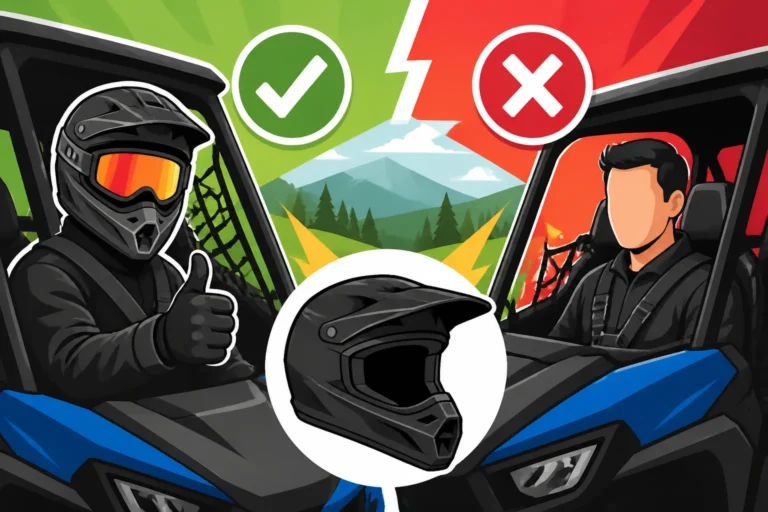
Alberta has generally strict rules about helmet use on public land for OHV operators. However, there is a specific exemption within the regulations for individuals operating an OHV for the purpose of farm or ranch work. This means that if you're actively engaged in legitimate agricultural duties on your property or making one of those permitted short movements between fields, you might not be legally required to wear a CSA-approved helmet. This [Alberta Helmet Exemptions Explained] acknowledges the practicalities of often dismounting and remounting a machine quickly while performing various tasks.
Despite the legal exemption, safety should always be your top priority. Many farmers and ranchers still choose to wear helmets, especially when operating on uneven terrain, in rough conditions, or with heavy loads. The risks of head injury are just as real during farm work as they are during recreational riding. Consider what you are doing, the terrain, and your comfort level. A helmet provides invaluable protection against unforeseen accidents, regardless of legal requirements.
Lights, Spark Arrestors, and Modified Exhausts
Even without registration, your off-highway vehicle isn't exempt from basic safety and environmental requirements, especially if it ever touches public land or presents a hazard. For example, if you're moving cattle at dusk or dawn, your machine still needs working head and tail lights, just like any other vehicle on public routes. This isn't just a legal nicety; it's crucial for visibility and preventing accidents.
Similarly, a spark arrestor is usually required to prevent wildfires, a critical concern in agricultural areas, particularly during dry seasons. An uncontrolled spark could devastate crops, pastures, and livelihoods. Even on private land, ensuring your machine has a functional spark arrestor is a responsible practice. Furthermore, [Alberta Bans Modified Exhausts] on public land, which means that super-loud pipe might be fine strictly on your back forty, but it could land you a ticket if you take it across the county road or into a ditch. For critical components like a spark arrestor, even if you’re mostly on private land, it's just good practice to ensure it's in working order, preventing potential fire hazards that could devastate your livelihood. Many aftermarket parts from companies like SuperATV can enhance your UTV's utility for farm tasks, but always double-check that any modifications comply with safety regulations, especially if there's any chance of operating on public access roads or ditches.
Age and Supervision Rules for Young Riders
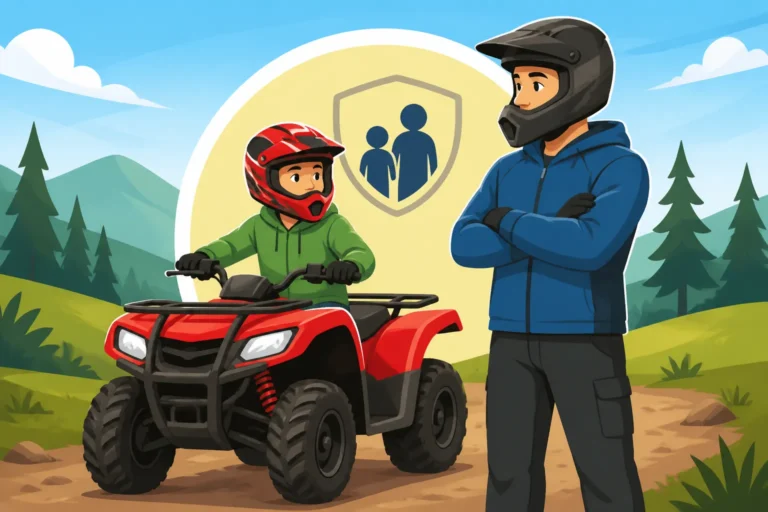
Alberta has clear age restrictions for operating OHVs on public land, typically requiring riders to be 14 years or older. While these rules might feel less stringent on private farm property where parents are supervising, the moment a young rider ventures into a public ditch or across a road, these age requirements spring back into full effect. On private land, under parental supervision and for farm work, younger riders might gain experience, but this should always be done with extreme caution, ensuring the child is physically capable and properly trained for the machine they are operating.
It’s crucial for parents and farm owners to be aware of [Alberta's Minimum Age of 14 on Public Land] and ensure proper [Alberta Riders Under 14 Need Supervision] if any part of the journey takes place off strictly private land. The farm exemption does not override these critical public safety provisions. Putting a child on a machine that is too powerful or too large for their size and experience, regardless of where they are riding, is always a serious safety risk that could lead to severe injury.
Common Misconceptions and Staying Compliant
Navigating the nuances of the farm and ranch work exemption can be tricky. There are several common misconceptions that can lead to unintentional violations. Understanding these pitfalls and adopting best practices will help you stay compliant and avoid unnecessary fines or legal complications.
The "Anything Goes on My Land" Myth
It's tempting to think that once you're on your own property, and especially with the farm exemption in play, anything goes. However, while the registration and plate requirements are lifted for farm work, this doesn't mean all laws disappear. Things like impaired operation, reckless endangerment, or environmental damage are still serious offences, regardless of where they occur. Operating an OHV while impaired by alcohol or drugs is illegal everywhere, and the penalties are severe, potentially including criminal charges.
Even on private land, operating safely and responsibly protects yourself, your family, your workers, and your valuable equipment. This includes basic safety practices like not overloading your machine, ensuring loads are secure, and avoiding excessively dangerous maneuvers. It also involves being mindful of noise levels if your property borders residential areas, respecting environmental stewardship by avoiding damage to sensitive habitats, and always being aware of your surroundings, especially when livestock or other people are nearby. The exemption provides flexibility, not a free pass for irresponsible conduct.
Documenting Your Farm Operation
While the exemption doesn't require you to carry a special "farm pass" or specific proof that your machine is for farm use, having documentation that clearly identifies your property as an active farm or ranch can be helpful in unforeseen circumstances. This isn't about proving the exemption daily, but if a situation arises where your operation is questioned, for instance, by a new peace officer unfamiliar with local agricultural practices, having farm registration numbers, land titles, or even specific permits for agricultural operations can quickly clarify your legitimate use of the OHV.
This level of preparedness can prevent unnecessary delays or confusion, allowing you to quickly demonstrate that your activities fall squarely within the intended scope of the exemption. You wouldn't typically carry these documents on your OHV, but knowing where they are and having them readily accessible (perhaps at the farm office) can be a good proactive measure. This approach is about being prepared and having solid evidence to back up your claim, not about creating extra paperwork for daily operations.
When the OHV Leaves the Farm for Other Uses
The farm exemption is strictly for farm and ranch work. The moment you load that OHV onto a trailer and head to McLean Creek for a weekend ride with the family, it ceases to be eligible for the exemption. At that point, your machine must be fully registered, plated, and insured like any other recreational off-highway vehicle in Alberta. This is a critical distinction that many people overlook. You cannot leverage the farm exemption for recreational purposes, even if it's the same machine you use for chores during the week.
Think of it this way: your work truck might be exempt from certain commercial vehicle regulations when hauling feed, but when you take it camping, it's just a regular truck subject to standard passenger vehicle laws. The same principle applies here. If your OHV is going to touch public trails, designated OHV areas, or other recreational zones, you need to ensure it meets all the standard requirements. This includes having proper registration, displaying the plate clearly, and carrying valid insurance. Neglecting this could result in fines, vehicle seizure, and the invalidation of your insurance policy if an accident occurs. Always plan ahead: if your destination is a place like Crown land, remember that [Alberta Registration Before Riding Crown Land] is a fundamental requirement.
To summarize the key differences in requirements:
| Aspect | For Farm/Ranch Work on Private Land | For Recreational Use or Public Land Travel |
|---|---|---|
| Registration | Exempt | Required |
| Plate Display | Exempt | Required |
| Insurance (3rd Party Liability) | Not explicitly required (but highly recommended if any public interaction) | Required |
| Helmet | Exempt (but strongly recommended for safety) | Required |
| Age Restrictions | Less stringent (private land, parental supervision) | 14+ on public land, supervision needed |
| Spark Arrestor | Recommended (fire prevention) | Required |
| Modified Exhaust | Allowed (on private land only, consider noise) | Banned on public land |
| Purpose of Use | Agricultural tasks only | Any legal recreational or utility use |
| Land Type | Private farm/ranch land, brief adjacent public access for farm purposes | Public land, designated trails, roads (if bylaws allow) |
This article is for general informational purposes only and does not constitute professional advice. Laws, prices and regulations vary by location and change over time. Consult a qualified professional for guidance on your specific situation.