Alberta Registration for Visiting Riders
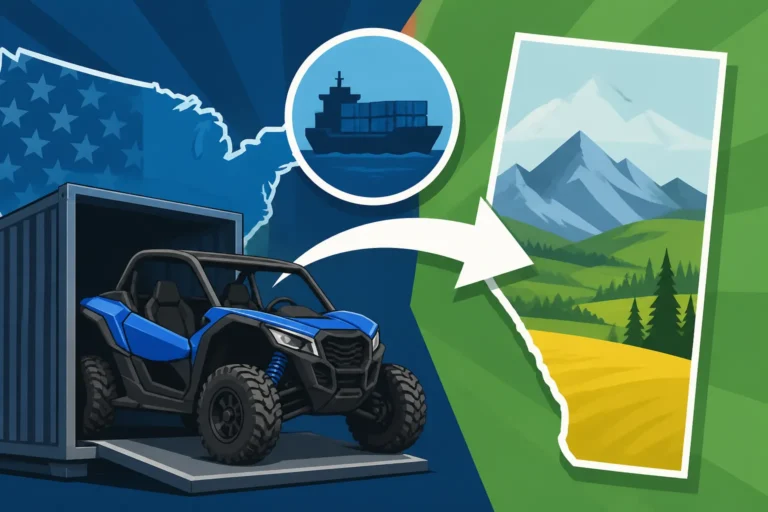
Visiting Alberta with your ATV or UTV for a riding adventure can be an incredible experience, but the excitement can quickly turn to frustration if you're unclear about the province's registration rules. Many riders from outside Alberta assume their home province or state registration is all they need, only to discover a complex web of regulations, especially around the "30-day rule." This guide is here to untangle those complexities, ensuring you understand exactly what's expected of visiting riders when it comes to registering your off-highway vehicle (OHV) in Alberta, helping you avoid unexpected tickets or even vehicle seizure.
Understanding Alberta's Registration Requirements for OHVs
When you hit the trails in Alberta, whether you're traversing a Public Land Use Zone (PLUZ) or just crossing a ditch to get to a friend's acreage, your off-highway vehicle (OHV) needs to be properly accounted for. This isn't just a suggestion; it's a legal requirement designed to ensure accountability, safety, and responsible land use across the province. For visitors, this can often be a source of confusion, as rules vary significantly from one jurisdiction to another.
The Basic Rule: When an OHV Needs to Be Registered
In Alberta, the fundamental principle is that if you're operating an OHV on public land, it must be registered and display a valid Alberta license plate. This applies to a wide range of machines, from the nimble dirt bike to the rugged side-by-side, and of course, your trusty ATV. The purpose behind this rule is multifaceted. It helps law enforcement identify machines, track ownership for safety and liability reasons, and ensures that everyone using public lands is playing by the same set of rules. For a visiting rider, this means that while your machine might be perfectly legal in British Columbia, Saskatchewan, or Montana, Alberta has its own conditions that must be met once you cross the border.
Imagine planning a fantastic week-long riding trip to the Ghost PLUZ with your buddies from out of province. You’ve packed your gear, checked your tires, and you're ready to explore Alberta's incredible landscapes. However, if your ATV doesn't meet Alberta's registration requirements, that dream trip could be cut short by a provincial officer. They don't care if your machine is registered back home; they care about what's required here, today, on Alberta's public land. It's not about being punitive, but about consistency and ensuring that every machine out there can be identified if there's an incident, an accident, or an environmental concern. The rules are in place for the safety and good order of shared recreational spaces.
Public Land vs. Private Land: A Crucial Distinction
The distinction between public and private land is absolutely paramount for any OHV operator in Alberta, and especially so for visiting riders trying to navigate the rules. In simple terms, if you're riding on land that isn't publicly owned or accessible, the provincial registration requirement often doesn't apply. This means that if you're staying on a friend's ranch and only riding their private trails with their explicit permission, you generally wouldn't need an Alberta OHV registration, even if your machine isn't registered in your home jurisdiction. The key here is explicit permission and staying strictly on private property.
However, the moment your tires touch public land – which includes not just designated trails in PLUZs, but also roadsides, highway ditches, Crown land, and sometimes even undeveloped municipal land – Alberta's registration rules kick in. Many visiting riders underestimate how broadly "public land" is defined. That seemingly innocent ditch alongside a rural road, which you might use to access a trail, is considered public land and requires registration. Even crossing a gravel road to get from one section of private property to another can be considered operating on public land. This is why it's so critical for visitors to understand the boundaries and always assume public land rules apply unless they are absolutely certain they are exclusively on private property with permission. Always confirm access before you ride, especially if you're relying on private land exemptions.
What Alberta Considers a "Visiting Rider"
The definition of a "visiting rider" in Alberta is pretty straightforward: you're someone who doesn't reside in Alberta and is temporarily in the province. This includes tourists, temporary workers, or anyone simply passing through. However, there's a critical timeframe associated with this status, which we'll dive into with the 30-day rule. Essentially, as long as you maintain your primary residence outside of Alberta and your stay is temporary, you fall into the "visiting rider" category. The moment your presence in the province becomes more permanent, or your machine is here for an extended period, that status can change.
For instance, if you're from Saskatchewan and come to Alberta for a two-week riding trip in the mountains, you're clearly a visiting rider. Your Saskatchewan registration is generally accepted for that period. But what if you decide to take a temporary job in Alberta for a few months and bring your quad with you? While you might still consider your permanent home to be out of province, the duration of your stay and the presence of your vehicle could shift your status in the eyes of Alberta law. Understanding this distinction is vital because it dictates whether your out-of-province plate remains valid or if you'll eventually need to obtain an Alberta registration. Law enforcement officers may ask for proof of your residency, such as your driver's license from your home jurisdiction, to confirm your status as a temporary visitor.
The 30-Day Rule for Out-of-Province Machines
This is where many visiting riders often find themselves in a bind. Alberta has a specific regulation that dictates how long an out-of-province registered OHV can operate within its borders before it's considered an "Alberta machine" and requires local registration. It's a rule designed to ensure that vehicles primarily operated in Alberta are registered and insured within the province's system, just like any resident's vehicle.
How the 30-Day Clock Works
The infamous "thirty consecutive days" rule states that an off-highway vehicle registered outside of Alberta can be operated on public land in Alberta for a maximum of 30 consecutive days. Crucially, this clock starts ticking the moment the machine enters Alberta, regardless of whether it's being ridden or just sitting parked at your campsite or vacation rental. It's about the machine's physical presence in the province. Once that 30-day period is up, the machine is legally considered an Alberta-based OHV, and its out-of-province registration is no longer sufficient for public land use.
Let's imagine you've driven your truck and trailer, carrying your side-by-side, from British Columbia into Alberta on June 1st. Even if you don't unload your side-by-side and ride it until June 15th, the 30-day clock for its presence in Alberta began on June 1st. This means that by June 30th, regardless of how many days you've actually ridden, your side-by-side will have been in Alberta for 30 consecutive days. If you plan to ride it on July 1st, it will need to be registered in Alberta. A common misconception is that the clock only ticks on riding days, but that's simply not the case. The rule specifies the machine's presence in Alberta. If you leave Alberta with your machine and then return, the clock generally resets. However, repeatedly crossing the border solely to reset the clock may be viewed with suspicion if challenged by law enforcement, so it's always best to be transparent and understand the spirit of the rule. You can find more specific details on this in [Alberta's 30-Day Rule for Out-of-Province Machines].
What Happens After 30 Days
Once your out-of-province OHV has been in Alberta for more than 30 consecutive days, it's no longer considered a "visiting" machine under provincial law for registration purposes. At this point, if you intend to continue riding it on any public land in Alberta, you are legally required to obtain an Alberta OHV registration. Failing to do so can lead to significant consequences, which we'll delve into in more detail shortly. Essentially, your machine transitions from being a temporary visitor to being treated as if it belongs in Alberta for the long term.
This situation often arises for people who come to Alberta for extended work contracts, perhaps in the oil and gas industry, or for those who spend their entire summer or winter seasons at a cabin in the mountains. They bring their machines for recreation during their longer stay. While their home residence might still be elsewhere, the machine's extended presence in Alberta triggers the provincial registration requirement. If you are stopped by an enforcement officer and they determine your OHV has been in Alberta for longer than 30 consecutive days without an Alberta plate, you could face fines for operating an unregistered vehicle. This isn't a grey area; it's a clear cut-off designed to integrate longer-term machines into Alberta's regulatory framework.
Tracking Your Stay and Proof for Officers
It's entirely possible that an enforcement officer might pull you over and ask how long your OHV has been in Alberta. Especially if you have an out-of-province plate, this is a reasonable question for them to ask. As a visiting rider, it's your responsibility to be able to demonstrate that your machine has not exceeded the 30-day limit. This means you might need to provide some form of proof regarding your entry date into the province or your duration of stay.
What kind of proof are we talking about? This could include fuel receipts from border towns, accommodation bookings with dates, or even dated records from service appointments for your vehicle or OHV. While an officer might not demand a detailed itinerary, having some documentation at hand can help alleviate any concerns and prove your compliance with the 30-day rule. Remember, the burden of proof often falls on the operator. Keeping your paperwork organized, even for a short trip, can save you a lot of hassle. For example, if you entered Alberta on August 1st and are stopped on August 25th, having a dated receipt for gas purchased near the provincial border on August 1st would be excellent proof that you are within the legal timeframe. This diligence extends to all your important documents, which you'll need to produce on demand, as highlighted in [Producing Insurance on Demand].
Exemptions and Special Cases for Visitors
While Alberta's OHV registration rules are generally quite comprehensive, there are a few scenarios where a visiting rider might find themselves exempt or operating under slightly different conditions. Understanding these nuances can save you time, effort, and potential headaches.
Private Property Riding for Visitors
This is the most significant exemption for visiting riders. If you are exclusively riding your OHV on private land in Alberta, with the explicit permission of the landowner, you do not need to register your OHV in Alberta, regardless of how long you've been in the province. This holds true even if your machine isn't registered in your home jurisdiction. The key, as always, is explicit permission and strict adherence to private property boundaries.
Consider a scenario where you've come to visit family on a sprawling farm near Olds. You brought your quad to help with chores and enjoy some recreational riding on their property. As long as your tires never leave their fields, access roads, or trails, and you have the farmer's permission, you are not required to have an Alberta OHV registration. However, the moment you decide to take a shortcut across the municipal road to visit a neighbour, or ride down the ditch to the nearest gas station, you are operating on public land and suddenly, provincial registration requirements apply. It's crucial to understand that "private property" means just that – land owned by an individual or entity that isn't publicly accessible. Always get permission in writing if possible, or at the very least, have a clear verbal agreement with the landowner. This distinction is critical for peace of mind.
Machines from Neighbouring Provinces and States
Alberta shares borders with British Columbia, Saskatchewan, and several US states, including Montana, all of which have their own OHV registration laws. For visiting riders, the general rule of the 30-day limit applies across the board, regardless of where your machine is coming from. There isn't a special reciprocal agreement that extends the 30-day window for machines from B.C. or Saskatchewan, for example.
So, whether you're bringing your dirt bike from Kelowna, your ATV from Saskatoon, or your side-by-side from Whitefish, Montana, the same 30-day consecutive presence rule applies. Your valid registration and insurance from your home province or state will be honoured for that initial 30-day period on Alberta public lands. After that, an Alberta plate is required. This means if you're a B.C. resident planning an extended summer at your cabin in Nordegg, you'll need to factor in getting an Alberta registration for your quad after the first month. Specific information about registering machines from different jurisdictions can be found in resources like [Alberta Registration for a Machine From BC], [Alberta Registration for a Machine From Saskatchewan], and [Alberta Registration for a Machine From Montana]. There are no special handshake deals that exempt you from Alberta's duration rules based on where your machine usually lives.
Commercial Use and Guided Tours
If you're a visiting rider participating in a guided OHV tour or renting a machine from an Alberta outfitter, you typically don't need to worry about the machine's registration. In these commercial scenarios, it is the responsibility of the rental company or tour operator to ensure that their entire fleet of OHVs is properly registered and insured in Alberta. They are providing the machine as a service, and with that comes the legal obligation to comply with all provincial regulations.
This is a significant relief for tourists who just want to enjoy a day on the trails without getting bogged down in administrative details. When you book a guided tour in Kananaskis or rent a side-by-side near McLean Creek, the outfitter will have already handled the [Alberta OHV Registration Cost] and all the necessary paperwork. Your primary responsibility as the rider will be to follow all safety instructions, obey traffic laws, and adhere to age and licensing requirements. However, you'll still need to bring your own personal identification and valid driver's license (if required for the rental), and ensure you comply with safety gear regulations, particularly [Alberta Helmet Law on Public Land]. So, while the machine's registration is handled, your personal compliance with riding rules is still paramount.
Necessary Documents and Practicalities for Visiting Riders
Embarking on an OHV adventure in Alberta as a visitor requires more than just a well-maintained machine and a sense of adventure. You need to be prepared with the right documentation and be aware of Alberta-specific safety requirements. Being caught without these essentials can quickly turn a scenic ride into a stressful encounter with law enforcement.
Carrying Your Home Province/State Registration and Insurance
For the first 30 consecutive days that your out-of-province OHV is in Alberta, your valid registration and proof of insurance from your home jurisdiction are your lifeline. It is absolutely critical that you carry these documents with you at all times when operating your OHV on public land in Alberta. Think of it as carrying your driver's license – you wouldn't leave home without it. An enforcement officer has the authority to request proof of both your registration and insurance, and failing to produce them on demand can result in fines or other penalties.
It’s important to understand that while your home insurance might cover your OHV, Alberta still requires that coverage to be present and provable. [Alberta Requires Insurance on Public Land] and [Alberta Proof of Insurance on Demand] are clear directives. Keep a physical copy of your registration certificate and insurance liability card in a waterproof bag, perhaps tucked into your riding jacket or a secure compartment on your machine. Relying solely on a digital copy on your phone can be risky, especially in areas with no cell service or if your battery dies. Being able to quickly and clearly demonstrate that your machine is legally allowed to be on the trails, even as a visitor, is a non-negotiable part of responsible riding.
Proof of Identity and Residency for Visitors
When an enforcement officer questions the status of your out-of-province OHV, they will likely ask for your personal identification. This is to confirm who you are and, crucially for the 30-day rule, to establish your residency status. Your driver's license from your home province or state is usually the primary document for this. It clearly states your address, which serves as proof that you are indeed a visitor to Alberta.
In some cases, especially if an officer has reason to believe your stay might be extended beyond the 30 days, they might ask for additional proof of your temporary status. This could include things like return flight tickets, a temporary work permit with an end date, or even hotel or campsite reservation confirmations that show a limited duration of stay. While this might seem like a lot of paperwork to carry on a trail ride, having a few key documents readily accessible can clarify your situation quickly. The goal is to provide evidence that you are genuinely a "visiting rider" whose machine is not yet subject to Alberta's full registration requirements. Keep these documents with your OHV registration and insurance – organized and protected from the elements.
Understanding Alberta-Specific Safety Requirements
Beyond registration, all OHV operators on Alberta public lands – residents and visitors alike – must adhere to specific safety and equipment requirements. These rules are in place for the safety of all riders and to protect the environment. It's not enough to just have your machine properly registered; it must also be safely equipped.
One of the most critical requirements is wearing an approved helmet. Since May 15, 2017, [Alberta Helmet Law on Public Land] has made it mandatory for all OHV riders and passengers on public land to wear a helmet that meets specific safety standards (CSA, Snell, or ECE). No matter where you're from, if you're riding public land in Alberta, you need a proper helmet. Furthermore, your OHV must be equipped with a spark arrestor to prevent wildfires – a critical detail in Alberta's often dry conditions, as detailed in [Alberta Requires a Spark Arrestor]. Working head and tail lights are also mandatory, especially if there's any chance you'll be riding near dusk, dawn, or in low visibility conditions, which is covered in [Alberta Requires Working Head and Tail Lights]. While these might be standard in your home jurisdiction, it's wise to double-check Alberta's specific requirements before you hit the trails. Ignorance of the law is not a defence, and these safety rules are strictly enforced for everyone.
What to Do If You Exceed the 30-Day Limit
Sometimes, plans change. A short visit might turn into an extended stay, or a temporary work assignment becomes a permanent move. If your OHV has been in Alberta for more than 30 consecutive days, or you anticipate it will be, you need to proactively address its registration status to avoid legal issues. Ignoring the rule is not an option.
The Process of Alberta OHV Registration for Out-of-Province Machines
If your OHV exceeds the 30-day limit, or you move to Alberta permanently, you'll need to register it in Alberta. The process involves visiting an authorized Alberta Registry Agent. You can't do this online for an initial registration, as they need to verify documentation. The good news is that Alberta has many registry agents across the province, making it relatively convenient.
You will need several key documents to complete the registration. First, you'll need proof of ownership, such as your current out-of-province registration, a bill of sale, or a manufacturer's statement of origin (MSO). If you're using a bill of sale, ensure it's a legitimate document that clearly identifies the buyer, seller, machine, and sale price. Resources like LawDepot can provide templates for professional bills of sale if you need to create one for your records. You'll also need personal identification (like an Alberta driver's license if you've become a resident, or another form of ID if you haven't yet). The agent will collect the required fees, and you'll receive an Alberta license plate and a registration certificate. It’s important to note that registering an OHV for the first time usually can't be done online, but renewals can be. For a full list of what to bring, check [Alberta Registration Paperwork Checklist].
Temporary Registration Options (if any exist)
Unlike some jurisdictions that offer temporary transit permits or short-term recreational registrations, Alberta generally does not have a specific "temporary registration" option for out-of-province OHVs that have exceeded the 30-day rule. Once your machine is past that limit and you intend to operate it on public land, the expectation is that you obtain a full Alberta OHV registration.
This means there isn't a workaround to extend your out-of-province plate's validity indefinitely in Alberta. If you find yourself in the position where you'll be in Alberta for, say, 45 days, and plan to ride your OHV, you should budget for the cost and time to get an Alberta plate. Planning ahead can prevent a lot of stress. Don't assume there's a simple, quick fix available at the last minute; full registration is the most common and safest path once you cross that threshold. This underlines the importance of being aware of your expected duration of stay from the outset.
Seeking Assistance from Registry Agents
When in doubt, the most reliable source of information for OHV registration in Alberta is an authorized Alberta Registry Agent. These are the front-line service providers for all things related to vehicle and OHV registration in the province. They deal with these rules every day and can provide accurate, up-to-date guidance tailored to your specific situation.
Don't hesitate to call or visit a registry agent location if you have questions about the 30-day rule, what documents you need, or how to register your out-of-province machine. They can clarify any ambiguities and walk you through the process, ensuring you meet all legal requirements. Many visitors have unique circumstances, and an agent can help determine if you need to register, what the costs might be ([What Alberta OHV Registration Costs]), and what paperwork to prepare. Consulting with a registry agent, as highlighted in [Alberta Registry Agents and OHV Paperwork], can provide invaluable peace of mind and prevent costly mistakes. It's much better to ask a question before you ride than to face a penalty afterward.
Penalties for Non-Compliance
Riding an unregistered OHV on public land in Alberta, especially if you've exceeded the 30-day limit for out-of-province machines, comes with serious consequences. These aren't minor inconveniences; they can significantly impact your wallet and even your ability to continue your recreational activities.
Fines for Unregistered Machines
Operating an unregistered OHV on Alberta's public land is a violation of the Traffic Safety Act. If you are stopped by an enforcement officer and your machine is found to be unregistered, or your out-of-province registration is no longer valid because you've exceeded the 30-day limit, you will likely receive a substantial fine. These tickets are not cheap, and they are issued on the spot. The amount can vary, but it's enough to put a serious damper on your trip budget.
For instance, you might be enjoying a beautiful trail ride in a Provincial Park or a PLUZ, completely unaware that your machine's 30-day window has closed. An officer conducts a routine check, verifies your registration, and finds that it's expired for Alberta purposes. Suddenly, your day is ruined by a hefty ticket. This fine is not only for the lack of registration but can sometimes be compounded if other violations are found, such as not carrying proof of insurance or not having proper safety equipment. It's a quick way for a fun day out to become an expensive lesson. For a deeper dive into the specific monetary consequences, refer to [Alberta Penalties for Riding Unregistered].
Vehicle Seizure and Impoundment
While fines are unpleasant, a far more severe consequence of non-compliance can be vehicle seizure and impoundment. This usually happens if you're found operating an unregistered OHV and you cannot provide valid proof of insurance. In Alberta, having proper insurance is just as critical as registration for operating on public land. If an officer determines your OHV is uninsured, they have the authority to seize and impound your machine on the spot.
Imagine your entire riding trip being brought to a screeching halt. Your OHV is towed away, and you're left stranded. Not only do you face the original fine for being unregistered, but you'll also be responsible for towing fees, impoundment storage fees, and potentially administrative release fees. These costs can quickly add up to hundreds, if not thousands, of dollars. Retrieving your machine from impound can be a logistical nightmare, especially if you're a visitor trying to manage it from afar. This harsh penalty, detailed in [Alberta Vehicle Seizure for No Insurance], is a strong deterrent and emphasizes just how seriously Alberta takes the issue of insured and registered vehicles on its public lands.
Impact on Future Visits
Beyond the immediate financial and logistical headaches, non-compliance with Alberta's OHV registration and insurance laws can have a lingering impact on your future visits to the province. While a single ticket might not prevent you from re-entering, it does create a record. Repeated offenses, or more serious infractions that lead to vehicle seizure, can flag you in the system.
Law enforcement agencies share information, and a history of non-compliance could lead to increased scrutiny during future interactions. It reflects negatively on your understanding and respect for local laws. Moreover, if you have to deal with impoundment, the experience itself might make you think twice about planning another trip. It's not just about avoiding a fine today; it's about maintaining a clean record and ensuring that your future adventures in Alberta remain hassle-free. Being a responsible visitor means respecting the rules of your host province, which ultimately contributes to a better experience for everyone on the trails.
Planning Your Alberta OHV Adventure as a Visitor
A well-planned trip is a successful trip. For visiting OHV riders, this means more than just plotting your route; it involves understanding Alberta’s unique landscape of rules and regulations. Taking the time to prepare will ensure your adventure is memorable for all the right reasons.
Pre-Trip Planning and Research
Before you even hitch up your trailer, dedicate time to thorough pre-trip research. This involves identifying the specific Public Land Use Zones (PLUZs) or recreation areas you intend to ride in and familiarizing yourself with their individual rules. For example, some PLUZs may have designated trails only, seasonal closures, or specific camping regulations. The provincial government and local tourism boards often provide detailed maps and guides for these areas. For a comprehensive overview, look into [Alberta's Public Land Use Zones Explained].
This planning should also include checking for current conditions, such as fire bans (which can severely restrict or even prohibit OHV use) and trail closures due to weather, wildlife, or maintenance. Knowing these details in advance allows you to adjust your plans and pack accordingly. Furthermore, if you plan on random camping on public land, remember that Alberta now requires a Public Lands Camping Pass for anyone 18 and older. This pass needs to be purchased before you arrive at your camping spot. Being proactive in your research means fewer surprises and a smoother, more enjoyable experience once you arrive.
Carrying Essential Documentation While Riding
We've emphasized the importance of having your home province/state registration and insurance, along with personal ID. But beyond these, consider a few other documents that can be incredibly helpful when you're out on the trails. A printed copy of your Public Lands Camping Pass (if applicable) is essential. While you can usually show it on a phone, having a physical copy as a backup is always a good idea, especially in areas with spotty cell service.
It's also a smart practice to carry a copy of your vehicle's ownership documents, even if it's just a photocopy of your current registration. This can prove ownership if there are any questions, especially if you're trailering your OHV. All these documents should be kept in a durable, waterproof pouch or container. Make sure it's easily accessible but also securely stored on your person or within your OHV. An officer can, and will, ask to see these documents at a staging area or during a trail patrol. Being able to produce them quickly and completely demonstrates your compliance and responsibility as a rider.
Respecting Local Rules and Environment
As a visitor, you are a guest in Alberta's stunning natural landscapes. Part of a successful and respectful trip involves adhering not just to the letter of the law, but also to local etiquette and environmental best practices. This includes staying on marked trails, avoiding sensitive areas like wetlands and alpine meadows, and operating your OHV responsibly to minimize noise and environmental impact.
Be mindful of wildlife. Alberta is home to a diverse array of animals, including bears, and it's your responsibility to know how to behave in their habitat. Always pack out everything you pack in, leaving no trace of your visit. Pay attention to posted signs regarding speed limits, trail conditions, and restricted areas. While your main concern might be the 30-day registration rule, a responsible visitor goes beyond the minimum legal requirements. By showing respect for the land, wildlife, and other users, you contribute positively to the OHV community and ensure these incredible riding areas remain accessible and enjoyable for everyone, for years to come. This kind of mindful engagement also often means having a smoother experience if you do encounter local authorities or other trail users.
| Feature | Alberta Resident (New OHV) | Visiting Rider (Under 30 Days) | Visiting Rider (Over 30 Days) |
|---|---|---|---|
| Required OHV Registration | Alberta OHV Plate & Certificate | Home Jurisdiction's Registration | Alberta OHV Plate & Certificate |
| Required OHV Insurance | Alberta-specific Liability | Home Jurisdiction's Liability | Alberta-specific Liability |
| Proof of Ownership | Bill of Sale/MSO | Home Reg. Certificate | Bill of Sale/MSO/Home Reg. Cert. |
| Personal ID Required | Alberta Driver's License | Home Jurisdiction's Driver's License | Alberta Driver's License (if resident) / Other ID |
| Public Lands Camping Pass | Yes (if random camping) | Yes (if random camping) | Yes (if random camping) |
| Helmet Requirement | Yes (CSA/Snell/ECE) | Yes (CSA/Snell/ECE) | Yes (CSA/Snell/ECE) |
| Spark Arrestor | Yes | Yes | Yes |
| Likely Encounter with Enforcement | Routine checks | Questions about stay duration | Questions about compliance |
| Potential Penalties | Fines, seizure for non-compliance | Fines for safety violations | Fines, seizure for non-compliance |
Disclaimer
This article is for general informational purposes only and does not constitute professional advice. Laws, prices and regulations vary by location and change over time. Consult a qualified professional for guidance on your specific situation.