Keeping 100 Metres Clear of a Well Site
Planning an Alberta ATV or UTV ride can involve more than choosing a trail: a place that looks open may sit beside an active well site or other energy facility. The 100-metre distance matters when you’re choosing a random camping spot, but it doesn’t automatically create a universal riding buffer. Here’s how to keep camping, access and trail rules separate—and avoid setting up somewhere you shouldn’t.
What the 100-metre distance applies to
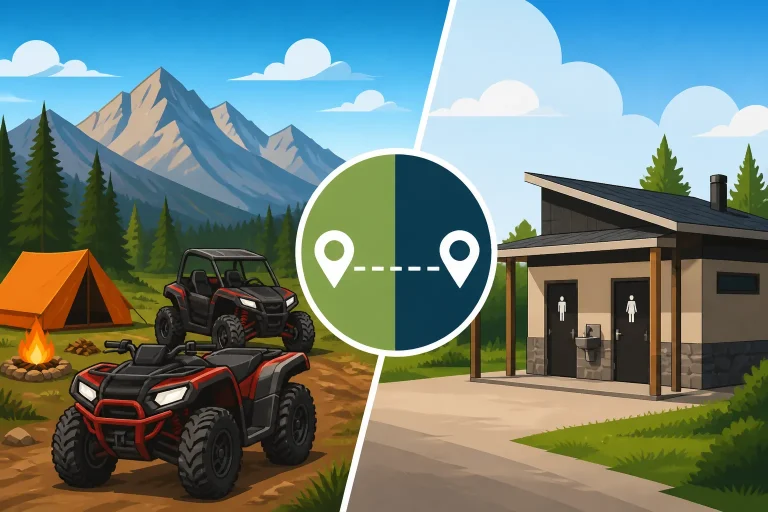
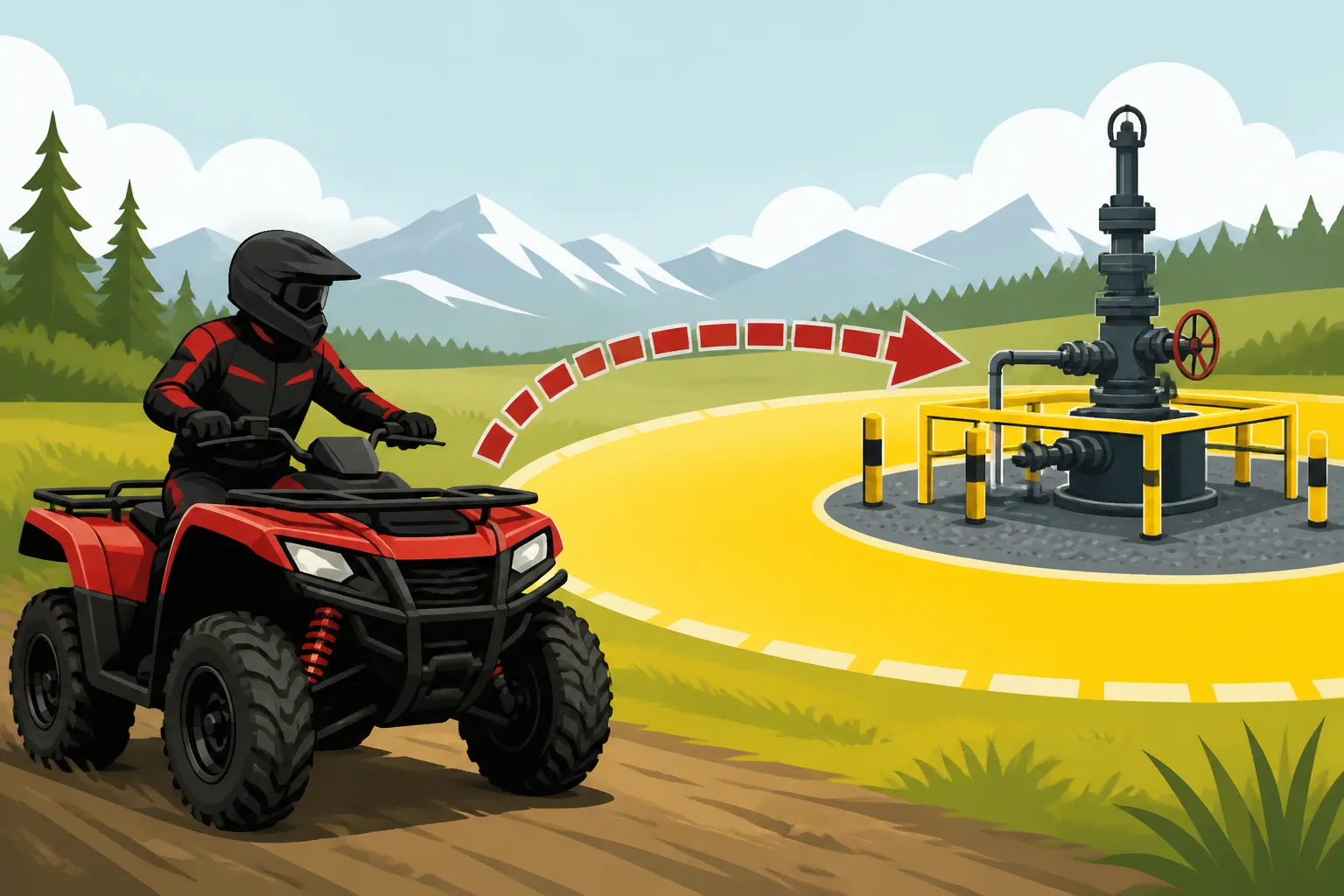
The 100-metre distance is relevant to random camping near an oil or gas facility on public land. If you plan to camp, keep your campsite at least 100 metres from the well site or facility. The restriction is about where you set up camp; it should not be read as permission to ride onto an industrial site, or as a general rule that every trail becomes off limits within a 100-metre circle.
That distinction matters on an ATV or UTV trip. A machine may be allowed on a designated route nearby while camping remains prohibited too close to a facility. Conversely, seeing a road or track beside a well site does not mean it is a public riding route. Access can be restricted, and industrial traffic may use roads that look like ordinary trail connections.
Use the distance as a minimum when selecting a campsite, not as a target that requires precise measuring right at the edge of a facility. Well sites can have fences, gates, equipment and traffic areas, and the visible features may not clearly show where the facility boundary lies. Giving the site more space reduces the chance that your camp is too close and keeps your group away from active operations.
If you are looking for a fuller explanation of where random camping is allowed, see Alberta Random Camping Rules Explained. The rules for a campsite and the rules for riding a machine are related, but they are not interchangeable.
| Situation | How to think about the 100-metre distance | What to do |
|---|---|---|
| Choosing a random campsite | Keep the campsite at least 100 metres from an oil or gas facility | Select a more distant, suitable spot |
| Riding a designated trail nearby | The camping distance alone does not decide whether the trail is open | Confirm the route is authorized and open |
| Crossing an industrial road | A visible road does not prove public access | Check signs, gates, maps and access conditions |
| Approaching a facility | The riding setback and access rights may depend on site rules or restrictions | Stay out of restricted areas and follow posted directions |
| Unsure where the facility boundary is | A fence or piece of equipment may not show the full boundary | Give the facility extra room or camp elsewhere |
The safest practical approach is to avoid trying to squeeze a campsite just outside the minimum. A little extra distance is useful when terrain, vegetation or an unclear site boundary makes it hard to judge where the facility ends. If you cannot confidently identify a suitable spot, choose a different place rather than relying on a rough estimate.
Riding near a well site is a separate access question
A facility setback for camping does not establish that riders may travel anywhere outside that distance. Before riding toward or past a well site, confirm that your route is open to OHVs and that you have permission or authority to use it. A track on a map, tire marks on the ground or an unlocked gate is not enough to establish access.
On public land, riding is subject to the rules for the specific area, route and land use. A legal route may run near industrial activity, but that does not make the well pad, service roads, work areas or closed routes part of the trail network. Stay on routes that are authorized for your machine and do not enter a fenced or signed facility area. Follow any temporary closure or direction from an operator or land manager.
Start by identifying the land and riding area you intend to use. Public land rules can vary by location, and a route that is open in one area may be restricted in another. Alberta Public Land Use Zones Explained provides background on how zones work, while Checking a Zone Before You Go is useful when you need to confirm the rules for a particular ride.
Pay attention to the difference between these common situations:
- A designated public trail passes nearby. Use the trail only if it is open to your type of OHV and current conditions permit travel.
- A road leads directly to a well site. Do not assume it is a recreational route. It may be an industrial access road or subject to restrictions.
- A gate is open. An open gate is not, by itself, an invitation to ride through. Look for signs and confirm access.
- The route is signed closed or blocked. Do not bypass the closure. It may be in place for operations, public safety, land protection or another access restriction.
- The trail appears on an old map but not a current one. Treat the route as uncertain until you verify its status.
Industrial activity can change the practical conditions around a route. Work vehicles may be moving, crews may be present and access may be restricted temporarily. Keep well away from active work areas, do not interfere with equipment, and follow signs or directions. If a route’s status is unclear, choose another confirmed route instead of riding in to investigate.
For more on the broader rules that govern OHV travel, see Alberta Rules for Riding Crown Land. If a route crosses private land or land with access conditions, consult Alberta Private Land Permission as well. A campsite’s distance from a facility does not replace the need to confirm that your entire route is lawful.
Choosing a campsite and checking the route
A reliable plan checks the campsite and the ride separately. First, decide where you are allowed to camp. Then identify an authorized route from the staging point to the trail system, without assuming that the shortest line on a map is open to OHVs.
Use this process before leaving:
- Identify the land and riding area. Confirm whether the planned campsite and routes are on public land, within a managed area, or on land where another access rule applies.
- Check current restrictions. Review the applicable area information for closures, seasonal limits, designated routes and any notices affecting access.
- Locate nearby facilities. Look at current mapping for wells and other industrial sites, then check the ground for signs, fences and access controls.
- Choose a campsite well clear of the facility. Keep at least 100 metres away from the oil or gas facility, and allow more room when the boundary is uncertain.
- Confirm the OHV route independently. Make sure each trail or road you plan to ride is open and authorized for your machine.
- Have a backup spot and route. If the planned campsite is too close, occupied, closed or unsuitable, use a location you have already checked.
Do not rely on a single map layer to answer every question. A recreational trail map may help with routes but may not show current industrial work or temporary closures. A phone map may show a track without telling you whether OHV use is permitted. Check more than one source where practical, and treat signs on the ground as important information.
Before the trip, download maps for offline use if you expect to lose cell service. Keep enough battery power to consult them, and carry a backup means of navigation if the area is remote. A downloaded map can help you avoid wandering toward a facility, but it does not establish that a route is legal.
If your trip includes grazing leases, private land or roads that serve industrial operations, verify access for those sections too. Alberta Grazing Lease Access Rules explains why crossing or using a route on a lease is not automatically allowed. Keep gates as you found them, respect posted restrictions and do not treat a work road as a shortcut.
Common mistakes and safer alternatives
The most common mistake is treating 100 metres as a universal riding exclusion zone. It is safer and more accurate to apply the distance to campsite selection, then check OHV access under the rules for the exact route and area. If another restriction applies to riding near a facility, follow that restriction; the camping distance does not override it.
Another mistake is measuring from the wrong point. A well site may include more than the visible wellhead, and the edge of a gravel pad or fence may not clearly define the relevant facility boundary. If you cannot tell where the site ends, do not place camp just beyond what appears to be 100 metres. Move farther away or choose another campsite.
Riders also sometimes assume an existing track is public because other machines have used it. Tracks can be made by workers, landowners or people riding where they should not. Tire marks are not proof of permission. Use current area information, posted notices and clear access authorization to decide where to ride.
A practical campsite should also be suitable for reasons beyond the facility setback. Avoid blocking roads, interfering with operations, disturbing sensitive ground or creating a safety problem for other land users. Do not camp where signs prohibit it, even if the location is far enough from the well site. Follow the other rules that apply to random camping in the area, including any limits on location, length of stay or access.
If you discover a facility only after reaching a planned site, do not simply set up and hope the distance is acceptable. Recheck the location, choose a more distant site and confirm that camping is allowed there. If you cannot find a suitable location, use an established camping option rather than improvising beside industrial access.
Finally, keep your riding group informed. Tell passengers and other riders that the campsite and the riding route have different rules. Agree on where the group will stop, where it will not travel and what to do if a road is signed closed or a work crew is present. That simple briefing helps prevent someone from mistaking a nearby industrial track for the planned trail.
Disclaimer
This article is for general informational purposes only and does not constitute professional advice. Laws, prices and regulations vary by location and change over time. Consult a qualified professional for guidance on your specific situation.