Alberta Provincial Park Rules for Machines
Alberta’s provincial parks can look like ideal places to ride, but a road or trail on a map is not automatically open to ATVs or UTVs. The key is to identify what kind of land you’re entering, then check the rules for that specific site. This helps you avoid mistaking road access, a camping pass or an out-of-province plate for permission to ride.
The basic rule: don’t assume a provincial park is open to OHVs
Alberta provincial parks are managed for recreation and conservation, and off-highway vehicle riding is generally not something to assume is allowed within them. A park may have roads, service routes or trails, but their presence does not mean an ATV or UTV can use them. Access may be limited to authorized vehicles, particular routes or specific purposes.
The practical starting point is simple: before unloading, confirm that the exact park or recreation area allows your type of machine on the route you intend to use. Look for current official site information and posted signs. If the rules are unclear, contact the managing office rather than relying on a trail map, an old online post or what another rider remembers.
A road is not automatically an OHV trail
A route may be open to ordinary highway vehicles without being open for recreational ATV or UTV riding. It may also be restricted to park operations, maintenance, emergency access or authorized users. A gate, sign or temporary closure can change what is allowed, even if a route appears on a map.
Keep these distinctions in mind:
- A public road through or near a park may have its own vehicle rules. Being able to drive a registered vehicle on it does not necessarily permit recreational riding off the road.
- A service road may be intended for park staff or other authorized traffic, not general OHV access.
- A trail shown on a map may be for hiking, cycling, horseback riding or another use. Check the listed permitted uses rather than inferring them from the trail’s appearance.
- A route outside the park boundary may fall under a different land manager and different rules.
Even when a route is open to motor vehicles, restrictions can apply to vehicle type, season, direction of travel, parking or stopping. Signs at the site matter. If a route crosses a boundary, check the rules on both sides before riding through.
Provincial parks, recreation areas and public land are different
The word “park” is often used casually for several kinds of outdoor areas. That can lead to the wrong assumptions. An Alberta provincial park, a provincial recreation area and a Public Land Use Zone are not interchangeable designations, and the same activity may be treated differently in each.
In particular, popular OHV riding areas may be on public land rather than inside a provincial park. For example, an OHV area or trailhead near a park boundary does not mean the trails within the park are also open to machines. Start by identifying the land designation and manager, then check its rules. Alberta’s Public Land Use Zones Explained and Alberta OHV Trails: Riding Public Land explain why a public-land riding area should not be confused with park land.
| Where you are | What to check before riding |
|---|---|
| Alberta provincial park | Whether the park permits your machine on the specific route, and whether any closures or site restrictions apply |
| Provincial recreation area | The area’s permitted uses, route access, signs and any seasonal restrictions |
| Public Land Use Zone | The zone’s current motorized-access rules, designated routes and applicable public-land requirements |
| Municipal or private land | The local bylaw or landowner’s permission, plus any road or access restrictions |
A boundary can be easy to miss in the field. Check a reliable map before your trip, and don’t assume that a staging area or parking lot identifies the rules for every trail nearby. Alberta Rules for Riding Crown Land is useful for understanding the separate rules that apply once you leave park land and enter public land.
Permits and vehicle paperwork are separate from permission to ride
A valid registration, insurance policy or pass does not make an otherwise prohibited route legal. These requirements address different things: vehicle documents establish compliance with relevant vehicle rules, while land-use rules determine where you may operate.
That distinction is especially important for visitors. A machine registered in another province may be subject to rules about how long it can operate in Alberta, but reciprocity does not override a park closure or create OHV access where none is allowed. Check visitor requirements separately from the rules for the destination. Alberta Reciprocity for Visiting Riders covers the province-to-province question; it does not replace checking a particular park’s permitted uses.
A camping pass is not riding permission
Alberta’s public-land camping requirements apply to specified public-land camping situations. They are not a general OHV trail permit, and having a camping pass does not authorize riding inside a provincial park or on a closed route. Likewise, paying a fee connected to a recreation or conservation area should not be treated as permission to use an ATV or UTV on every road or trail there.
Before a trip, separate the questions:
- May this machine enter and ride on this land? Check the site’s motorized-use rules and current closures.
- May it use this particular road or trail? Confirm the route’s permitted uses, not just the area’s general designation.
- Does the machine meet the applicable legal requirements? Check registration, insurance and equipment rules for where you plan to ride.
- Are there camping, parking or access requirements? Confirm these independently if you plan to stay overnight or use a managed staging area.
For public-land travel beyond a park, requirements can differ from those inside a park. Alberta Registration Before Riding Crown Land and Alberta Insurance Requirements on Public Land cover requirements relevant to public-land riding. Neither item should be read as proof that a route inside a provincial park is open.
Registration and insurance still matter where riding is allowed
If you are riding somewhere that permits OHVs, the required vehicle documents and equipment still matter. Alberta’s rules may apply to registration, insurance, plate display and other operating conditions, depending on the land and circumstances. For example, public-land riding has its own requirements, and an officer may ask you to produce documents.
Do not use park access as a reason to skip a vehicle check. Confirm the requirements for the land you will actually ride, and carry the required proof. Alberta Equipment Required on Public Land is a helpful companion for checking public-land riding equipment rules. The requirements for an authorized public road, a park route and a public-land trail may not be identical.
How to check a park before you unload
The most reliable approach is to check the destination as a specific place, not as a broad region. Search for the exact park or recreation area name and confirm that the information applies to the route and machine you plan to use. If a website or map does not clearly say that ATVs or UTVs are permitted, don’t interpret silence as permission.
Use a pre-ride check
- Confirm the land designation. Find out whether the destination is a provincial park, provincial recreation area, public land, municipal land or private property. Check boundaries, especially if the ride will cross between different areas.
- Check the permitted uses for your machine. Look for explicit information about OHVs, ATVs, UTVs or off-highway vehicles. A general reference to “motor vehicles” may not answer whether recreational OHV use is allowed.
- Confirm the route. Check whether the specific road or trail is open to your machine. Note any gates, restricted-access signs, seasonal closures or temporary notices.
- Check for current changes. Weather, fire conditions, maintenance work, wildlife concerns or other management decisions can affect access. Use current official information and follow signs at the site.
- Check your separate vehicle obligations. Verify registration, insurance, plate placement and any applicable equipment requirements. If you are visiting Alberta, check how your out-of-province documents are treated.
- Save the relevant details. Keep the official map or site information available offline if you expect to lose cell service. A screenshot can help you review the route, but it does not override a closure sign or changed access condition.
- Ask if anything remains unclear. Contact the park or land manager with the machine type and the exact route you want to use. Ask whether recreational riding is allowed, not merely whether vehicles can reach the area.
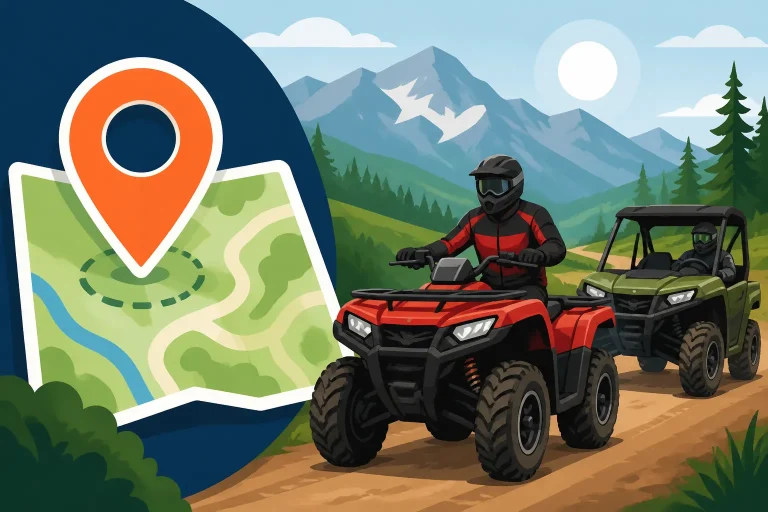
A map is a planning tool, not permission. A route line may indicate a trail without describing its current vehicle rules, and third-party maps can be outdated. Use them to orient yourself, then confirm permitted use through the responsible manager.
If the park does not allow the ride
Do not ride around a gate, use an unmarked access route or assume that a nearby road is a legal workaround. Instead, find a designated OHV riding area where your machine is allowed. Check its current trail map, closures and vehicle requirements before setting out. Alberta Bylaw Lookups Before You Ride can also help when your plan involves municipal roads or land outside a park.
For a ride that begins near a park boundary, plan the transition carefully. Identify where park rules end and where the next land manager’s rules begin. Keep to routes that are clearly open, and turn back if a sign or barrier indicates that access is restricted. If you cannot establish that the route is permitted, choose another destination.
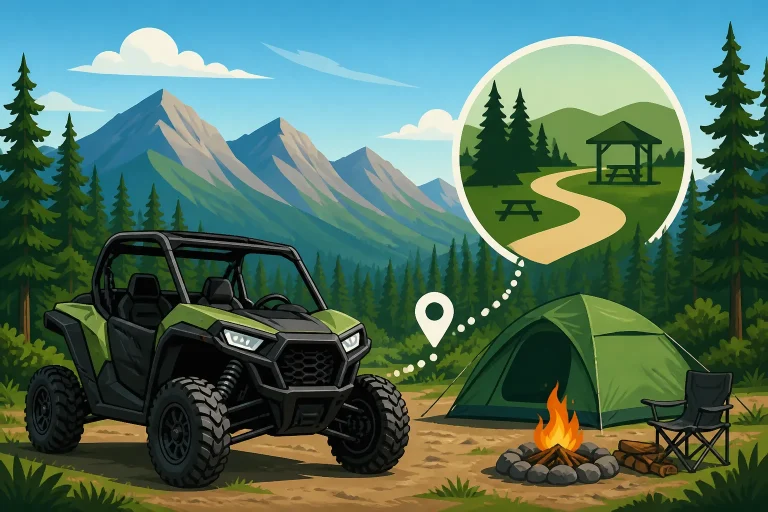
If camping is part of the trip, check camping rules separately from riding rules. A legal campsite does not grant permission to operate an OHV in the surrounding area. Likewise, a legal riding area may have different limits on where you can camp, park or leave a trailer.
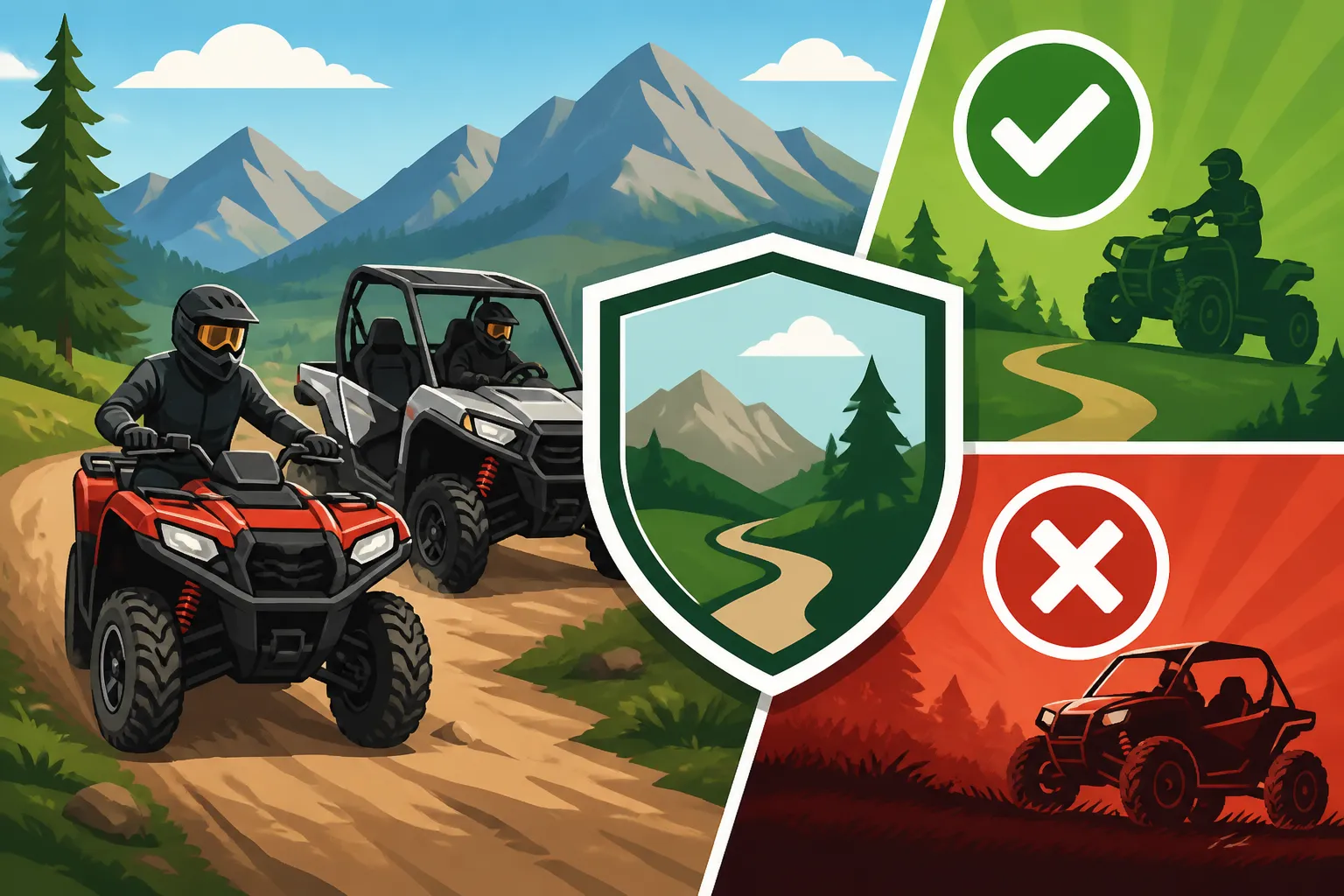
The safest planning assumption is that provincial park land is not an OHV riding area unless current site information explicitly confirms access for your machine and route. Confirm the land designation, check the route, and treat passes, registration and insurance as separate requirements rather than substitutes for permission.
Disclaimer
This article is for general informational purposes only and does not constitute professional advice. Laws, prices and regulations vary by location and change over time. Consult a qualified professional for guidance on your specific situation.