Human Waste on Public Land
A riding day can go sideways fast when the staging area has no toilet, the trail is busy, or someone in the group needs a stop far from camp. This guide explains how to handle human waste responsibly on Alberta public land, what to pack for an ATV or UTV trip, and how to avoid leaving a mess for other riders, campers, or wildlife.
Plan for toilet stops before you leave
Check what facilities are actually available
Do not assume a trailhead or staging area has a washroom just because it is marked on a map. Facilities can be limited, closed, or a long drive from the riding area. Before leaving, check the relevant land or recreation-area information and make a practical plan for both the ride and any overnight camp.
This matters around popular riding areas such as McLean Creek and the Ghost Public Land Use Zone, where busy weekends can mean more people sharing the same staging spots and trails. A toilet at a nearby campground may be useful before or after a ride, but it may not be close enough to rely on once your group is out on the trails. Look into Alberta OHV Camping and Staging Areas and the rules for your specific destination.
If you are camping, check whether you are in a developed recreation area or random camping somewhere else on public land. The facilities and expectations may differ. Alberta Random Camping Rules Explained is a useful companion when you are planning where to stay, while Alberta Camping Distance From Facilities can help you think through how far a camp should be from nearby facilities.
Choose a waste plan that fits the trip
A short day ride with an available washroom is different from a remote overnight trip. Think about the number of riders, how long you will be out, whether there are children in the group, and whether your route passes reliable facilities. A plan that works for two people on a short loop may not work for a large group spending the weekend away from a campground.
For a group outing, decide ahead of time who is carrying the toilet supplies and where those supplies will be stored. In a side-by-side, it can be easier to bring a portable toilet or a sealable waste container than to improvise after someone urgently needs one. On a quad with limited rack space, compact waste bags and a dedicated dry bag may be a more realistic option.
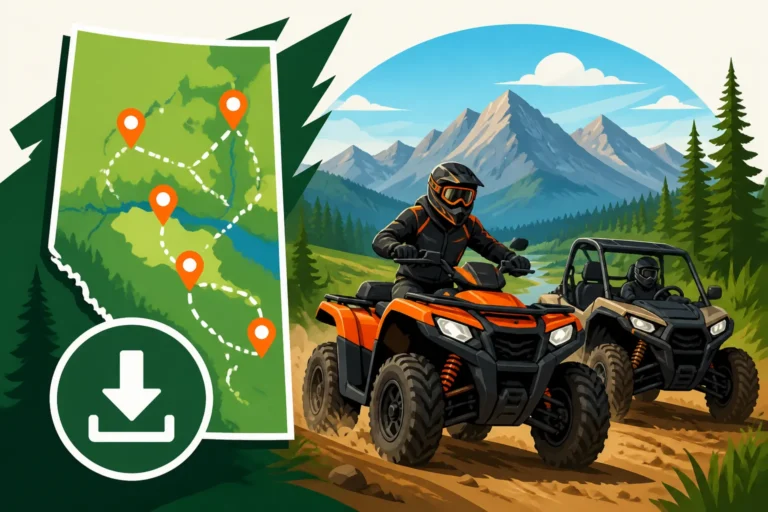
A mapping app such as onX Offroad can help you orient yourself and plan a route, but it should not be treated as proof that a washroom exists or that a particular spot is suitable for toileting. Check local information separately, and have a backup plan if a facility is unavailable. It is also sensible to download or carry the map information you need before heading into an area with unreliable reception.
Choose a low-impact method
Use an available toilet when you can
When a maintained washroom or toilet is open and accessible, use it. This is usually the simplest way to keep waste away from trails, campsites, creeks, and places where other visitors may stop. It also avoids the uncertainty of whether the ground is suitable for digging or whether the area has restrictions on waste disposal.
A nearby facility is only helpful if it is genuinely accessible during your trip. If it is outside the riding area, closed for the season, or too far away for a long ride, do not make it your only plan. Check before setting out, especially when travelling with children or a group whose needs may change during the day.
At a busy staging area, keep toilet use within the designated facility rather than using nearby brush or trees. People often walk beyond the parking lot to unload machines, eat, or gather their gear. A spot that looks private from the road may still be part of a frequently used area.
Use a portable toilet or pack-out system when needed
A portable toilet or waste-bag system is a reliable option when the terrain is rocky, wet, heavily used, or otherwise unsuitable for burying waste. It can also be the better choice for a group camp or a trip where digging would be difficult. Follow the product instructions, keep waste securely contained, and dispose of it at an appropriate facility rather than leaving it on public land.
This approach takes a little preparation, but it can prevent a stressful search for an acceptable spot. Before the ride, check that your kit has enough bags or capacity for the group and the length of the trip. Keep it separate from food, cooking equipment, and clean water. A sturdy, sealable container can help contain odours and protect other gear during transport.
A simple comparison can help you choose a method before you pack:
| Situation | Practical option | Important consideration |
|---|---|---|
| Open washroom at a staging area or campground | Use the facility | Confirm it is open and accessible |
| Short ride near reliable facilities | Plan a stop before or after riding | Do not assume facilities are on the trail |
| Remote ride or overnight camp | Portable toilet or pack-out system | Carry enough capacity and take waste out |
| Dry, suitable ground where local rules allow digging | Small cathole may be appropriate | Stay well away from water, trails, and camp |
| Wetland, snow-covered ground, rock, or heavily used area | Pack-out system | Do not dig where waste may not break down or remain contained |
Bury waste only when it is appropriate and allowed
In some backcountry settings, a small cathole is a common low-impact approach, but it is not right for every location and it is not a substitute for checking local rules. Where land conditions and rules allow it, choose a private spot away from water, camp, trails, roads, and places other visitors are likely to use. A commonly used backcountry guideline is to stay at least 60 metres from water, campsites, and trails, and to bury waste in a small hole roughly 15 to 20 centimetres deep. Treat these as practical outdoor guidelines, not as a claim that every Alberta site permits digging.
Avoid digging in wetlands, near streams or lakes, in saturated soil, on snow, or in places where shallow rock makes it difficult to cover waste properly. The same caution applies to high-use areas: a location may look secluded, but if many visitors use it, repeated digging can leave a cluster of unpleasant, exposed sites. In those situations, pack-out is the more responsible choice.
After use, cover the hole completely and leave the area looking as natural as possible. Do not bury wipes, sanitary products, packaging, or other rubbish. They do not break down like human waste and should be packed out. If you are unsure whether digging is appropriate, choose a waste-bag system instead.
Keep waste away from water, trails, and camp
Leave the trail tread intact
Do not ride off the established trail to find a toilet spot. Leaving the trail can damage vegetation and soil, create new tracks, or put you somewhere that is not open to motorized travel. Park only where permitted, then walk to a suitable location if you are using a method that requires privacy. Read Staying on the Trail Tread for more on why keeping machines on established routes matters.
Use a map to orient yourself, but do not let a screen replace a careful look at the ground and the area around you. onX Offroad may be useful as part of your navigation setup, yet the screen cannot tell you whether soil is saturated, whether a spot is close to a watercourse, or whether local restrictions rule out digging. Keep a paper backup or another navigation option if your phone battery or signal becomes a concern.
Take particular care near creeks, lakes, marshy areas, and drainage channels. Waste can be carried by runoff, especially after rain or snowmelt. If the ground is wet or water is nearby, do not gamble on finding a good place to bury waste. Keep your route and your toilet plan separate: the goal is to meet a basic need without widening the trail or disturbing a fragile area.
Pack out toilet paper and hygiene items
Toilet paper, wet wipes, tissues, menstrual products, and packaging should not be left behind. Burying or burning them is not a reliable disposal method. Wind can uncover buried items, fire may not consume them completely, and visible waste creates an unpleasant experience for the next visitor.
Carry a dedicated sealable bag or container for used hygiene items. A small opaque bag can offer privacy inside a larger dry bag, while a sturdy container can prevent leaks or odours during a long ride. Keep clean supplies separate from used items so you are not reaching into the same pouch for both.
A useful rule for the whole group is simple: if you brought it into the riding area, take it back out. That includes packaging from toilet supplies and any disposable items used along the way. Packing Out What You Bring covers the same principle for the wider range of rubbish that can accumulate on a ride.
Be considerate of other visitors and wildlife
Choose a spot that is not beside a campsite, picnic area, trail junction, or vehicle parking area. Privacy matters, but so does not placing waste where someone else is likely to walk, set up a tent, or stop to rest. If several riders need a break, avoid turning one convenient patch of brush into a repeated-use toilet area.
Keep food, toiletries, and waste contained. Wildlife can be attracted to unsecured items, and a discarded wipe or package can become litter well after your group has left. Do not leave waste bags at a staging area or beside a full garbage bin unless the disposal point is clearly intended for them. If you cannot confirm that the facility accepts the waste, carry it to an appropriate disposal location.
onX Offroad can be one tool for checking your route and staying oriented, but use it alongside local maps, posted signs, and land-use information. For public land, conditions and access can vary from one area to another. If a route or camping spot is unclear, check the local guidance rather than assuming that an open-looking area is suitable for stopping or digging.
Pack a simple toilet kit for an ATV or UTV trip
Build a kit that matches your machine
A useful kit does not need to be complicated. The important part is having the supplies before somebody needs them. For a day ride, that may mean toilet paper, hand-cleaning supplies, a sealable bag for used items, and a small amount of water or sanitizer. For a remote overnight trip, add a suitable waste-bag system or portable toilet, plus enough capacity for everyone who will rely on it.
On an ATV, keep the kit compact, waterproof, and easy to reach without unpacking the entire rack. On a UTV, store it in a dedicated container that will not be mixed up with food or recovery gear. Make sure containers are secured so they cannot fall off on rough terrain. If the kit is buried under camping equipment, it may be technically packed but not very useful when the need is urgent.
Before leaving, do a quick check: Is the kit complete? Can the group carry used items out? Is there a plan if the washroom is closed? Are children or guests clear on what to do? A short conversation in the parking area can prevent embarrassment and keep someone from making a poor last-minute choice.
Use a practical pre-ride checklist
For a day ride, use this checklist as a starting point:
- Check whether toilets are available at the staging area or campground.
- Plan an alternative for any part of the ride far from facilities.
- Pack toilet paper and hand-cleaning supplies in a waterproof pouch.
- Bring a sealable container or waste bags for used paper and hygiene products.
- For remote trips, pack a portable toilet or suitable pack-out system.
- Keep waste supplies separate from food and clean water.
- Tell the group to pack out all non-waste items and leave no used products behind.
If you are riding in an unfamiliar area, onX Offroad can help you follow your planned route, while official land information and local signs should guide decisions about access and site rules. The app is a navigation aid, not a substitute for checking whether the specific land allows camping, digging, or a particular type of waste disposal.
A good waste plan is a small part of trip preparation, but it makes a real difference on shared public land. Use facilities when available, bring a pack-out option when they are not, and keep waste far from water and other visitors. When there is any doubt about whether a spot is suitable, carry the waste out rather than leaving a problem for the next rider.
Disclaimer
This article is for general informational purposes only and does not constitute professional advice. Laws, prices and regulations vary by location and change over time. Consult a qualified professional for guidance on your specific situation.