Packing Out What You Bring
A ride through Alberta’s foothills or public-land trails can leave more behind than tire tracks if snack wrappers, broken straps, or food scraps get dropped along the way. Packing out what you bring sounds simple, but wind, mud, busy staging areas, and limited storage can make it easy to forget something. This guide explains how to plan for your waste, keep your group accountable, and leave riding areas cleaner than you found them.
What packing out means on an Alberta ride
Packing out means taking your waste and unwanted gear back with you instead of leaving it at a trailhead, campsite, rest stop, or along the route. That includes obvious garbage, such as cans and wrappers, as well as less noticeable items: zip ties, torn gloves, broken parts, wipes, and food scraps.
The principle applies whether you are riding a quad, side-by-side, or another off-highway vehicle. If you bring something into a riding area, plan to carry it out. A staging area may have waste facilities, but do not assume a remote trail, informal stopping point, or public-land campsite will have a bin.
Small items become trail litter quickly
A wrapper tucked into a jacket pocket can fall out when someone reaches for a phone. A drink can may bounce off a cargo rack on rough ground. A loose strap can snag on brush, and a tissue left beside a trail can be scattered by wind or wildlife. These are ordinary mishaps, not necessarily deliberate littering, but they still leave a mess for other riders and land users.
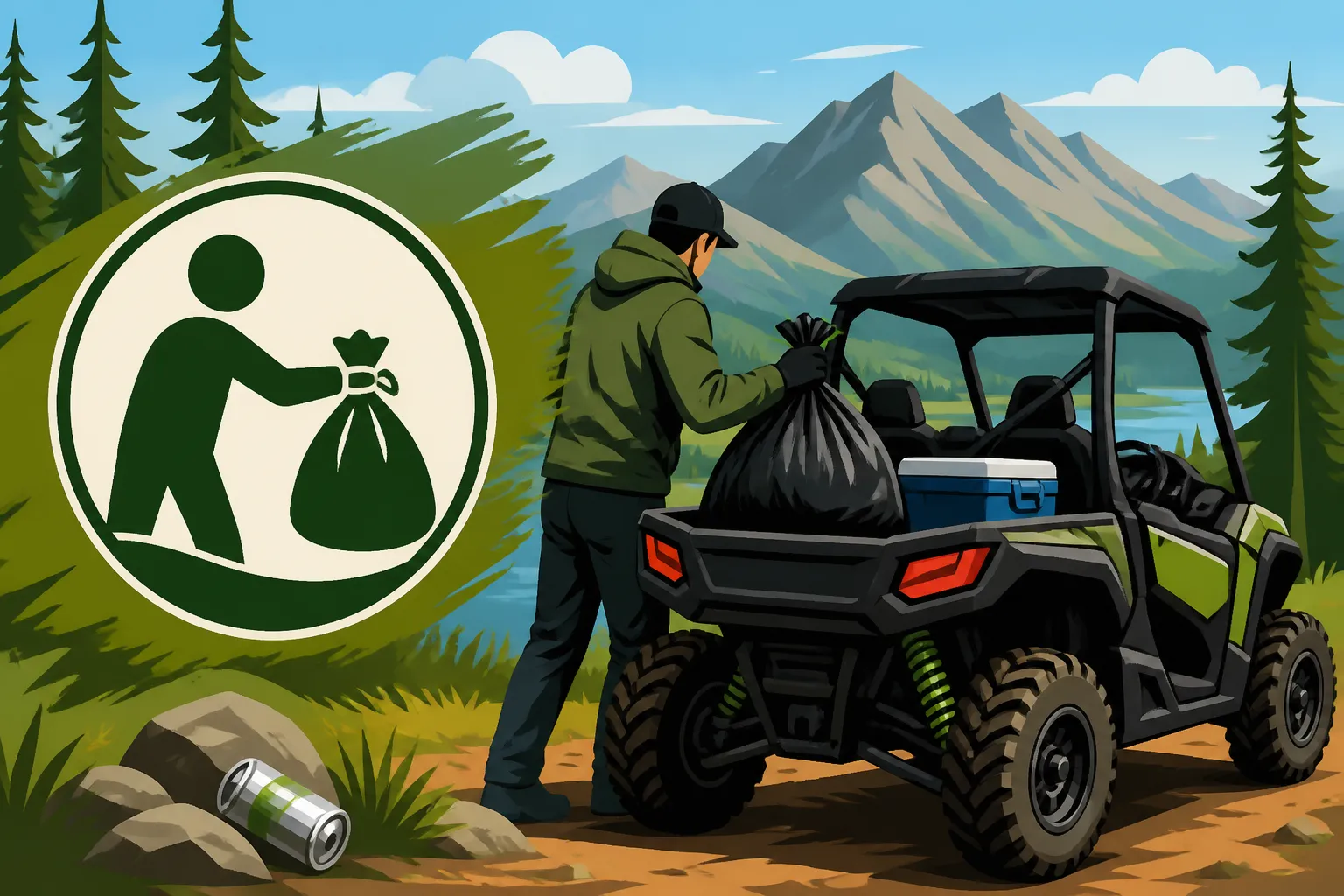
Try a quick gear check before you leave home. Make sure bags close securely, racks are not overloaded, and small items have a designated place. Keep trash in a closed pouch or container rather than wedging it between cargo. For a group ride, it helps to agree on a single rule: wrappers and loose waste go into a rider’s pack or the group’s garbage bag as soon as they are made.
If a group stops for lunch, do a short ground check before starting the machines again. Look under parked vehicles and around the spot where people sat. A dropped wrapper can blend into leaves or gravel, especially when everyone is ready to get moving.
“Biodegradable” does not mean “leave it there”
Food scraps are still litter. A banana peel or apple core may seem harmless, but it can take time to break down and may attract animals to a place where people gather. Wildlife that finds easy food around trails or camps can begin associating human activity with something to eat. Pack out peels, cores, shells, and leftovers just as you would a plastic wrapper.
The same goes for paper products and wipes. Some may be labelled biodegradable, but that does not make them appropriate to leave on a trail. Conditions vary, and a product that breaks down in one setting may linger in another. Pack it out unless the specific site provides clear instructions for disposal.
That approach is part of the wider habit described in Alberta Trail Etiquette Locals Expect: share the area thoughtfully, minimize disturbance, and leave the place in good condition for the next person.
Set up your ATV or UTV to carry waste securely
It is easier to pack out waste when you have already made room for it. Riders sometimes plan carefully for tools, fuel, food, and recovery gear, then discover there is nowhere clean and secure to put a muddy wrapper or leaking food container. A little preparation avoids that awkward choice between carrying a mess and leaving it behind.
| Waste or item | Practical way to carry it | Helpful habit |
|---|---|---|
| Dry wrappers and cans | Reusable, sealable garbage bag or lidded container | Put waste away as soon as it is made |
| Food scraps | Separate sealed bag or container | Keep food waste away from wildlife and clean gear |
| Muddy or wet items | Durable bag that can be rinsed later | Separate wet waste from clothing and supplies |
| Broken parts or sharp pieces | Sturdy container or secured cargo space | Check that sharp edges cannot cut a bag or injure someone |
| Used wipes or tissues | Small opaque, sealable bag | Keep it closed and pack it out |
| Reusable bottles and food containers | Secure rack, bag, or passenger-compartment storage | Count them during the end-of-ride check |
Choose storage that suits the machine
On an ATV, a small lidded container or durable bag can keep waste from blowing away. On a side-by-side, a dedicated compartment or secured bin may be more practical, especially with several passengers. The right setup depends on the vehicle and the trail: a bag that works on a smooth road may tear or shift on a rough, muddy route.
Avoid leaving loose garbage in an open cargo bed or on top of a rack. Wind and vibration can move light items even when they look secure at the start. If you use a reusable bag, close it fully and secure it so it cannot catch on branches or interfere with the vehicle.
Keep waste separate from clean food, clothing, first-aid supplies, and recovery equipment. If a bag leaks or a container opens, separation limits the cleanup. It also means you are less likely to decide a dirty item is too inconvenient to bring home.
Plan for the ride you are actually taking
A short outing near a serviced staging area calls for a different waste plan than a full day on a remote route. Before setting out, consider the size of your group, how many meals and snacks you are carrying, whether the ride includes camping, and how much storage space is available. A family group may create more packaging than a solo rider, while a longer ride can produce wet or muddy waste that needs stronger containment.
If you use onX Offroad to help plan a route, check your intended area before leaving and save the information you need for offline use where available. Map tools can support trip planning, but they do not replace checking official land-use information for access rules, closures, and local conditions. If coverage is limited, do not rely on being able to look up a disposal option once you are already on the trail.
A useful pre-ride check is to point out where waste will go before the group starts. For example: “Food wrappers go in the passenger-side container; anything wet goes in the sealed bag.” A simple shared plan prevents every rider from assuming someone else is carrying the garbage.
Manage waste at stops, camps, and remote sites
Most waste problems happen when people are tired, distracted, or in a hurry to leave. A planned routine makes the final check feel like part of the ride rather than an extra chore. It also helps when the group has stopped at several places and no one remembers exactly where a small item may have been dropped.
Use a stop-by-stop cleanup routine
At each break, collect the group’s waste before restarting. Ask passengers to check their own seating area, then scan the ground around the machines. Look for small items, including bottle caps, food packaging, broken zip ties, and pieces of tape. A quick check is easier than retracing a route later.
Before leaving a lunch spot or informal stopping area, assign one person to do a final sweep while another checks the machines. On a family ride, make the cleanup part of the routine for everyone who is old enough to help. Kids can look for visible wrappers while an adult checks the vehicle and confirms that bags are closed.
When you return to a staging area, use the disposal facilities provided there if available, and follow posted instructions. Keep the area tidy while unloading too. Packaging can blow out of a truck bed or trailer just as easily as it can off an ATV, so secure waste during the drive home.
Camping requires extra care
A campsite can generate food packaging, cans, cooking waste, and personal-care items in addition to ordinary trail litter. Store food and garbage securely rather than leaving either out overnight. Animals may be attracted to scraps or odours, and scattered waste can turn a pleasant site into a cleanup job for someone else.
If you are camping on public land, check the rules that apply to the location and the type of camping you plan to do. [Alberta Random Camping Rules] can help you understand why it is important to know where camping is permitted and what limits apply. Waste planning is one part of that preparation; it does not replace checking the rules for access, site use, and duration.
Human waste needs separate thought from ordinary garbage. Do not assume that burying or leaving wipes, toilet paper, or hygiene products is acceptable. Check the site’s instructions and prepare a suitable method before travelling. For more on this issue, see Human Waste on Public Land.
Leave the site cleaner than you found it
If you notice litter left by someone else, you can remove it if it is safe to handle and you have a way to carry it out. Do not pick up sharp, hazardous, or unknown material with bare hands. The goal is to help without putting yourself at risk or creating a bigger problem.
Some riders carry a spare bag specifically for a small amount of litter they find at a stop. That can be a practical way to improve a busy area without turning the ride into a large cleanup operation. Secure the bag properly and take it to an appropriate disposal point afterward.
The habit is captured in Leaving a Site Cleaner Than You Found It. It is not about taking responsibility for every problem in a riding area. It is about avoiding preventable mess and making a reasonable effort when a small cleanup is safe and manageable.
Prepare for the area before you ride
A good waste plan starts before the machines leave the trailer. Alberta riding areas differ in access, facilities, closures, and conditions. A route that looks close to a town on a screen may still take a long time to reach, and a familiar staging area may not have the services you expect on the day you arrive.
Check the land-use information and route
Use the relevant land-use information to confirm where you can ride and whether the route or area has restrictions. Alberta’s Public Land Use Zones Explained is a useful starting point for understanding why identifying the correct zone matters. Do not assume that a visible track is open simply because it appears on a map or has tire marks.
Map information can help with orientation, but it may not reflect every temporary closure or on-the-ground change. Check official information before the trip and be ready to adjust your plan. If you use onX Offroad, treat it as a navigation aid rather than the final authority on whether a trail is open. Downloading relevant map information in advance can be useful where cell service is unreliable, but it does not remove the need to check access rules.
It can also help to review Alberta Trail Closures After a Storm before a trip in changing conditions. If a route is closed or damaged, respect the closure rather than riding around a barrier. Detours can cause additional damage and may take riders into areas where they are not permitted.
Build a simple packing-out checklist
A checklist is especially useful when several people share one vehicle or when a ride includes children, guests, or multiple machines. Keep it short enough to use, and assign responsibility rather than leaving the whole group to “remember.”
Before leaving, confirm that you have:
- A secure bag or container for dry garbage.
- A separate option for wet or food waste.
- Enough cargo space for waste from the whole ride.
- A plan for carrying sharp or broken items safely.
- A way to check for loose items at every stop.
- A final cleanup routine for the staging area or campsite.
Before heading home, check the vehicle, the ground around it, and any place where the group stopped. If you used a digital map, including onX Offroad, review the route for your own navigation and note any access information you need to verify before your next visit. For broader planning, Alberta OHV Trail Map Downloads can help you prepare for a ride, while Checking a Zone Before You Go reinforces the value of checking the area itself rather than relying on memory.
Packing out what you bring is a small responsibility that makes a noticeable difference over time. Secure the waste before it can blow away, collect it as you go, and do a final sweep before leaving. Those habits help keep Alberta’s riding areas more welcoming for riders, campers, wildlife, and everyone who comes after you.
Disclaimer
This article is for general informational purposes only and does not constitute professional advice. Laws, prices and regulations vary by location and change over time. Consult a qualified professional for guidance on your specific situation.