Alberta Staging Areas With Trailer Parking
Finding an Alberta OHV staging area with room for a truck and trailer can be harder than choosing a trail. A lot may look spacious on a map but feel tight when it’s busy, muddy, or shared with other users. This guide explains how to find suitable staging, assess access and parking, and plan a less stressful arrival.
What to check before choosing an Alberta staging area
Confirm that staging and trailer parking are actually allowed
A staging area is a place to unload, prepare your machine, and begin a ride. It does not automatically follow that every nearby pullout, road shoulder, or open patch of ground is approved for parking. Land access, vehicle restrictions, seasonal closures, and local rules can vary by riding area. Check the official information for the specific zone or trail system before heading out.
Look for clear details about the staging location, parking conditions, and permitted vehicles. If a map shows a road or a broad clearing, treat that as a clue rather than proof that you can park a truck and trailer there. A route that looks straightforward on a screen may lead to a narrow access road, a small lot, or a spot where turning around with a long trailer is awkward.
For public-land rides, start with [Alberta OHV Camping and Staging Areas] and [Checking a Zone Before You Go]. These are useful reminders that access depends on the location, not simply on whether a trail appears on a map. A local land manager or relevant county office may also be able to clarify what applies to a particular access point.
Judge the parking space as a truck-and-trailer setup
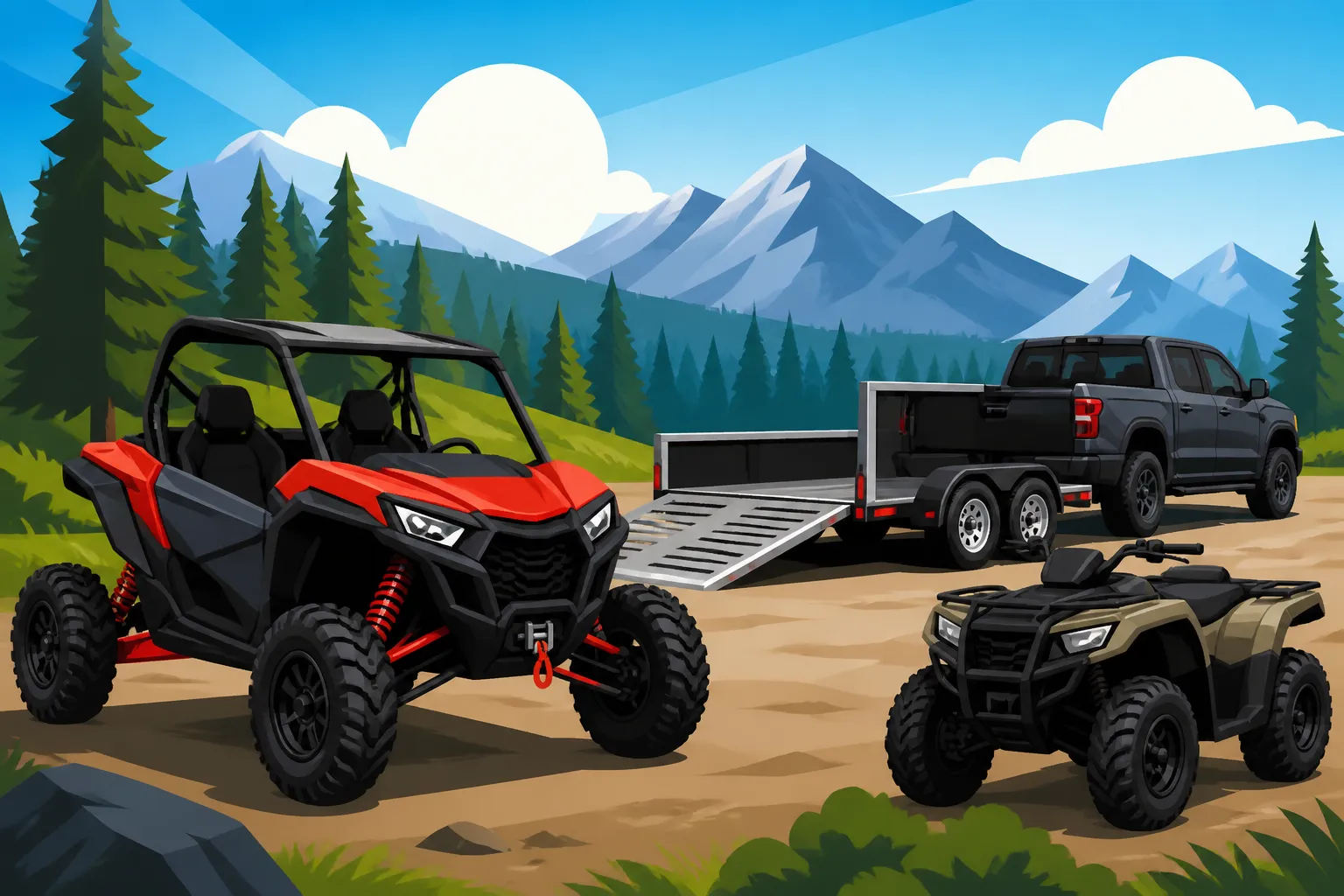
A parking space that fits a pickup may not work for a pickup towing a long trailer. Think through the whole manoeuvre: entering, turning, unloading, parking, and leaving. If you need to back into a tight spot beside other vehicles, a busy staging lot can become stressful quickly, especially if you are new to towing or arrive with a group.
Before leaving home, consider your trailer’s length, the tow vehicle’s turning radius, and whether you will need to make a U-turn. Check whether there is room to unload without blocking traffic or taking up space another rider needs. If the access road is narrow, steep, or rough, decide in advance whether the trailer and tow vehicle are suited to it.
The guide [Where to Park a Long Trailer] is a helpful companion when you are weighing a tight lot against a larger, more practical staging area. When in doubt, choose a clearly designated location with enough room for your full setup rather than relying on an informal roadside space.
Alberta riding areas to investigate for staging
McLean Creek and Fisher East
McLean Creek is a well-known OHV destination west of Calgary, and its established access points make it a natural place for riders to investigate when planning a foothills trip. Fisher East is one staging location associated with the area. Before setting out, check the latest information for the access point you plan to use, including road conditions, restrictions, and whether the parking area suits your trailer.
Arriving early can make a real difference on a popular riding day. A lot that seems roomy during a quiet weekday visit may fill up on a weekend or during favourable weather. If you are meeting friends, agree on a backup plan before anyone starts towing toward the area. That can be as simple as choosing a second approved access point or deciding what to do if the first lot is full.
For area-specific planning, see [McLean Creek: Alberta's Best Known OHV Area] and [Staging at Fisher East in Alberta]. Treat mapped details as part of your preparation, not a guarantee of space. An app such as onX Offroad can help you review routes and orient yourself, but compare any map information with official access and closure notices before you travel.
Iron Horse Trail and community access points
The Iron Horse Trail follows a former rail corridor through northeastern Alberta, with access near communities such as Smoky Lake. Its character differs from a foothills staging area: rather than planning around a single trailhead, you may be considering where to start and finish along an extended route. Confirm the rules for your chosen section and identify a suitable place to park before you unload.
A community access point can be convenient, but convenience does not guarantee space for a large trailer. Check whether parking is designated, whether the approach is suitable for your vehicle, and whether there are restrictions on leaving a truck and trailer for the duration of your ride. If your plan involves travelling one way and arranging a pickup elsewhere, make those arrangements before arriving.
The overview [Alberta's Iron Horse Trail] can help you understand the route, while [Alberta Trail Maps Worth Downloading] offers a useful starting point for map preparation. Use onX Offroad or another mapping tool to compare your planned approach with the official information, and download maps in advance if you expect limited cell service.
How to compare potential staging areas
The best staging area is not always the closest one. A slightly longer drive to a broad, appropriate lot may be easier than trying to squeeze into a small pullout near the trail. Compare locations by access, parking layout, trailer manoeuvring room, ride suitability, and the availability of current local information.
| What to compare | Why it matters | What to look for |
|---|---|---|
| Permission and access | A visible clearing may not be an approved staging area | Official maps, signage, or land-manager guidance |
| Parking capacity | A small lot can fill quickly on busy days | A designated area with room for vehicles and trailers |
| Turning space | Reversing a long trailer can be difficult in a crowded lot | A layout that allows safe entry and exit |
| Road approach | Rough or narrow access can be challenging while towing | Road conditions and restrictions for the route in |
| Trail suitability | A convenient lot may not connect to a ride that fits your group | Current trail maps, difficulty information, and closures |
| Backup option | Plans can change if a lot is full or access is restricted | Another approved staging location identified in advance |
A mapping app such as onX Offroad can help with route awareness and offline preparation, but it should not be the final word on whether an area is open or suitable for parking. Use it alongside official maps and local notices.
Plan your arrival and departure around the trailer
Arrive with a parking plan
Before the trip, decide which staging area you are aiming for and where you will go if it is full. Check the access route with your actual vehicle and trailer in mind. A short, narrow approach may be easy in a car but uncomfortable when towing, particularly if there is oncoming traffic or limited room to pull aside.
If you are travelling with a group, decide how everyone will meet. Multiple trucks arriving at once can take up a surprising amount of space, and a group that spreads across the lot may block other riders from unloading. Set a meeting point that does not depend on occupying extra parking spaces, and ask everyone to keep loading and unloading efficient.
Timing matters, too. Reaching the staging area early can give you more choice and less pressure to manoeuvre while others wait. The advice in [Arriving Early When the Staging Lot Fills Up] is especially relevant on weekends and during popular riding periods. If you arrive and the approved parking is full, do not assume that a nearby shoulder or closed access road is an acceptable overflow lot.
Make room for other riders and users
Staging areas are shared spaces. Park within the intended area, leave room for other trucks to enter and exit, and avoid blocking access routes, signs, gates, or trail entrances. Unload where it is safe and practical, then move the tow vehicle and trailer into an appropriate parking position instead of leaving them in a high-traffic unloading area.
Be considerate when securing gear, warming up machines, or gathering a group. A trailer ramp can take up considerable room, and a line of machines waiting to unload may create congestion. If someone is trying to back into a space, give them time and space rather than crowding their turn.
Before leaving, check that your trailer is properly connected, lights and tie-downs are secure, and the lot is clear of gear or rubbish. A tidy departure helps keep the area welcoming and avoids leaving loose straps, packaging, or other items behind.
A practical checklist for trailer-friendly staging
Before you leave home
Use a short checklist so that the parking question does not become a last-minute scramble:
- Identify an approved staging area and confirm the access route.
- Check current restrictions, closures, and road conditions for the riding zone.
- Estimate whether the lot can accommodate your tow vehicle and trailer.
- Pick a backup location that is also suitable and permitted.
- Download maps or save key details in case cell coverage is unreliable.
- Share the meeting plan with everyone in your group.
- Confirm that the trailer, tie-downs, lights, and tow vehicle are ready for the trip.
For trail planning, [Alberta Trail Difficulty Ratings] can help you choose a ride that matches your group’s experience and machine. That matters because a staging area is only useful if it gets you to trails that suit the people riding.
If the lot is crowded or access has changed
A full staging area is frustrating, especially after a long tow, but improvising can create bigger problems. Do not block a gate, park on a narrow road, or use a nearby clearing unless it is clearly designated for parking. If the area is unexpectedly busy, turn around only where it is safe and use the backup plan you chose beforehand.
Access can also change because of weather, trail damage, seasonal restrictions, or other land-management decisions. Check notices shortly before departure and again when practical during trip planning. [Alberta Trail Closures After a Storm] is a useful reminder to treat conditions as part of the plan rather than assuming a route will remain unchanged.
If you are unsure whether a particular space is appropriate for a truck and trailer, ask the relevant land manager or local authority before relying on it. A little checking ahead of time is much easier than trying to reverse a long trailer out of a crowded or unsuitable spot.
Disclaimer
This article is for general informational purposes only and does not constitute professional advice. Laws, prices and regulations vary by location and change over time. Consult a qualified professional for guidance on your specific situation.