Alberta Riding With a Group of Ten
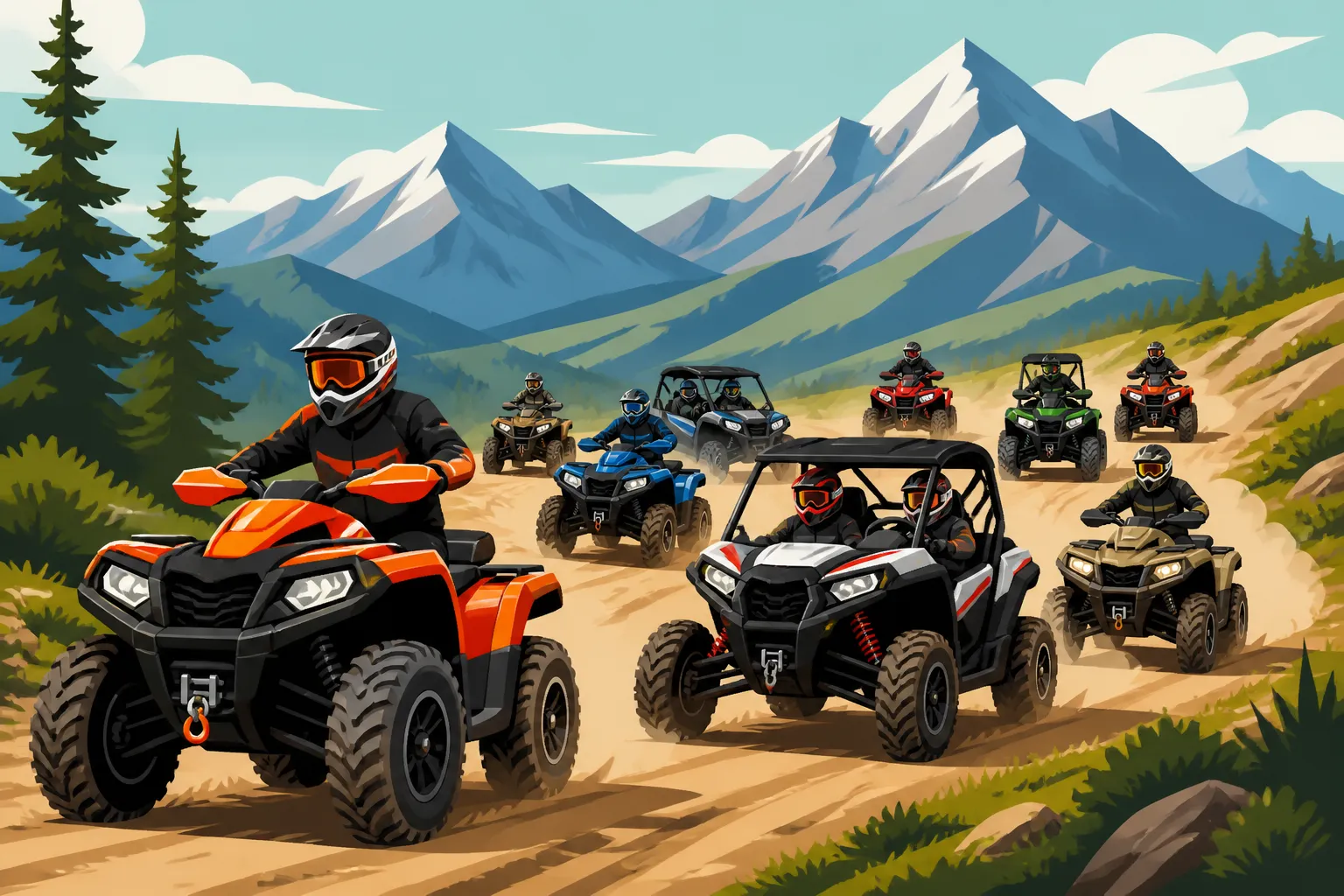
A ten-machine ride can feel like a great day out until the staging area is crowded, riders lose sight of one another, or someone assumes every trail allows a group that size. This guide explains how to plan an Alberta ATV or UTV ride for ten people, check local access rules, organize the convoy, and reduce the chances of stranding a rider or damaging a trail.
Check whether the riding area suits a group of ten
Look up the rules for the exact zone
Alberta does not have one simple rule that makes every public riding area equally suitable for a group of ten. Access can depend on the land designation, local restrictions, trail closures, vehicle type, and whether the ride is recreational, organized, or guided. A route that looks open on a map may still have restrictions that affect where you can ride or how you can reach the trail.
Check the rules for the specific area before you load up. Alberta’s public land use zones can have different trail designations and seasonal conditions, so start with [Checking a Zone Before You Go]. Confirm that the routes you plan to use are open to your type of machine, and look for notices about closures, active work, fire restrictions, or access changes.
If you are considering a well-known area such as McLean Creek or the Ghost Public Land Use Zone, do not treat its popularity as proof that every route is open or appropriate for a large convoy. Review the local guidance, then choose a route that matches your riders’ experience and machines. [Alberta OHV Trails: Riding Public Land] and [Alberta's Public Land Use Zones Explained] are useful starting points for understanding how public-land access works.
Distinguish a casual ride from an organized event
Ten friends riding together for a day is not automatically the same thing as a public event, commercial tour, or guided ride. But if you are advertising the ride, collecting money, guiding clients, setting up a large gathering, or using a public area in a way that may require authorization, check whether a permit or other approval applies. Do not assume that calling something a “group ride” settles the question.
When in doubt, ask the relevant land manager or local authority what applies to your plan. Be ready to explain where you expect to ride, how many machines are involved, whether the ride is open to the public, and whether anyone is being paid. For more on the distinction, see [Alberta Permits for an Event or a Guided Trip].
Also check for local restrictions that are easy to overlook. A riding area may have designated trails, limited staging space, or rules about where vehicles can be parked. If you are planning a busy weekend, factor in other riders and leave room for trucks, trailers, emergency access, and people trying to unload safely.
Choose a route and stage the group carefully
Match the route to the least experienced rider
With ten people, the group’s abilities may vary more than you expect. One rider might be comfortable with steep, rocky climbs while another is still learning how to handle mud, ruts, or a tight turn on a narrow trail. Choose a route that the least experienced person can manage, rather than setting a pace that forces them to take risks or fall far behind.
Talk through the route before you leave. Describe the roughest sections, likely water or mud crossings, and any places where the group will need to stop or turn around. A loop that looks short on a map can feel demanding if it includes difficult terrain, repeated obstacles, or little room to pull over. Reviewing [Alberta Trail Difficulty Ratings] can help you make a more realistic choice.
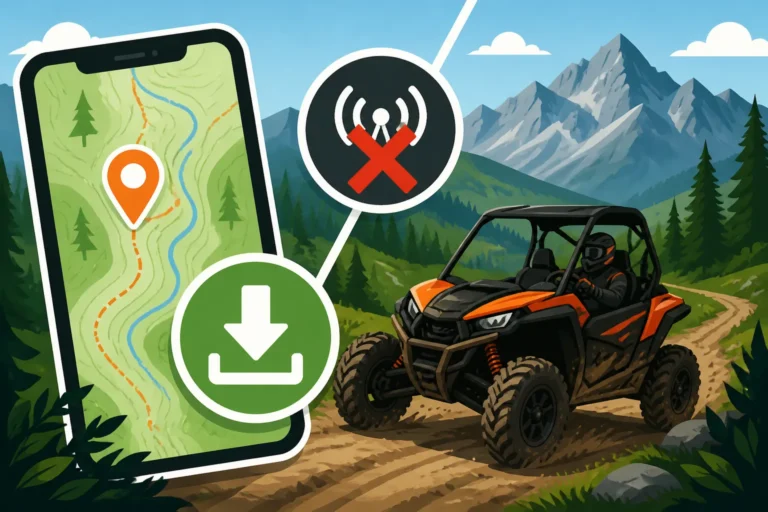
Map tools can support planning, but they are not a substitute for local rules or signs on the ground. A navigation app such as onX Offroad can help riders review a route and identify where they expect to go. Confirm access and closures separately, and download or save the information you will need before leaving cell coverage.
Plan for parking, unloading, and regrouping
Ten machines take up space. Before the ride, check whether your chosen staging area can reasonably accommodate the group’s trucks and trailers, especially if you are going during a popular riding period. Agree on a meeting time and a parking plan so the first arrivals do not block access while waiting for the rest.
Do not assume a staging lot will have enough room just because it appears large online. At a busy site such as Fisher East, a group that arrives together may need to be considerate of other users and keep a clear path for vehicles entering or leaving. If the lot is full, avoid parking in a way that blocks access or pushes trailers onto unsuitable ground. [Alberta Staging Areas With Trailer Parking] can help you think through the practical side of choosing a launch point.
Set a regrouping point before you leave the parking area. That might be a signed junction, a broad pullout, or another safe place where machines can stop without blocking the trail. A shared route in onX Offroad can help everyone understand the planned direction, but make sure riders know what to do if the group is separated or the route changes.
| Planning question | Why it matters for ten riders | Practical approach |
|---|---|---|
| Is the route open to our machines? | Trail access can vary by area, route, or season. | Check the local rules and closure information before loading. |
| Can everyone manage the terrain? | A single difficult section can split the convoy or put a rider at risk. | Choose a route for the least experienced rider and agree on a turnaround point. |
| Is there room to stage? | Ten machines plus trucks and trailers can crowd a busy lot. | Set a meeting plan and leave access lanes clear. |
| What happens if someone falls behind? | Riders can lose contact in wooded or rolling terrain. | Use a lead and sweep rider, with planned regrouping stops. |
| Does the ride need special authorization? | An event or paid outing may be treated differently from a casual ride. | Ask the relevant authority if the activity is organized, advertised, or commercial. |
Keep ten machines moving as one group
Assign a lead, a sweep, and clear roles
A large group benefits from simple roles. The lead rider knows the planned route and sets a pace that fits the group. The sweep rider stays behind everyone else and checks that nobody has been left behind. Choose people who are comfortable taking responsibility, rather than assuming the fastest rider should lead.
Before setting off, agree on what riders should do if they cannot keep up or need to stop. They should move to a safe spot where possible, alert the group using the agreed method, and avoid riding off alone to catch up. The sweep rider should know when the group has stopped and when it is safe to continue. These expectations are especially helpful where the trail is narrow or visibility is limited.
Agree on simple signals and communication before starting. If the group uses radios, confirm that everyone knows the channel and how to call for a stop or assistance. If not, plan more frequent visual checks and choose regrouping points that are easy to recognize. A route shared through onX Offroad may help with orientation, but it cannot ensure that every rider has a signal or is looking at a screen.
Use spacing and regrouping stops rather than a tight pack
Riding bumper-to-bumper makes it harder to react to dust, sudden stops, loose rocks, or a rider who slows down. Leave enough space to see the trail and respond safely. The right spacing depends on visibility, speed, terrain, and conditions; stretch the convoy out where visibility allows, but make sure riders can still keep track of the person ahead.
Avoid letting the group become so spread out that the front riders disappear around multiple turns before the last riders reach the first one. Regroup at planned locations, such as larger junctions or safe pullouts, rather than stopping in the middle of a narrow trail. On a dusty or busy route, wait until the last machine has caught up before continuing into another section.
Build in breaks before someone is exhausted, thirsty, or frustrated. A ten-person group may take longer to get moving again than a small party because riders need time to park, check gear, and communicate. Give the group a realistic schedule, and avoid pressuring slower riders to rush through terrain just to make up time. For further planning ideas, see [Alberta Group Ride Planning].
Prepare for breakdowns, changing conditions, and trail etiquette
Make a realistic backup plan
A group of ten may be more likely to encounter a minor issue simply because there are more machines and riders involved. A flat tire, loose part, overheated engine, or rider who feels unwell can change the day’s plan. Before leaving, make sure the group knows who carries basic tools, first aid supplies, water, and any equipment needed for the machines being ridden.
Check fuel range and make sure riders understand the planned distance between stops. Do not plan around the machine with the longest range if another rider may run short sooner. If someone has a mechanical problem, decide in advance whether the group will stop together, send a pair of riders for assistance, or use another agreed plan. Avoid leaving one person alone on the trail.
Conditions can change after you arrive. Rain may make a route harder, smoke or fire restrictions may affect access, and a closure may make your planned route unsuitable. Check conditions shortly before the ride and be willing to shorten or change the plan. [Alberta Trail Closures After a Storm] and [Alberta Fire Bans and Riding] cover two situations that can affect a day’s route.
Keep the ride considerate for other trail users
A ten-machine convoy can create more dust and noise than a couple of machines, so take extra care when approaching other riders, hikers, or nearby properties. Slow down where visibility is poor, give people room, and avoid revving or gathering in a way that blocks access. If the group stops, pull off only where it is safe and appropriate.
Stay on designated routes and avoid widening a trail to get around mud or an obstacle. Riding around a wet patch can damage vegetation and create a broader, harder-to-repair track. The same applies to shortcuts across open ground: a route that looks easier for one machine can become a damaged line when ten follow it. Review [Staying on the Trail Tread] before choosing how to handle difficult trail conditions.
Before departure, make sure each rider understands the ride plan, local access expectations, and what to do if separated. Share the route and regrouping points, but keep the group flexible enough to turn around when conditions or rider ability call for it. A well-planned ride is not the one that covers the most ground; it is the one where everyone gets back safely without leaving a mess for the next group.
Disclaimer
This article is for general informational purposes only and does not constitute professional advice. Laws, prices and regulations vary by location and change over time. Consult a qualified professional for guidance on your specific situation.