Staging at Fisher East in Alberta
Fisher East is a useful place to unload and begin an ATV or UTV ride in Alberta’s McLean Creek area, but arriving prepared matters: trail access, conditions, permitted routes and on-site services can vary. This guide explains how to plan a Fisher East ride, what to check before you leave, and how to avoid common staging-area and trail-day headaches.
What to know about Fisher East staging area
Where Fisher East fits into a McLean Creek ride
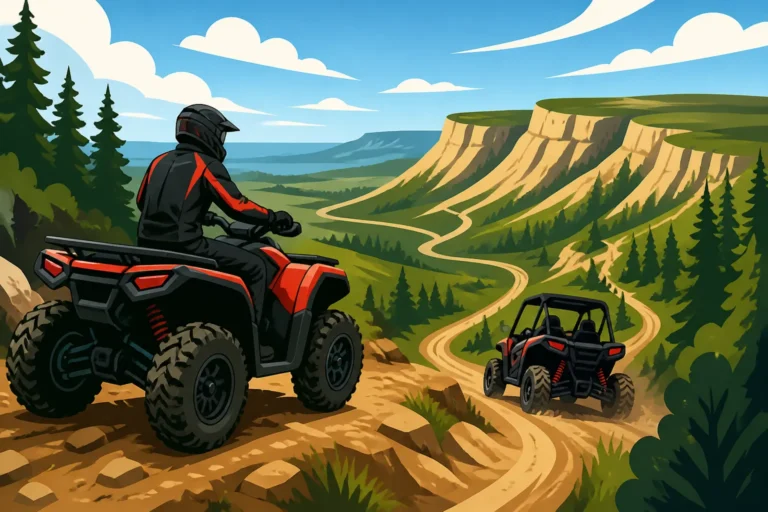
Fisher East is a staging area associated with the McLean Creek riding area, west of Calgary. Riders use staging areas to park a tow vehicle and trailer, unload machines, check gear and set off toward the designated riding network. If you are new to the area, think of Fisher East as a starting point for a planned ride, not as a guarantee that every nearby road or track is open to OHVs.
McLean Creek is a popular destination, so the experience can feel very different depending on when you arrive. On a busy weekend, several groups may be unloading at once, trailers may need careful manoeuvring, and a quiet-looking trailhead can quickly fill with machines. Arriving with your gear organized and your route picked out makes the first half-hour calmer for everyone.
The riding area is often discussed in terms of its size and network, but those broad descriptions should not replace checking the actual route you intend to ride. [McLean Creek: Alberta's Best Known OHV Area] offers wider context, while [McLean Creek's 100 Kilometres of Alberta Trail] helps explain why a simple outing can become a longer ride than expected. A trail total does not mean every route is suitable for every machine or open in every season.
What to expect at the staging area
Treat Fisher East as a staging location, not a full-service visitor centre. Facilities, garbage options, washrooms, cell reception and parking conditions can change or may not be available when you need them. Bring drinking water, food, basic tools, a first-aid kit and a plan for packing out your rubbish. If you rely on a service such as a washroom or a place to refill water, confirm it before leaving home rather than assuming it will be there.
Give yourself room to unload and load safely. Keep your truck and trailer positioned so other users can pass, and avoid blocking access points or turning areas. Before you start the machine, do a quick walk-around: check that straps are clear, the ramp is secure, loose gear is put away and your group understands where it will gather after unloading. A few minutes of orderliness can prevent a rushed departure or a trailer-side mishap.
It also helps to agree on a return plan before anyone rides off. Choose a time to check in, identify what the group should do if someone becomes separated, and make sure every rider knows the staging area’s name. If people in your group are using separate navigation apps, such as onX Offroad, compare the route and meeting point together rather than assuming everyone’s screen shows the same thing.
Planning a route from Fisher East
Match the ride to your machine and group
A good McLean Creek ride is not necessarily the longest one. Consider the least experienced rider, the smallest or least capable machine, your fuel range and the amount of time you have before dark. A family outing with a first-time rider may call for a short out-and-back on a suitable designated route. A group of experienced riders may be comfortable planning a longer loop, but should still allow time for changing conditions and unexpected stops.
Machine size matters too. A route that looks manageable on a small quad may feel different in a wider or longer side-by-side. Check the route guidance for vehicle restrictions, width limits or other designations before setting out. Do not assume a track is appropriate simply because it appears on an app or because another group has driven it. [Alberta Trails That Allow Side-by-Sides] is a useful starting point when your group includes UTVs.
Be realistic about your group’s pace. Riders often underestimate the time it takes to regroup, navigate junctions, help with a minor mechanical issue or stop for a break. A planned route should leave enough daylight for the slowest rider to return without rushing. If your group is divided on how far to go, choose the shorter option and leave a more ambitious ride for another day.
Check maps, closures and conditions
Look at current official trail and public-land information before driving out, then check it again close to your departure. Weather, seasonal restrictions, maintenance work, fire conditions and temporary closures can affect access. A map saved weeks ago may not show a new closure, and a trail that was passable on a dry visit may be rough, muddy or damaged after rain.
Download or save your route information before you lose reliable cell service. A paper backup or a map saved offline can be valuable if your phone battery runs low or reception drops. onX Offroad can help with route planning and location awareness, but use it as a navigation aid—not as the final authority on whether a route is legally open. Compare app information with official Alberta maps and signs on the ground. [Alberta OHV Trail Map Downloads] and [Checking a Zone Before You Go] are helpful places to start that process.
Pay particular attention to closures and trail designations at junctions. If signs on site conflict with an old screenshot or a planned GPS track, do not ride past the sign on the assumption that the digital route is right. [Alberta Trail Closures After a Storm] is relevant when recent weather may have changed conditions. For a broader look at riding-area etiquette, [Alberta OHV Trails: Riding Public Land] explains why respecting designated routes matters.
| Before you leave | What to check | Why it matters |
|---|---|---|
| Route | Designated trails, vehicle suitability and closures | A visible track is not automatically an authorized route |
| Weather | Recent rain, snow, wind or fire restrictions | Conditions can change quickly and affect access |
| Navigation | Downloaded map, charged phone and backup plan | Reception may be unreliable away from town |
| Machine | Fuel, tires, lights, brakes and basic tools | Small problems are harder to solve far from the staging area |
| Group | Meeting point, return time and separation plan | Helps prevent confusion if riders become spread out |
| Tow vehicle | Parking, trailer setup and return access | Makes unloading and departure safer and easier |
Getting ready for the trail
Prepare the machine and your riding gear
Before loading up, check the basics that are easiest to overlook at home: tire condition and pressure, fuel, brakes, throttle operation, steering, lights and any loose parts. Carry tools that match your machine and know how to use them. A compact repair kit, tire-repair supplies and a means of getting a disabled machine back to the staging area can make a big difference when a small issue appears far from the trailer.
Wear protective gear appropriate to the machine, weather and route. A helmet that fits properly, eye protection, gloves, sturdy footwear and layers for changing temperatures are practical essentials. Mountain and foothills weather can feel different from the forecast in Calgary or Bragg Creek, especially if you ride into shaded or exposed areas. Pack rain protection and an extra warm layer even when the morning starts sunny.
Make sure your group is familiar with each machine’s controls and passenger limits. A new rider should not be pressured into keeping up with a faster group. Agree on a pace that gives everyone time to react to ruts, rocks, dust and other trail users. If a rider is uncomfortable, stopping to reassess is smarter than turning a manageable outing into a recovery problem.
Bring the paperwork and follow public-land requirements
Do not leave registration and insurance questions until you reach the staging area. Check that your machine is properly registered for the riding you plan to do and that you can produce the required documents. Rules can depend on where you ride and the machine’s circumstances, so confirm the requirements that apply to your situation. [Alberta Registration Before Riding Crown Land] and [Alberta Requires Insurance on Public Land] cover two important parts of that preparation.
Keep essential paperwork accessible, whether you carry it securely or have a practical way to show it when asked. Make sure the information matches the machine and that your insurance coverage applies to your intended use. Do not rely on a photo of a document unless you have confirmed that it will be accepted for the purpose you need. [What to Show an Officer on Alberta Public Land] is a useful reminder of the kinds of checks riders should be prepared for.
Public-land riding also means paying attention to equipment and conduct, not just papers. Check applicable rules for items such as lighting and spark arrestors, and keep your machine in good working order. [Alberta Equipment Required on Public Land] provides more detail. Leave gates as you find them, give other users room, and stay on the designated trail tread. For everyday habits that make a shared area safer, see [Alberta Trail Etiquette Locals Expect] and [Staying on the Trail Tread].
Choosing the right time and riding responsibly
Make seasonal conditions part of your plan
The best time to ride depends on more than personal preference. Spring thaw can leave trails soft and vulnerable to damage. Riding through deep mud can widen ruts, damage trail surfaces and make access harder for other users. If a route is saturated or an area is closed, turn around rather than trying to push through. Waiting for better conditions can protect the trails and save your machine from unnecessary wear.
Summer can bring busy staging areas, dusty stretches and changing fire conditions. Check for restrictions before travelling, and avoid leaving a machine or vehicle in a way that could create a fire risk. In fall, shorter daylight and hunting activity may affect how you plan your route and what you wear. In winter, snow and cold change traction, visibility and recovery needs. A familiar summer route should not be treated as automatically safe or open in another season.
Build flexibility into the day. If conditions are worse than expected, choose a shorter route or ride another time. A group can feel disappointed after making the drive, but a cautious change of plan is better than damaging a trail, getting stuck or becoming stranded as daylight fades. Before every trip, review the local information that applies to the date and area you intend to visit.
Share the area with care
Fisher East and the trails around McLean Creek are shared spaces. You may encounter other OHV riders, hikers, cyclists, equestrians, workers or people travelling to nearby public-land destinations. Slow down where visibility is limited, be predictable at junctions and give others room. Dust and noise can carry farther than expected, particularly when conditions are dry and the surrounding area is quiet.
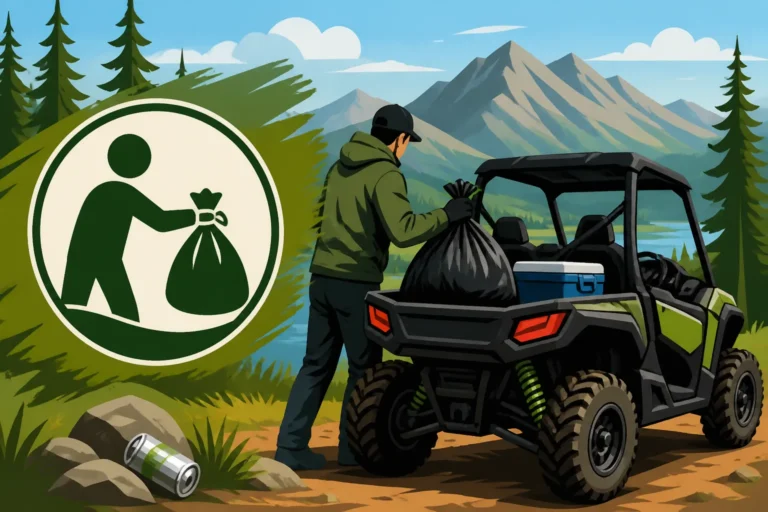
Stay on authorized routes and avoid shortcuts around mud, puddles or obstacles. Bypasses can quickly become new tracks that damage vegetation and widen the disturbed area. If a trail is blocked or badly damaged, turn back or use an approved alternative rather than making your own. Pack out food wrappers, broken straps and other rubbish, and avoid leaving repair parts behind.
Navigation should support responsible decisions, not replace them. onX Offroad may help your group stay oriented, but confirm that the route is allowed and follow posted signs. Where your digital map and a closure sign disagree, respect the sign and reassess. [Alberta OHV Camping and Staging Areas] provides broader context for using staging locations thoughtfully, while [Why a Quad Does Not Need the Conservation Pass] may help clarify a separate pass question for this area. Check the applicable rules for your vehicle and parking arrangement rather than assuming every pass requirement works the same way.
A practical Fisher East ride-day checklist
Before leaving home
Start with the essentials: confirm the riding area is open, review the route and vehicle suitability, check the forecast, and make sure each rider knows the plan. Save maps offline and agree on a return time. If the group includes visitors or riders unfamiliar with Alberta’s requirements, take time to confirm registration, insurance and equipment obligations before loading the machines.
Check the trailer and tow vehicle as carefully as the ATVs or UTVs. Secure ramps and gear, inspect tie-downs, and make sure the load is balanced. Bring enough water and food for delays, plus a first-aid kit, basic tools, a charged phone and a backup navigation option. If you are relying on a nearby store or fuel stop, confirm your plan before you leave rather than assuming it will be open when you need it.
Set expectations for the group. Decide who is leading, who is sweeping at the back, what to do at junctions and how you will regroup. Keep the route within the ability of the least experienced rider and the limits of the least capable machine. These small conversations are especially helpful when several households or separate friend groups meet at the staging area.
At the staging area and on the return
Once you arrive, park without blocking other users, unload carefully and complete a final machine check. Confirm that everyone has water, protective gear and any required documents. Review the planned route one more time, including the turnaround point. If the staging area is crowded or conditions have changed, be willing to adjust your plan before heading out.
On the trail, ride at a pace that leaves room to react, and stop somewhere safe if your group needs to regroup. Keep track of time and fuel, and turn back early enough to return in daylight. If a route is closed or becomes unsuitable, do not improvise a shortcut. Choose an authorized alternative or head back the way you came.
When you return, check that every rider and machine is accounted for before loading. Look over the machines for damage, remove rubbish and leave the staging area clear for the next group. If you find a hazard or closure that other riders should know about, use the appropriate local reporting channel. A little care at the end of the day helps keep Fisher East usable and welcoming for the next trip.
Disclaimer
This article is for general informational purposes only and does not constitute professional advice. Laws, prices and regulations vary by location and change over time. Consult a qualified professional for guidance on your specific situation.