Seizure After a Serious Violation
There’s a unique dread that washes over you when you see a law enforcement vehicle pull up while you’re out enjoying a ride on your ATV or side-by-side. Most of the time, it might be a routine check, a friendly reminder, or perhaps a minor ticket. But there are specific, serious violations in Alberta that can lead to a much more devastating outcome: the seizure of your beloved machine. This guide aims to pull back the curtain on these grave consequences, helping you understand what can trigger a vehicle seizure and, more importantly, how to avoid this nightmare scenario altogether.
Understanding "Serious Violations" in Alberta OHV Law
When we talk about "serious violations" in the context of off-highway vehicles (OHVs) in Alberta, we're not just talking about a minor speeding ticket or forgetting your registration at home. We're delving into infractions that show a significant disregard for safety, public land rules, or the law itself, often carrying heavy penalties, including the potential for your machine to be impounded. These are the kinds of situations that officers are trained to address with a firm hand, precisely because they pose a greater risk to riders, other users, and the environment. The state takes these actions seriously because they can lead to accidents, injuries, or even fatalities. It's about maintaining order and safety on our shared trails and public lands.
Impaired Operation and Its Immediate Consequences
One of the most clear-cut pathways to having your OHV seized is operating it while impaired. Just like driving a car, operating an ATV or side-by-side under the influence of alcohol or drugs is a criminal offense in Alberta. It's not just about being "drunk" or "stoned"; any level of impairment that affects your ability to safely operate the machine can lead to severe charges. Officers are looking for signs of erratic riding, slurred speech, or the smell of alcohol, and if they suspect impairment, they will investigate further.
The concept of "care or control" also applies here. You don't necessarily have to be actively riding for an impaired charge to stick. If you're sitting on your quad with the keys in the ignition, even if it's not moving, you could be deemed to have care or control of the vehicle and face the same serious charges. The consequences are immediate: your machine will be impounded on the spot, you'll be arrested, and you'll face legal proceedings that can include hefty fines, license suspension, and even jail time. The [Alberta Impaired Riding Penalties] are severe, designed to deter such dangerous behaviour. It's a risk simply not worth taking, no matter how remote you feel you are.
The Critical Role of Insurance and Registration
While not typically as immediately severe as impaired operation, a persistent or blatant disregard for insurance and registration requirements can also escalate to vehicle seizure. Alberta law mandates that all OHVs operating on public land must be registered and insured. This isn't just bureaucratic red tape; it's about accountability and financial protection in case of an accident. If you're involved in a collision and don't have insurance, the financial burden can be catastrophic, not just for you but for any other parties involved.
Officers conducting checks at staging areas or patrolling trails will routinely ask for proof of registration and insurance. While a first offense for no registration might result in a ticket and a warning to get it sorted, repeated offenses or a complete lack of insurance can trigger a more drastic response. Especially if an officer suspects you're intentionally dodging the requirements, or if you're involved in an incident without proper documentation, they may decide that impoundment is the necessary step to prevent further illegal operation. It sends a clear message: these requirements are non-negotiable for riding on public land.
The Seizure Process: From Incident to Impound Lot
So, what exactly happens if an officer decides to seize your ATV or side-by-side? It's not as simple as them just taking your keys. The process is designed to be a significant deterrent, involving a series of steps that can be costly, time-consuming, and incredibly frustrating for the machine owner. Understanding this process might just be the motivation you need to ensure you're always on the right side of the law.
On-Site Enforcement and Initial Steps
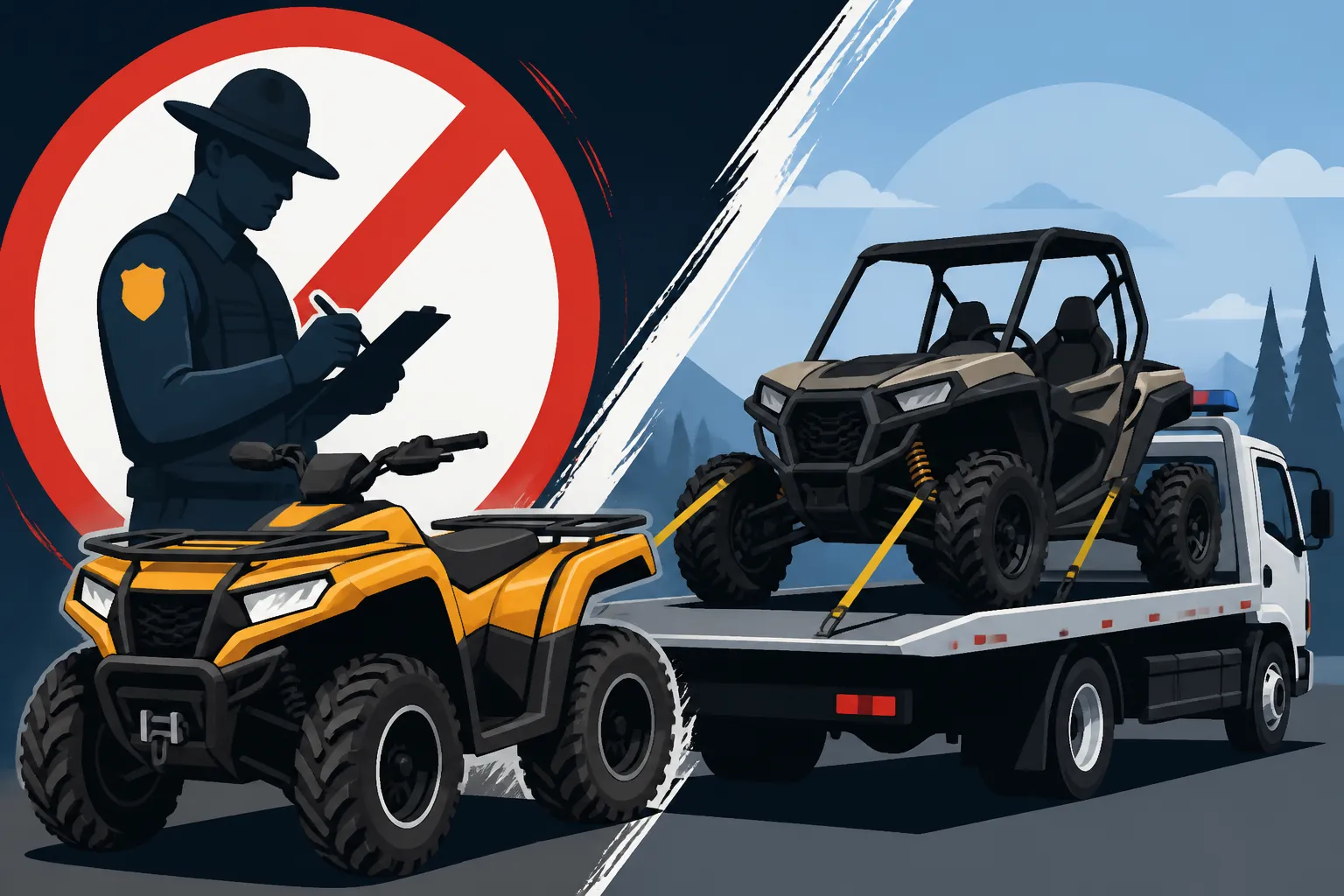
The moment an officer decides to seize your machine, whether it's the RCMP, a Fish and Wildlife officer, or municipal enforcement, the situation shifts dramatically. They have the legal authority under the Traffic Safety Act and other regulations to remove a vehicle if it's being operated illegally in a serious manner. At the scene, they will typically issue you a notice of seizure and explain the grounds for impoundment. This isn't a conversation; it's a statement of fact. You'll likely be given a ticket or charge for the primary violation that led to the seizure.
Then comes the logistical challenge. If you're deep on a remote trail, the officer isn't going to drive your machine out for you. They will arrange for a tow truck or specialized recovery service to come to the location, which can take time and significantly add to the eventual costs. Imagine being stranded kilometres from your truck and trailer, watching your machine be loaded onto a specialized recovery vehicle. This isn't just an inconvenience; it's a harsh lesson. This is part of the [Alberta Officer Checks at a Staging Area] process, but it can happen anywhere on public land.
Impoundment, Fees, and Release Procedures
Once your OHV is seized, it's typically transported to a designated impound lot, which could be a police compound, a municipal facility, or a private towing company's yard. And this is where the costs really start to pile up. You're not just paying for the initial tow; you'll be charged daily storage fees for every day your machine sits in impound. These fees can quickly add up, turning an already difficult situation into a financial burden.
To get your machine back, you'll generally need to jump through several hoops. First, you'll need to satisfy the reasons for the impoundment. If it was for no insurance, you'll need to provide proof of valid insurance. If it was for an expired registration, you'll need to renew it. You'll also need to prove ownership of the machine, which means having your valid registration certificate (remember, [Alberta Digital Certificates Must Be Printed] to be valid on the trail). Finally, and perhaps most painfully, you'll have to pay all outstanding fines, towing charges, and storage fees in full. Only then will the impound lot release your machine. It's a process that can be frustratingly slow, and some riders find that getting their machine back, especially if they've invested in quality aftermarket parts from places like SuperATV, is a battle in itself.
| Violation Severity | Example Offenses | Immediate Consequences | Potential For Seizure | Recovery Difficulty |
|---|---|---|---|---|
| Minor | No visible plate, minor equipment infraction | Warning, small fine | Unlikely | Minimal |
| Moderate | Unregistered (first offense), expired insurance | Ticket, larger fine | Possible (repeat) | Moderate |
| Serious | Impaired operation, no insurance (repeat), dangerous operation, unplated | Arrest, major fines, license suspension | High | Significant |
Preventing Seizure: Best Practices for Alberta OHV Riders
The best defense against having your OHV seized is to never put yourself in a position for it to happen. This isn't about being paranoid; it's about being prepared, knowledgeable, and responsible. A little bit of proactive effort can save you a whole lot of headache, heartache, and money down the line. We all love the freedom that comes with riding, but that freedom comes with responsibility.
Staying Legal: Registration, Insurance, and Equipment
First and foremost, make absolutely sure your machine is properly registered and insured. Set reminders for your registration renewal, and keep your insurance policy active. Remember, [Alberta Requires Insurance on Public Land], and a valid registration is your ticket to legal trail access. Don't let these basic administrative tasks lapse. Always carry proof of both with you when you ride. Whether it's the printed digital certificate or your physical card, it needs to be accessible.
Beyond paperwork, ensure your OHV meets all the necessary equipment requirements. This means having working head and tail lights, a functional spark arrestor, and a muffler that isn't illegally modified. A loud, modified exhaust might sound cool to some, but it's a surefire way to draw unwanted attention from enforcement and can lead to tickets. [Alberta Requires a Spark Arrestor], and [Alberta Requires Working Head and Tail Lights] are not suggestions; they are legal requirements. Many riders enhance their machines with parts from companies like SuperATV, which is fantastic for performance and durability, but always double-check that any modifications still comply with Alberta's OHV regulations. An illegal modification can not only get you a ticket but also make your machine a target for closer inspection, potentially uncovering other issues.
Responsible Riding and Knowing Your Limits
Beyond the legal technicalities, your riding behaviour plays a huge role in preventing seizure. The most critical aspect here is absolutely never operating your OHV while impaired by alcohol or drugs. Even one beer or a small amount of cannabis can impair your judgment and reaction time, making you a danger to yourself and others. If you plan on consuming, arrange for a designated driver or simply don't ride. It’s that simple.
Furthermore, always ride within designated areas and respect private property. Trespassing can lead to serious charges, especially if you damage property or ignore "no trespassing" signs. Know the rules of the specific Public Land Use Zone (PLUZ) or trail system you're riding in. When riding with younger individuals, ensure you understand and adhere to [Alberta Rules for a 14-Year-Old Rider] and other age-related regulations, including [Alberta Helmet Law on Public Land] requirements. Proper supervision is not just a good idea; it's often a legal obligation. By practicing responsible riding, you're not only protecting yourself from potential seizure but also preserving access for all riders.
The Financial and Personal Impact of Machine Seizure
Let's be blunt: having your ATV or side-by-side seized isn't just an inconvenience; it's a significant financial hit and a deeply frustrating personal experience. Many riders pour their hard-earned money and time into their machines, often upgrading them with premium parts from reputable brands like SuperATV. To have that investment suddenly taken away, even temporarily, can be incredibly disheartening. Understanding the full scope of this impact might just be the final push you need to always prioritize compliance and safe riding practices.
The Hidden Costs: Time, Stress, and Legal Fees
When your machine is impounded, the initial fines for the violation that led to the seizure are just the tip of the iceberg. As we discussed, you're immediately looking at towing fees, which can vary wildly depending on how remote your seizure location was. Then come the daily storage fees at the impound lot, which accrue rapidly. These can easily run into hundreds, if not thousands, of dollars, especially if there's a delay in resolving the underlying issues. Remember, your machine won't be released until all these fees are paid.
Beyond the monetary costs, there's the invaluable cost of your time and peace of mind. You'll spend hours, if not days, dealing with law enforcement, the impound lot, insurance companies, and potentially lawyers. This is time you could be spending at work, with family, or, ironically, out riding. The stress and frustration of navigating this bureaucracy can be immense. If the seizure led to a criminal charge, like impaired operation, you'll also face potentially crippling legal fees, court costs, and a permanent record. These are the real, tangible consequences that far outweigh the perceived thrill of an illegal ride. [Alberta Ticket Costs for a Riding Violation] might seem high, but they pale in comparison to seizure costs.
Protecting Your Investment and Your Passion
For many of us, our ATV or side-by-side isn't just a toy; it's an integral part of our lifestyle, a stress reliever, and a gateway to exploring Alberta's incredible outdoors. It's an investment, not just financially, but emotionally. You've spent time researching models, perhaps upgrading with accessories like a new winch or A-arms from SuperATV, all to enhance your riding experience. To have that investment jeopardized or temporarily lost due to a preventable violation is a harsh reality.
The thought of your cherished machine sitting idle in an impound lot, gathering dust and incurring fees, is enough to make any rider cringe. It removes the opportunity for enjoyment, for family outings, for that escape into nature you crave. Protecting your machine from seizure means more than just avoiding fines; it means safeguarding your ability to pursue your passion. It reinforces the idea that responsible ownership isn't just about following rules; it's about respecting your investment, your community, and the privilege of enjoying Alberta's trails.
Disclaimer
This article is for general informational purposes only and does not constitute professional advice. Laws, prices and regulations vary by location and change over time. Consult a qualified professional for guidance on your specific situation.