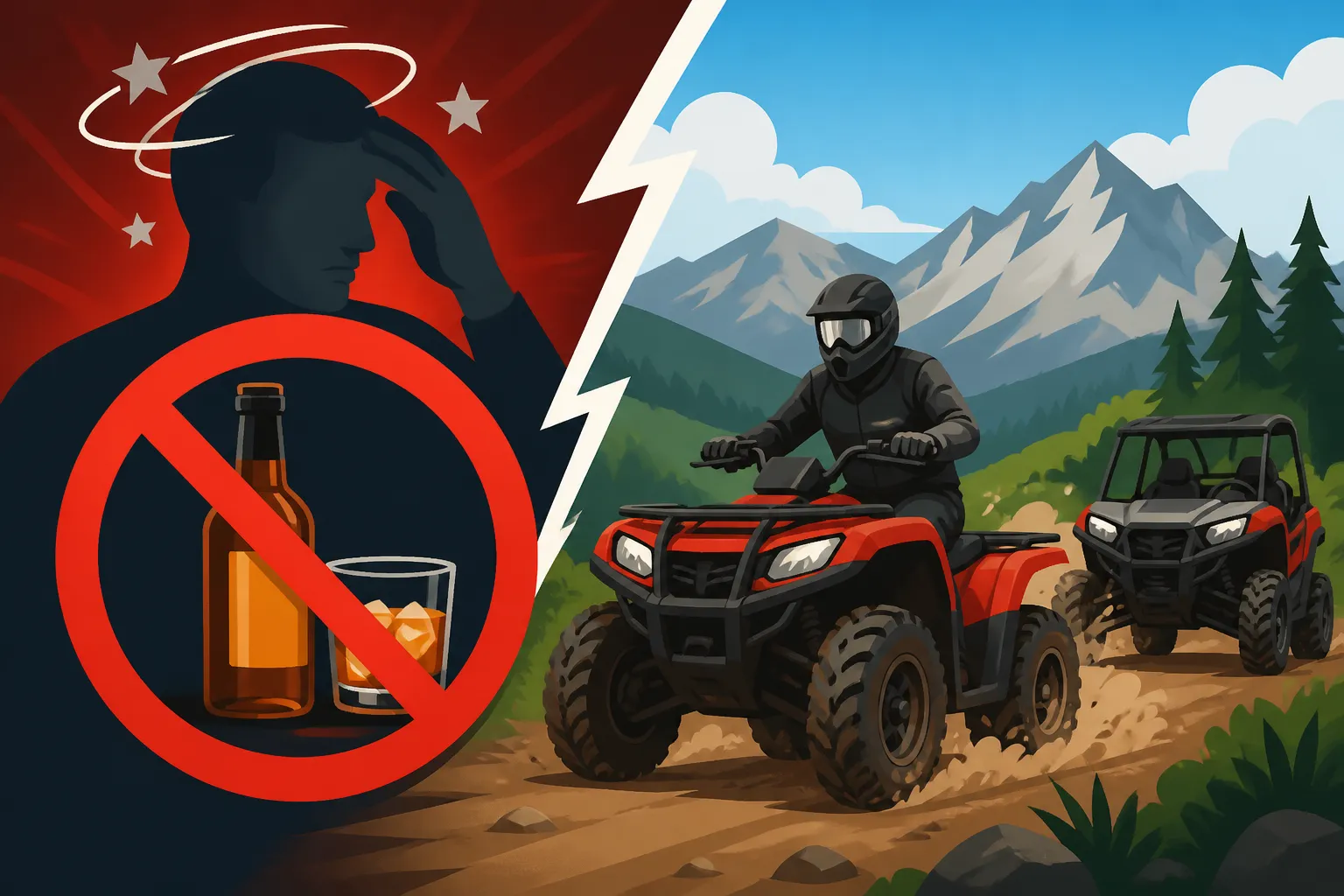
Impaired Operation Off Road
It's easy to think that when you're out in the Alberta backcountry, far from paved roads and traffic lights, the usual rules might not apply. Maybe you're on your favourite quad, the sun is shining, and someone offers you a cold one or a puff. The reality, however, is that operating an off-highway vehicle (OHV) while impaired by alcohol or drugs carries serious, life-altering consequences, just as it does on the highway. This guide will walk you through what impaired operation means for OHV riders in Alberta, the legal ramifications you face, and how to make sure you always ride safe and sober.
What "Impaired Operation" Means in Alberta for OHVs
When we talk about "impaired operation" of an OHV in Alberta, it's not just about being "drunk" in the traditional sense. The law is quite broad and covers anything that diminishes your ability to operate your machine safely. Whether you're on a vast stretch of Crown land or tearing it up on a designated trail in a Public Land Use Zone, the same standards for sobriety and alertness apply. An OHV, be it an ATV, side-by-side, dirt bike, or snowmobile, is still a powerful piece of machinery, and operating it requires your full attention and quick reflexes.
Beyond Alcohol: Other Forms of Impairment
Many riders immediately think of alcohol when they hear "impaired driving," and yes, that's a huge part of it. But the scope of impairment extends much further. Any substance that alters your mental or physical state can be considered impairing, and it's all treated seriously under the law.
Think about it: alcohol slows your reaction time, distorts your perception of speed and distance, and makes you more likely to take unnecessary risks. A small creek crossing that would normally be a piece of cake can suddenly seem daunting, or worse, you might misjudge it completely. Then there's cannabis. While it's legal now, operating any vehicle, including an OHV, while under its influence is absolutely illegal. It affects your concentration, coordination, and judgment – all critical for navigating unpredictable off-road terrain. And let's not forget prescription medications. Many common drugs, from pain relievers to antihistamines, carry warnings about operating heavy machinery. If your doctor tells you not to drive a car while taking them, you definitely shouldn't be ripping through the forest on a quad. Even fatigue, though not a substance, can severely impair your ability to ride safely. After a long day of working, or even just an early start and a full day on the trails, exhaustion can creep in and mimic some of the effects of mild intoxication, making you prone to errors. Whether you're considering a new suspension upgrade from SuperATV or just a simple oil change, none of these improvements will ever compensate for impaired judgment.
The "Off-Road" Distinction: Why It Still Matters
This is where a lot of riders get caught off guard. There's a common misconception that because you're "off-road," away from highways and urban centres, the rules are more relaxed. This could not be further from the truth. In Alberta, the laws regarding impaired operation apply to any place to which the public has access. This means Crown land, Public Land Use Zones (PLUZs) like McLean Creek, organized trail systems, and even private land if the public has access or if the owner allows it (even if the owner gives you permission to ride, they certainly aren't giving you permission to ride impaired).
The Traffic Safety Act, the main piece of legislation governing vehicles in Alberta, considers these areas just as serious as any public highway when it comes to impaired operation. Peace officers, including RCMP and Fish and Wildlife officers, have full authority to stop and investigate OHV riders for impairment in these zones. Just because there isn't a painted white line or a speed limit sign doesn't mean you're immune to the law. In fact, the unpredictable nature of off-road terrain often makes impaired riding even more dangerous than on a paved road, increasing the risk of serious injury to yourself or others. Remember, what the [Traffic Safety Act Requires of Alberta OHVs] is comprehensive, and impaired driving falls squarely under its purview.
Legal Consequences of Impaired OHV Operation
The penalties for operating an OHV while impaired in Alberta are severe and far-reaching. They're designed to deter dangerous behaviour and protect everyone who shares our beautiful landscapes. Don't underestimate the impact a single bad decision can have on your life.
Immediate Penalties: Roadside Suspensions and Fines
If a peace officer suspects you are operating your OHV while impaired by alcohol or drugs, the immediate consequences can be swift and devastating. Alberta operates on a tiered penalty system, but even a first-time, low-level alcohol impairment can result in a roadside suspension of your driver's license. Yes, your car driver's license, not just your OHV privileges, because the ability to operate any motor vehicle is considered a single privilege. This could mean your license is suspended for days or even weeks on the spot. You'll face immediate fines, and your OHV will likely be seized and impounded. Imagine being stranded deep in the backcountry, watching your quad being loaded onto a tow truck, and having to figure out how to get home.
For more serious levels of impairment, or if you refuse to provide a breath or blood sample, the consequences escalate dramatically. You could be facing an immediate three-month license suspension and a much heavier fine, not to mention the costs associated with your vehicle being impounded. These immediate sanctions are administrative, meaning they happen on the spot, even before any criminal charges are laid. For more specifics on what happens when things go wrong, you might want to read about [Alberta Impaired Riding Penalties] in detail.
Long-Term Repercussions: Criminal Charges and Record
Beyond the immediate roadside penalties, operating an OHV while impaired can lead to criminal charges under the Criminal Code of Canada. This is not a traffic ticket; this is a serious criminal offense. If convicted, you will end up with a permanent criminal record. A criminal record can impact your life in countless ways:
- Travel restrictions: Many countries, including the United States, can deny entry to individuals with criminal records, even for seemingly minor offenses. Your dream vacation or cross-border riding trip could become impossible.
- Employment opportunities: Many jobs, especially those requiring security clearances, driving, or working with vulnerable populations, will be off-limits. Even for other roles, a criminal record can be a significant barrier.
- Increased insurance rates: Your vehicle insurance premiums (for your car, truck, and OHV) will likely skyrocket, if you can even find a company willing to insure you.
- Higher fines and court costs: The fines imposed by the court can be substantial, often in the thousands of dollars, plus additional court fees. You can find more information about [Alberta Court Costs for an OHV Citation] if you're curious about the financial implications.
- Further license suspensions: The courts can impose additional, lengthy driver's license suspensions, often for a year or more, further complicating your daily life and ability to get to work or provide for your family.
- Vehicle forfeiture: In some severe cases, repeat offenders could even face the forfeiture of their OHV.
It's a heavy price to pay for a moment of poor judgment. When you hear about [When Riding a Quad Becomes a Criminal Charge], impaired operation is one of the clearest paths to that unfortunate outcome.
Vehicle Seizure: What Happens to Your Machine
A common immediate consequence of impaired OHV operation is the seizure and impoundment of your machine. This isn't just an inconvenience; it's a significant financial burden. When an officer determines you're impaired, they're not going to let you drive your OHV away, nor will they let a friend take it if that friend was also involved in the impaired activity or can't legally operate it.
Your quad or side-by-side will be towed by a provincially approved towing company to an impound lot. You'll be on the hook for the towing fees, which can vary depending on your location and how far it needs to be moved. Then, there are daily storage fees at the impound lot, which can quickly add up. These fees accrue for every day your machine sits there. To get your machine back, you'll need to sort out your legal situation, pay all outstanding fines and fees, and ensure you have a valid, sober driver to retrieve it. If you can't pay the fees, the impound lot can eventually sell your machine to recover their costs. This process is similar to what happens in scenarios like [Alberta Vehicle Seizure for No Insurance], where financial penalties and loss of your machine are very real possibilities. You might have just invested in some rugged SuperATV skid plates, but they won't protect you from the impound lot.
Practical Strategies to Avoid Impaired Riding
Avoiding impaired riding isn't just about following the law; it's about personal responsibility, safety, and ensuring you and everyone you ride with has a good time without incident. A little foresight can prevent a lot of heartache.
Planning Ahead: Designated Drivers and Safe Staging
The best way to avoid impaired riding is to make the decision before you even hit the trails. If your riding plans involve any alcohol or cannabis, plan for it deliberately. This might mean having a designated sober driver for the truck and trailer that gets your OHV to the staging area. This person is responsible for all transportation, ensuring everyone and every machine arrives and departs safely.
Another strategy is to choose a staging area or campsite where you can responsibly leave your OHV overnight if necessary. If you decide to enjoy some adult beverages after the riding is done for the day, make sure your machine is parked and secured. Don't be tempted to take a "quick spin" around the camp. Even a short ride while impaired can lead to serious consequences. Consider setting up a specific "no-go" zone for your OHV once the evening festivities begin. Many Public Land Use Zones in Alberta allow for camping, which can facilitate this responsible approach. Ensure you know the [Alberta Alcohol Rules While Riding] and adhere to them strictly.
Education and Awareness: Knowing the Risks
Ignorance is not an excuse in the eyes of the law. As an OHV operator, it's your responsibility to understand how various substances affect your body and your ability to control your machine. Take the time to read the labels on any medications you're taking, understand the legal limits for alcohol, and be aware of how cannabis affects judgment and reaction time.
It's not just about avoiding a ticket; it's about staying safe. Riding an OHV requires a high degree of skill, focus, and quick decision-making. Uneven terrain, sudden obstacles, other riders, and wildlife can appear in an instant. Even minor impairment can mean the difference between smoothly navigating a challenge and crashing. Talk to your riding buddies about it. Make it clear that safety comes first. A strong, cohesive group often looks out for each other, and that includes ensuring everyone rides sober. While installing a new SuperATV windshield can enhance your ride, it can't enhance your sobriety.
The "Zero Tolerance" Mindset
For many seasoned riders and safety advocates, the simplest and most effective strategy is to adopt a personal "zero tolerance" policy for alcohol and drugs while riding. This means absolutely no consumption of impairing substances before or during your ride. It eliminates any guesswork about whether you're "over the limit" or "too impaired."
This mindset means enjoying the ride for the ride itself – the scenery, the challenge, the camaraderie. Save any celebratory drinks or cannabis use for after the machines are loaded up, parked safely at home or at your campsite, and you're done operating them for the day. This clear boundary removes temptation and ensures you're always operating at your best. It means you can focus on the trail, the capabilities of your machine (perhaps enhanced with some quality parts from SuperATV), and the pure joy of off-roading, rather than worrying about an officer's next move or a tragic accident. When officers conduct [Alberta Equipment Checks by Officers] at staging areas, they're often also assessing for signs of impairment. Don't give them a reason to question your sobriety.
| Type of Impairment | Immediate Effect on Rider | Potential Legal Consequence | Long-Term Impact |
|---|---|---|---|
| Alcohol | Slowed reaction, poor judgment, reduced coordination, blurred vision | Roadside license suspension, fines, OHV seizure | Criminal record, lengthy license suspension, increased insurance, travel restrictions |
| Cannabis | Altered perception, impaired concentration, reduced coordination | Roadside license suspension, fines, OHV seizure | Criminal record, lengthy license suspension, increased insurance, travel restrictions |
| Prescription Drugs | Drowsiness, dizziness, impaired focus (check warnings) | Roadside license suspension, fines, OHV seizure | Criminal record, lengthy license suspension, increased insurance, travel restrictions |
| Illegal Drugs | Varied, but always impairing and illegal | Criminal charges, OHV seizure, fines | Criminal record, lengthy license suspension, increased insurance, travel restrictions |
| Fatigue | Reduced alertness, slower reactions, poor decision-making | N/A (but increases accident risk, may lead to other violations) | Accidents, injury, potential civil liability |
Disclaimer
This article is for general informational purposes only and does not constitute professional advice. Laws, prices and regulations vary by location and change over time. Consult a qualified professional for guidance on your specific situation.