Snell and ECE Alternatives
When you're gearing up for a ride on your ATV or UTV in Alberta, one of the most crucial pieces of equipment is your helmet. But with so many standards out there, it can feel like navigating a maze trying to figure out if your non-CSA certified helmet is actually legal. Many riders find themselves wondering if their Snell or ECE helmet, often considered top-tier globally, will pass muster with local enforcement. This guide will cut through the confusion, explaining Alberta's helmet requirements and clarifying whether those high-quality Snell and ECE alternatives meet the mark for your off-highway adventures.
Alberta's Helmet Requirements: The Baseline
Riding an off-highway vehicle (OHV) in Alberta comes with a firm understanding that safety is paramount. The province has clear rules about helmets, designed to protect riders from serious injury. While these rules seem straightforward on the surface, the details about specific certifications can sometimes cause a headache for riders who've invested in different standards.
The Mandate and CSA Standard
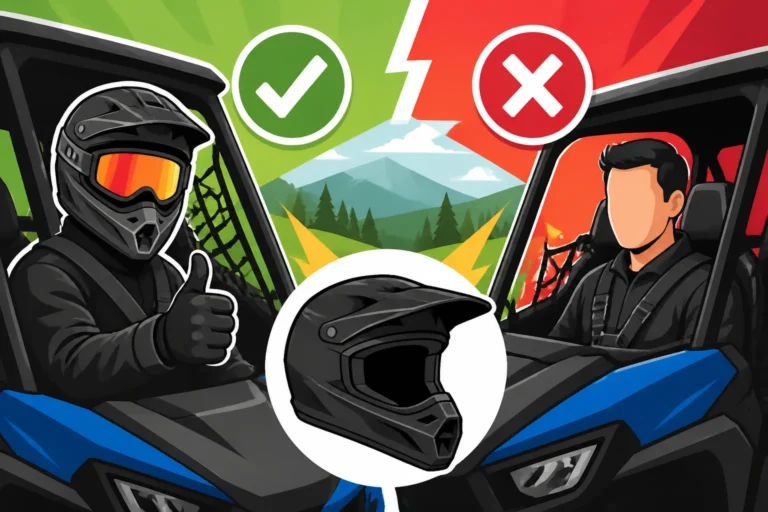
In Alberta, it's not just a suggestion; it's the law to wear an approved helmet when operating or riding as a passenger on an OHV on public land. This requirement has been in place since May 15, 2017, and it's something every rider needs to take seriously. The law, as outlined in the Traffic Safety Act and its associated regulations, specifically points to helmets approved under various standards. Historically, and often most commonly cited, is the Canadian Standards Association (CSA) standard, particularly the CSA CAN3-D230-M85. This is the baseline many people refer to, and it's what you'll typically find stamped inside helmets sold widely across Canada. If your helmet has this label, you're generally good to go. You can learn more about this in [Alberta CSA Helmet Standards].
However, the regulations don't exclusively limit riders to CSA. They mention helmets that meet standards from other jurisdictions, provided they offer comparable protection. This is where the confusion often arises, as "comparable protection" can be a subjective term if you're stopped by an officer who isn't familiar with international helmet certifications. The spirit of the law is to ensure riders are protected by a helmet designed for impact, but the letter of the law needs to be understood when you're out on the trails or riding a ditch.
Why People Look Beyond CSA
There are several compelling reasons why an Alberta rider might own or seek out a helmet certified to a standard other than CSA. For one, the global market for helmets is vast, and many international brands primarily certify their products under standards like Snell or ECE, especially if their main markets are outside of Canada. Riders might encounter these helmets when purchasing from online retailers, specialty shops that import specific brands, or even when travelling.
Another factor is performance and features. Riders involved in competitive racing, or those who simply demand the highest levels of protection and advanced features, often find that helmets certified by Snell or ECE offer cutting-edge technology, better ventilation, lighter materials, or specific designs tailored for aggressive riding. Some riders feel these standards represent a higher benchmark for safety testing than CSA, pushing the boundaries of impact absorption and coverage. Furthermore, riders who frequently cross international borders, or those who originally purchased their helmets in countries with different primary standards, want to ensure their gear is acceptable no matter where their adventures take them. It’s a pain point to have to buy a new helmet just because you moved or are visiting, especially when you know your current helmet is of superior quality.
Understanding Snell and ECE: The Gold Standards
When you dive into the world of helmet certifications, Snell and ECE are two names that consistently rise to the top. They're often considered the "gold standards" in rider safety, recognized globally for their rigorous testing protocols and comprehensive safety requirements. For many serious riders, these certifications are the benchmarks they look for, often preferring them over other standards.
The Snell Memorial Foundation
The Snell Memorial Foundation is a non-profit organization dedicated to helmet safety, originating in the United States. It's renowned for setting some of the most stringent helmet safety standards in the world. Unlike some other certifications that are mandatory regulatory requirements, Snell certification is voluntary. Helmet manufacturers submit their products for testing to Snell, aiming to prove their helmets exceed typical safety benchmarks.
Snell tests are notoriously tough, often involving multiple impacts to the same spot, high-velocity impacts, and tests for shell penetration. The standard for motorcycle and OHV helmets typically falls under the 'M' series, such as Snell M2015 or the more recent M2020. A helmet with a Snell M2020 rating, for instance, has undergone a battery of tests designed to simulate severe crash scenarios, including tests for impact management, positional stability, dynamic retention, and face shield penetration. What this means for a rider is a helmet designed to offer exceptional protection, often going above and beyond what minimum legal requirements might demand. It's an assurance that your head is encased in a piece of engineering built to absorb immense forces and resist sharp object intrusion.
Economic Commission for Europe (ECE)
The ECE 22.05 (and now ECE 22.06) standard is a widely recognized international safety standard, particularly prevalent across Europe and in many other countries worldwide. Administered by the United Nations Economic Commission for Europe, this standard is a mandatory certification for all helmets sold in ECE-member countries. This means if you buy a helmet in Europe, or from a major international brand that sells globally, it's almost certainly ECE certified.
ECE testing is comprehensive, including tests for impact absorption, rigidity, retention system (chin strap) performance, peripheral vision, and shell penetration. The testing regimen for ECE 22.06, the newer iteration, is even more stringent than its predecessor, incorporating oblique impacts and more rigorous testing of accessories like visors and communication systems. The key difference from Snell is that ECE is a regulatory standard, meaning all helmets must pass it to be sold in those regions, ensuring a high baseline of safety for all consumers. For an Alberta rider, an ECE-certified helmet signifies a product that has met a globally accepted, robust safety standard, indicating a high level of protection.
Are Snell and ECE Helmets Legal in Alberta?
This is often the million-dollar question for riders: if you've invested in a Snell or ECE helmet, are you truly compliant with Alberta's laws? The answer, thankfully, is generally yes, but there's a nuance you need to understand to avoid potential issues.
The Traffic Safety Act and "Approved" Helmets
Alberta's Off-Highway Vehicle Regulation (319/2002) under the Traffic Safety Act states that a person operating or riding an OHV on public land must wear a helmet that "meets the standards established by the Canadian Standards Association or any other prescribed standard." This is the key phrase: "any other prescribed standard." The regulation further clarifies by listing several recognized helmet standards in addition to CSA, including those from the U.S. Department of Transportation (DOT), the Snell Memorial Foundation, and the Economic Commission for Europe (ECE). This is good news!
Specifically, the regulation often refers to CSA CAN3-D230-M85 for Canadian certification, and then explicitly mentions other standards such as:
- DOT FMVSS 218 (Federal Motor Vehicle Safety Standard from the U.S.)
- Snell M2005 or later (or specific M-rated versions like M2010, M2015, M2020)
- ECE 22.05 or later (the European standard)
This means that if your helmet carries a valid Snell (e.g., M2015 or M2020) or ECE (e.g., 22.05 or 22.06) certification sticker or label, it does meet a prescribed standard under Alberta law. This is a critical point that sometimes gets overlooked. Many riders worry about being ticketed if their helmet isn't explicitly CSA, but the regulation is clear that these other highly regarded international standards are also acceptable. You can find out more about these requirements in [What the Traffic Safety Act Requires of Alberta OHVs] and [Alberta Helmet Law Explained].
The Officer's Perspective and Enforcement
While the law clearly accepts Snell and ECE certifications, the real-world experience can sometimes vary. Most enforcement officers are well-versed in helmet standards and can quickly identify legitimate certifications. However, in rare instances, an officer might not immediately recognize a Snell or ECE label, particularly if they are more accustomed to seeing CSA or DOT stickers. This doesn't mean your helmet is illegal; it just means you might need to provide a little clarity.
To avoid any unnecessary delays or misunderstandings, it's always a good practice to be prepared. Ensure the certification label inside your helmet is clear and readable. Some riders even go so far as to carry a printed copy of the relevant section of the Alberta Off-Highway Vehicle Regulation, or a screenshot on their phone, highlighting the part that recognizes Snell and ECE standards. This isn't usually necessary, but it can quickly clear up any confusion if encountered. Remember, the onus is on you, the rider, to prove your helmet meets the standard if questioned. Don't risk a [Alberta's $93 Non-CSA Helmet Fine] just because the label is worn or hard to find.
Choosing the Right Helmet: Beyond the Label
While meeting the legal standard is essential, selecting a helmet goes far beyond just checking for a Snell, ECE, or CSA sticker. The best helmet is one that not only protects you legally but also practically, ensuring maximum safety and comfort for your style of riding.
Fit and Comfort
This cannot be stressed enough: a helmet that doesn't fit properly is a helmet that can't do its job effectively. An ill-fitting helmet can shift during an impact, leaving parts of your head exposed, or it can become a distracting nuisance during a long ride, leading to fatigue and reduced concentration. When trying on a helmet, it should feel snug all around your head without any pressure points. It shouldn't move side-to-side or front-to-back when you try to shake your head. The chin strap should be securely fastened, allowing only a minimal amount of movement.
Consider the interior padding – many modern helmets feature removable and washable liners, which is a huge plus for hygiene and comfort after dusty or sweaty rides. The overall weight of the helmet also contributes significantly to comfort, especially on extended trips; a lighter helmet reduces neck strain. Never compromise on fit for a particular brand or style. Your brain is worth the extra time it takes to find the perfect fit.
Features for ATV/UTV Riding
ATV and UTV riding present unique challenges and conditions, so look for features tailored to this environment.
- Ventilation: Riding can be physically demanding and often takes place in warm weather. Good airflow is crucial to prevent overheating and fogging of your visor or goggles. Look for helmets with multiple adjustable vents.
- Visor/Goggle Compatibility: Many off-road helmets are designed to be worn with goggles, offering superior dust protection and impact resistance compared to an integrated visor in dusty, muddy conditions. If you prefer a full-face helmet with a visor, ensure it's scratch-resistant, anti-fog, and provides excellent peripheral vision.
- Impact Protection Systems: Beyond the basic foam liner, some helmets incorporate advanced rotational impact protection systems, like MIPS (Multi-directional Impact Protection System) or similar technologies. These systems are designed to reduce rotational forces on the brain during an angled impact, which can be just as dangerous as a direct impact.
- Shell Material: Helmets come in various shell materials, from polycarbonate to fiberglass, carbon fiber, and composites. Generally, the more advanced materials offer a better strength-to-weight ratio, providing excellent protection without excessive bulk.
When you're out there tackling the trails, whether you're navigating tight turns or open fields, having gear that's up to the task is paramount. Sometimes, this extends beyond just your helmet to the machine itself. For example, if you're looking to upgrade your UTV's protection or add accessories that enhance visibility and durability – such as heavy-duty roofs, full doors, or specialized lighting – companies like SuperATV offer a vast array of parts designed for rugged off-road use. Just like a high-standard helmet, these kinds of robust additions ensure your ride is as safe and controlled as possible, allowing you to focus on the trail ahead.
Accessories and Customization
The right helmet can also be enhanced with various accessories. Many off-road helmets have peaks or visors that help deflect roost (dirt and debris kicked up by other riders) and provide shade from the sun. Ensure these are durable and securely attached.
For group rides, consider helmets designed to integrate communication systems, allowing you to talk to your fellow riders without shouting or stopping. If you wear prescription glasses, try the helmet on with your glasses to ensure there are no uncomfortable pressure points. Some helmets even have dedicated channels for glasses arms. Ultimately, the best helmet for you will be one that combines the required safety certification with a perfect fit and features that align with your riding style and the conditions you typically encounter in Alberta.
Practical Considerations for Alberta Riders
Knowing the law is one thing, but putting it into practice out on the trails is another. As an Alberta OHV rider, there are a few practical considerations that can make your experience smoother and ensure you stay on the right side of the rules, particularly when it comes to your helmet.
Where to Buy Certified Helmets
When you're looking to purchase a helmet, always buy from reputable sources. This includes authorized dealerships for major motorcycle and powersports brands, specialty off-road gear shops, and well-known online retailers. These vendors are much more likely to stock helmets that meet recognized safety standards like CSA, Snell, ECE, or DOT. Be wary of extremely cheap helmets from unknown brands, especially if they don't clearly display any recognized certification. Sometimes, what seems like a great deal can be a huge compromise on safety, and it's simply not worth the risk.
Many local powersports dealers in Alberta carry a wide range of helmets, giving you the opportunity to try them on for fit before you buy. Remember, a helmet is a long-term investment in your safety, so it's worth spending a little extra to get a quality product that fits correctly and is certified. This step aligns perfectly with the advice in [Buying a CSA-Approved Helmet Before an Alberta Ride], even if you end up choosing a Snell or ECE alternative.
Carrying Proof of Certification
While most officers are knowledgeable about various helmet standards, having a clear and visible certification sticker inside your helmet is your first line of defense if you're ever stopped. The Snell and ECE certifications are typically indicated by stickers or labels sewn into the liner or affixed to the shell itself. Make sure these are not worn off or obscured.
If you happen to have a helmet where the sticker is internal or hard to access quickly, or if you just want extra peace of mind, consider carrying a simple photo of the certification label on your phone. You could also keep a small, laminated card in your riding pack with a note explaining the accepted helmet standards under the Alberta Off-Highway Vehicle Regulation. This can be a quick and easy way to clarify the situation and demonstrate your compliance. This kind of proactive approach can save you time and hassle, especially if you happen to encounter an officer unfamiliar with every specific certification standard. On public land, an officer can ask to see your papers, and that includes proof your gear meets the requirements. Learn more about general equipment requirements in [Alberta Equipment Required on Public Land].
The Impact of Your Choice
Ultimately, choosing a helmet with a recognized certification like Snell or ECE, or indeed CSA or DOT, is about more than just avoiding a ticket. It's about ensuring you have the best possible protection in the event of an accident. These certifications aren't just arbitrary labels; they represent rigorous testing and a commitment to rider safety.
A high-quality helmet can be the difference between a minor bump and a life-altering injury. By choosing a helmet that meets these stringent international standards, you're not just complying with Alberta's laws; you're making a conscious decision to prioritize your own well-being and that of your passengers. Whether you're riding a quad, dirt bike, or side-by-side, your helmet is your most important piece of safety gear. For those of you who frequently ride side-by-sides, remember that even with roll cages and seatbelts, helmets are still legally required on public land, and the same certification rules apply. Check out [Do You Need a Helmet in a Side-by-Side?] for more specific guidance.
Here's a quick comparison of the major helmet safety standards for your reference:
| Standard | Jurisdiction/Origin | Primary Focus | Key Characteristics | Alberta Legality |
|---|---|---|---|---|
| CSA | Canada | General consumer safety for various products | Canadian Standards Association. Covers impact absorption and penetration resistance. Often cited for OHV helmets in Canada. | Accepted |
| Snell (M-series) | USA (Non-profit) | Voluntary, extremely high-level protection | Known for exceptionally rigorous, repeated impact tests at multiple points and high-velocity penetration resistance. Often considered the "gold standard" by enthusiasts. | Accepted |
| ECE (22.05/22.06) | Europe (UN Economic Commission) | Mandatory for sales in member countries | Comprehensive testing for impact absorption, rigidity, retention system, and peripheral vision. ECE 22.06 adds oblique impacts and accessory testing. Widely recognized internationally. | Accepted |
| DOT (FMVSS 218) | USA (Federal Government) | Minimum legal standard for highway use | Federal Motor Vehicle Safety Standard. Focuses on preventing skull fractures and catastrophic brain injuries in crashes. Self-certified by manufacturers, with random government testing. | Accepted |
Knowing these options empowers you to make an informed choice that balances safety, comfort, and compliance, ensuring your adventures on Alberta's public lands are both thrilling and secure.
Disclaimer
This article is for general informational purposes only and does not constitute professional advice. Laws, prices and regulations vary by location and change over time. Consult a qualified professional for guidance on your specific situation.