What an Alberta Officer Can Ask to See
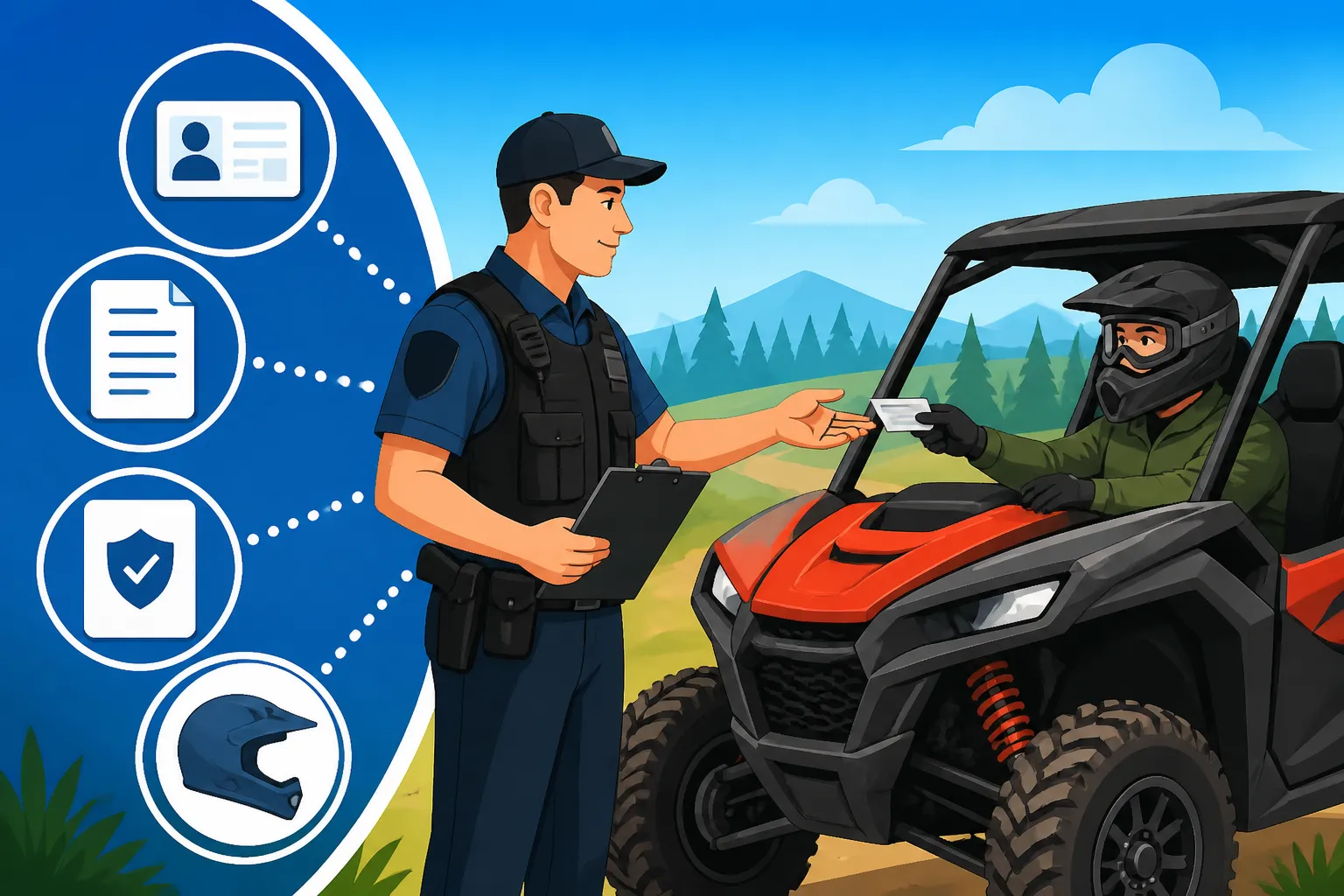
Picture this: you're out on a beautiful Alberta trail, enjoying the fresh air and the rumble of your ATV or side-by-side, when suddenly, you see flashing lights or a uniformed officer waving you over. Your heart might do a little flutter – it's a common reaction! Many riders get a knot in their stomach wondering exactly what an officer can ask for and what they need to produce on the spot. This guide is here to walk you through precisely what an Alberta officer is legally entitled to see and verify when you're out riding your off-highway vehicle (OHV), so you can be prepared and ride with confidence, not anxiety.
The Essentials: What Every Rider Needs to Carry
When an officer stops you on public land, designated trails, or even sometimes on certain private lands where public access is permitted, they're primarily looking to ensure you and your machine are compliant with Alberta's laws. It's not about catching you out, but about maintaining safety and order for everyone enjoying the great outdoors. Knowing what to have ready can make the interaction smooth and quick.
Your Personal Identification and License
Just like driving a car, you need to identify yourself when operating an OHV. An officer will ask for proof of identity. This isn't just a suggestion; it's a fundamental part of law enforcement's ability to confirm who they are speaking with and to ensure you're old enough to be operating the machine.
Imagine you're stopped and you don't have ID. The officer has no way of verifying your age or identity, which can lead to delays and additional questioning. It's not uncommon for officers to see young riders on machines that are too powerful for them, or individuals who aren't legally old enough to ride unsupervised. So, always have a valid driver's license or another form of government-issued photo identification on you. A provincial ID card works just fine if you don't have a driver's license. It's a good habit to keep this in a waterproof pouch, perhaps in your jacket pocket or a small saddlebag on your machine, rather than in your wallet that might get lost or damaged on the trail. This also goes for any supervisors accompanying young riders; they will need to show their ID as well to prove they meet the [Alberta Adult Supervision at 18] requirements.
Proof of Ownership and Registration
This is where many riders get tripped up, especially those new to the OHV scene. In Alberta, nearly all off-highway vehicles operating on public land must be registered. An officer will absolutely ask to see your current registration certificate. This isn't just a formality; it proves that the machine legally belongs to you (or that you have permission to operate it if it belongs to someone else) and that it's properly recorded with the province.
Your registration certificate will show the vehicle's make, model, VIN (Vehicle Identification Number), and the registered owner's name. It's your official proof that the OHV is recognized by the province for use on public lands. Whether you've just bought a new machine from a dealer or a used one through a private sale, ensuring the registration is current and in your name is paramount. If you've recently purchased your machine, you'll want to make sure the transfer of ownership has been completed at an Alberta Registry Agent. Documents like a bill of sale can be crucial here, especially if you're in the process of transferring registration. Tools from platforms like LawDepot can provide templates for proper bills of sale, ensuring all necessary details are included for a smooth transfer and proving legitimate ownership. Forgetting to carry this document could mean a ticket for [Alberta Penalties for Riding Unregistered] or, in some cases, even a vehicle seizure if there are serious doubts about ownership. Remember, [Alberta Issues a Plate, Not a Sticker], so you won't have a sticker on your license plate as proof of current registration.
Current Insurance Documents
Another critical piece of paperwork an officer will require is proof of valid liability insurance. Many riders mistakenly believe that because they're not on a highway, insurance isn't necessary. This is a dangerous misconception. [Alberta Requires Insurance on Public Land] and an officer has every right to ask for proof.
Your insurance policy should clearly state the effective dates and the coverage limits for your OHV. Most riders carry their pink card (liability insurance card) in a waterproof holder. This card confirms that you have at least the minimum required third-party liability coverage. Why is this so important? Accidents happen, even to the most careful riders. If you're involved in a collision and cause damage or injury to another person or their property, your liability insurance protects you from potentially ruinous costs. Without it, you could be facing not only hefty fines for [Alberta Vehicle Seizure for No Insurance] but also personal financial responsibility for any damages. The officer isn't just checking a box; they're ensuring that should an incident occur, you're not leaving others vulnerable. It's a peace-of-mind item for everyone on the trail.
Beyond Paperwork: Machine Requirements an Officer Checks
It's not just about what's in your wallet or saddlebag; an officer will also cast a keen eye over your actual off-highway vehicle to ensure it meets safety and regulatory standards. These checks are designed to prevent accidents, reduce environmental impact, and ensure that machines are being operated responsibly.
Displaying Your License Plate Correctly
Your Alberta license plate isn't just a decorative item; it's a legal identifier for your machine. An officer will verify that your plate is properly displayed and clearly visible. The specific requirements for [Alberta Plate Placement on a Quad] (or any OHV) state that it must be securely attached, clearly legible, and positioned so that it can be read from the rear of the machine.
I've seen many riders try to get creative with their plate placement, tucking it under a fender, or letting it hang loosely where it can get covered in mud. This isn't just sloppy; it's non-compliant. The plate needs to be mounted in a way that it won't be easily obstructed by mud, snow, or accessories. If your plate is bent, broken, or obscured, you could face a ticket. Officers need to be able to identify your machine quickly and accurately, whether for safety reasons, enforcement, or if you're involved in an incident on the trail.
Required Lighting and Safety Equipment
When you're out on the trails, especially as dusk approaches or if you're riding in conditions with reduced visibility, proper lighting is essential for your safety and the safety of others. An officer will check that your machine has working head and tail lights. [Alberta Requires Working Head and Tail Lights] not just for night riding, but often even during the day in certain conditions, similar to how cars need daytime running lights.
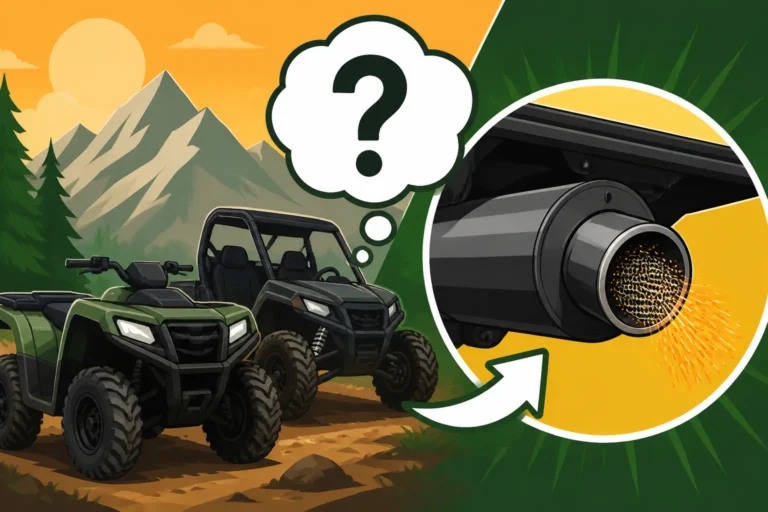
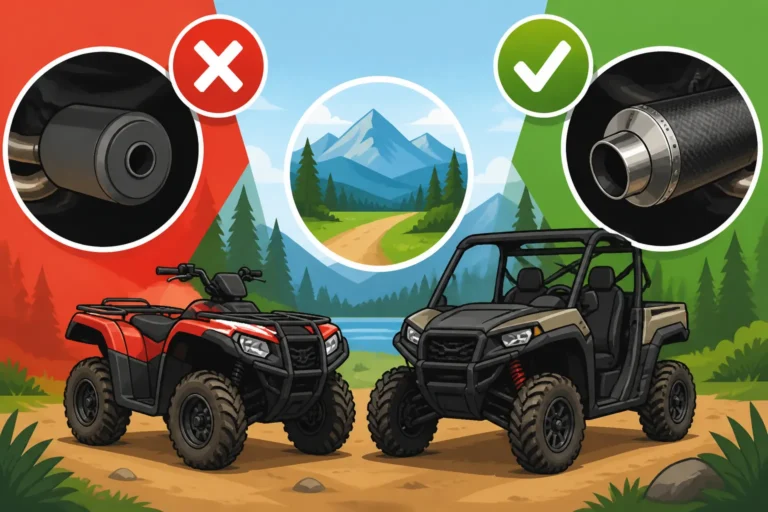
Beyond lights, other safety equipment may be checked. While not typically a direct "show me" item an officer asks for in the same way as paperwork, your machine must also be equipped with a spark arrestor. This vital piece of equipment prevents sparks from escaping your exhaust and potentially starting a wildfire, especially in dry conditions. An officer might physically inspect your exhaust for the presence of a spark arrestor, or at least ask about it. Similarly, [Alberta Bans Modified Exhausts] that exceed noise limits or bypass the spark arrestor. A loud, modified exhaust can draw unwanted attention, complaints from other trail users or nearby residents, and definitely the attention of an officer. They are enforcing regulations designed to protect our forests and maintain peace on public lands.
Vehicle Condition and Modifications
Officers also have a general duty to ensure vehicles are safe to operate. While they aren't mechanics, they can observe obvious safety concerns. This might include bald tires, broken suspension components, or anything that makes the machine appear unsafe for its intended use. While there isn't a checklist they whip out, common sense dictates that a well-maintained machine is a safe machine.
One area of specific concern can be modifications. Beyond exhaust, any significant modification that impacts the safety or legality of the machine could be questioned. For instance, oversized tires that rub against fenders or alter the handling characteristics dramatically might catch an officer's eye. While most modifications are done for performance or aesthetics, it’s crucial to ensure they don't compromise the vehicle's safety features or breach any provincial regulations. For example, some areas may have restrictions on machine width, which large aftermarket tires or extended A-arms could push you over.
Rules of the Trail: Behaviour and Compliance
Being compliant isn't just about what you carry or how your machine is equipped; it's also about how you operate it and respect the rules of the trail and land. An officer is observing your overall conduct and adherence to regulations.
Helmet Use and Age Restrictions
One of the most immediate things an officer will look for is proper helmet use. In Alberta, [Alberta Helmet Law on Public Land] is mandatory. This means every rider and passenger on an OHV on public land must wear an approved helmet, regardless of age. An officer will check that you and any passengers are wearing helmets that meet recognized safety standards.
Furthermore, they'll verify the age of the operator. [Alberta's Minimum Age of 14 on Public Land] for unsupervised riding is strictly enforced. If a rider is under 14, they must be supervised by an adult, and the officer will want to see that supervising adult's identification and confirm they are providing close supervision as required. These rules are in place to protect riders, especially younger ones, from serious injury. It's not uncommon for an officer to stop a group to ensure all riders are meeting these fundamental safety requirements.
Public Lands Camping Pass and Other Permits
If you're planning on random camping in certain Public Land Use Zones (PLUZs) in Alberta, you'll need to have a Public Lands Camping Pass. An officer can ask to see this pass to ensure you're compliant with the regulations for specific areas, particularly along the Eastern Slopes. This pass, along with a WIN card, helps fund trail maintenance and conservation efforts.
While not universally required for all riding, specific areas or activities might necessitate additional permits. For example, if you're on a grazing lease, while access is generally permitted for recreation, officers may ask about permission if there are specific concerns or bylaws in place. Carrying any specific permits relevant to your activity or location is a good practice. It demonstrates you've done your homework and are respecting the rules of the land you're enjoying.
What Happens When You Don't Have What's Asked For?
This is the part no one wants to think about, but it's important to understand the consequences of being unprepared or non-compliant. An officer isn't just making suggestions; they are enforcing laws designed to protect individuals, property, and the environment.
Fines and Tickets
The most common outcome for not having the required documentation or equipment is a ticket. Fines vary depending on the specific infraction. Forgetting your registration or insurance, not having a spark arrestor, riding with a modified exhaust, or failing to wear a helmet can all result in significant financial penalties. An officer is within their rights to issue these tickets on the spot. It's usually a quick and unpleasant end to an otherwise enjoyable ride.
Here's a quick look at some common things an officer can ask for, and what happens if you don't have them:
| Item Requested by Officer | Why It's Required | Potential Consequence of Not Having It |
|---|---|---|
| Photo ID / Driver's License | Identity verification, age for riding | Delays, further questioning, potential fine for identity |
| OHV Registration Certificate | Proof of ownership, compliance with provincial law | Fine for unregistered OHV, potential machine seizure |
| Proof of Insurance (Pink Card) | Liability coverage for accidents on public land | Fine for uninsured OHV, mandatory machine seizure |
| Properly Mounted License Plate | Machine identification | Fine for improper display or obscured plate |
| Working Head & Tail Lights | Visibility for safety | Fine for unequipped machine |
| Spark Arrestor | Fire prevention | Fine for unequipped machine |
| Legal Exhaust System | Noise control, fire prevention | Fine for modified exhaust |
| CSA/ECE/Snell Approved Helmet | Head injury protection | Fine for no helmet |
| Public Lands Camping Pass | Compliance for random camping in specific zones | Fine for illegal camping |
It's clear that the list of potential tickets can add up quickly if you're not diligent. The best defense is always preparation. Before every ride, take a moment to confirm you have your ID, registration, and insurance. Do a quick visual check of your lights, plate, and exhaust. This small routine can save you a lot of hassle and money down the line. Check out [Alberta Ticket Costs for a Riding Violation] for more details on potential fines.
Vehicle Seizure
In more serious cases, particularly for repeat offenders or significant violations like operating an uninsured OHV, an officer has the authority to seize your machine. This is a much more severe consequence than a ticket. If your vehicle is seized, you'll be responsible for towing and impound fees, on top of any fines or other penalties. The process of getting your machine back can be lengthy and expensive, completely ruining your riding season. [Alberta Vehicle Seizure for No Insurance] is a real consequence and serves as a strong deterrent against riding without proper coverage.
An officer's primary goal is safety and compliance. They're out there to ensure that everyone can enjoy Alberta's incredible landscapes responsibly. By understanding what they can ask for and being prepared, you're not only protecting yourself from potential penalties but also contributing to a positive riding environment for all. It's all about being a responsible, informed rider.
Disclaimer
This article is for general informational purposes only and does not constitute professional advice. Laws, prices and regulations vary by location and change over time. Consult a qualified professional for guidance on your specific situation.