Moving to Alberta With a Machine
The idea of packing up your life and heading to Alberta with your beloved ATV or UTV is exciting – endless trails, majestic mountains, and wide-open spaces await! But amidst the moving boxes and new beginnings, the last thing you want is a legal headache with your machine. This guide is here to walk you through the essential steps and potential pitfalls of bringing your off-highway vehicle (OHV) into Alberta, ensuring a smooth transition so you can hit the trails legally and safely.
Understanding Alberta's OHV Registration Requirements for New Residents
Moving to a new province means learning a whole new set of rules, and off-highway vehicle registration in Alberta is no exception. It's not just about getting a plate; it's about understanding the nuances that apply specifically to new residents.
The 30-Day Rule and Its Implications
One of the most important things for new Albertans to grasp is the "30-day rule." Essentially, if you're moving to Alberta and bringing your OHV with you from another province or territory, you have a grace period of 30 consecutive days from the date you officially establish residency to get your machine registered in Alberta. This rule is designed to give you a little breathing room to settle in before tackling all the necessary paperwork. It feels like a ticking clock when you're trying to unpack boxes and find the local grocery store, but it’s a hard deadline for keeping your machine street-legal on public land here.
What happens if you don't register within those 30 days? Well, technically, your out-of-province registration is no longer considered valid here, and you could face penalties if caught riding on public land. It's the same kind of trouble you'd get into for riding an unregistered machine that's always been in Alberta. So, while it might seem like a small detail in the grand scheme of moving, it's one that can quickly turn into a costly fine or even a vehicle seizure if not addressed promptly. For more detail, check out [Alberta's 30-Day Rule for Out-of-Province Machines] and [Thirty Consecutive Days and the Clock].
What Counts as "Residency" in Alberta
So, how does Alberta define a new resident for OHV purposes, and what proof do you need? Generally, establishing residency means you've made Alberta your primary home. This usually involves things like obtaining an Alberta driver's licence, getting utility bills in your name at an Alberta address, or registering your other vehicles (like your car or truck) here. Your OHV registration will fall under these same proofs.
When you go to register your OHV, the registry agent will need to see documents that confirm your Alberta address. This is usually pretty straightforward if you've already updated your driver's licence. However, if you haven't, you might need to bring additional proof like a recent utility bill, a lease agreement, or a property tax assessment. It’s all about showing that your primary residence is now firmly planted in Alberta. For more on what documents are accepted, see [Alberta Registration and Proof of Address]. Moving involves a lot of paperwork, and having organized documents is crucial. For any personal legal documents you might need to prepare during your move, whether it's setting up residency or other declarations, platforms like LawDepot are often handy for official templates.
The "No Sticker" Reality for Alberta OHVs
If you’re coming from a place where OHV registration involves a sticker on your plate, get ready for a change! Alberta dropped plate stickers for all vehicles, including OHVs, back in 2021. This means your off-highway vehicle will still get a physical licence plate, but there won't be a yearly sticker to affix to it.
Instead of a sticker, your proof of current registration is your physical licence plate and your printed registration certificate. You'll need to make sure your plate is properly mounted and visible on your machine, and you should always carry a copy of your current registration certificate with you when you ride on public land. This certificate will show the expiry date, so an enforcement officer can quickly verify that your registration is active. It's a small change, but one that can confuse new residents if they're expecting to find a sticker. You can learn more about this change in [Alberta Dropped Plate Stickers in 2021] and [No Sticker on the Plate Since 2021].
The Step-by-Step Process for Registering Your OHV
Once you’ve settled into your new Alberta home and are ready to tackle the OHV registration, the process itself is quite streamlined, provided you have all your ducks in a row. It typically involves a visit to a local registry agent and having the right documents.
Gathering Your Essential Paperwork
Before you even think about heading to a registry office, make sure you have all the necessary paperwork for your OHV. This usually includes:
- Proof of Ownership: This is typically your bill of sale. If you purchased your machine from a dealer, this will be a formal document. If you bought it from a private seller, a detailed, signed bill of sale is crucial. It should include the seller's and buyer's full names and addresses, the date of sale, the purchase price, and most importantly, the vehicle identification number (VIN) of the OHV. If you're coming from another province, your previous province's registration document (if it lists you as the owner) can also be helpful.
- Previous Registration (if applicable): While not strictly mandatory if you have a solid bill of sale, having your old registration from your previous province can help prove the machine's history and that it was legally registered to you.
- Your Alberta Identification: An Alberta driver's licence or other government-issued ID showing your current Alberta address.
What if you don't have a bill of sale, or it's incomplete? This is a surprisingly common scenario, especially with older machines or those passed down through family. In Alberta, you might need to complete a Statutory Declaration. This is a sworn statement, signed in front of a Commissioner for Oaths, that details how you acquired the machine and affirms your ownership. It replaces the need for a bill of sale in these specific circumstances. Services like LawDepot can provide templates for these essential documents, ensuring you have all the necessary legal language for a smooth transfer, whether you're bringing a machine into Alberta or just updating its ownership here. For a detailed list, check out [Alberta Registration Paperwork Checklist] and [Alberta Registration Without a Bill of Sale].
Visiting an Alberta Registry Agent
Unlike some provinces that might offer online registration for initial out-of-province transfers, Alberta requires new registrations, especially for machines coming from outside the province, to be handled in person at an authorized Alberta Registry Agent. These are private businesses that are licensed by the provincial government to provide registry services. You’ll find them in most towns and cities across Alberta.
When you arrive at the registry, you’ll present your paperwork, and the agent will guide you through the process. They will verify your ownership documents, check the VIN, and confirm your identity and Alberta residency. This is a good opportunity to ask any questions you might have about Alberta's specific OHV rules. The agents are generally very knowledgeable and can provide clarity on local regulations, public land use, and other requirements you might not be familiar with. It’s also where you'll be issued your shiny new Alberta OHV plate! Get a head start on what to expect by reading [Alberta Registry Agents and OHV Paperwork] and [What a Registry Agent Needs to Register Your Quad].
Understanding Fees and Plate Issuance
There are a few costs associated with registering your OHV in Alberta. You'll pay the provincial registration fee, which is a set amount for either a one-year or two-year registration period, and then there's a small counter fee charged by the registry agent for their services. These fees can vary slightly by registry, but the provincial portion remains constant.
Once all the paperwork is processed and fees are paid, the registry agent will issue you a permanent Alberta OHV licence plate right then and there. You'll also receive your printed registration certificate, which you absolutely need to carry with you whenever you're riding on public land. If for some reason the plate isn't immediately available (which is rare), they might issue a temporary registration permit, but usually, you'll walk out with your plate in hand, ready to mount it on your machine. For current cost breakdowns, refer to [Alberta OHV Registration Cost] and [Why Your Renewal Costs More Than the Base Fee].
Insurance and Other Important Considerations
Getting your OHV registered is a huge step, but it's not the only piece of the puzzle. Alberta has mandatory insurance requirements, and there are other factors new residents should be aware of to ensure responsible and legal riding.
Alberta's Mandatory OHV Insurance Rules
This is a big one: in Alberta, all off-highway vehicles operating on public land must have valid third-party liability insurance. This isn't optional; it's a legal requirement designed to protect you and others in case of an accident. While specific coverage amounts can vary, the provincial minimum is generally quite robust to ensure adequate protection. You might be able to get this through your existing vehicle or home insurance provider, or you may need a specialized OHV insurance policy.
When you’re pricing out insurance, be sure to ask about coverage for public land use, any deductibles, and what exactly is covered (e.g., collision, comprehensive, third-party liability). Having this insurance squared away before you hit any public trails is critical. Enforcement officers can and do ask for proof of insurance, and riding without it can lead to significant penalties, including fines and even your machine being seized. Learn more in [Alberta Requires Insurance on Public Land] and [Alberta Insurance Requirements on Public Land].
Carrying Your Documents on the Trail
Once your OHV is registered and insured in Alberta, it's crucial to always carry proof of these documents with you when you're riding on public land. This means having your current Alberta registration certificate and your proof of insurance readily accessible. While digital copies on your phone might seem convenient, it's always safest to carry physical copies, especially in areas with no cell service or if your phone battery dies.
Keep these documents in a waterproof bag or container, perhaps in your machine's storage compartment or a backpack. An enforcement officer may ask to see them at any time, and being unable to produce them can lead to delays or even tickets. This isn't just a recommendation; it's a legal obligation for every rider. Read up on [Alberta Proof of Insurance on Demand] and [Printing a Certificate Before You Ride] for more info.
Potential Roadblocks and Solutions
Sometimes, despite your best efforts, you might run into a snag during the registration process. Common issues can include:
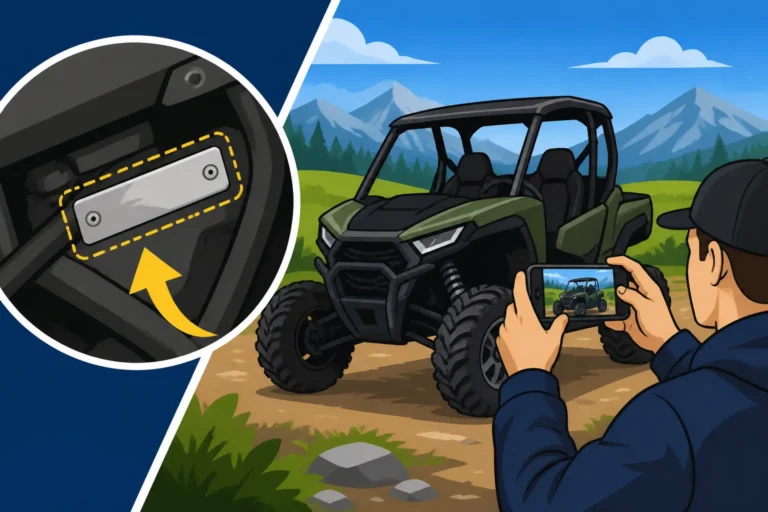
- VIN problems: A VIN that’s unreadable, missing, or doesn't match the documentation. If the VIN is obscured or unreadable, you might need to get a VIN verification from a law enforcement agency or a specialized mechanic. If it's missing or there's a discrepancy, the registry agent will guide you on the next steps, which could involve additional inspections.
- Missing or incomplete previous owner information: If the bill of sale is vague or you've bought an older machine with a long ownership history that isn't fully documented, proving continuous ownership can be tricky. This is where a formal document, even a statutory declaration, becomes key. Resources like LawDepot offer templates for various legal forms, including statutory declarations, which can be invaluable when you're trying to prove ownership or details about your machine without a traditional bill of sale.
- Out-of-province liens: If there's an outstanding lien on the machine from your previous province, it could complicate the transfer. Always do a lien search before purchasing a used OHV, especially from another jurisdiction.
Don't get discouraged if you hit a roadblock. Registry agents deal with these situations regularly and can advise you on the specific steps to resolve them. It might involve a bit more legwork, but there's almost always a solution. For specific issues, see [Alberta Registration When the VIN Is Gone] and [Alberta Registration Questions Agents Hear].
Integrating Your Machine into the Alberta Riding Scene
With your OHV legally registered and insured in Alberta, the fun truly begins! But before you tear off into the sunset, it's worth understanding the broader context of Alberta's riding environment, including where you can ride and other important passes you might need.
Understanding Alberta's Public Land Use Zones (PLUZ)
Alberta boasts an incredible amount of public land, much of which is open to OHV recreation. However, it's not a free-for-all. Much of this land is managed under a system of Public Land Use Zones, or PLUZ. These zones have specific rules and regulations regarding OHV use, including designated trails, seasonal closures, and permitted activities like camping. Familiarizing yourself with the PLUZ system is paramount to responsible riding and avoiding fines.
Before heading out, always check the specific PLUZ you plan to visit. Many popular areas have detailed maps and rules available online from Alberta Environment and Protected Areas. Riding in undesignated areas can lead to ecological damage and hefty fines, so staying on marked trails is crucial. This system ensures that our beautiful natural spaces remain enjoyable for everyone, including future generations of riders. [Alberta's Public Land Use Zones Explained] provides a great overview, and [Crown Land as the Registration Trigger] highlights why this matters.
Getting Your Public Lands Camping Pass and WIN Card
If your idea of an ultimate OHV adventure includes random camping on public land, you'll need to be aware of Alberta's Public Lands Camping Pass. This pass is required for anyone 18 and older who plans to random camp along the eastern slopes of the Rocky Mountains, which encompasses many popular OHV riding areas. It's a small fee that helps fund conservation efforts and maintenance of these cherished lands.
To purchase a Public Lands Camping Pass, you'll first need an Alberta Wildlife Identification Number (WIN) card. The WIN card is a one-time purchase that acts as your unique identifier for various recreational licenses and passes in Alberta, including hunting, fishing, and the camping pass. It's easy to get online or at any registry office. So, if you plan on camping in the backcountry with your machine, make sure both of these are on your checklist. For details, consult [Alberta Public Lands Camping Pass Rules] and [Alberta's WIN Card Explained].
Local Bylaws and Community Etiquette
Beyond provincial regulations, it's also important to be aware of local municipal bylaws that might affect OHV use, especially if you plan on riding near or through communities. Some counties and towns have specific bylaws regarding where OHVs can and cannot be operated, including rules about ditch riding, road crossings, and noise restrictions. These can vary significantly from one municipality to another.
Always check with the local county or municipal office for their specific OHV bylaws before you ride in a new area. Being a respectful rider also means being mindful of noise, dust, and potential impacts on private land or residential areas. A little research and consideration go a long way in ensuring OHV riding remains a welcome activity in Alberta's diverse communities. Start your research with [Alberta ATV Road Rules: Bylaws Decide] and [Alberta Bylaw Lookups Before You Ride].
OHV Document Checklist for New Alberta Residents
Here's a quick overview of what to remember when bringing your OHV to Alberta:
| Item | Before Moving to Alberta | After Moving to Alberta |
|---|---|---|
| Proof of Ownership | Original Bill of Sale / Previous Registration (from old province) | Alberta OHV Registration Certificate |
| Identification | Valid Driver's Licence (from old province) | Alberta Driver's Licence |
| Residency Proof | N/A | Alberta Utility Bill, Lease Agreement, etc. (if needed) |
| Insurance | Existing Out-of-Province Insurance (if valid) | Alberta Third-Party Liability OHV Insurance |
| Physical Plate | Out-of-Province OHV Plate (if applicable) | Alberta OHV Plate |
| Additional Passes | N/A | Alberta WIN Card (for camping pass) |
| N/A | Alberta Public Lands Camping Pass (for random camping) | |
| Legal Templates | Consider LawDepot for any required bills of sale or declarations if buying privately. | Consider LawDepot for any required statutory declarations if ownership proof is complex. |
Disclaimer
This article is for general informational purposes only and does not constitute professional advice. Laws, prices and regulations vary by location and change over time. Consult a qualified professional for guidance on your specific situation.