Federal Tax on a New Machine
Buying a brand-new ATV or side-by-side in Alberta is exciting, but for many folks, the paperwork and hidden costs can quickly turn that excitement into a headache. One of the biggest points of confusion, especially if you're new to Alberta or just haven't bought a new machine in a while, revolves around taxes. You hear talk of GST, PST, and sometimes even a mix of both, leaving you wondering exactly what you're on the hook for. This guide is here to clear up the mystery of federal tax on a new off-highway vehicle (OHV) purchase in Alberta, ensuring you understand exactly where your money is going.
Understanding the Tax Landscape for New OHVs in Alberta
When you’re looking at that shiny new quad or side-by-side on the showroom floor, it’s easy to get caught up in the thrill. But before you sign on the dotted line, it’s crucial to understand the tax implications. Alberta has a unique tax structure that often catches people by surprise, especially if they’ve moved here from another province. Getting this clear upfront will save you from sticker shock later.
The Big Distinction: GST vs. PST
One of the first things to understand about buying anything in Alberta, including a new off-highway vehicle, is the absence of provincial sales tax (PST). That's right, unlike provinces such as British Columbia or Saskatchewan, where you'd pay both a federal sales tax and a provincial sales tax, Alberta only levies one general sales tax. This means that when you purchase your new ATV or side-by-side, you won't be paying the extra percentage that buyers in most other parts of Canada would. This is a significant advantage that can make a difference in your overall budget, but it doesn't mean you're entirely off the hook for sales tax.
The tax you will pay is the Goods and Services Tax (GST). This is a federal tax, applied uniformly across Canada, on most goods and services. Currently, the GST rate is 5%. So, while your friends in Manitoba might be paying 5% GST plus 7% PST (for a total of 12%), here in Alberta, you're only looking at that 5% federal tax. This distinction is paramount and often leads to confusion. Many new residents or those unfamiliar with Alberta's tax system sometimes worry they’ll be hit with an additional provincial tax, but rest assured, [Alberta Has No Provincial Sales Tax]. It’s just the GST you need to factor in for your new machine.
How GST Applies to Your New ATV or Side-by-Side
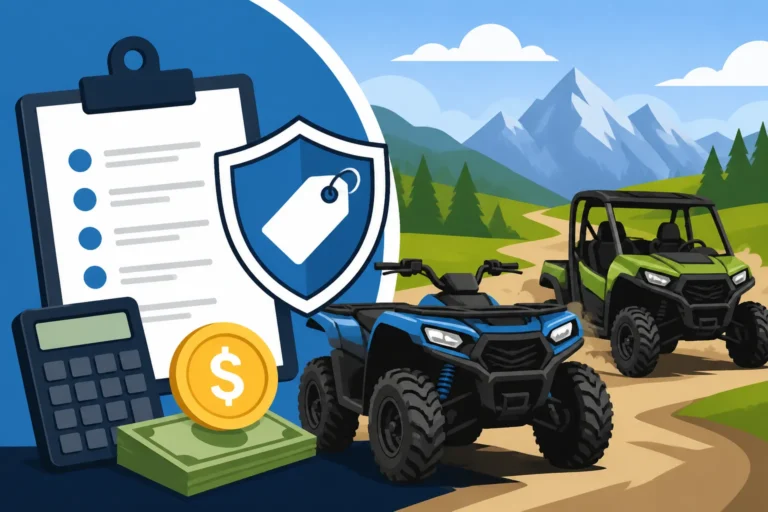
The 5% GST is applied directly to the net purchase price of your new ATV or side-by-side. This isn't just the base price of the machine itself, but often includes other charges from the dealership that are considered part of the "supply" of the vehicle. For instance, if you're buying from a dealer, the GST will be calculated on the total amount before any additional provincial levies (which don't exist here) or financing charges are applied. This is why when you look at an invoice for a new machine, you'll see the line item for GST clearly listed, typically as a single lump sum that’s 5% of the total taxable amount.
It’s a straightforward calculation, but it’s crucial to understand that it impacts your overall cost. For example, if you’re purchasing a machine for $10,000, you’ll be adding an extra $500 for GST. This might seem obvious, but many people budget for the sticker price of the machine and forget to factor in this mandatory federal charge, which can quickly add up, especially on higher-end models or when you start adding accessories right at the point of sale. This is important to remember whether you're buying a quad or a side-by-side; the principle remains the same.
Dealer Purchases and the GST Calculation
Most new ATVs and side-by-sides are purchased from authorized dealerships. These establishments are obligated to collect and remit GST on every new sale. Understanding how they present these costs on an invoice is key to knowing exactly what you’re paying for. It’s not just about the price of the machine; there are often several other charges that also become subject to that 5% federal tax.
Itemized Invoices: What to Look For
When you receive an invoice from a dealership for your new off-highway vehicle, it should be thoroughly itemized. This isn't just good practice; it's essential for transparency. You'll typically see the base price of the ATV or side-by-side listed first. Following that, you might see a series of other charges. These can include:
- Freight: The cost to transport the machine from the manufacturer to the dealership.
- PDI (Pre-Delivery Inspection): The cost for the dealer to uncrate, assemble, and inspect the machine, ensuring it's ready for you.
- Administration Fees: Sometimes called "doc fees" or "dealer prep fees," these cover the dealership's costs for processing paperwork, like your [Alberta Dealer Paperwork at Delivery].
It's vital to note that GST is typically applied to the total of these charges combined with the base price of the machine. So, if your machine is $10,000, freight is $300, and PDI is $200, the GST won't just be on the $10,000. It will be on $10,500, meaning your GST charge would be $525 instead of $500. Always scrutinize the invoice and ask questions if anything is unclear. Reputable dealerships will be happy to walk you through each line item, explaining what it covers and why it’s subject to tax.
Beyond the Sticker Price: Fees That Get Taxed
It's a common misconception that GST only applies to the advertised "sticker price" of the machine itself. In reality, any service or item that is part of the "supply" of the off-highway vehicle to you, the customer, will likely have GST applied. This includes those aforementioned freight and PDI charges, which are often non-negotiable parts of buying a new machine. Even if you add accessories like a winch, a windshield, or heated grips at the time of purchase and have the dealer install them, the cost of those accessories and the labour for installation will also have GST applied.
Imagine this scenario: you've saved diligently for a $15,000 side-by-side. You mentally calculate 5% GST, expecting to pay $750. However, after adding $500 for freight, $400 for PDI, and $600 for a new storage box and winch installed by the dealer, your taxable total jumps to $16,500. Suddenly, your GST bill is $825, not $750. That extra $75 might not sound like a fortune, but it can eat into your budget for riding gear, a trailer, or even your [Alberta OHV Registration Cost]. Being aware of these additional fees that fall under the GST umbrella, often listed under [Alberta Dealer Fees to Expect], allows you to budget more accurately and avoid any unpleasant surprises at the finance office.
Exemptions and Special Cases for Federal Tax
While GST is a mandatory federal tax on most new goods and services, including OHVs, there are specific, albeit rare, situations where the application of GST might differ. It’s not about avoiding the tax entirely for most people, but understanding if any unique circumstances might apply to your purchase.
Farm Use and Tax Implications
For many rural Albertans, an ATV or side-by-side isn't just for recreation; it's an essential tool for farm or ranch work. While Alberta does have some exemptions related to registration for farm-owned machines, such as for a [Alberta Registration for a Farm Quad] that never leaves private land, it's crucial to understand that these exemptions do not extend to the initial purchase tax. The federal Goods and Services Tax (GST) still applies to the sale of a new ATV or side-by-side, regardless of its intended use on a farm or ranch.
The only way a farm operation might see a difference in their tax burden related to GST is if they are a GST-registered business. In such cases, they would still pay the GST at the time of purchase, but they would be eligible to claim an input tax credit (ITC) for the GST paid on the machine, effectively recovering the tax. However, this is a business tax matter and requires the farm to be registered for GST. For the average individual buying a machine for farm use, even if it qualifies for a registration exemption, the 5% federal sales tax on the purchase price itself is still fully applicable and must be paid at the point of sale. It's an important distinction to make, as confusing registration rules with sales tax rules can lead to misunderstanding your financial obligations.
What About Indigenous Status or Diplomatic Exemptions?
There are very specific and narrow exemptions from paying GST that apply under federal law. The most common of these relates to individuals with Indigenous status, specifically status Indians. Under certain conditions, status Indians may be exempt from paying GST on goods and services, including new vehicle purchases, if the goods are purchased on a reserve or delivered to a reserve. However, the rules surrounding these exemptions can be complex and are governed by specific federal legislation. It's not a universal exemption and depends heavily on the circumstances of the purchase and the specific policies of the retailer.
Similarly, diplomatic personnel accredited to Canada may also be eligible for GST exemptions on purchases, but these are typically administered through specific programs and protocols with Global Affairs Canada. These exemptions are highly specialized and do not apply to the general public. For the vast majority of new ATV or side-by-side buyers in Alberta, neither of these categories will apply. If you believe you may qualify for such an exemption due to Indigenous status or diplomatic status, it is imperative to consult directly with the dealership's finance department and verify your eligibility with the relevant government authorities or official sources before completing your purchase. Assuming an exemption without proper verification can lead to unexpected charges and complications.
The Ripple Effect: How GST Impacts Your Overall OHV Budget
When you're dreaming of hitting the trails, it's easy to focus on the big-ticket item – the ATV or side-by-side itself. But savvy riders know that the initial purchase price is just the beginning. The federal tax, while seemingly small at 5%, has a significant ripple effect on your entire OHV budget, from registration to insurance, and even the gear you need to buy. Ignoring this can lead to being short on funds for other critical aspects of riding.
The True Cost of Ownership
That 5% GST adds up, and it's not just on the base price. As we discussed, it applies to all those dealer fees and accessories too. This means that your true "out-the-door" cost for the machine itself is always higher than the advertised price. For a $20,000 side-by-side, the GST alone is $1,000. Add in freight, PDI, and a few essential accessories, and you could be looking at another $1,000 to $2,000 in costs, all subject to that 5% GST. Suddenly, your $20,000 machine costs you over $21,000, maybe even $22,000, just to get it out of the dealership.
This extra cost directly impacts what you have left for other essentials. You'll need to factor in the annual [What Alberta OHV Registration Costs], which is a mandatory expense before you can legally ride on public lands. Then there’s the crucial matter of insurance. Even if you're a careful rider, public land riding requires you to carry liability insurance, and the cost of this can vary widely. Knowing your [Alberta Insurance Cost for an ATV] and budgeting for it is non-negotiable. Don't forget safety gear: a good helmet, gloves, boots, and appropriate riding clothes are essential. All of these items, when purchased new, will also be subject to GST. So, while 5% might not seem like a lot, when applied to a large purchase and all its associated necessities, it creates a substantial bump in your total investment.
Tips for Budgeting Your New OHV Purchase
To avoid any unwelcome financial surprises, it’s best to adopt a comprehensive budgeting strategy from the outset. Don't just look at the machine's price tag; calculate the total cost.
- Add 5% to Everything: When you're pricing out a machine, add 5% to the advertised price and to any known dealer fees (freight, PDI, admin fees). Do the same for any accessories you plan to buy from the dealership, like a winch or a plow.
- Factor in Registration and Insurance: Get quotes for your [Alberta OHV Registration Cost] and [Alberta Insurance Cost for an ATV] before you commit to a purchase. These are annual costs that you need to be able to afford.
- Budget for Gear: Research the cost of essential safety gear and riding apparel. Remember, this too will have GST added.
- Create a Detailed Spreadsheet: Use a spreadsheet or a budgeting tool (you can find templates online, some even on platforms like LawDepot, to help you track expenses) to list every single anticipated cost. This includes the machine, taxes, dealer fees, registration, insurance, gear, and even a small buffer for unexpected items.
- Consider a 'Total Out-the-Door' Price: When negotiating with a dealer, don't just ask for the price of the machine. Ask for the "total out-the-door price," which includes all fees and taxes. This gives you a clear picture of what you'll actually pay.
- Don't Forget Financing Costs: If you're financing your new OHV, remember that interest charges are added on after the total purchase price (including GST) is determined. So, the GST is part of the principal you'll be paying interest on. Understanding your [Financing Through a Powersports Dealer] options and their associated costs is another layer of budgeting.
By diligently accounting for federal tax and all other associated expenses, you'll be able to purchase your new ATV or side-by-side with confidence, knowing you've truly prepared for the full cost of ownership and are ready for safe and enjoyable riding in Alberta.
Disclaimer
This article is for general informational purposes only and does not constitute professional advice. Laws, prices and regulations vary by location and change over time. Consult a qualified professional for guidance on your specific situation.