Photographing a VIN for Your Records
We've all been there: that moment of panic when you need a crucial piece of information about your ATV or UTV, and it's either not at your fingertips or you can't quite read it. Whether you're dealing with insurance, potential theft, or simply trying to remember a detail for a service appointment, having an accessible, clear record of your Vehicle Identification Number (VIN) is absolutely invaluable. This guide will walk you through why and how to properly photograph your VIN and other vital documents, offering peace of mind for every Alberta off-highway vehicle (OHV) owner.
Why Photographing Your VIN is a Smart Move in Alberta
Think of your VIN as your machine's unique DNA. It's a 17-character code that tells a story: who manufactured it, where, when, and what kind of machine it is. Relying solely on a faded sticker or a dirty stamping on the frame can lead to headaches down the road. Taking a few moments to snap some clear photos of your VIN, and knowing where to store them, can save you a world of trouble. It's a simple step that offers huge returns in terms of security and convenience.
Protecting Against Theft and Recovery
Let's imagine a scenario that no OHV owner ever wants to face: you arrive at your favourite staging area in McLean Creek, or perhaps your family cabin in the Lesser Slave River area, only to discover your prized side-by-side or quad is gone. Your heart sinks. The first thing the RCMP or local law enforcement will ask for is the make, model, year, and of course, the VIN. If you're scrambling to find paperwork, or worse, can't clearly recall or locate the VIN on the machine, you're immediately slowing down the recovery process.
A clear photograph of the VIN, especially one that shows the surrounding area on the machine, provides undeniable proof of that specific identifier. This isn't just about reporting the theft; it's about giving the authorities the most precise tool possible to track down your machine. This photo can be instantly shared, entered into databases, and circulated among officers far more easily than a description. It helps them differentiate your stolen machine from others of the same make and model, significantly increasing the chances of getting it back. For anyone looking to purchase a used machine, remember to always perform due diligence, and this includes [Checking a Serial Number for Theft Before You Pay].
Streamlining Insurance Claims and Registration
Life happens. Maybe you have an unfortunate incident on a trail in the Ghost PLUZ, or perhaps a minor fender-bender while trailering your quad out of town. When you call your insurance provider to make a claim, they're going to need that VIN. Having a photo on your phone means you're not digging through your glove box (which might also be damaged), or trying to recall the lengthy alphanumeric code from memory. You can simply open your photo gallery and relay the information accurately and quickly. This small detail can really smooth out what is often an already stressful situation.
Furthermore, when it comes to the administrative side of OHV ownership in Alberta, such as initial registration or transferring ownership, a clear VIN is paramount. Sometimes, the VIN on an older machine can become corroded or obscured. Trying to read a faint stamping at an Alberta registry agent can be frustrating for both you and the staff. A sharp photograph can serve as a vital backup, especially if you're ever in a situation where you need to register a machine but don't have a traditional bill of sale, which can be a tricky situation in Alberta. Knowing how to navigate [Alberta Registration Without a Bill of Sale] can sometimes depend on having clear identifier photos.
Essential for Buying or Selling a Used Machine
In Alberta's robust used OHV market, trust and transparency are everything. As a buyer, seeing a clear photograph of the VIN from the seller, alongside photos of the machine itself, provides an extra layer of verification even before you go to view the machine in person. It allows you to cross-reference the VIN with the registration documents and potentially even perform a lien check, ensuring you're not purchasing a machine with hidden baggage. This simple step can prevent a lot of headaches later on and ensures that the information on the bill of sale accurately reflects the machine you're buying.
If you're the one selling, providing a clear VIN photo from the outset demonstrates your honesty and builds buyer confidence. It helps expedite the sale process, as potential buyers can do their preliminary checks without having to physically inspect the machine first. When creating a bill of sale, whether it's for a friendly transaction between neighbours or a more formal arrangement, having the VIN readily available ensures accuracy. Many Albertans use templates for legal documents, and tools like LawDepot offer straightforward ways to create a bill of sale for your ATV or UTV, where including the accurate VIN is a critical field. This makes the entire process of [What a Private Quad Sale Between Neighbours Needs] much smoother and more professional. You can even generate custom legal forms with the right information that clearly states the machine's identity.
Where to Find and How to Photograph Your ATV or UTV VIN
Finding the VIN on an OHV can sometimes feel like a scavenger hunt, especially if you're new to the machine or it's been a while since you last looked. However, knowing the common spots and following a few simple photographic tips will make this task quick and easy, ensuring you get a clear, usable record every time.
Common VIN Locations on OHVs
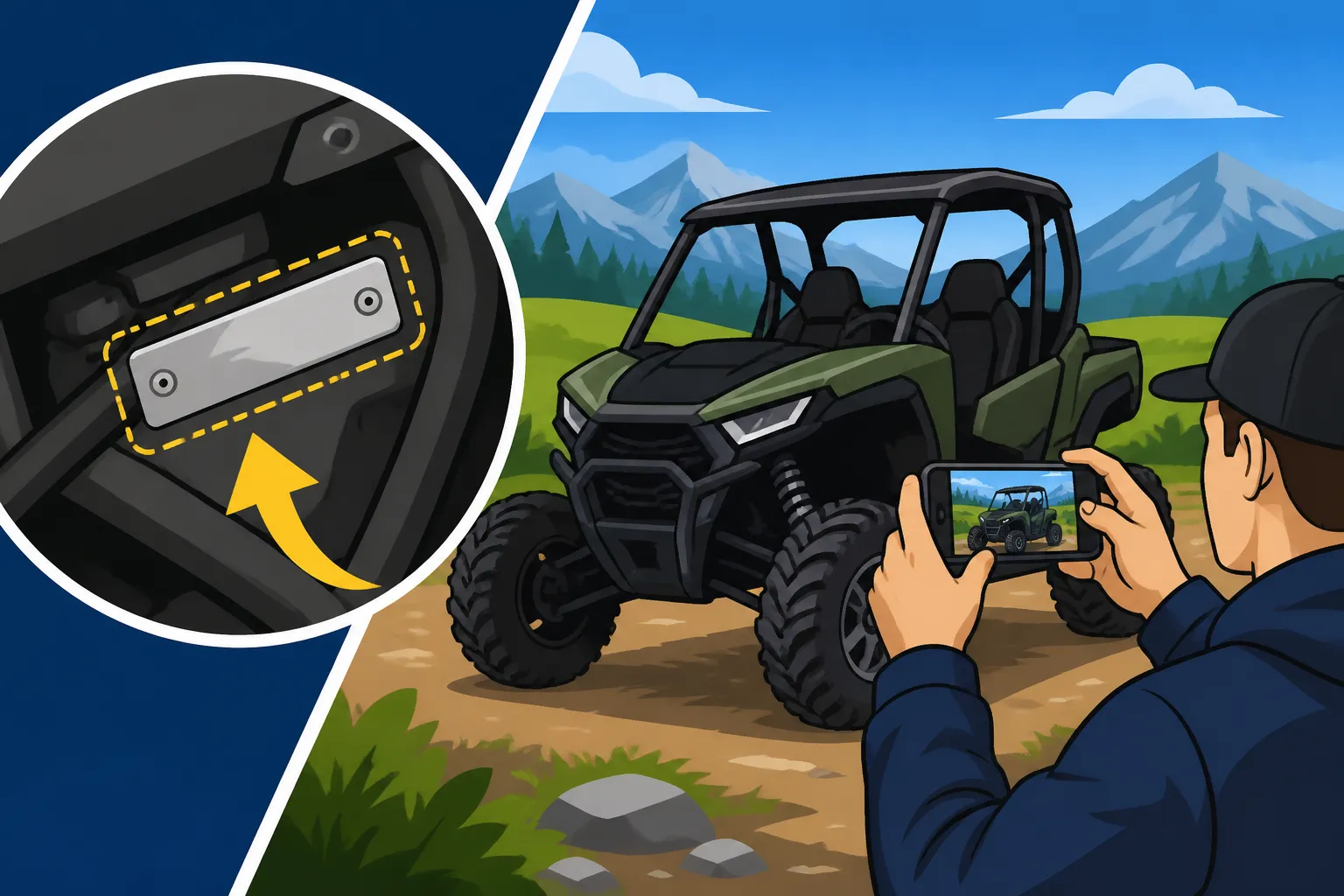
While the exact placement can vary slightly between manufacturers and models, most ATVs and UTVs in Alberta follow a general pattern for VIN placement. For ATVs (quads), you'll often find the VIN stamped on the left side of the frame, usually near the front suspension or the steering head. It might be on a cross-member, or sometimes closer to the footrest area. For side-by-sides (UTVs), the VIN is frequently located on the frame near the driver's side front wheel well, or under the driver's seat. Some manufacturers also place a sticker with the VIN on the frame, but these can fade or peel over time, making the stamped version the most reliable record.
Before you even think about taking a photo, take a moment to locate the VIN. Once found, give the area a good cleaning. Mud, dirt, and grime from countless adventures on Alberta's trails can easily obscure the characters, making them unreadable even in a good photo. A wire brush, a rag, and some mild cleaner can work wonders. You might be surprised how much clearer the stamping becomes once it's clean. Always cross-reference the number with your ownership documents to ensure they match exactly. If you're struggling to locate it, there are resources like [Serial Numbers and Where to Look] that can provide more specific guidance for various machine types.
Tips for a Clear and Usable Photograph
Now that you've found and cleaned your VIN, it's time to capture those crucial images. The goal here isn't just a snapshot; it's a clear, well-lit, and easily readable record that you can rely on. Start by ensuring you have good lighting. Natural daylight is often best, so try to take your photos outdoors during the day. If you're in a garage, use a strong flashlight to illuminate the VIN directly, minimizing shadows. Avoid using your camera's flash if it causes glare, as this can make the numbers harder to discern.
Take several photos from slightly different angles and distances. Get a close-up that clearly shows all 17 characters of the VIN, making sure it's in sharp focus. Then, take a slightly wider shot that includes the VIN but also shows some of the surrounding frame or part of the machine. This wider shot provides context and helps prove that the VIN belongs to your specific machine. Once you have your photos, it’s a good idea to back them up. Email them to yourself, upload them to a cloud storage service like Google Drive or Dropbox, or save them to a dedicated folder on your computer. This way, even if your phone gets lost or damaged, your VIN records are safe and accessible.
Beyond the VIN: Other Critical Documents to Photograph and Store
While the VIN is undeniably important, it's just one piece of the puzzle for responsible OHV ownership in Alberta. Just as with your VIN, having digital copies of other essential documents can be a lifesaver, offering immediate access to information that you might otherwise struggle to find when you need it most. This comprehensive approach ensures you're prepared for anything, from a simple administrative task to an unexpected emergency.
Proof of Ownership and Purchase
Imagine buying a used quad from a private seller near Red Deer, and months later, you discover the paper bill of sale has gone missing. Without it, proving you legally own the machine can become a significant hurdle. This is why photographing your bill of sale immediately after purchase is crucial. Ensure all details, including the seller's information, buyer's information, purchase date, price, and most importantly, the VIN of the machine, are clearly visible in the photos. If your machine came with a Manufacturer's Statement of Origin (MSO) – often the case with new machines – photograph that too. The MSO is essentially the birth certificate of your OHV, proving its initial ownership and specifications. Understanding [What a Manufacturer's Statement of Origin Proves] is key to validating your machine's history.
For those engaging in private sales or looking to formalize their ownership records, services like LawDepot can be a huge asset. They provide customizable templates for bills of sale and other legal documents that clearly outline the terms of the transaction and include all necessary fields like the VIN. Once completed and signed, take clear photos of the final document. This digital backup ensures that even if the physical paper is lost, damaged, or misplaced, you still have a robust record of your legal ownership. It acts as a powerful safeguard against future disputes or complications regarding who actually owns the machine.
Registration and Insurance Documents
In Alberta, riding an OHV on public land requires both registration and insurance. Having these documents readily available, especially when you're out on the trails, is not just good practice—it's often a legal requirement. Photographing your current registration certificate and your proof of insurance ensures that even if you forget the physical copies at home, or if they get wet and unreadable during a creek crossing, you have digital versions on your phone. This is particularly useful when dealing with Alberta registry agents, as having immediate access to your registration details can expedite any inquiry. When it comes to being prepared, you should also be familiar with [Printing a Certificate Before You Ride], as a physical copy is often preferred.
Police officers, Fish and Wildlife officers, or Peace Officers in Alberta can ask to see your proof of registration and insurance at any time on public land. Having a digital photo readily available can save you a potential ticket or a lot of hassle. Remember, [Alberta Proof of Insurance on Demand] is a real requirement, and while a physical card is ideal, a clear digital image can sometimes be accepted. Don't forget to update these photos annually or whenever you renew your registration or insurance, ensuring you always have the most current information at your fingertips.
Maintenance Records and Modification Details
While not legally required, keeping digital records of your OHV's maintenance history and any significant modifications can be incredibly beneficial. If you've had major engine work done, replaced key components, or added aftermarket accessories like a winch or a lift kit, snap photos of the invoices or descriptions of the work. This creates a digital service log that can prove invaluable for several reasons. For example, if you're ever selling your machine, being able to show a prospective buyer a detailed history of care and upgrades can significantly increase its perceived value and help you justify your asking price.
These records also come in handy if you need to troubleshoot an issue or claim warranty work. Having documentation of past services or parts installed can help your mechanic diagnose problems more quickly or prove that work was done by a certified professional. Furthermore, if an incident occurs and you need to detail the extent of damage or the value of modifications for an insurance claim, these photos and digital records provide concrete evidence. It’s all about building a comprehensive digital profile for your OHV, creating a complete story of its life and care.
Practical Scenarios Where VIN Photos Save the Day
We've talked about the "why" and the "what," but let's dive into some real-world situations where having those VIN photos and other digital documents tucked away on your phone or in the cloud truly comes to the rescue. These aren't far-fetched scenarios; they're common frustrations that Alberta OHV riders face, and a bit of digital preparedness can turn a potential disaster into a minor hiccup.
The Lost or Damaged Document Dilemma
Picture this: you're out riding in the Athabasca Ranch Public Land Use Zone, caught in a sudden downpour, and your paper registration certificate, tucked into your waterproof bag, somehow still gets soaked and becomes an illegible pulp. Or perhaps you've moved homes across Alberta, and in the chaos of unpacking, that original bill of sale for your quad vanishes into thin air. These situations are surprisingly common, and they can leave you feeling completely stuck.
Without a physical document, trying to prove ownership, renew registration, or file an insurance claim can become a bureaucratic nightmare. This is where your digital photographs shine. A quick retrieve from your phone or cloud storage, and suddenly, you have all the necessary details. You can provide the VIN, policy numbers, and dates to an insurance agent, a registry service, or even law enforcement. It mitigates the immediate panic and allows you to proceed with whatever task is at hand, often buying you enough time to request official replacement documents if absolutely necessary. It's truly a testament to the power of digital redundancy.
Dealing with Registry Agents and Police
Interactions with official bodies, whether it's an Alberta registry agent or a police officer on patrol, are always smoother when you can provide information promptly and accurately. Imagine being pulled over on a county road that permits OHV use, and an officer asks for your registration and insurance. Fumbling for papers, only to realize you left them on your kitchen counter, can lead to delays and potentially a ticket. However, if you can pull up clear photos of your documents, including your VIN, on your phone, you're immediately showing preparedness and cooperation. Understanding [What an Alberta Officer Can Ask to See] is crucial for all riders.
Similarly, when you visit an Alberta registry agent to transfer ownership, renew your plates, or simply ask a question about your OHV, having a digital copy of your VIN and other details can speed up the process. Registry agents deal with countless documents daily, and a clear, readable VIN from your phone can make their job, and your experience, much easier. It demonstrates that you're a responsible owner who has taken steps to keep their records in order, making your interactions with [Alberta Registry Agents and OHV Paperwork] much more efficient.
Out-of-Province Travel and Verification
Alberta riders often enjoy taking their machines across provincial borders, perhaps to explore the vast trail networks of British Columbia or Saskatchewan. While these provinces have reciprocity agreements for visiting riders, specific rules and requirements can vary. If you're ever stopped by an officer in another province and asked to verify your machine's details, having digital photos of your VIN, registration, and insurance can provide immediate proof of your machine's identity and legal status. This can prevent misunderstandings and ensure a smooth continuation of your trip.
Consider a scenario where you're riding with friends from out of province, and their machine might be subject to different rules. By having your own documents readily accessible, you can quickly provide your information without confusion. While generally [Riding on Your Home Province's Plate as a Visitor] is permitted for a certain period, having all your digital ducks in a row ensures you can confidently assert your compliance with regulations, even when far from home. It's all about minimizing friction and maximizing your time enjoying the trails, wherever they may lead you.
Essential OHV Documents for Digital Records
| Document Type | Why It's Crucial | Best Practice for Photographing |
|---|---|---|
| VIN (Vehicle Identification Number) | Unique identifier for theft recovery, insurance claims, and registration. | Multiple clear, well-lit photos: close-up of numbers, wider shot showing context on the machine. Clean the area first. |
| Bill of Sale/MSO | Proof of ownership, essential for buying, selling, and registration. | Full document, clearly showing buyer/seller details, date, price, and VIN. Get all pages if applicable. |
| Registration Certificate | Legal proof your OHV is registered for public land use in Alberta. | Entire document visible, focus on expiry date and plate number. |
| Proof of Insurance | Legal requirement for public land riding; vital for claims. | Insurance card or policy summary, showing policy number, dates, and covered machine. |
| Maintenance/Service Records | Tracks machine's history, aids resale, warranty claims, and troubleshooting. | Invoices, work orders, photos of installed parts. Ensure dates and descriptions are legible. |
Taking these simple steps to photograph and digitally store your essential OHV documents, especially your VIN, isn't just about being organized; it's about being a prepared, responsible, and secure rider in Alberta. It gives you peace of mind, knowing that no matter what the trail throws at you, you've got your machine's most important details safely in hand.
Disclaimer
This article is for general informational purposes only and does not constitute professional advice. Laws, prices and regulations vary by location and change over time. Consult a qualified professional for guidance on your specific situation.