Registering a Quad After a Long Stay in Alberta
It's incredibly easy to fall in love with Alberta's stunning landscapes and vibrant communities, leading many to extend a short visit into a long-term stay. If you've been enjoying Alberta with your out-of-province quad and now find yourself settling in, you might be wondering about the rules for your off-highway vehicle (OHV). This comprehensive guide will walk you through the ins and outs of registering your ATV or UTV in Alberta once your temporary visit has evolved into full-fledged residency, ensuring you're compliant with local regulations.
Understanding Alberta's 30-Day Rule for Out-of-Province Machines
When you first arrive in Alberta with your ATV or UTV from another province or territory, the good news is that you're generally given a grace period. Alberta's rules for off-highway vehicles allow for visiting riders to operate their properly registered and insured machines from their home jurisdiction for a limited time. This often feels like a welcome relief, especially if you're just passing through or enjoying a short vacation. It means you don't have to immediately scramble to get Alberta plates the moment you cross the border.
However, this grace period isn't indefinite, and it's specifically designed for visitors. The critical element here is the distinction between visiting and establishing residency. For an OHV coming from outside Alberta, you're typically allowed to operate it for up to 30 consecutive days within the province before Alberta registration becomes mandatory. This "30-day rule" is a common point of confusion, as many people assume it resets with every trip or can be loosely interpreted. It's truly about the duration of your machine's stay in Alberta, and more importantly, your status within the province. For a deeper dive into this initial period, check out [Alberta's 30-Day Rule for Out-of-Province Machines].
The true challenge arises when that "visit" turns into something more permanent. Life happens; a temporary job turns into a career, you find a place to live, or your kids enroll in a local school. These are all indicators that your status is shifting from visitor to resident, and with that shift comes a new set of responsibilities regarding your vehicles, including your OHV. Ignoring this change can lead to complications down the line, potentially resulting in fines or other legal issues if you're caught riding an unregistered machine.
When Your "Visit" Becomes a Residency
The moment you start establishing roots in Alberta, your legal standing changes, and so do the requirements for your OHV. While there isn't one single, magic trigger event, residency is generally indicated by a combination of factors. Think about it: if you've moved all your belongings, found a permanent job, signed a lease for an apartment, or purchased a home, you're no longer just visiting. You're an Albertan. This is usually confirmed when you undertake other actions like getting an Alberta driver's license, registering your car in the province, or enrolling your children in local schools. Each of these steps signals a clear intent to reside in Alberta permanently.
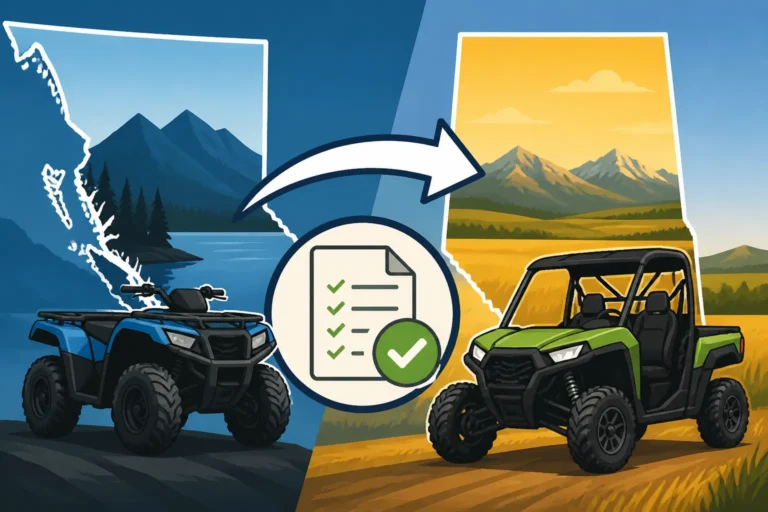
For instance, imagine you arrived from British Columbia six months ago for a contract job, thinking you'd head home afterwards. Now, that contract has been extended, you've rented an apartment in Cochrane, and you're contemplating buying a house. You've also swapped your BC driver's license for an Alberta one. At this point, you've undeniably established residency. Your ATV, which still carries its BC plate, is now subject to Alberta's registration rules. The 30-day grace period for visiting vehicles expired long ago, and continuing to operate it on an out-of-province plate could put you at risk.
This shift in residency is crucial because Alberta's Traffic Safety Act applies to residents operating OHVs within the province. The authorities don't necessarily track your every move, but if you're pulled over and can't provide proof of Alberta registration, or if your personal identification clearly shows you're now an Alberta resident, you could face penalties. It’s always best to be proactive and address your OHV’s registration status as soon as you recognize you’re here for the long haul.
The Legal Obligation to Register
Once you've established residency in Alberta, the legal obligation to register your OHV in the province becomes paramount. The Traffic Safety Act and its associated regulations, specifically the Off-Highway Vehicle Regulation 319/2002, clearly outline that all OHVs operating on public land in Alberta must be registered in Alberta, unless specifically exempted (such as the narrow exemption for bona fide visitors within their 30-day window). This isn't just a suggestion; it's a legal requirement designed to ensure accountability, aid in vehicle identification, and support trail and safety initiatives across the province.
Consider a scenario where you're riding your unregistered quad in a Public Land Use Zone (PLUZ) like McLean Creek. An enforcement officer stops you during a routine check. If they discover you've been living in Alberta for several months, have an Alberta driver's license, and your OHV still has an out-of-province plate (or no plate at all), you could be facing a ticket for operating an unregistered vehicle. Penalties for riding an unregistered OHV can range from fines to, in more serious or repeat cases, vehicle seizure. It’s simply not worth the risk, especially when the registration process is straightforward.
Beyond the immediate legal consequences, registering your OHV also connects you to the provincial system that helps fund and maintain the very trails and staging areas you enjoy. It’s part of being a responsible OHV enthusiast and a contributing member of the Alberta riding community. Understanding [What the Traffic Safety Act Requires of Alberta OHVs] can help clarify these obligations and ensure you're always riding legally.
The Step-by-Step Process for Alberta OHV Registration
So, you've moved to Alberta, unpacked your bags, and now it's time to get your quad officially recognized in its new home. The process for registering an OHV that you've brought in from another jurisdiction is quite similar to registering a newly purchased machine in Alberta, with a few key differences regarding proof of ownership. Generally, you'll need to visit an authorized Alberta Registry Agent. These agents are your one-stop shop for all things vehicle registration, and they're well-versed in guiding you through the necessary paperwork.
Before you even step foot in a registry office, the most crucial step is to gather all your documentation. This includes proof of your identity, proof of Alberta residency, and—critically—proof of ownership for your ATV or UTV. Without these fundamental items, the registry agent simply won't be able to proceed with your registration. It might seem like a lot, but having everything organized upfront saves you multiple trips and potential frustration.
Once you have your documents in hand, the process typically involves a few key steps: confirming your identity and residency, presenting your ownership documents, completing the registration application, and paying the applicable fees. The registry agent will process your information, issue you an Alberta OHV registration certificate, and provide you with a license plate for your machine. This plate then needs to be properly affixed to your OHV before you can legally ride on public land in Alberta.
Gathering Your Paperwork
To ensure a smooth registration process, make sure you have the following documents ready:
- Proof of Ownership: This is the big one. Ideally, you'll have the original bill of sale or Manufacturer's Statement of Origin (MSO) from when you first acquired the machine. If you bought it used, a previous registration certificate from your former province or a detailed bill of sale with the seller's information, vehicle description (make, model, VIN), and purchase price will be essential. If you happen to be missing a traditional bill of sale, or if your machine is an older model where such paperwork is scarce, an affidavit of ownership might be an option. Resources like LawDepot can provide templates for a professional bill of sale if you’re trying to create one retroactively for an older machine, or an affidavit of ownership if you need to attest to your possession.
- Personal Identification: You'll need valid government-issued photo identification, such as your Alberta driver's license or an Alberta ID card. This confirms who you are.
- Proof of Alberta Residency: Since you've established a "long stay," you'll need to prove your current Alberta address. This could be your Alberta driver's license, a utility bill (gas, electricity, internet), a rental agreement, or a property tax assessment. Make sure the address on your ID matches your proof of residency, or be prepared to provide additional documentation if there are discrepancies.
- Your Machine's Details: You'll need the Vehicle Identification Number (VIN), make, model, and year of your ATV or UTV. This information is usually found on the MSO, bill of sale, or directly on the machine itself (often stamped on the frame).
Having these documents clearly organized and easily accessible will make your visit to the registry agent much more efficient. Don't forget to make copies for your own records before you go. For more detailed insights into what documents are required, you might find [What a Registry Agent Needs to Register Your Quad] particularly helpful.
Visiting a Registry Agent
Once your paperwork is in order, your next step is to visit any authorized Alberta Registry Agent office. You can find these offices conveniently located throughout the province, from small towns to major cities. When you arrive, you'll indicate that you wish to register an off-highway vehicle. The staff are trained professionals who regularly handle these types of transactions and can guide you through any specific nuances based on your documentation.
The registry agent will review your proof of ownership, personal ID, and residency documents. They will enter your OHV's details, particularly the VIN, into the provincial system. It's during this step that any previous out-of-province registration might be noted, effectively transitioning your machine's legal status to Alberta. You'll complete an application form, confirming the vehicle details and your personal information. This is also where you'll choose your registration term, which can typically be for [Alberta Registration Terms of One or Two Years].
After the forms are completed and verified, you will pay the required registration fees. These fees include the base registration cost and often a service charge from the registry agent. Once payment is processed, you'll be issued an Alberta OHV registration certificate, which is your official proof of registration. You'll also receive a physical license plate. It's important to remember that [Alberta Issues a Plate, Not a Sticker], so you won't be receiving a separate sticker for your plate. For details on what to expect regarding costs, see [Why Your Renewal Costs More Than the Base Fee]. Registry agents play a crucial role, and understanding [Alberta Registry Agents and OHV Paperwork] can help set your expectations for the visit.
Special Considerations for Long-Term Alberta Residents with Out-of-Province OHVs
Transitioning from visitor to resident with an OHV you've owned for a while can sometimes present unique challenges, particularly if your original paperwork isn't pristine. Perhaps the bill of sale was a casual handwritten note from years ago, or maybe the original owner never provided an MSO. These situations aren't insurmountable, but they do require a bit more effort and understanding of Alberta's options. The key is to demonstrate clear, undisputed ownership to the registry agent.
Another crucial consideration is insurance. While your out-of-province insurance might have covered you as a visitor, once you become an Alberta resident and register your OHV here, you're expected to carry insurance that meets Alberta's requirements. This isn't just a suggestion; it's a legal mandate if you plan to ride on any public land. Proactive communication with your insurance provider is essential to ensure you're adequately covered and compliant with the province's regulations.
Understanding these special considerations helps you navigate the registration process without unexpected hitches. It's about being prepared for potential questions or requirements that might not apply to someone registering a brand-new machine with all its factory paperwork.
Dealing with Lost or Insufficient Paperwork
It's a common story: you bought your quad years ago, perhaps from a friend or a private seller, and the original bill of sale has long since vanished into the abyss of forgotten documents. Or maybe your machine is so old it predates consistent paperwork trails. When you go to register in Alberta after a long stay, a lack of clear ownership documentation can be a roadblock. However, it's not always a dead end.
In cases where you lack a formal bill of sale or Manufacturer's Statement of Origin, an Alberta Registry Agent can often accept a sworn affidavit of ownership. This is a legal document where you solemnly declare, under oath, that you are the rightful owner of the OHV, detailing how and when you acquired it, and why original documentation is unavailable. It's a serious declaration, and misrepresenting facts can carry legal consequences. You may also need to provide additional supporting evidence, such as old registration cards from your previous province, or even photographs of the machine with you. For a formal document like an affidavit, using a service like LawDepot for a template can ensure it meets legal standards. More information can be found in [Alberta Registration Without a Bill of Sale].
In some rare instances, particularly for very old machines or those with questionable VINs, a VIN inspection might be required to verify the vehicle's identity and ensure it hasn't been stolen. This usually involves a visit from a law enforcement officer who will physically examine the OHV's VIN plate. While this adds another step to the process, it's a necessary measure to protect legitimate owners and prevent the registration of stolen property. Always check with your chosen registry agent about their specific requirements for unusual ownership situations before your visit.
Insurance Requirements and Your New Status
One of the most critical aspects of settling into Alberta life with your OHV is ensuring you have proper insurance. While visitors might have been covered by their home province's insurance, once you become an Alberta resident and register your quad here, you are fully subject to Alberta's insurance laws. This means that if you plan to operate your OHV on any public land in Alberta – which includes designated OHV trails, ditches next to highways, and many Crown land areas – you must have valid third-party liability insurance. The specific amount required is generally consistent across the province, but it's vital to confirm with your insurance provider.
Ignoring the insurance requirement is a serious misstep. Riding an OHV on public land in Alberta without valid insurance can lead to significant penalties, including substantial fines and even the seizure of your vehicle. Imagine enjoying a beautiful day out at the [Ghost PLUZ Riding in Alberta] only to be stopped by an officer who then impounds your machine because your insurance isn't up to snuff. It's an expensive and frustrating experience that is entirely avoidable. Always carry proof of your Alberta insurance with you when you ride, as officers have the right to demand it. For further details on this crucial requirement, see [Alberta Requires Insurance on Public Land] and [Alberta Proof of Insurance on Demand].
Contact your insurance broker or company as soon as you know you're becoming an Alberta resident to transition your policy. They can guide you through the process, explain different coverage options, and ensure your OHV is properly insured for its new home. Don't assume your old policy automatically updates or meets Alberta's standards; verify it directly. This step is as important as the registration itself for legal and responsible riding.
Post-Registration Responsibilities and Best Practices
Congratulations! You've successfully navigated the registration process and your ATV or UTV is now officially an Alberta-plated machine. While the hard part is over, there are still a few ongoing responsibilities and best practices to keep in mind to ensure your riding adventures remain hassle-free and compliant with provincial regulations. These steps are simple but crucial for continued enjoyment of Alberta's vast riding opportunities.
From correctly displaying your new Alberta plate to understanding when and how to renew your registration, these ongoing tasks are part of being a responsible OHV owner in Alberta. Staying on top of these details not only keeps you on the right side of the law but also contributes to the safety and enjoyment of the entire riding community. Think of it as the maintenance schedule for your legal paperwork, just as important as the maintenance for your machine itself.
Receiving and Displaying Your Alberta Plate
Once your registration is complete, the registry agent will provide you with a physical Alberta license plate. Unlike some other jurisdictions or even older Alberta practices for other vehicles, for OHVs, [Alberta Issues a Plate, Not a Sticker]. This means the plate itself is your primary visual identifier. It's a small plate, designed to be mounted on your machine without obstructing its function or creating a safety hazard.
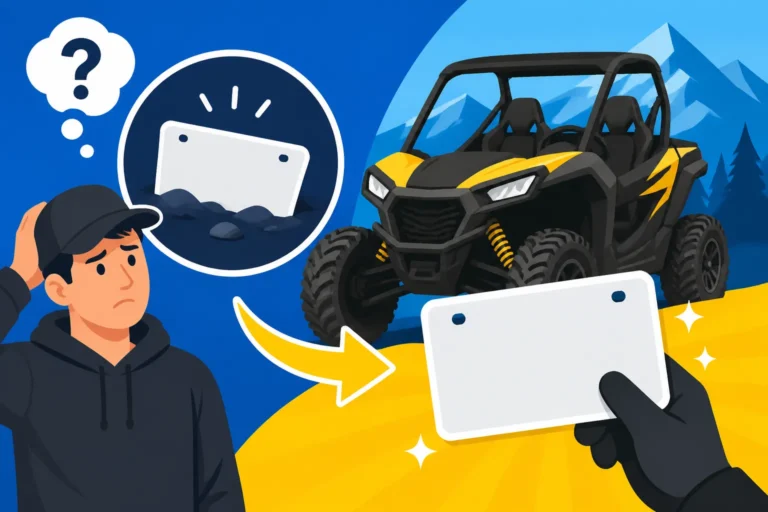
Proper placement of this plate is not just an aesthetic choice; it's a legal requirement. The plate must be securely fastened to the rear of your ATV or UTV, visible and legible at all times. This means ensuring it's not covered by mud, snow, or any accessories you might have added to your machine. It also needs to be mounted in a way that it won't easily fall off on rough trails. Many riders opt for a dedicated license plate bracket that provides good visibility and protection. If your plate becomes damaged or lost, you'll need to visit a registry agent to get a [Alberta Plate Replacement If Lost]. For specific guidance on where and how to mount it, refer to [Alberta Plate Placement on a Machine].
It’s worth noting that riding without a properly displayed plate is akin to riding unregistered and can draw unwanted attention from enforcement officers. Always double-check your plate before heading out on a ride, especially after a muddy adventure or if you've done any modifications to your machine's rear rack or storage.
Keeping Your Registration Current
Just like with your car or truck, your OHV registration isn't a one-time affair; it expires and needs to be renewed periodically. Alberta OHV registrations are typically issued for either [Alberta Registration Terms of One or Two Years], giving you some flexibility in how often you need to revisit this task. Most registry agents will send out a reminder notice as your renewal date approaches, but it's ultimately your responsibility to keep track of the expiry date. This date is clearly printed on your registration certificate.
Renewing your registration is generally a straightforward process. Many people choose to renew online, which can be done through a secure provincial portal during specific [Alberta Online Renewal Hours]. This is a convenient option that saves a trip to the registry office. If you prefer, or if you have specific questions, you can always visit an Alberta Registry Agent in person for your renewal. Regardless of how you renew, once processed, you will receive a new registration certificate. Although it might be a digital document, it's crucial that [Alberta Digital Certificates Must Be Printed] and carried with you when you ride.
Failing to renew your registration means your OHV is once again considered unregistered, and you could face penalties for operating it on public land. It's a simple, quick process to keep current, so don't let it lapse. Mark your calendar, set a reminder on your phone, or sign up for email notifications from the province if available. Staying on top of your renewals ensures you can continue to enjoy Alberta's fantastic OHV trails without interruption or legal concerns.
Required Documents Checklist for OHV Registration in Alberta
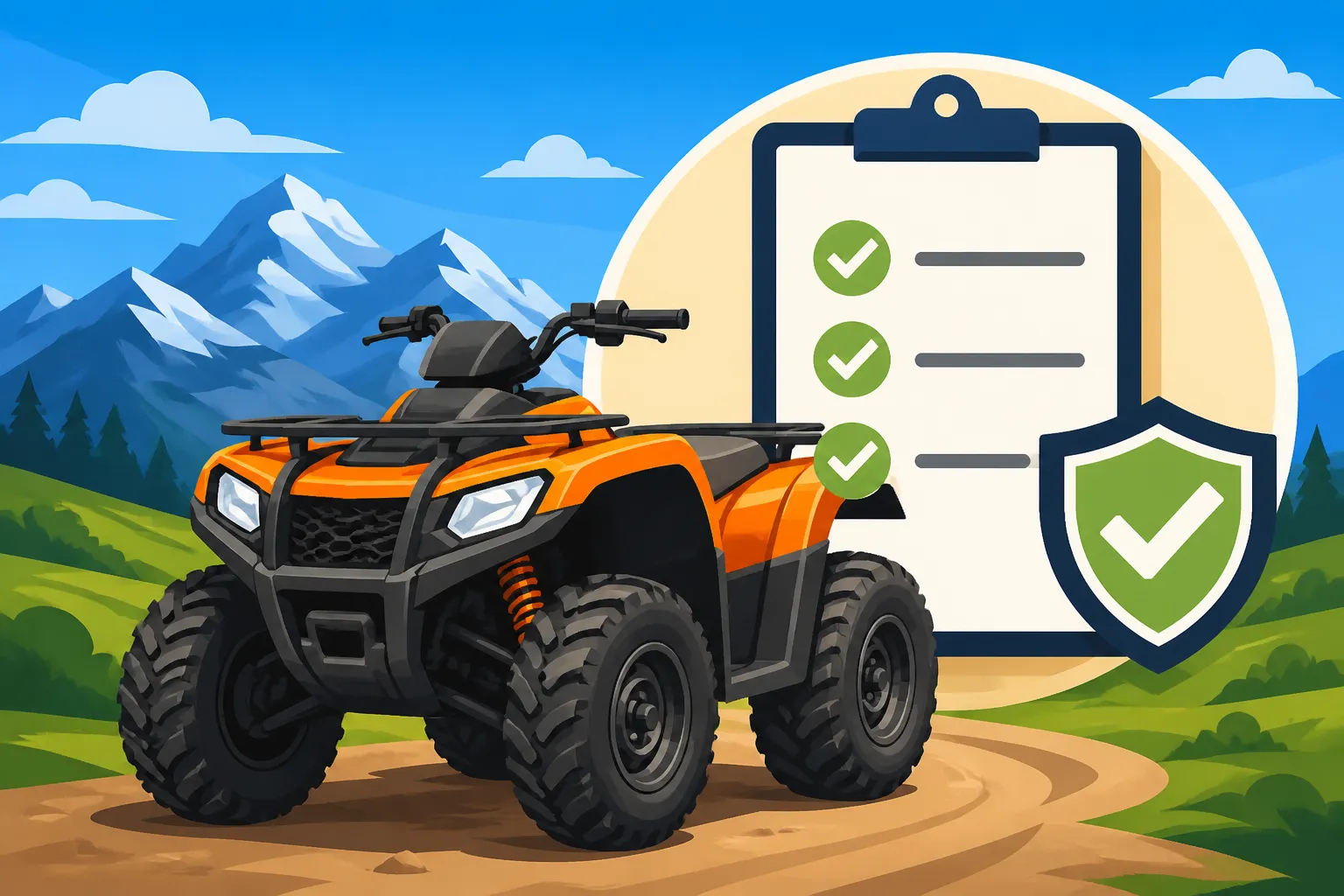
To make your registration process as smooth as possible, here's a quick checklist of the documents you'll likely need, depending on your situation:
| Document Type | Required For | Notes |
|---|---|---|
| Proof of Ownership | All Registrations | Original Bill of Sale, Manufacturer's Statement of Origin (MSO), or previous provincial registration certificate. |
| If Lost/Insufficient Paperwork | Sworn Affidavit of Ownership (templates often available from LawDepot), potentially supported by other proofs (e.g., old insurance papers, photos). | |
| Personal ID | All Registrations | Valid Alberta Driver's License or Alberta ID Card (government-issued, photo ID). |
| Proof of Residency | All Registrations | Alberta Driver's License, utility bill, rental agreement, or property tax assessment showing your current Alberta address. |
| OHV Details | All Registrations | Vehicle Identification Number (VIN), make, model, and year. Ensure the VIN is clear and accessible on your machine. |
Remember, this table provides general guidance. It's always a good idea to call your chosen Alberta Registry Agent office ahead of time to confirm their specific requirements, especially if your situation is unique (e.g., inherited machine, [Alberta Registration After the Owner Dies], or very old OHV).
Disclaimer
This article is for general informational purposes only and does not constitute professional advice. Laws, prices and regulations vary by location and change over time. Consult a qualified professional for guidance on your specific situation.