When Police Seize a Quad for Having No Insurance
It’s a scenario no off-highway vehicle (OHV) owner wants to face: you’re out enjoying Alberta’s incredible trails or working on your land, only to be stopped by an officer who then impounds your quad because you don’t have the proper insurance. The frustration, the immediate hit to your plans, and the looming financial burden can feel overwhelming. This comprehensive guide will walk you through exactly what happens when your ATV or UTV is seized for lack of insurance in Alberta, how to navigate the recovery process, and crucially, how to prevent this headache from happening again.
The Immediate Impact of a Seizure for No Insurance
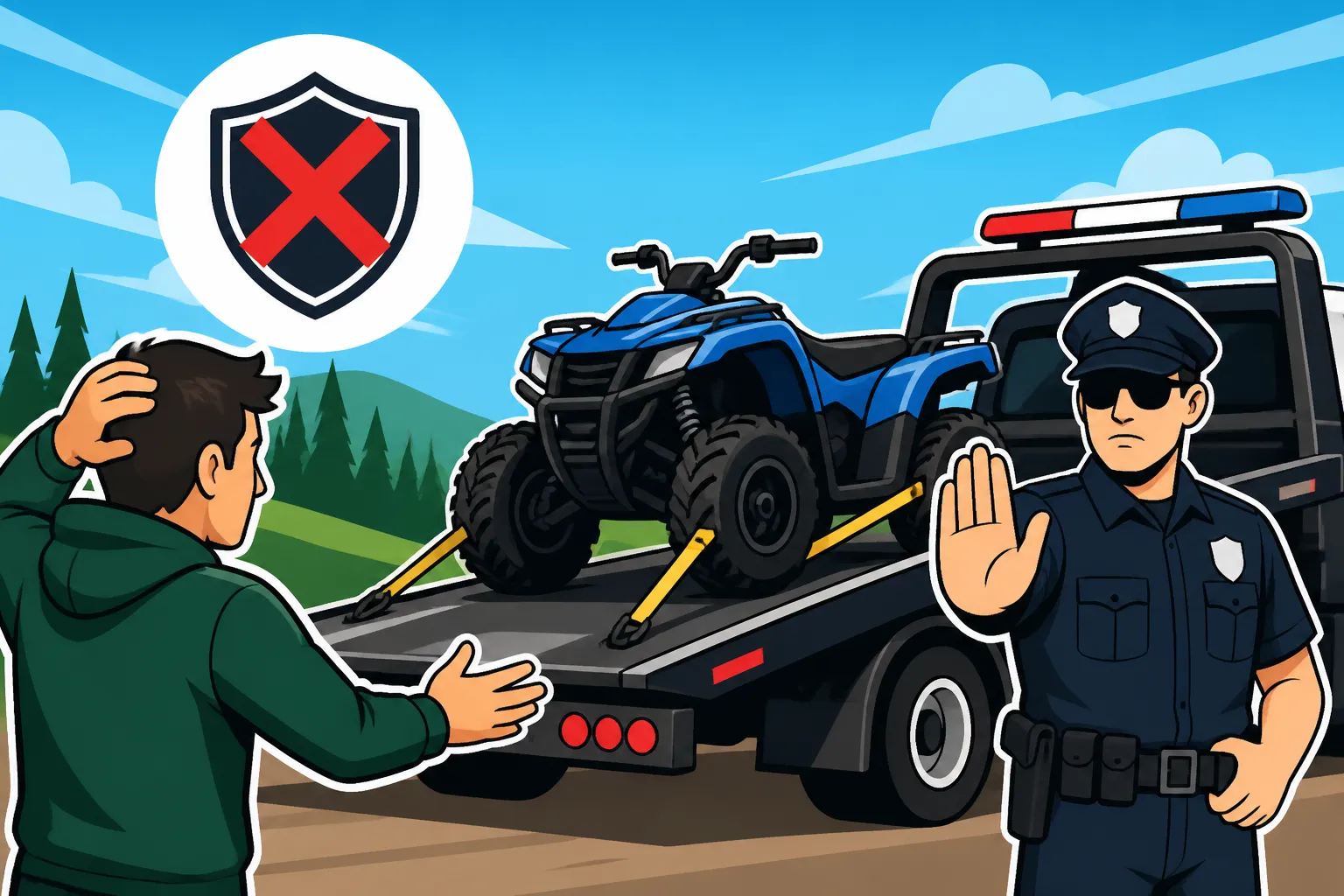
When an Alberta peace officer seizes your off-highway vehicle because you don’t have insurance, it’s not just a warning; it's a significant disruption that comes with immediate, tangible consequences. This isn't a simple pat on the back and a reminder to do better next time. It's a full stop, often leaving you stranded and facing a cascade of expenses.
Why Your Quad Gets Impounded
The core reason for an impoundment due to lack of insurance stems directly from Alberta’s laws. Specifically, the province's [Traffic Safety Act] mandates that off-highway vehicles operating on public land must be insured. This isn’t a grey area; it’s a clear legal requirement. If an officer stops you and you cannot produce proof of insurance on demand, they have the authority to remove your machine from the public space immediately. This applies whether you're cruising through a Public Land Use Zone, accessing your hunting lease via a forestry road, or even riding along a highway ditch, which is legally considered part of the highway system.
The officer's rationale is straightforward: an uninsured OHV poses a significant risk to public safety and property. If you were involved in an accident, without insurance, there would be no coverage for potential damages or injuries to yourself, others, or public property. This is why the enforcement is so swift and uncompromising. They are operating under the clear directives of regulations like [Off-Highway Vehicle Regulation 319/2002], which outlines the conditions under which OHVs can be operated. It’s not about ruining your day; it’s about enforcing a critical safety and financial responsibility measure that [Alberta Requires Insurance on Public Land].
The Costly Tow and Storage Fees
One of the most immediate and painful financial hits you’ll experience after your quad is seized is the cost of towing and storage. When your OHV is impounded, it's not simply left by the side of the trail. It will be professionally towed to a designated impound lot, and these services are rarely cheap. The tow truck operator charges a fee for the pickup and transport, often calculated based on distance, time of day (after-hours service can be higher), and the type of vehicle being towed. Given that many OHV riding areas are quite a distance from urban centres, this initial tow bill can quickly climb into the hundreds of dollars.
Once at the impound lot, your quad begins accruing storage fees. These fees are typically charged on a daily basis, and they don't stop accumulating until you show up, with all the necessary documentation and funds, to retrieve your machine. Life happens, and it might take you a few days to get your insurance in order, gather identification, and arrange payment. During this time, every day your quad sits in that lot, the bill gets bigger. It’s not uncommon for a week's worth of storage to add another few hundred dollars to your growing tab, on top of the initial tow. These costs are solely your responsibility, and the impound lot will not release your vehicle until every penny is paid.
The Infraction Ticket and Penalties
Beyond the immediate loss of your quad to an impound lot and the mounting fees, you will also be issued an infraction ticket. This isn’t just a slap on the wrist; it carries a significant fine. Operating an OHV on public land without valid insurance is a serious offense under Alberta’s traffic safety legislation, and the associated penalties reflect that. The amount of the fine can vary, but it's typically substantial, often in the hundreds of dollars. This fine is separate from the towing and storage costs and must be paid, or you'll have to appear in court to dispute it.
Refusing to pay the fine, or failing to appear in court if you choose to dispute it, can lead to even more severe consequences, such as further penalties, additional court costs, or even potential implications for your driver’s licence. It’s crucial to treat this ticket seriously. The officers who stopped you are fully within their rights to demand [Alberta Proof of Insurance on Demand], and if you don't have it, the legal framework is clear. While the seizure itself is a major inconvenience, the accompanying ticket serves as a powerful reminder of your legal obligations as an OHV owner in Alberta.
Navigating the Recovery Process After Seizure
So, your quad has been impounded. The initial shock and frustration have set in. Now what? Retrieving your off-highway vehicle from the impound lot is a multi-step process that requires careful attention to detail, a bit of patience, and a significant amount of money. It’s not as simple as just showing up; you need to demonstrate that you've rectified the situation that led to the seizure in the first place.
Getting Proof of Insurance in Order
The absolute first thing you need to do is arrange for valid insurance for your OHV. The impound lot will not release your machine without proof that it is now properly insured. This means contacting an insurance provider and obtaining a policy. If you had insurance but couldn't locate the documents at the time of the stop, contact your insurer immediately to get a digital or physical copy of your insurance card or certificate. Most modern insurance companies can email or fax you proof quickly.
If you genuinely did not have insurance, you’ll need to purchase a new policy. Be prepared to provide details about your OHV, including its make, model, year, and Vehicle Identification Number (VIN). Some insurers might ask if the vehicle has been previously impounded for lack of insurance, which could potentially affect your rates or options. Remember, the goal here is to get verifiable, current proof of insurance. This might be a digital insurance card on your phone, a printed certificate, or a physical card. Ensure that the policy is active and covers the date you intend to pick up your OHV. You can often get quotes online or over the phone, and many policies can be activated almost instantly once payment is made. Don't forget to check out what the [Alberta Insurance Cost for an ATV] might look like.
Dealing with the Impound Lot and Paperwork
Once you have your proof of insurance, your next step is to contact the impound lot where your quad is being held. They will confirm their operating hours, what specific documents you need to bring, and the exact amount of money you owe for towing and storage. It's crucial to clarify all these details before you make the trip. Typically, you will need:
- Valid Photo Identification: Usually a driver's licence.
- Proof of Ownership: This could be your OHV registration certificate, a bill of sale, or a manufacturer's statement of origin. Make sure the name on this document matches your ID. If you've just bought the quad and the paperwork is a bit murky, using a service like LawDepot to create a clear bill of sale can solidify your ownership documents before you head to the registry. Clear ownership is key to getting both registration and insurance sorted.
- Current Proof of Insurance: As discussed, this is non-negotiable.
- Payment for Towing and Storage: Impound lots usually only accept specific forms of payment, often cash, debit, or major credit cards. They will not release your vehicle on a promise to pay later.
It’s wise to have copies of everything, even if you’re bringing originals. The impound lot staff will guide you through any specific paperwork they require for release. Be prepared for a potentially lengthy process at the lot, especially if it’s a busy time. Patience is a virtue here, as getting frustrated won't speed things up. It’s a good idea to know the exact location and hours of operations, as some lots have limited weekend or evening hours, which could delay your retrieval even further, adding more storage fees.
Paying the Bill: Fines, Towing, and Storage
This is where the financial reality of the seizure truly hits. Before you can drive your quad off the lot, you must pay all accumulated towing and storage fees. As mentioned, these can escalate quickly. An initial tow of $200 could easily turn into $500 or more with a few days of storage. The impound lot will provide you with a final bill, and you must settle it in full before they hand over the keys (or allow you to load it onto your trailer).
In addition to these impound fees, you are also responsible for the original infraction ticket for operating without insurance. This fine is separate and typically handled through provincial courts or by paying it directly to the provincial government or an authorized agent, not the impound lot itself. Some impound lots might verify that the ticket has been dealt with, but generally, their concern is solely with the tow and storage. Make sure you understand the deadline for paying your ticket or responding to the court, as failing to do so can lead to further penalties. All these costs together — the fine, the tow, and the storage — represent a significant, avoidable expense that underscores the importance of being fully compliant with [Alberta Insurance Requirements on Public Land] at all times.
Avoiding Future Seizures: Staying Compliant
Nobody wants to repeat the impoundment experience. The stress, the inconvenience, and the financial burden are all powerful motivators to ensure it never happens again. The good news is that avoiding future seizures is entirely within your control by understanding and adhering to Alberta's OHV regulations.
Understanding Alberta's Insurance Requirements
The fundamental takeaway here is that if you ride your OHV on any public land in Alberta, you must have valid insurance. This isn't just about designated OHV trails; it includes a wide range of areas that riders sometimes overlook. "Public land" in Alberta is a broad term, encompassing Crown land, provincial parks (where OHVs are permitted), designated OHV recreation areas like McLean Creek, and even roadside ditches and alleys that fall under the legal definition of a highway. Essentially, if it’s not your private land or land you have explicit permission to be on, assume it’s public and requires insurance.
What kind of insurance? Typically, liability insurance is the minimum requirement. This protects you financially if your OHV causes damage to property or injury to another person. While comprehensive or collision coverage is smart for protecting your own machine, liability is the legal mandate. The province wants to ensure that if an incident occurs, there's a mechanism to cover the costs rather than leaving victims with no recourse. It's not just a good idea; it's the law. Many riders miss this point, thinking that because it's an "off-road" vehicle, it escapes "on-road" rules like insurance. Alberta law makes it clear: [Alberta Requires Insurance on Public Land].
Proactive Steps for OHV Owners
Being proactive is key to staying compliant and avoiding the hassle of an impoundment. Here are some essential habits to adopt:
- Always Carry Proof of Insurance: This means having your physical insurance card or a readily accessible digital copy on your phone every time you ride on public land. Don't just assume it's "somewhere in the truck." Make it part of your pre-ride checklist, right alongside checking your fuel and packing your helmet. If an officer asks, you need to be able to produce [Producing Insurance on Demand] quickly and clearly.
- Keep Your Registration Current: While distinct from insurance, registration is another legal requirement for OHVs on public land. Lapsed registration can also lead to fines and potential impoundment. Ensure your [Alberta ATV Registration Renewal Online] is handled promptly. You can check renewal dates with [Alberta Registry Agents and OHV Paperwork].
- Understand What Constitutes "Public Land": Educate yourself on the specific rules of the areas you plan to ride. Some areas might have specific bylaws, but the general rule about insurance on public land remains. Familiarize yourself with definitions like those found in the Traffic Safety Act. For example, [Alberta Rules for Riding Crown Land] are very clear on this.
- Maintain Clear Ownership Records: If you buy a used OHV, ensure you get a proper bill of sale. A tool like LawDepot can help you generate legally sound documents for private sales, ensuring a clear chain of ownership which is vital for both registration and insurance. Having ambiguous ownership can complicate getting an insurance policy or retrieving a seized vehicle.
What to Do If You're Stopped
If a peace officer stops you while you’re riding your OHV, the way you respond can significantly impact the interaction. Here's a brief guide:
- Stay Calm and Cooperative: Remain polite and respectful. An officer is simply doing their job to enforce provincial regulations.
- Pull Over Safely: If directed, stop your OHV in a safe location, turn off the engine, and remove your helmet if requested.
- Provide Requested Documents: Have your driver's licence, OHV registration, and proof of insurance readily available. If your documents are on your phone, inform the officer before you reach for it.
- Be Honest: If you realize you don't have insurance, or your registration is expired, it's generally best to be honest and explain the situation calmly. Trying to deceive an officer will only make matters worse.
- Understand Your Rights: You have the right to ask why you've been stopped and to receive a clear explanation. If you disagree with the officer's assessment, you can gather information and dispute the ticket in court later, but cooperate at the scene to avoid escalation.
Remember, the goal is to resolve the situation efficiently and respectfully. By understanding the rules, taking proactive steps, and handling interactions with officers professionally, you can avoid the costly and frustrating experience of [Alberta Vehicle Seizure for No Insurance] and continue to enjoy Alberta's fantastic OHV opportunities responsibly.
Disclaimer
This article is for general informational purposes only and does not constitute professional advice. Laws, prices and regulations vary by location and change over time. Consult a qualified professional for guidance on your specific situation.