Producing Insurance on Demand
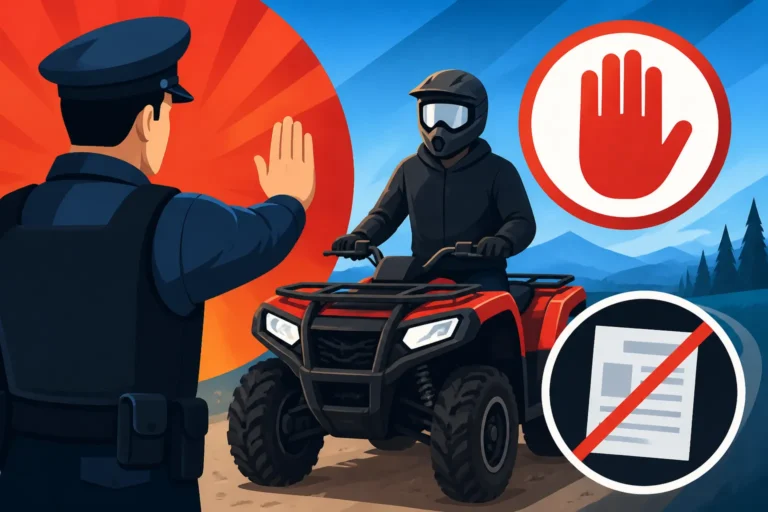
There’s nothing quite like hitting the trails on your ATV or side-by-side in Alberta, feeling the freedom of the open landscape. But that feeling can vanish in an instant if you’re suddenly pulled over by a Fish and Wildlife officer or an RCMP member and asked to produce your proof of insurance. It’s a moment that can make your heart sink if you’re not prepared. This guide is all about helping you understand exactly what’s required, how to carry it, and what can happen if you don’t have it ready to show. We're going to break down the "on demand" part of "producing insurance on demand" so you can ride with confidence and peace of mind, knowing you’ve got all your ducks in a row.
The Non-Negotiable Reality: Why Insurance Proof is a Must in Alberta
It might feel a bit like bureaucracy intruding on your outdoor fun, but the requirement to carry proof of insurance for your Off-Highway Vehicle (OHV) on public land in Alberta isn't just a suggestion; it's a legal obligation. This isn't about stifling your enjoyment; it's about protecting everyone who shares these lands and ensuring accountability in case of an accident.
The Legal Framework Behind OHV Insurance
The foundation for this requirement lies squarely in Alberta's legislation, primarily the Traffic Safety Act and the Off-Highway Vehicle Regulation 319/2002. These provincial laws are designed to govern the safe operation of all vehicles, including OHVs, when they are operated in areas accessible to the public. Essentially, if you're not on private land that you own or have explicit permission to be on without specific conditions, these rules apply. It’s critical to remember that your homeowner's insurance typically won’t cover your OHV when you’re out on public trails or designated riding areas, making dedicated OHV insurance a necessity. Understanding [What the Traffic Safety Act Requires of Alberta OHVs] and specifically the details within [Off-Highway Vehicle Regulation 319/2002] can really clarify these obligations.
Defining "Public Land" for OHV Operation
The term "public land" can be a bit broader than many riders initially assume. It includes the obvious spots like Public Land Use Zones (PLUZ) such as McLean Creek or the Ghost, forestry trunk roads, and designated trails within Crown Land. But it also extends to areas that might surprise you. Think about those seemingly innocuous highway ditches, road allowances, and even some alleys or undeveloped municipal lands. Yes, riding in a ditch alongside a highway or even traversing what feels like an isolated service road can very much fall under the definition of public land, making your insurance and registration requirements kick in. This is why it’s crucial to understand concepts like [Why a Highway Ditch Counts as Public Land] and why many local municipalities have their own bylaws governing OHV use within their boundaries. The key takeaway here is that if you're not on your own private property, assume you need to be insured and registered. You definitely want to avoid a situation where you're caught off guard in a less-than-obvious public area.
Consequences of Operating Uninsured
Riding without valid insurance on public land in Alberta is not just a minor oversight; it carries significant penalties. We're not just talking about a stern warning here. You could face substantial fines, and in more serious cases, your machine could even be seized. Imagine your beloved quad or side-by-side being impounded, leaving you stranded and facing a hefty bill to get it back, on top of the initial fine. This is why [Alberta Requires Insurance on Public Land] is such an important regulation to respect. It's not just about compliance; it's about avoiding a truly frustrating and expensive experience that can put a serious damper on your riding season. Ensuring you have your proof of insurance ready for [Alberta Proof of Insurance on Demand] is about proactive problem-solving, not reactive damage control.
What Actually Qualifies as Proof: More Than Just a Pink Card
When an officer asks for proof of insurance, they aren't looking for a casual verbal assurance. They need to see specific documentation that confirms your OHV is covered. While the familiar "pink card" is the most common form, it's not the only one, and being aware of your options can save you a lot of grief on the trail.
The Standard: Your Insurance Pink Card
For many years, the physical "pink card" has been the universal symbol of vehicle insurance in Alberta. This card, typically issued by your insurance provider, contains all the essential details an officer needs to verify your coverage. It will list the policy number, the effective dates of your insurance, the specific vehicle description (including the VIN), and the name of the insured. It's a tangible, universally recognized document, and having it laminated or stored in a waterproof bag is a smart move to protect it from the elements while you’re out riding.
Modern Solutions: Digital Proof on Your Device
In our increasingly digital world, Alberta has embraced electronic proof of insurance. This means you can often present your insurance information on your smartphone or another electronic device. Your insurance provider will likely have sent you a digital copy, either via email or through their dedicated app. The convenience here is obvious—one less piece of paper to worry about. However, there are a few important caveats. Your device needs to be charged and working, and you need to be able to access the document easily, even if cell service is spotty. A screenshot of your digital pink card is often a good backup plan, as it doesn't require an active internet connection to display. Just make sure the screenshot is clear and shows all the necessary information. Remember, the officer needs to be able to read it.
The Best of Both Worlds: A Printed Digital Copy
While digital proof is accepted, many experienced riders still swear by a printed copy of their insurance certificate or pink card. Think of it as your ultimate backup plan. If your phone dies, gets wet, or simply can't get a signal in the remote backcountry, a printed copy is a lifesaver. Keep it in a waterproof pouch in your machine's glove box, a saddlebag, or even a ziploc bag in your riding jacket. This simple step can prevent a minor inconvenience from escalating into a serious headache. Ensure it's legible and contains all the same information as your original pink card. When it comes to managing important personal documents, tools like LawDepot can be helpful for organizing other aspects of your vehicle ownership paperwork, though it won't generate your insurance card directly. It's more about having all your ducks in a row for all the documentation related to your machine.
Key Information Required on Your Proof
No matter the format, your proof of insurance must clearly display several critical pieces of information. This isn't just for show; it's what an officer uses to confirm your compliance. Look for:
- Policy Number: The unique identifier for your insurance coverage.
- Effective Dates: The start and end dates of your coverage period.
- Vehicle Description: Details like the make, model, year, and crucially, the Vehicle Identification Number (VIN) of your OHV.
- Insured's Name: Your full legal name as the policyholder.
Having all these details present and legible is what makes your proof of insurance valid. It's the core of meeting [Alberta Insurance Requirements on Public Land].
Keeping Your Proof Handy: The "On Demand" Challenge
The operative phrase here is "on demand." This isn't about being able to dig out your insurance card from a mountain of paperwork at home later. It means having it accessible and ready to present immediately when requested by an authorized officer. This is where practicality meets compliance, and a little planning goes a long way.
Secure Storage for Physical Documents
If you opt for a physical pink card or a printed digital copy, think about where you'll keep it on your machine or person. Tucking it loosely into a pocket might seem easy, but it’s a recipe for disaster if you hit a puddle, take a spill, or simply have it blow away in the wind. A small, sturdy, waterproof pouch or bag is an excellent investment. Many riders stash these in a dedicated, easy-to-reach compartment on their ATV or side-by-side, such as a glove box, a small storage bin, or a saddlebag. The key is that it should be protected from the elements and securely fastened so it doesn't get lost while you're bouncing along the trails. This falls directly under the advice for [Carrying Papers on a Long Alberta Ride].
Ensuring Digital Access in the Backcountry
Relying on digital proof presents its own set of challenges, especially when you venture into remote areas where cell service is non-existent.
Here are some tips:
- Charge Your Device: This sounds obvious, but a dead phone is useless. Always start your ride with a fully charged phone.
- Take Screenshots: Save screenshots of your digital insurance card to your photo gallery. This way, you don't need internet access to pull up the document.
- Email it to Yourself: If you have an email app that stores messages offline, sending yourself the digital card can provide another accessible backup.
- Consider a Power Bank: A small, portable power bank can be a lifesaver for keeping your phone charged on longer rides, not just for insurance, but for navigation and emergencies too.
The goal is to ensure that even if you're deep in a Public Land Use Zone, you can still produce that proof without delay. Remember, an officer might not wait patiently for you to find a signal.
What "On Demand" Really Means
When an officer asks for proof of insurance, they expect you to be able to present it then and there. This means no excuses about it being at home, or needing to wait for your phone to charge. The immediate availability of your documents is part of the legal requirement. Imagine the scenario: you're stopped, and the officer asks for your paperwork. If you fumble around, can't find it, or your phone is dead, it can lead to immediate consequences. Being prepared and efficient in producing your documents demonstrates responsibility and makes the interaction much smoother. This is the heart of [Alberta Proof of Insurance on Demand].
| Method of Carrying Proof | Pros | Cons | Best Practice |
|---|---|---|---|
| Physical Pink Card | Universally recognized, no battery needed | Can get lost, damaged by water/mud, takes up physical space | Laminate or store in a waterproof pouch; keep in a secure, accessible spot. |
| Printed Digital Copy | Backup for digital, no battery needed | Same as physical, might not look as "official" as a pink card | Print clearly, waterproof, keep separate from original pink card (if any). |
| Digital on Smartphone (App) | Convenient, always with you (usually) | Requires charged phone, cell service for app/email, screen visibility | Take screenshots, fully charge phone, consider a power bank, protect from drops. |
| Digital on Smartphone (Photo) | No internet needed for viewing | Still requires charged phone, screen visibility, photo can be accidentally deleted | Take multiple screenshots, keep in a dedicated album, back up to cloud. |
The Steep Cost of Non-Compliance: What Happens If You Can't Show It
Failing to produce valid proof of insurance when requested by an officer can quickly turn a fun day out into a very costly and inconvenient experience. The legal system in Alberta doesn't take kindly to uninsured vehicles on public land, and the consequences reflect that seriousness.
Immediate Fines and Tickets
The most direct and immediate consequence of not being able to produce proof of insurance is a ticket and a substantial fine. These aren't just minor parking tickets; they can be quite significant, leaving a noticeable dent in your wallet. The exact amount can vary, but suffice it to say, it's far more expensive than the annual cost of your OHV insurance policy. Think of it this way: for the cost of a few tanks of gas, you could have avoided a fine that might force you to skip several riding trips. While this guide focuses on insurance, remember that not being able to show your registration can lead to similar issues, as highlighted in [Alberta Penalties for Riding Unregistered]. Being prepared for [What an Alberta Officer Can Ask to See] involves both registration and insurance.
Vehicle Seizure: A Major Headache
Beyond a fine, officers have the authority to seize your Off-Highway Vehicle if you are operating it without valid insurance on public land. This is perhaps the most inconvenient and frustrating outcome. Imagine being miles out on a trail, only to have your machine impounded. You'd be left figuring out how to get yourself and any passengers back home, and then facing the process of retrieving your OHV from the impound lot. This usually involves paying the initial fine, proving you now have valid insurance, and then covering the towing and storage fees – which can quickly add up to hundreds, if not thousands, of dollars. This is a very real possibility, as detailed in [Alberta Vehicle Seizure for No Insurance]. The hassle, expense, and stress of vehicle seizure are powerful motivators to ensure you always have your insurance proof ready.
Impact on Your Insurance Record
Even if your machine isn't seized, receiving a ticket for operating an uninsured vehicle (or failing to produce proof) can have lasting repercussions on your insurance record. This could lead to higher premiums in the future, as insurance companies may view you as a higher-risk client. It's not just about the immediate fine; it's about the long-term financial impact that could continue for several years. LawDepot is an excellent resource for creating a variety of legal documents, like a bill of sale or power of attorney, which aren't insurance specific but are critical components of responsible vehicle ownership that can help avoid certain legal tangles. Having all your documentation in order, whether it's insurance or ownership, reduces risk.
The Difference Between No Insurance and No Proof
It's important to understand the distinction between genuinely not having insurance and simply not being able to produce proof of it when asked. While both can lead to tickets and fines, the consequences might differ slightly. If you do have insurance but just forgot your proof, sometimes (and this is not guaranteed, it depends on the officer and the specific circumstances) you might be given an opportunity to present proof at a later date, potentially avoiding the more severe penalties like seizure. However, this is never something to count on. The expectation is that you have the proof on demand. If you genuinely don't have insurance, the penalties will be much harsher. Don't risk it; ensure your OHV is insured for public land use and always carry the proper documentation.
Disclaimer
This article is for general informational purposes only and does not constitute professional advice. Laws, prices and regulations vary by location and change over time. Consult a qualified professional for guidance on your specific situation.