No Sticker on the Plate Since 2021
It's completely understandable to feel a bit lost or frustrated when you head out to register your ATV or side-by-side in Alberta and find that something you always expected—a physical registration sticker for your plate—just isn't there anymore. Many riders, both new and seasoned, have shown up to the registry, or even pulled over by an officer, only to realize the rules have changed. This guide is here to clear up that confusion, explain why those stickers disappeared, and tell you exactly what you need to have to ride legally on Alberta's public lands today.
The End of an Era: Why Alberta Stopped Issuing OHV Plate Stickers
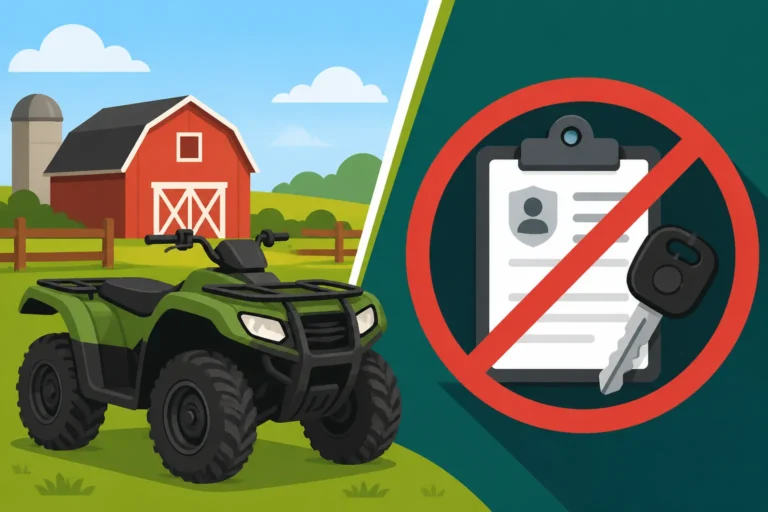
For years, it was just part of the routine: register your off-highway vehicle (OHV), get your metal plate, and then affix that little validation sticker right on it. It was a visual cue, a quick glance for peace of mind, and for enforcement, a fast way to confirm a machine was properly registered. But like many things, the system evolved. Alberta made a significant change, and since 2021, those beloved little stickers are no longer issued for any vehicles, including our trusty ATVs, side-by-sides, dirt bikes, and snowmobiles. This change often leaves riders scratching their heads, wondering if they missed a memo or if their registration is even valid without that familiar sticker.
The provincial government's decision to discontinue plate stickers was part of a larger initiative to modernize services and reduce administrative costs across the board. Think about all the stickers that were printed, mailed, and sometimes replaced each year for millions of vehicles in Alberta. Eliminating them meant a substantial saving in production, postage, and the overall bureaucratic effort involved. It also brought OHV registration in line with how other vehicle types are now managed in the province, creating a more uniform system. While it might feel like a small detail, it was a significant shift that impacted every registered vehicle owner in Alberta. This change, officially implemented in January 2021, means that whether you're registering a brand-new quad or renewing the registration on your decade-old mud monster, you'll get a plate, but no sticker to go with it. You can learn more about this specific change by checking out [Alberta Dropped Plate Stickers in 2021].
What the Shift to Stickerless Registration Means for You
Initially, this change caused a fair bit of confusion. Riders would come home from the registry, plate in hand, only to notice the absence of the sticker they'd always anticipated. There were legitimate concerns about whether they were still compliant or if an officer might question their registration without that visual proof. It's a natural reaction to a change in a long-standing practice. The key takeaway here is that the absence of a sticker is not an error; it's the new normal. Your registration is still valid, and your plate still serves its purpose of identification, but the method of proving its currency has simply moved to a different form. It’s important to understand that the province still expects you to display a valid plate, as detailed in [Alberta Issues a Plate, Not a Sticker], but the validation part now relies on digital records and a physical document you carry.
The shift also puts a bit more onus on the rider to understand the new system. It's no longer a simple matter of looking at the sticker's expiry date on your plate. Instead, you need to know where your proof of registration is, how to access it, and be prepared to present it if asked. This can feel like an extra step, especially when you're used to the old way. However, once you understand the current requirements, it's quite straightforward. The primary thing to remember is that while the sticker is gone, the requirement to be properly registered and to be able to prove it has not.
The Reasoning Behind Alberta's Modernization
Beyond just cost savings, the province aimed for a more efficient and environmentally friendly system. Paper stickers contribute to waste, and the postal system isn't always foolproof. By moving to an electronic system, registration records are instantly updated and accessible digitally by enforcement officers, reducing delays and improving accuracy. This modernization aligns with trends seen in other jurisdictions and across various government services, moving towards digital solutions where possible. It's about streamlining operations and making the overall process more robust and less reliant on physical tokens that can be lost, stolen, or damaged.
This move was also about making the system more convenient in some ways. Renewing your registration can now often be done entirely online, without waiting for a sticker to arrive in the mail. This saves a trip to the registry for many people, especially those living in rural areas. While the initial adjustment period might have been bumpy for some, the underlying intent was to create a more resilient and accessible registration system for all vehicle owners, including those of us who love hitting the trails on our OHVs.
What Replaced the Sticker: Your Digital Registration Certificate
So, if there's no sticker, what do you use to prove your OHV is registered? The answer is your digital registration certificate. When you register your ATV or side-by-side, or renew its registration, you'll receive a digital copy of your vehicle's registration. This isn't just an email; it's an official document that contains all the pertinent details about your machine, its plate number, and the expiry date of your registration. It's crucial to treat this document with the same importance you would have treated your old sticker. In fact, it's even more important because it contains more detailed information.
The key thing to understand is that "digital" doesn't necessarily mean "on your phone." While you might receive the certificate via email or be able to download it, the provincial regulations explicitly state that you must carry a printed copy of your valid registration certificate when operating your OHV on public land. Simply showing an officer a PDF on your smartphone screen isn't usually sufficient. The reason for this is practical: phones can run out of battery, screens can crack, and signal can be non-existent in many of Alberta's incredible riding areas. A printed piece of paper is reliable, always accessible, and doesn't depend on technology working in the backcountry. For detailed instructions, see [Alberta Digital Certificates Must Be Printed].
Carrying Your Proof: Paper is Paramount
Imagine you're out exploring the extensive trails around McLean Creek or navigating the backcountry of the Ghost PLUZ. You're far from cell service, and your phone just decided to die. If an Alberta Fish and Wildlife officer or RCMP officer approaches you and asks for proof of registration, having that printed certificate tucked into a waterproof bag in your riding jacket or under your seat is absolutely essential. It’s your undeniable proof that your machine is legally registered for public land use. Not being able to produce it upon request can lead to fines, inconvenience, and unwanted delays to your ride.
Beyond the registration certificate, you'll also need to carry proof of insurance. Just like the registration, [Alberta Requires Insurance on Public Land], and a printed copy of your insurance pink card (or an electronic version if that’s all you have and you can access it) should be with you. Together, these two documents form the complete package of legal compliance for your OHV. Getting these documents squared away should be at the top of your checklist before every ride, ensuring you're ready for anything the trail—or an officer—throws your way.
Common Misconceptions About Digital Proof
One common misconception is that because the registration is "digital," an officer can just look it up on their system instantly. While enforcement officers do have access to databases, relying solely on that is risky and not the expectation. Their systems might not be real-time, or connectivity issues in remote areas could prevent them from verifying your registration on the spot. The onus is on you, the rider, to have the physical proof. Another mistaken belief is that once you've registered, you're good to go and don't need to worry about the certificate. However, just like your driver's license, your OHV registration certificate needs to be carried with you whenever you're operating the machine on public land.
It’s also important to note that this digital certificate is unique to your machine and its registration period. If you sell your OHV, the registration does not automatically transfer to the new owner, and they will need to obtain their own. Similarly, if you renew your registration, you'll get a new digital certificate with the updated expiry date, and you must print and carry that current version. Always double-check the dates to ensure everything is up to date, whether you're dealing with a new machine or just a renewal.
Managing Your OHV Registration: Best Practices in a Stickerless World
Navigating OHV registration in Alberta, especially without the old plate stickers, comes down to good habits and understanding the new process. It's not just about getting the registration done, but also about managing the paperwork and staying compliant. This means being proactive about renewals, keeping your documents in order, and knowing where to go for help or information. Think of it as embracing a slightly different ritual before your next adventure.
Whether you're registering a machine you just bought from a dealer, or one acquired through a private sale, the process still goes through an Alberta Registry Agent. They will process your application, issue your metal plate, and provide you with that all-important digital registration certificate. It’s wise to keep a separate digital copy (on a cloud service or email) in case you ever lose your printed version. That way, you can easily print a replacement without having to go back to the registry. This small step can save a lot of headaches down the road, especially if you're out on a multi-day trip. You can find more useful information about what's required by visiting [Alberta Registry Agents and OHV Paperwork].
Keeping Your Documents Accessible and Safe
The best practice for your printed registration certificate and proof of insurance is to store them securely on your OHV, perhaps in a small, waterproof case or bag attached to the machine, or carried in your riding gear. This ensures they are always with the machine, regardless of who is riding it (as long as they are legally allowed to operate it). Make sure the location is easily accessible but also protected from the elements. A Ziploc bag inside a storage compartment or a plastic sleeve in your glove box on a side-by-side works wonders for keeping papers dry and legible.
It’s also a good idea to periodically check the expiry date on your printed certificate. Set a reminder in your phone a month or two before it expires so you have ample time to process your renewal. Renewals can often be done online through many registry agents, saving you a trip. Just remember that once renewed, you'll get a new digital certificate that you'll need to print and carry. For more specifics on renewing, consider checking out [Alberta ATV Registration Renewal Online]. This diligence prevents inadvertent lapses in registration, which can lead to tickets and potential vehicle seizure if you’re caught riding unregistered on public land.
Leveraging Tools for Paperwork Management
For private sales, where a dealer isn't handling all the details, managing paperwork can be a bit more complex. You'll need a proper bill of sale to prove ownership for registration purposes. This is where tools from companies like LawDepot can be incredibly helpful. LawDepot provides templates for bills of sale and other legal documents, ensuring you have all the necessary information covered for a smooth transfer of ownership and subsequent registration. Using a professionally drafted template helps avoid issues with incomplete paperwork or disputes later on. Whether you're buying or selling, having a clear, comprehensive bill of sale is crucial, especially when there’s no physical title document to pass along, as is often the case with OHVs.
Similarly, if you're dealing with special circumstances, such as inheriting a machine or acquiring one without a traditional bill of sale, these types of legal resources can guide you on what alternative documentation might be accepted by the registry. LawDepot's resources can offer peace of mind by helping you prepare the documentation required to register your machine correctly and ensure everything is above board. Proper documentation protects both the buyer and the seller and makes the registration process much smoother at the registry office.
What to Do When You Can't Find Your Certificate or Have Questions
It happens to the best of us: you're ready for a ride, you go to grab your registration certificate, and it's nowhere to be found. Or perhaps you're simply confused about a specific aspect of the new stickerless system. Don't panic! There are clear steps you can take to resolve these issues and get back on the trail with peace of mind. The most important thing is to address these concerns before you head out, not when you're facing an officer.
If you've misplaced your printed registration certificate, the first thing to do is check your email or any online accounts you might have with the registry agent you used. Most agents will send you an email with the digital certificate attached. If you can locate that, simply print another copy. If you can't find it digitally or in your personal records, your next step is to contact your Alberta Registry Agent. They can access your registration records and provide you with another copy of your digital certificate, which you can then print. There might be a small fee for this service, but it’s a small price to pay for compliance. Remember, the goal is always to have a current, legible, printed copy with you.
Addressing Confusion and Seeking Clarity
The stickerless system is still relatively new, and it's perfectly normal to have questions. Maybe you're not sure if your specific type of OHV needs registration, or you're wondering about the rules for visitors to Alberta. The best place to get clear, accurate information is directly from an Alberta Registry Agent. These professionals are trained on the latest regulations and can provide definitive answers. Avoid relying solely on hearsay or old information from online forums, as rules can change.
For instance, you might be curious about [Alberta Registration for Visiting Riders] or how long a machine from out-of-province can operate in Alberta without needing local registration, which is covered by [Alberta's 30-Day Rule for Out-of-Province Machines]. These are common and valid questions that a registry agent can easily clarify. They are there to help you navigate the complexities of OHV registration and ensure you understand your obligations under the Traffic Safety Act. Don't hesitate to reach out to them; they are a valuable resource for all things related to vehicle registration in Alberta.
Staying Informed and Compliant
Staying informed is key to enjoying your OHV responsibly and legally in Alberta. Periodically checking official Alberta government websites for updates on OHV regulations, or subscribing to newsletters from reputable OHV associations, can help keep you in the loop. These sources often announce changes well in advance, giving you time to adapt. For example, if you’re concerned about making sure all your ducks are in a row for a private sale, LawDepot can again be a fantastic resource for understanding the nuances of bills of sale and other transfer documents. Their clear, templated forms help ensure that when it comes time to register, you have all the documentation an Alberta Registry Agent needs without any hitches.
Ultimately, the absence of a plate sticker is just one piece of the puzzle. The spirit of the law remains: responsible riding means registering your machine, insuring it, and carrying the correct documentation. By understanding the shift to digital certificates and embracing best practices for document management, you can ensure your adventures on Alberta's beautiful trails are always worry-free and compliant with the law.
| Previous System (Before 2021) | Current System (Since 2021) |
|---|---|
| Metal plate with annual sticker | Metal plate, no sticker |
| Sticker showed expiry date | Digital certificate shows expiry |
| Visual confirmation on plate | Verification via printed certificate/database |
| Renewal often involved mailing sticker | Online renewal common, new digital certificate issued |
| Physical sticker needed on plate | Printed digital certificate required to be carried |
Disclaimer
This article is for general informational purposes only and does not constitute professional advice. Laws, prices and regulations vary by location and change over time. Consult a qualified professional for guidance on your specific situation.