Alberta Farmer-Owned Machines on Private Land
It's incredibly common for farmers in Alberta to wonder if their trusty ATV or side-by-side, used exclusively for work around the farm, actually needs to be registered. You're out there every day, checking fences, moving feed, or herding cattle, and the thought of extra paperwork for a machine that barely leaves your property can feel like an unnecessary burden. This guide is here to untangle the specific rules surrounding farmer-owned off-highway vehicles (OHVs) used solely on private land in Alberta, helping you understand when you're exempt and when you might need to register.
Understanding Alberta's Farm Exemption
The rules around off-highway vehicles in Alberta can feel like a maze, especially for those who rely on them for their livelihood. Farmers have a unique situation, as their machines are often vital tools for daily operations, not just recreational toys. Thankfully, Alberta law recognizes this distinction and offers specific exemptions that can save you time and money, but it's crucial to understand the fine print.
The Core of the Exemption
At its heart, the farm exemption for OHV registration in Alberta is pretty straightforward: if your off-highway vehicle is primarily used for farm operations and never leaves private land, it generally does not need to be registered with the province. This is a huge relief for many producers who might have several machines dedicated to different tasks across their property. Imagine needing to register every quad, dirt bike, or side-by-side you use to check crops, maintain irrigation, or move livestock – it would be an administrative nightmare!
The key here is "primarily used for farm operations" and "never leaves private land." This isn't a blanket exemption for all farm-owned machines, but rather a specific one tied to both the purpose and the location of use. It acknowledges that these vehicles are essential equipment, much like a tractor or a combine, when kept within the bounds of agricultural work on owned or leased land. The provincial government understands that these machines aren't typically contributing to public land use statistics or potential public safety issues in the same way a recreational rider on Crown land might. For more general information, you might find [Alberta's Farm Exemption From Registration] helpful.
What Qualifies as "Farm Operations"?
When we talk about "farm operations," we're generally referring to activities directly related to agriculture. This can include a wide range of tasks that are integral to running a farm, ranch, or acreage. Think about things like tending to livestock, maintaining fields, repairing fences, transporting tools or materials within your property, or even managing irrigation systems. It's about the day-to-day work that keeps your agricultural enterprise running.
However, it’s not just about the type of activity, but also the intent. Using your quad to haul firewood for your personal home heating on your acreage is likely considered part of farm operations if that acreage is also your primary residence and supports your farming activities. But taking the same quad out for a joyride around a large field on a Sunday afternoon, while still on private land, could blur the lines slightly, though typically as long as it stays on your private land, the registration exemption still holds. The moment it's used for recreational purposes off private land, that's where the exemption quickly evaporates. This distinction is critical for understanding the spirit of the law and ensuring you stay compliant.
Defining Private Land for OHV Use
The term "private land" might seem obvious, but when it comes to off-highway vehicles in Alberta, there are nuances that can trip up even the most seasoned rural residents. It's not just about the property lines on your deed; it's about understanding what the law considers private versus public access, and where those lines become blurry.
Owned vs. Leased Land
For most farmers, "private land" clearly means the land they own outright – their homestead, fields, and pastures. This is the most straightforward scenario. If your OHV never leaves these boundaries and is used for farm work, you're generally covered by the exemption. However, many farming operations involve leased land. Whether you lease additional fields from a neighbour or have a grazing lease on Crown land, understanding the distinction is vital.
If you are using an OHV on land you are leasing for agricultural purposes, that land can still be considered "private" for the duration of your lease, provided your lease agreement grants you exclusive access and control. This means an OHV used for farm operations on a privately leased field would generally fall under the same exemption as an OHV on owned land. The critical factor is that you control access, and it's used for your farming operations. You might use a service like LawDepot to help draft clear lease agreements, ensuring all parties understand the terms of land use. However, if that lease is a Crown land grazing lease, that's a different story entirely, as Crown land is generally considered public, even if leased for specific purposes. Alberta Farmer-Owned Machines on Private Land explores this in more detail.
The Grey Area: Road Allowances, Ditches, and Crossings
Here's where things get tricky and many farmers inadvertently find themselves on the wrong side of the law. Road allowances, ditches, and even crossing a paved road to get from one field to another are not considered private land under Alberta's traffic laws. Even if the ditch runs right alongside your private field, and you only use it to get to the back forty, it’s legally part of the "highway" system. This can be a real point of frustration for rural landowners.
Using your OHV to travel along a ditch or cross a road, even for a short distance between your own properties, means you are operating on public land or a public right-of-way. In these scenarios, the farm exemption for non-registration immediately vanishes. Your OHV would then need to be registered, plated, and you would need to carry proof of insurance. It's a common misconception that because it's "just down the road" or "only the ditch," it doesn't count. Unfortunately, it absolutely does. [Alberta Registration Before Riding a Ditch] provides specific information on these challenges.
To illustrate, let's say your farm operation spans two parcels of land divided by a county road. You might think it's perfectly fine to hop on your unregistered quad, drive a few hundred metres down the ditch, and cross the road to your other field. But if you encounter a peace officer, you could face penalties for operating an unregistered and uninsured vehicle on a "highway." Even a gravel road that provides access to your fields might be considered a public road. This is why careful planning is essential if your farm operations require any travel beyond your owned or exclusively leased private property boundaries.
When Registration Is Required for Farmers
While the farm exemption is a boon for many, it's not a get-out-of-jail-free card for all situations. There are very specific circumstances where even a farmer-owned machine, used for agricultural purposes, absolutely must be registered and comply with all provincial OHV regulations. Ignoring these requirements can lead to fines, vehicle seizure, and unnecessary headaches.
Public Land Use
The most significant trigger for requiring registration is using your OHV on any form of public land. As discussed, this includes more than just designated OHV trails or provincial parks. It encompasses road allowances, ditches alongside public roads, Crown land (even if you have a grazing lease, the OHV itself may still need registration for transit), and any other area that isn't exclusively owned or leased private property. If you need to access multiple parcels of your farm by crossing a road, or if part of your daily routine involves checking fences along a public right-of-way, your OHV needs to be registered.
It's a common scenario: a rancher needs to check on cattle in a remote pasture that borders Crown land. While the cattle might be on their leased grazing land, the access road to that pasture might traverse a short section of Crown land. In this case, even if the primary purpose is farm work, the brief transit over public land means the OHV is subject to registration and other regulations like [Alberta Requires Insurance on Public Land]. This is where the distinction becomes crucial, and many farmers are caught off guard.
Recreational Use
Even if your OHV spends 99% of its life doing farm work, if you decide to take it out for a weekend spin on a designated OHV trail, or use it for hunting on public land, it instantly loses its farm exemption status. Any recreational use off private land requires full registration, plating, and insurance. The law doesn't care about the machine's primary use if it's being used recreationally in a public space.
Consider a farmer who uses their side-by-side all week for hauling feed, but on Saturday, they want to take their kids for a ride through a nearby Public Land Use Zone (PLUZ). That side-by-side, regardless of its weekday duties, must be fully registered and insured for that recreational outing. This means that if you anticipate any public land or recreational use, it's far simpler and safer to register the machine from the get-go. Thinking of registering your machine? You'll find helpful steps in [How to Register an ATV in Alberta].
Exceptions for Moving Between Private Properties
Sometimes, a farm operation requires moving an OHV between two separate, non-contiguous parcels of private land. If these parcels are close enough, you might think a quick hop across a public road is fine without registration. However, as noted earlier, crossing a public road or travelling on a road allowance means you are on a "highway" as defined by the Traffic Safety Act.
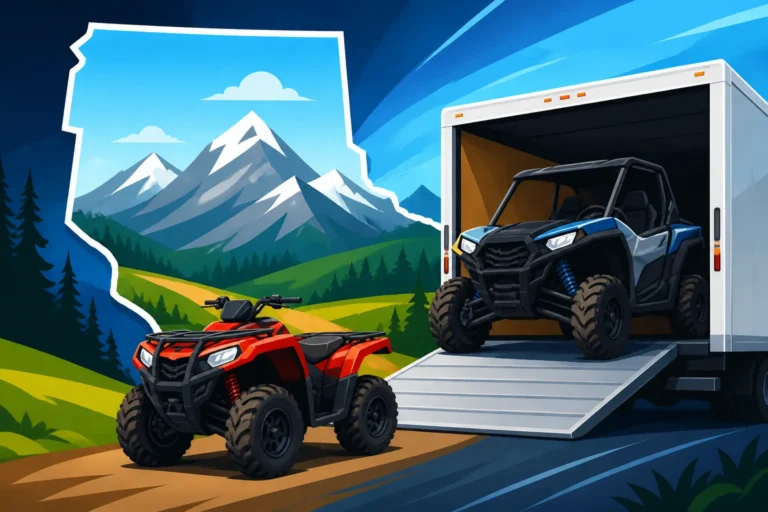
There are very limited exceptions, such as specific bylaws in some rural municipalities that permit OHV use on certain roads. These are rare and highly localized, requiring explicit permission from the municipality. You cannot assume such a bylaw exists where you operate. Without such a specific bylaw, any travel on a public road or ditch necessitates registration. If you're moving a machine between properties, the safest and legally compliant way is often to load it onto a trailer and transport it. This ensures you're not operating an unregistered OHV on a public thoroughfare.
Practical Considerations for Farmers
Navigating the rules for farmer-owned OHVs on private land isn't just about understanding the law; it's also about practical steps to ensure compliance and avoid potential issues. Even with an exemption, common sense and good record-keeping go a long way.
Proof of Ownership and Exemption
Even if your OHV doesn't need to be registered, you should always be able to prove that you own it and that it qualifies for the farm exemption if questioned. This means keeping important documents handy, even if they're just stored securely on your farm. This includes your bill of sale, which clearly shows you purchased the machine, and any documents related to your farm operation that demonstrate its primary use.
Having a clear bill of sale is crucial for any OHV, registered or not. If you've purchased a used machine, a detailed bill of sale from the previous owner is your best defense against questions of ownership. For a new machine, the Manufacturer's Statement of Origin (MSO) is your primary proof. While these documents don't register the vehicle, they establish your legal claim to it. You might consider using a legal document service like LawDepot to generate a professional bill of sale for any OHV transactions, ensuring it includes all necessary details. This helps prevent misunderstandings and establishes a clear paper trail for your ownership. [Alberta Private Sale Paperwork] offers more insights into this.
Insurance: A Must-Have Even If Not Required
While OHVs used exclusively on private land for farm operations may not legally require registration or mandatory public liability insurance under the Traffic Safety Act, carrying insurance is still a highly recommended and prudent decision. Accidents happen, even on private property. A rollover while checking fences, an unexpected collision with farm equipment, or an injury to an employee or visitor involving your OHV could result in significant financial liability.
Your farm liability insurance policy might offer some coverage for OHV use on your property, but it's vital to confirm this with your insurance provider. Many policies have specific exclusions for motorized vehicles, so a separate OHV policy might be necessary. Think of it as peace of mind: if something goes wrong, you're protected. The cost of a dedicated OHV insurance policy, even if just for private land use, is often a small price to pay compared to potential medical bills, repair costs, or legal fees arising from an incident. Don't assume you're covered; always verify with your insurer.
Best Practices for Farmers
To stay compliant and safe, adopting a few best practices can make a big difference.
- Educate Everyone on the Farm: Ensure anyone who operates an OHV on your farm understands the rules. This includes family members, employees, and even casual visitors. Make it clear where the machines can and cannot go without registration.
- Signage: If you have extensive private property that borders public land, clear signage indicating "Private Property" or "No Public Access" can help prevent trespassers and reinforce the private nature of your operations.
- Route Planning: If you must move an OHV between private parcels, plan your route carefully. Can you trailer it? Are there municipal bylaws that allow controlled road crossings? If not, assume you need registration.
- Regular Maintenance: Keep your farm OHVs in good working order. Even on private land, mechanical failures can lead to accidents. Regular checks of brakes, tires, lights, and fluids are crucial.
- Safety Gear: Helmets, eye protection, and appropriate riding gear should always be used, regardless of whether you're on private or public land. Safety isn't optional, and [Alberta Helmet Law on Public Land] highlights why it's so important.
By being proactive and informed, farmers can leverage the registration exemption for their OHVs while maintaining a safe and legally compliant operation.
What Happens if You're Caught Without Registration?
Ignoring the registration requirements, especially when you step off private land, can lead to serious consequences. While the farm exemption offers a reprieve in specific situations, operating an unregistered OHV when it's required can result in penalties that will quickly erase any perceived savings.
Fines and Penalties
If you're caught operating an unregistered OHV on public land in Alberta, even if it's "just the ditch" or "a quick hop across the road," you could face significant fines. These aren't just minor infractions; they are issued under the Traffic Safety Act, which means they carry weight. The exact amount can vary, but generally, operating an unregistered vehicle is a substantial ticket. Furthermore, if you are also found to be operating without the legally required liability insurance (which is mandatory if you need registration), the penalties become even more severe.
Imagine you're driving your quad to check a remote corner of your field and have to briefly use a road allowance. A peace officer stops you. Not only could you be fined for not having current registration, but also for not having proof of insurance. These tickets can add up quickly, potentially costing you hundreds of dollars. It’s far more economical to simply register your OHV if there's any chance it will leave your private property. You can explore [Alberta Penalties for Riding Unregistered] for a clearer picture of potential fines.
Vehicle Seizure
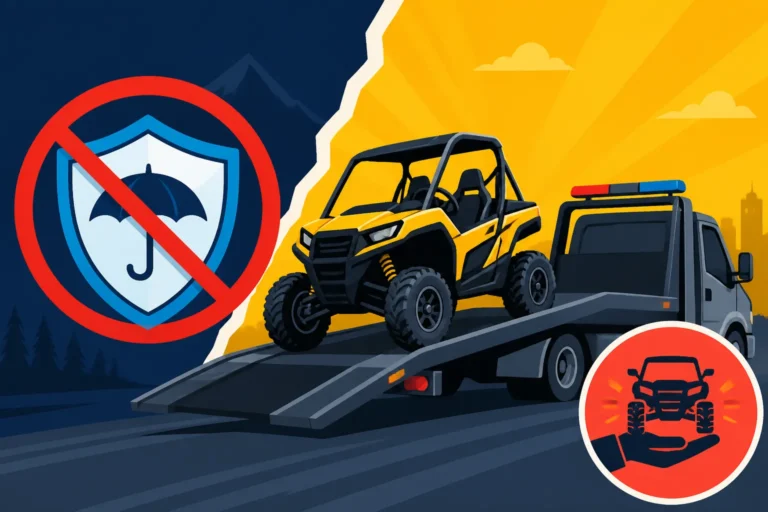
In some cases, operating an unregistered and uninsured OHV on public land can lead to the immediate seizure of your vehicle. This is particularly true if you are found to be operating without valid insurance, which is a very serious offense. If your OHV is seized, you'll incur towing and impoundment fees on top of any fines, and getting your machine back can be a lengthy and frustrating process. This isn't just an inconvenience; it can severely disrupt your farm operations if you rely on that machine daily.
Consider the ripple effect: your quad is taken, you can't complete your daily tasks, and you're now spending valuable time and money dealing with impound lots and court dates. This scenario underscores why it's always better to err on the side of caution and ensure your machine is properly registered and insured if there's any chance it will touch public land. [Alberta Vehicle Seizure for No Insurance] explains the severity of these situations.
Legal Ramifications
Beyond fines and seizure, there are broader legal implications, especially if an accident occurs. If you're involved in an incident while operating an unregistered and uninsured OHV on public land, you could be held personally liable for damages, injuries, and legal costs. Your personal assets could be at risk if you are sued, and without insurance, you have no financial buffer. Even if the accident is not your fault, the lack of proper documentation can complicate matters immensely.
This is why understanding the nuances of private versus public land, and the conditions of the farm exemption, is so critical for Alberta farmers. It's not just about avoiding a ticket; it's about protecting yourself, your business, and your financial well-being. Ensuring your paperwork is in order, whether that means leveraging the exemption correctly or getting full registration, is a non-negotiable part of responsible OHV ownership.
Documentation and Best Practices for Farm OHVs
Even when an Alberta farmer-owned OHV is exempt from registration, having proper documentation and following best practices is essential for proving ownership, facilitating potential sales, and ensuring legal clarity. Think of it as creating a "mini-registration" file for your unregistered farm machines.
Keeping Your Paperwork Organized
For any OHV, registered or not, a paper trail is your best friend. This includes the original bill of sale, any previous ownership transfers, and service records. Even though you don't receive a registration certificate from the province for an exempt farm machine, these documents prove you are the rightful owner. If you ever need to sell the machine, having these records makes the process much smoother and instills confidence in a buyer. Without a proper paper trail, selling a machine can become a headache, especially for a buyer who might then struggle to register it themselves if they plan to use it recreationally or on public land.
Creating a clear bill of sale, even for private transactions, is paramount. You might consider using templates from legal document providers like LawDepot. They often provide user-friendly forms that ensure all critical information is included, protecting both the buyer and seller. This also applies if you are acquiring a machine that was previously unregistered under the farm exemption. Always insist on a clear bill of sale that includes the VIN, purchase price, date, and signatures of both parties. This simple step can save you immense trouble down the road. [Alberta Registration Paperwork Checklist] can give you an idea of what kinds of documents are generally useful to keep.
When to Consider Proactive Registration
While the exemption is valuable, there are situations where proactively registering your farm OHV, even if it could qualify for the exemption, might be the more practical and stress-free choice.
- Borderline Public Land Use: If your farm operations frequently skirt the edges of public land, involve short trips on road allowances, or require crossing public roads, the peace of mind that comes with registration and insurance might outweigh the nominal cost. It removes any ambiguity and risk of penalties.
- Multiple Users: If multiple family members, employees, or even contractors will be using the OHV, ensuring it's registered simplifies things. It means less training on the specific nuances of the exemption and a clearer path to compliance for everyone.
- Future Use: If you anticipate that the machine might eventually be used recreationally, or sold to someone who will use it that way, registering it from the start saves a step later. Transferring a registered OHV is typically simpler than registering an unregistered one.
- Insurance Benefits: As discussed, insurance is a wise investment regardless. If getting a standalone OHV insurance policy is easier when the machine is registered, it could be another reason to register.
Ultimately, the decision to rely solely on the farm exemption or to proactively register comes down to your specific farm layout, operational needs, and risk tolerance.
Here's a quick comparison of farm OHV registration scenarios:
| Scenario | Requires Registration? | Insurance Recommended? | Key Considerations |
|---|---|---|---|
| Exclusively on owned private land | No | Yes | Need proof of ownership (bill of sale) |
| Exclusively on privately leased land | No | Yes | Lease must grant exclusive access; proof of lease |
| Crossing public road between fields | Yes | Yes | Considered "highway"; potential fines/seizure |
| Riding in a ditch/road allowance | Yes | Yes | Also "highway"; high risk of penalties |
| Recreational use on public land | Yes | Yes | Exemption does not apply; full compliance needed |
| Transporting on a trailer | No (OHV itself) | Yes (for OHV in transit) | Trailer might need separate registration/plate |
| Selling the machine | No (if currently exempt) | Yes (while you own it) | Clear bill of sale is crucial for buyer's future registration |
Understanding these distinctions is key to avoiding legal troubles and ensuring your farm operations run smoothly without unexpected interruptions.
Disclaimer
This article is for general informational purposes only and does not constitute professional advice. Laws, prices and regulations vary by location and change over time. Consult a qualified professional for guidance on your specific situation.