Alberta’s Farm Exemption From Registration
Riding an off-highway vehicle (OHV) on an Alberta farm often brings a cloud of confusion around registration requirements. Many farmers rely on quads, side-by-sides, and dirt bikes for essential daily tasks, and the last thing anyone wants is to run afoul of the law simply for tending to their livelihood. This guide aims to clear up the muddy waters, explaining Alberta's farm exemption from OHV registration, when it applies, and crucially, when it absolutely does not.
Understanding the Basics: What is an Off-Highway Vehicle in Alberta?
Before we dive into exemptions, it’s essential to understand what Alberta considers an Off-Highway Vehicle (OHV) in the first place. This isn't just a legal nicety; it sets the stage for every rule that follows, including any potential exemptions that might save you time and money. Knowing precisely what category your quad, dirt bike, or side-by-side falls into is the very first step toward compliance. Without a clear definition, it's easy to assume your machine is exempt when it isn't, or vice-versa, leading to unnecessary worry or, worse, unexpected penalties.
Defining OHVs Under Alberta Law
Under Alberta's Traffic Safety Act, an Off-Highway Vehicle is broadly defined. It essentially covers any motorized vehicle designed for travel on land, water, snow, or ice, and not ordinarily used on a highway. This includes the usual suspects like all-terrain vehicles (ATVs), dirt bikes, snowmobiles, and side-by-sides (UTVs). The key phrase here is "not ordinarily used on a highway." This immediately distinguishes them from your pickup truck or family car, which are built and intended for road travel.
This definition captures a wide array of machines that farmers commonly employ. From a small utility quad used to check fences, to a powerful side-by-side hauling tools across vast fields, if it's motorized and designed for off-road terrain, it's likely an OHV in the eyes of Alberta law. Understanding this fundamental classification is critical before you even begin to consider if your specific use case qualifies for an exemption. It means that most of the workhorse machines on your farm, if they fit this description, are indeed OHVs first, with any exemptions applying after this initial classification.
Common Farm Equipment That Might Qualify as an OHV
On an Alberta farm, OHVs are often more than just recreational toys; they're indispensable tools. Think about the quad you use daily to herd cattle or sheep, or the side-by-side that takes you across a sprawling canola field to check irrigation lines. These are prime examples of farm equipment that unequivocally fit the definition of an OHV. A dirt bike might be used for quick trips between distant outbuildings, while a larger UTV with a dump box could be hauling feed or fencing materials.
Even specialized machines like certain types of compact utility tractors or smaller tracked vehicles, if they are primarily designed for off-highway travel and don't meet the definition of a "farm implement" that is specifically exempt from registration, could fall under the OHV umbrella. The crucial point is their design for off-road utility rather than highway use. It’s not just the big, obvious recreational machines; many smaller, quieter work vehicles are still OHVs and subject to the same foundational rules and potential exemptions.
The Heart of the Matter: Alberta's Farm Exemption Explained
Now that we know what an OHV is, let's get to the crucial part for many rural Albertans: the farm exemption. This provision acknowledges the unique role OHVs play in agricultural operations and seeks to reduce administrative burden on farmers. However, it’s not a blanket exemption for simply owning a farm. It's very specific about who can claim it and how the OHV is being used. Misinterpreting these details can lead to fines and headaches, so paying close attention here is paramount.
Who Qualifies for the Farm Exemption?
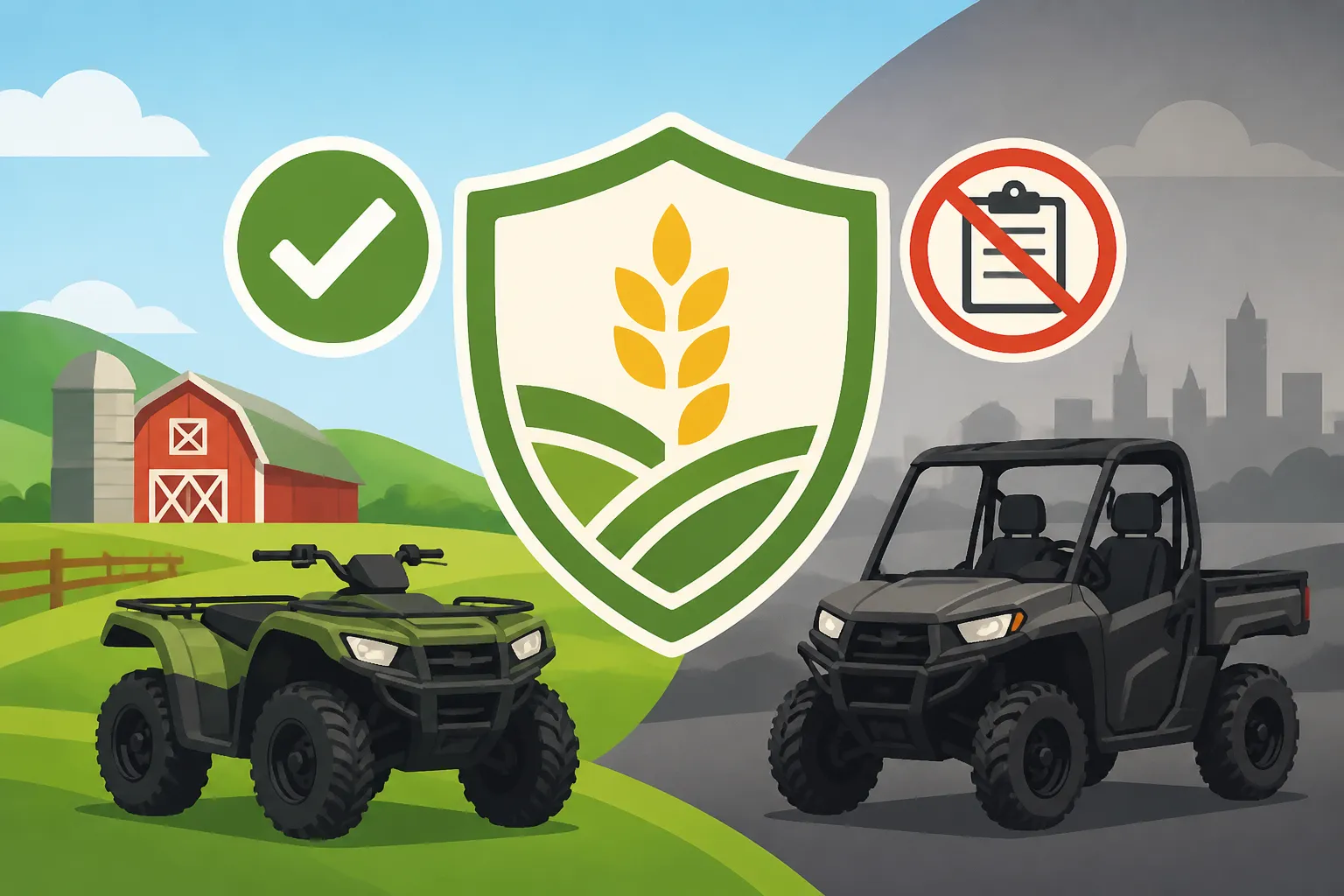
To qualify for Alberta's farm exemption from OHV registration, the machine must be owned by a farmer or rancher. This isn't about someone who owns a small hobby farm with a few chickens; it's generally aimed at those actively engaged in agricultural operations, including cultivating land, raising livestock, or producing agricultural products. The intent behind this rule is to support legitimate farming businesses, allowing them to use necessary equipment without additional bureaucratic hurdles for machines that are essentially tools of the trade.
It’s about the purpose of ownership as much as the purpose of use. If you're running a legitimate agricultural enterprise, whether it's grain farming, cattle ranching, or growing specialty crops, and you own the OHV specifically for these purposes, you're on the right track. This also applies to immediate family members operating the machine under the same farming enterprise. The spirit of the exemption is to streamline operations for those whose livelihood depends on these machines in a very direct, agricultural context.
What "Farm Use" Truly Means
This is where many people stumble. "Farm use" for the purpose of the registration exemption is narrowly defined. It strictly refers to using the OHV for tasks directly related to the operation of the farm or ranch. This includes activities like checking crops, inspecting fences, herding livestock, transporting tools or feed within the farm property, or moving between adjacent parcels of land owned or leased by the same farm operation. Think of it as a tool, akin to a tractor or combine, performing its specific function within the agricultural sphere.
Crucially, "farm use" does not extend to recreational riding, even if that riding happens on your own farm property. If you're out exploring trails on your land for fun, or taking the kids for a joyride after chores are done, that specific activity would typically fall outside the narrow definition of farm use. The exemption is tied to the function of the vehicle at the moment it is being used. If you're using it to fix a broken gate, that's farm use. If you're just cruising around enjoying the scenery, that generally isn't. The moment the intent shifts from agricultural work to leisure, the exemption often no longer applies. For more on this, you might find [Does a Farm Quad That Never Leaves Need Registration?] to be a helpful read.
Restrictions and Limitations of the Exemption
The farm exemption is powerful, but it's far from limitless. The most significant restriction is that the OHV must remain on the farmer's own land or land leased by the farm operation. This means you cannot simply drive your unregistered farm quad down the county road, even if it's just to get to another field a few kilometers away. The exemption is inherently tied to the private property where the farming activities occur. Crossing a public highway or riding along a road allowance, even briefly, generally invalidates the exemption for that specific trip.
Furthermore, as previously mentioned, the purpose of the use is critical. If that "farm quad" is being used for hunting, fishing, trail riding, or any other recreational activity, even if it's on your own property, the exemption likely does not apply. The OHV must be directly employed in agricultural work. This is a common point of confusion, as many farmers use their machines for both work and play. It's essential to understand that if the vehicle is primarily for farm work but occasionally used for recreation, the recreational use portion would typically require registration if it were to occur on public lands. Even on private land, while not subject to public registration rules, the spirit of the exemption is clearly focused on agricultural utility.
Beyond the Farm Gate: When the Exemption Doesn't Apply
It’s vital to understand that the farm exemption is not a free pass to operate your OHV anywhere, any time, without registration. There are very specific scenarios where, despite being owned by a farmer and sometimes used for farm work, your OHV absolutely must be registered and plated. Ignoring these distinctions can lead to significant penalties, including fines and even the seizure of your machine. It's easy to assume that because you're a farmer, your quad is always exempt, but that's a dangerous assumption to make.
Riding on Public Roads or Crown Land
This is perhaps the biggest and most common pitfall for farmers. The moment your OHV leaves the boundaries of your privately owned or leased farm property and ventures onto a public road, highway, road allowance, or Crown land, the farm exemption typically vanishes. This includes crossing a public road to get to another field, driving along the shoulder of a county road, or taking a shortcut through a municipal right-of-way. Even riding in the ditch beside a public road counts as being on a public highway in Alberta. In these situations, your OHV needs to be properly registered with an Alberta plate, and you must carry proof of registration and insurance. [Alberta Registration Before Riding Crown Land] and [Alberta Registration Before Riding a Ditch] delve deeper into these specific scenarios.
The only exceptions to this generally involve specific municipal bylaws that permit OHV travel on certain roads, or if you have specific written permission from the Minister of Transportation, which is rare for general farm use. For the vast majority of farmers, if you're taking your machine off your land, even for a short trip, it needs to be road-legal in terms of registration and plate display, just like any other OHV. This also means understanding [Alberta Requires Insurance on Public Land], as an unregistered OHV will also likely lack the necessary insurance for public land use.
Recreational Use, Even on Farm Property
Another key area of misunderstanding is the nature of the use itself. As we touched on, the farm exemption is specifically for agricultural work. If you, your family, or your friends are using the OHV for recreational purposes—such as trail riding, mudding, joyriding, or simply exploring—even if these activities occur entirely within your own farm property, the spirit of the farm exemption for registration doesn't technically apply to that specific use. While you wouldn't be ticketed for lack of registration on your own private land (because public registration laws don't apply there), the point is that the exemption isn't meant to cover recreational activities.
If that same OHV, used for recreational purposes on your land, then decides to venture off the property onto Crown land or a public trail, it would definitively need to be registered and plated. It's about maintaining consistency in how the vehicle is classified and used. If an OHV is purchased and used primarily for recreational purposes, even if it sees occasional farm work, it's generally prudent to register it from the outset, especially if there's any chance it will ever leave private property.
When a Farm OHV is Used for Commercial Purposes Beyond Agriculture
Sometimes, a farm OHV might be pressed into service for other commercial ventures that aren't strictly agricultural. For instance, if you're using your side-by-side, typically used for checking crops, to also haul equipment for a side business like landscaping or construction work off your farm, the exemption likely would not cover this. The wording focuses squarely on "agricultural purposes." Similarly, if you lend or rent your farm OHV to another entity for their commercial use (not related to your farm's operations), its exempt status would be compromised.
The exemption is designed to support direct farm operations. Any departure from this core purpose, especially if it involves leaving private farm property or engaging in other for-profit activities, usually means the OHV will need to be registered. This ensures that all commercial vehicles operating on public lands adhere to the same registration and safety standards, preventing unfair advantages or regulatory gaps.
Proof and Documentation: What You Need to Know
Even with a legitimate farm exemption, you can't just operate your OHV with a wink and a nod. If you’re ever stopped by an enforcement officer, whether it’s for a random check near your property or in response to a complaint, you need to be able to clearly demonstrate that your machine qualifies for the exemption. This isn’t about suspicion; it’s about upholding the integrity of the law. Having your ducks in a row can save you a lot of hassle and potential penalties down the line.
Records to Keep for a Farm-Exempt OHV
While a farm-exempt OHV doesn't get a registration certificate from a registry agent, you absolutely need to maintain clear documentation of ownership and proof of its primary use. This includes:
- Proof of Purchase: A bill of sale or other purchase agreement showing you are the owner. This is crucial for establishing your legal right to the machine. You can find templates for such documents online; for instance, LawDepot offers various legal forms that can help structure a bill of sale, even for private transactions.
- Proof of Farm Ownership/Operation: Documents like your farm business registration, property tax assessments for agricultural land, crop insurance policies, or livestock registrations. These establish you as a legitimate farmer or rancher.
- Proof of Address: A valid Alberta driver's license or other government-issued ID showing your current residential address, ideally matching your farm property.
- VIN (Vehicle Identification Number) Records: While not registered, having a clear record of your OHV's VIN is essential for identification and theft recovery. Photograph it, write it down, and keep it safe.
Having these documents readily available, perhaps even laminated and stored in a waterproof bag on the machine itself (if practical), or certainly easily accessible at your home, is prudent. This makes it straightforward to answer any questions about your machine's exempt status.
If You Need a Bill of Sale or Ownership Transfer
Even for a farm-exempt OHV, every time ownership changes hands, a proper bill of sale is critical. This document legally transfers ownership and is your primary proof that you rightfully possess the machine. Whether you bought it new from a dealer, used from a neighbour, or acquired it through an auction, get a bill of sale. It should include the date of sale, buyer and seller names and addresses, the OHV's make, model, year, and VIN, and the purchase price.
If you don't have a formal bill of sale, especially for older machines or those acquired informally, creating one retroactively might be possible with the previous owner. However, for a fully registered machine, a valid bill of sale is absolutely required by registry agents. For farm-exempt machines, while not for registration purposes, it's still your best defense against claims of theft or disputes over ownership. Resources like LawDepot can provide customizable bill of sale templates that can simplify this process and ensure all necessary details are included. [Will a Handwritten Bill of Sale Register a Quad?] provides insights into what makes a bill of sale valid.
What to Do If Questioned by Authorities
If an enforcement officer questions your OHV's registration status while you're operating it on your farm property, remain calm and cooperative. Clearly state that you believe your OHV is exempt under the farm use provision of the Traffic Safety Act. Be prepared to present the documentation you've diligently kept. Explain the specific farm task you were performing when approached.
For example, "Officer, I'm checking fences on my property here, and this quad is used solely for agricultural purposes on my land." Then present your bill of sale, proof of farm ownership, and ID. If you've been riding on public land, however, and your OHV isn't registered, then you may be facing a different scenario, as the exemption would likely not apply to that particular instance. In such cases, the officer has the discretion to issue tickets for operating an unregistered OHV or for not having proper insurance. Understanding [Alberta Penalties for Riding Unregistered] is important here.
Navigating the Grey Areas: Common Scenarios and Misconceptions
The clarity of the law often meets the messy reality of daily farm life, creating "grey areas" where the application of the farm exemption isn't always immediately obvious. These are the situations where farmers often scratch their heads, wondering if they're still covered or if they need to rethink their approach. Let's break down some common scenarios that can cause confusion.
Lending Your Farm Quad to a Neighbour
Imagine your neighbour's fence is down, cattle are getting out, and they need a quad to quickly round them up, but their own machine is broken. You lend them your farm quad, typically used for your own cattle. Does the exemption still apply? This is a tricky one. Generally, the exemption is tied to your farm operation. If your neighbour is using your quad for their farm operation, and it remains on their private property (or their leased land), they might argue it's still being used for agricultural purposes, albeit not directly for your farm.
However, the safest approach is to ensure that if your OHV leaves your property, especially if it's being operated by someone else, it's either fully registered or the use is strictly confined to the recipient's private agricultural land. If your neighbour takes it onto a public road or Crown land, even for their farm work, it absolutely needs registration. A formal agreement, perhaps a loan agreement created through a service like LawDepot, could clarify terms of use and liability, even for informal arrangements.
Hauling to a Local Farm Supply Store
This is a classic grey area. You need a few fence posts or a bag of feed, and it's just a short trip down the gravel road to the local farm supply. Can you take your unregistered farm quad, perhaps with a small trailer attached, for this "farm errand"? In almost all cases, the answer is a resounding no. The moment your OHV leaves your private property and enters a public road, the farm exemption is generally lost. This is considered use on a highway, even if it's just a short hop and even if you're carrying farm supplies.
For such trips, your OHV must be fully registered, plated, and insured for public road use. The intent of the trip (getting farm supplies) does not override the location of the travel (a public road). This is a very common scenario that leads to tickets for farmers, simply because they view the trip as an extension of their farm work, not as public road travel. Remember the rule: if it leaves your land, it usually needs to be registered. [Alberta Registration Before Riding a Ditch] is highly relevant here, as even the ditch is often considered part of the highway.
Using a Farm Quad for Hunting on Your Own Land
You've spent all day checking fences with your quad, and now that evening chores are done, you decide to use it to retrieve a deer you harvested on your own property. Is this still "farm use"? While it's on your land, and retrieving game can be seen as practical, it generally doesn't fall under the narrow definition of agricultural work for the purpose of the registration exemption. Hunting is a recreational activity, even if it occurs on your farm.
Again, on your own private land, the need for public registration doesn't apply anyway. However, if you were to use that same quad for hunting off your private property, say on Crown land or a designated hunting area, it would unquestionably need to be registered and plated. The distinction is subtle but important: the exemption applies to agricultural activities, not merely to activities on a farm.
Other Important Considerations for Farm OHV Operators
Beyond the intricacies of registration, operating an OHV on a farm, whether exempt or registered, comes with other critical responsibilities. These factors are just as important for safety, compliance, and peace of mind. Thinking about your OHV purely in terms of registration can lead to overlooking other legal and practical requirements that ensure safe and responsible operation.
Insurance Requirements for Farm-Used OHVs
Even if your OHV is farm-exempt from registration because it never leaves your private property, you should seriously consider carrying adequate insurance. While Alberta law only mandates insurance for OHVs operating on public land, accidents can and do happen on private property. A rollover, a collision with farm equipment, or an injury to a farmhand or visitor can result in significant financial liability. Without insurance, you'd be personally responsible for medical costs, property damage, and potential lawsuits.
Many general farm insurance policies might offer some coverage for OHVs used in farming operations, but it's crucial to confirm this with your insurer. Ask specific questions about liability coverage, collision, and comprehensive coverage for your farm-used OHVs. If your OHV sometimes leaves your private land and is registered, then carrying liability insurance is a legal requirement for public land use. [Alberta Requires Insurance on Public Land] is a key resource for understanding these obligations. It's a small premium for potentially massive protection.
Helmet Laws and Age Restrictions on Farm Land
Alberta's helmet law requires anyone riding an OHV on public land to wear a CSA-compliant helmet. However, there are specific exemptions, and private farm land is one of them. Generally, helmets are not legally mandated for adults operating an OHV on private farm or ranch land for the purpose of agriculture or ranch work. This also extends to certain cultural exemptions or if the OHV has rollover protection and seatbelts. For more specific details, [Alberta Private Property Helmet Exemption] offers a deeper look.
Despite the exemption, safety-conscious farmers often choose to wear helmets anyway, especially for more challenging tasks or uneven terrain. Accidents can be severe regardless of location. For youth, Alberta has age restrictions (a minimum age of 14 for operating an OHV alone on public land), and while these may not apply on private land, parental supervision and careful judgment are always paramount when children are operating any machinery. Common sense and safety always trump legal exemptions when it comes to protecting yourself and your family.
The Importance of Safe Operation and Maintenance
Regardless of its registration status, every OHV on a farm needs to be operated safely and maintained regularly. Farm environments can be hazardous, with uneven terrain, obstacles, livestock, and other machinery. Proper training, knowing the limits of your machine, avoiding impaired operation, and ensuring all safety features (like brakes and lights, if applicable) are in working order are non-negotiable.
Regular maintenance—checking tires, oil, brakes, and spark arrestors—prevents breakdowns and ensures reliable performance. A well-maintained OHV is a safer OHV. When police or enforcement officers conduct checks, they're not just looking at registration; they're also assessing the overall condition of the machine and the safety of its operation. A farm OHV might be exempt from registration, but it's never exempt from the laws of physics or the need for responsible handling.
Making the Right Choice: Registering Your Farm OHV Anyway
While the farm exemption offers a clear benefit, it's not always the best or only path for every farmer. For some, the limitations of the exemption might outweigh the administrative ease. There are compelling reasons why a farmer might choose to voluntarily register their OHV, even if they could technically qualify for an exemption. This decision often boils down to balancing convenience, liability, and the practical realities of how the OHV is actually used day-to-day.
Benefits of Voluntary Registration
Opting to register your farm OHV, even when exempt, can offer several advantages:
- Flexibility of Use: The biggest benefit is the freedom to operate your OHV off your private property without legal concerns. Need to cross a public road to get to another field? No problem, as long as you're registered and insured. Want to take your OHV to a nearby community event or staging area for a family ride on a weekend? You can, provided you adhere to all other public land rules. This eliminates the constant worry about where your wheels are touching. [Alberta Registration for a Farm Quad] provides details on this process.
- Theft Recovery: While not a guarantee, a registered OHV with a visible plate can sometimes be easier for law enforcement to track if stolen. It's tied to a provincial database, providing a clear record of ownership that can be invaluable in recovery efforts.
- Clear Proof of Ownership: While a bill of sale is crucial, a provincial registration certificate from a [What a Registry Agent Needs to Register Your Quad] office offers another layer of official, government-backed proof of ownership, which can be beneficial in disputes or legal situations.
- Resale Value and Ease of Sale: A registered OHV might be more attractive to potential buyers, as it signifies clear ownership and provides a ready-to-transfer registration certificate, simplifying the process for the next owner.
These benefits often provide enough incentive for farmers to choose voluntary registration, especially if their OHV is used for a mix of work and occasional off-farm travel.
When to Consider Registering Despite the Exemption
You should strongly consider registering your farm OHV if:
- It frequently leaves your private property: If you regularly need to cross public roads, use road allowances, or venture onto Crown land for any reason—be it farm work, errands, or recreation—registration is highly advisable. Trying to rely on the exemption for these trips is a risky gamble.
- It's used for both farm work and recreation: If the OHV serves a dual purpose, registering it provides the flexibility to enjoy it recreationally on public lands (where permitted) without having to buy a second, dedicated recreational OHV.
- You frequently lend it to others: If family members, friends, or other farmhands will be using the OHV, particularly if there's any chance it might leave your property, registering it ensures all operators are covered under appropriate legal frameworks.
- You're uncomfortable with the grey areas: If the nuances of "farm use" and "private property" create too much uncertainty or anxiety, registering the OHV offers definitive compliance and peace of mind.
Ultimately, the decision rests on a careful evaluation of how you actually use your OHV, not just how you could use it under the strictest definition of the exemption.
The Registration Process for a Farm Machine
If you decide to register your farm machine, the process is straightforward and similar to registering any other OHV in Alberta. You'll need to visit an authorized Alberta Registry Agent office. Make sure you bring:
- Proof of Ownership: A bill of sale or Manufacturer's Statement of Origin.
- Personal Identification: Your valid Alberta driver's license or another form of government-issued ID.
- Proof of Insurance: A valid pink card from an Alberta-approved insurer.
The registry agent will process your application, and you'll receive an OHV plate and a registration certificate. The cost for OHV registration varies, depending on whether you choose a one-year or two-year term, and includes the base registration fee plus the registry agent's service charge. For more detailed information on associated costs, you can consult [What Alberta OHV Registration Costs]. Remember, once registered, your OHV must display its plate properly, and you must carry a copy of your registration certificate and proof of insurance whenever you operate it. This is a simple, proactive step that can save you a lot of grief.
| Scenario | Farm Exemption Applies? | Registration & Plate Required? | Insurance for Public Land Required? |
|---|---|---|---|
| Herding cattle on your own fields | Yes | No | Recommended (Private) |
| Checking fence lines on leased land | Yes | No | Recommended (Private) |
| Riding for recreation on your own land | No (but public laws don't apply) | No | Recommended (Private) |
| Crossing a public road to another field | No | Yes | Yes |
| Driving along a public ditch/road allowance | No | Yes | Yes |
| Hauling feed from a store down a county road | No | Yes | Yes |
| Hunting on Crown land | No | Yes | Yes |
| Transporting tools between farm parcels (private access) | Yes | No | Recommended (Private) |
| Transporting tools between farm parcels (public road access) | No | Yes | Yes |
| Lending to a neighbour for their farm use (on their land) | Grey Area (Safest: Register) | Recommended (for off-property use) | Recommended (for off-property use) |
Disclaimer
This article is for general informational purposes only and does not constitute professional advice. Laws, prices and regulations vary by location and change over time. Consult a qualified professional for guidance on your specific situation.