Where a Kananaskis Pass Actually Gets Checked
If you’re hauling an ATV or side-by-side into Kananaskis, it can be hard to tell whether the pass is checked at a gate, a trailhead or somewhere along the road. The practical answer is that checks can happen in the area, often by plate, so plan for the vehicle you park—not just the machine you ride.
Where Kananaskis Pass checks happen
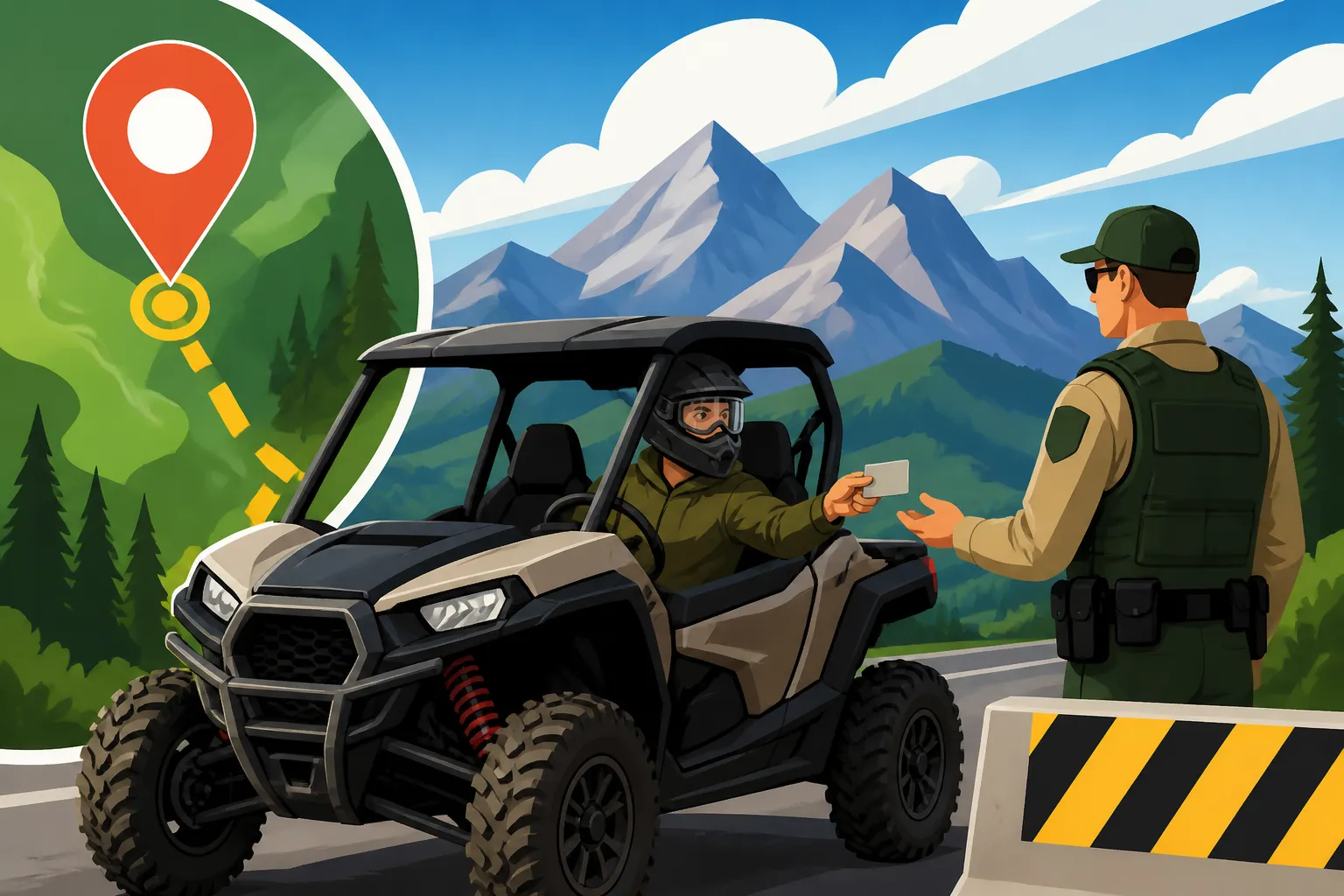
The Kananaskis Conservation Pass is required for vehicles parked in the areas covered by the program. There isn’t necessarily a staffed entrance booth where every driver has to stop. Instead, pass compliance can be checked while vehicles are parked at places such as day-use areas, trailheads and other designated parking areas.
Enforcement may use licence plate information to confirm whether a vehicle has a valid pass. Staff can also check vehicles in person. That means reaching a parking lot without being stopped on the way in does not show that no check will happen later.
| Situation | What to plan for |
|---|---|
| You park in a covered Kananaskis area | Make sure the pass is valid for the vehicle’s plate |
| You arrive at a trailhead or day-use area | Expect that the parked vehicle may be checked |
| You pass through without parking | Check the current official rules; the pass requirement is tied to covered areas and vehicle use |
| You bring a truck and trailer | Confirm which vehicle or vehicles need a pass under the current rules |
| You unload an ATV or UTV | Keep the transport vehicle’s pass requirement separate from the OHV’s registration and riding rules |
Because checks are not limited to a single entrance, don’t rely on spotting a booth or seeing an enforcement vehicle. The safest approach is to buy or confirm the pass before you park in a covered area. The details of the program are explained in Alberta Kananaskis Conservation Pass Rules.
A plate check is not a visible sticker check
The pass is associated with a vehicle’s licence plate, so a sticker on the windshield or bumper is not the main proof of compliance. Make sure the plate number entered when buying the pass matches the plate on the vehicle you bring. A typo, an old plate number or selecting a different vehicle can create a problem even if you paid for a pass.
A confirmation email or purchase record can be useful if you need to check your details, but it doesn’t replace entering the correct plate information. If your vehicle, plate or pass details change, review the provider’s instructions before relying on the old record.
That distinction matters for people towing OHVs. The pass is not a trail permit that you display on the quad, and a truck’s pass does not replace the registration or insurance requirements that apply to an OHV on public land. For those separate requirements, see Alberta Requires Insurance on Public Land and Alberta Registration Before Riding Crown Land.
What the pass means for an ATV or UTV trip
For many riders, the vehicle most likely to be checked is the truck or other road vehicle used to reach a staging area. If you park it in a covered Kananaskis location, check that vehicle’s pass status before leaving home. The ATV or UTV has its own rules for registration, insurance and where it may be operated.
Don’t assume the Kananaskis pass automatically authorizes you to ride an OHV on a nearby road, trail or public-land route. It is a vehicle access and parking pass for covered locations, not permission to ride every route in the region. A legal riding route may have separate closures, access conditions or vehicle restrictions. Before unloading, confirm that the area is open to your machine and that the route is designated for your type of OHV.
The distinction is especially important if you are using a trailhead near a riding area. A valid pass for the truck does not make a closed trail open, and OHV registration does not satisfy the parking-pass requirement for a covered location. Treat each requirement as its own check:
- Confirm the parking location is covered by the Kananaskis pass program.
- Check that the pass is valid for the plate on the vehicle you will park.
- Confirm that the ATV or UTV may be ridden in the intended area.
- Carry the registration and insurance evidence required for the OHV.
- Check for current closures, local restrictions and any separate camping-pass requirement if you plan to camp.
The general Kananaskis pass rules, including exemptions, can be nuanced. If you’re unsure whether your vehicle or visit qualifies, check Alberta Kananaskis Pass Exemptions rather than assuming that a short stop, trailer or particular vehicle type is automatically exempt.
Don’t confuse it with an OHV trail pass
Alberta does not have a general mandatory OHV trail pass for every ride. That does not mean there are no costs or access requirements in a particular area. A Kananaskis Conservation Pass, an OHV registration, insurance, camping authorization and local trail conditions serve different purposes.
For example, a rider who drives a truck to a covered parking area may need to deal with the Kananaskis pass for that vehicle. The OHV may separately need to be registered and insured for public-land riding. If the trip includes random camping on public land, the camping-pass rules may also apply. See Alberta Has No OHV Trail Pass and Alberta’s Public Lands Camping Pass for the distinction between these requirements.
A pass also does not override municipal bylaws or provincial restrictions. If your planned route includes a road, ditch or local right-of-way, check whether OHVs are allowed there. Alberta ATV Road Rules: Bylaws Decide explains why access can vary from one municipality to another.
How to avoid a pass problem
The most reliable approach is to check the vehicle and location before the trip, rather than trying to sort it out at the trailhead. Pass systems and coverage can change, and a destination described informally as “Kananaskis” may not make the boundary or requirements obvious.
Before you leave:
- Identify the exact parking area, staging lot or day-use area, not just the nearest community or riding zone.
- Confirm whether the location is covered by the pass program using current official information.
- Enter the licence plate carefully when purchasing a pass and check that it belongs to the vehicle you will bring.
- If you are switching vehicles, borrowing a truck or using a rental, confirm that the pass is valid for that vehicle rather than assuming it follows the driver.
- Keep the purchase confirmation accessible, but do not rely on a paper printout or phone screen to correct a plate mismatch.
- Check whether a separate pass or authorization is needed for camping.
- Confirm that your OHV is registered and insured for the riding you plan to do.
If you are transporting more than one vehicle, such as a truck and a separate towing vehicle, don’t assume one pass covers both. Check the current program’s vehicle limits and terms. The pass is tied to the relevant vehicle information, so the answer depends on the pass option and the vehicles involved. For current costs and purchase details, use Alberta Kananaskis Pass Cost and Where to Buy a Kananaskis Conservation Pass.
Keep the proof of purchase until after the trip. If a plate-reading check appears to have flagged your vehicle incorrectly, having the confirmation and correct plate information can help you explain the issue. It is still better to resolve a mismatch before parking; a receipt for a different plate may not establish that the parked vehicle was covered.
Finally, check conditions close to departure. A pass only addresses the pass requirement. Seasonal closures, fire restrictions, road conditions and trail access can affect whether a trip is possible even when your paperwork is in order. For an OHV ride, check the applicable area information and don’t use a pass as a substitute for confirming where riding is permitted.
A simple way to think about the check
There may not be one checkpoint where every Kananaskis visitor is stopped. A vehicle can be checked by its plate or by staff while it is parked in a covered area. For an ATV or UTV outing, focus first on the road vehicle you leave at the staging area, then separately confirm the OHV’s registration, insurance and route access.
If your trip involves a truck, trailer, OHV and campsite, each piece can have its own rule. Confirm the parking pass for the vehicle, the riding requirements for the machine and any camping requirements for the site. That approach is more dependable than looking for a booth or assuming that one permit covers the whole trip.
Disclaimer
This article is for general informational purposes only and does not constitute professional advice. Laws, prices and regulations vary by location and change over time. Consult a qualified professional for guidance on your specific situation.