Alberta Helmets Required Since May 2017
Remember when you could just throw on any old cap or maybe even no helmet at all for a quick spin on your quad across some Crown land in Alberta? Well, those days are long gone, and have been for a while now. Since May 2017, Alberta has made it crystal clear: if you're riding an Off-Highway Vehicle (OHV) on public land, a proper helmet is not just a good idea, it's the law. This guide is going to break down exactly what that means for you, from what kind of helmet you need to where these rules apply, ensuring you stay safe and ticket-free on the trails.
The Turning Point: May 2017 and Alberta's Helmet Law
For many years, the question of mandatory helmets for ATV and UTV riders on public land in Alberta was a hot topic. There were strong opinions on both sides – those who championed personal freedom and those who advocated fiercely for increased safety measures. The debate wasn't unique to Alberta, but the province eventually decided that the risks associated with head injuries were simply too high to ignore.
Why the Change? Safety and Public Awareness
The push for mandatory helmets stemmed from undeniable statistics. Year after year, too many riders were sustaining serious, often life-altering, head injuries in OHV accidents. Emergency rooms across Alberta saw the devastating impact firsthand, and health officials, alongside rider advocacy groups, pressed for change. It wasn't about stifling enjoyment; it was about saving lives and preventing permanent disabilities. The provincial government listened to these concerns, recognizing that while riding an OHV is an exhilarating experience, it also carries inherent risks that can be significantly mitigated with proper safety gear. This move brought Alberta in line with other jurisdictions that had already adopted similar mandatory helmet laws, aiming to create a safer environment for everyone enjoying the province's vast trail networks and public lands. The date of May 15, 2017, marked the official implementation of this critical piece of legislation, fundamentally changing the landscape of OHV riding in Alberta.
What the Law Says Now
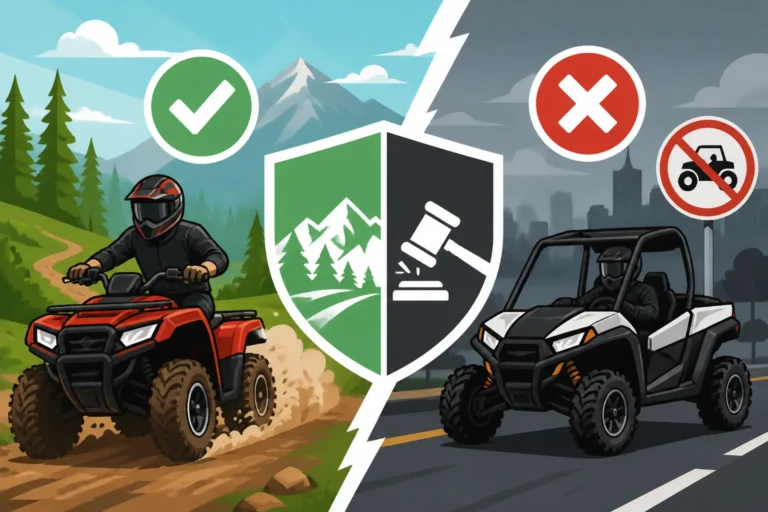
Simply put, as of May 15, 2017, the law states that any person operating or riding as a passenger on an OHV on public land in Alberta must wear a helmet. This isn't a suggestion; it's a legal requirement under the Traffic Safety Act and the Off-Highway Vehicle Regulation 319/2002. The law is broad, encompassing not only traditional ATVs and side-by-sides but also dirt bikes and snowmobiles. The intent is clear: if your wheels are on public ground and you're riding an OHV, your head needs to be protected. This applies whether you're ripping through the trails of McLean Creek, exploring the Ghost PLUZ, or simply crossing a ditch on the way to a designated riding area. Ignorance of the law is, unfortunately, no excuse, and enforcement is quite serious, with officers actively checking for compliance at staging areas and on trails. For instance, you could be pulled over just for riding across a road allowance to get to your favourite spot, and if you or your passenger aren't helmeted, you could face penalties.
Who Needs to Wear a Helmet in Alberta?
This is a common point of confusion for riders, especially those new to the sport or visiting from out of province. The law is quite comprehensive in its scope, aiming to protect everyone on an OHV. It's not just the person at the controls who needs to worry about it.
Every Rider on Public Land
The blanket rule applies to every single person operating an OHV on public land. This means if you're on a quad, a dirt bike, a three-wheeler, a side-by-side, or even a snowmobile (yes, snowmobiles are OHVs under Alberta law), you need to be wearing an approved helmet. There’s no age cut-off or experience level that exempts you. From the seasoned veteran navigating technical terrain to the new rider learning the ropes, the expectation is the same. This also includes youth riders; in fact, the rules around young riders, such as [Alberta's Minimum Age of 14 on Public Land] and [Alberta Riders Under 14 Need Supervision], only underscore the importance of safety equipment even more. Imagine a scenario where a family is out for a day of riding: if Dad is on his quad, Mom is on hers, and their teenager is on a youth-sized machine, all three must be wearing helmets the moment they leave private property and enter public land. Failing to do so puts them at risk of a ticket, and more importantly, a serious injury.
Passengers Included: No Exceptions for the Backseat
It's a common oversight: people assume the passenger is exempt. But the law is very explicit: "any person operating or riding as a passenger on an OHV on public land" must wear a helmet. This means if you have a friend riding behind you on a two-up ATV, or your child in the back seat of your four-seat side-by-side, they must have an approved helmet on. This applies equally to adults and children. There are no special provisions for short distances or slow speeds; the rule is constant. Think about it: a passenger is just as susceptible to head injury in an accident as the operator. If you're planning a family outing, make sure you have appropriately sized and approved helmets for every single person who will be on a machine. Neglecting this detail can lead to a significant fine, and could even prompt an officer to consider [When Police Seize a Quad for Having No Insurance] or other serious enforcement actions if other safety violations are present.
Understanding "Public Land" in the Context of Helmets
The term "public land" might seem straightforward, but in Alberta, especially for OHV riders, it can have nuances that trip people up. Knowing exactly where the helmet law applies is crucial for legal and safe riding.
Crown Land, PLUZes, and Designated Trails
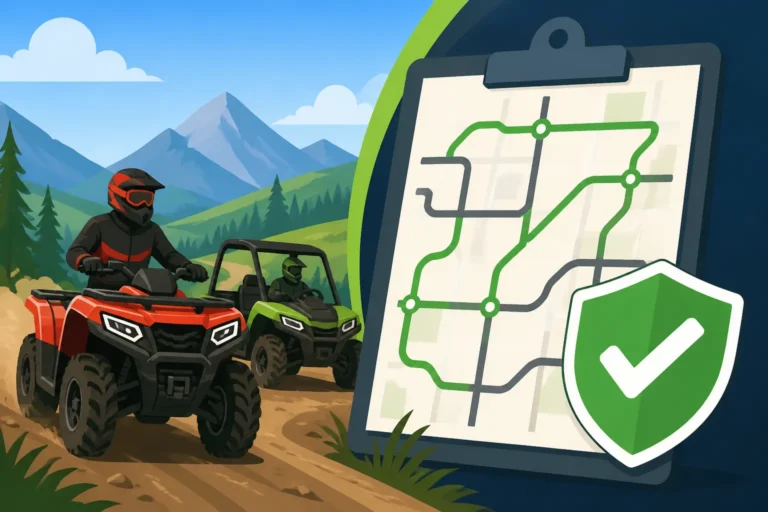
When we talk about public land in Alberta, the first thing that often comes to mind are the vast stretches of Crown land, Public Land Use Zones (PLUZes), and the designated OHV trail systems within them. Areas like McLean Creek, the Ghost PLUZ, or the trails around Rocky Mountain House are prime examples. These are unequivocally public lands, and helmet use is mandatory throughout these zones. Whether you're navigating the technical trails in the foothills or cruising along a cutline in the northern forests, your helmet needs to be securely fastened. Many of these areas are actively patrolled by enforcement officers, including Fish and Wildlife officers, provincial park rangers, and RCMP, all of whom can issue tickets for non-compliance. It's important to remember that even if you're just staging your machine in a public parking area before hitting the trails, as soon as you start moving your OHV, you should be wearing your helmet.
The Tricky Business of Ditches and Road Allowances
Here's where many riders get caught off guard. In Alberta, the legal definition of a "highway" is much broader than just paved roads. It includes the entire road allowance, which means the shoulders, boulevards, sidewalks, and, crucially for OHV riders, the ditches. The Traffic Safety Act defines a highway to include "any road, street, trail, avenue, parkway, driveway, viaduct, lane, alley, square, bridge, causeway, trestleway or other place that the public is ordinarily entitled or permitted to use for the passage or parking of vehicles." This means that riding in a ditch, even for a very short distance to get from one private property to another, is considered riding on a highway, which is public land. Therefore, the helmet law applies. This is why you need to know [Why a Highway Ditch Counts as Public Land]. Many municipalities also have bylaws restricting OHV use on these road allowances. So, even if you’re just pulling out of your acreage and riding a few hundred meters down the ditch to a neighbour's field, you need a helmet. This is a crucial distinction to remember and often leads to fines for riders who believe they are merely on the edge of private land.
Private Property: A Different Story
The good news for landowners and those with explicit permission is that the helmet law does not apply on private property. If you own a large parcel of land, a farm, or a ranch, and you're riding your OHV exclusively within your property boundaries, wearing a helmet is at your discretion (though still highly recommended for safety!). The same applies if you have explicit permission from a private landowner to ride on their land. For example, if you're helping a farmer with chores and riding a [Alberta Farm Quad] on their fields, the mandatory helmet law won't be enforced there. However, the moment your wheels touch a public road, ditch, or trail – even if it just borders that private property – the law kicks in. This distinction is vital, especially for those who spend a lot of time on rural properties. Always clarify with the landowner about what constitutes their property boundaries, and be prepared to don your helmet if you anticipate crossing onto any public access points, even briefly.
What Kind of Helmet is Legal in Alberta?
It's not enough just to wear a helmet; it has to be the right kind of helmet. Just like car seats have specific safety standards, so too do OHV helmets, and Alberta's law reflects these requirements.
The CSA Standard and Beyond
The Alberta helmet law specifies that a helmet must meet certain safety standards to be considered legal. Primarily, it needs to meet the Canadian Standards Association (CSA) standard, specifically CSA CAN3-D230-M85. This standard ensures the helmet has undergone rigorous testing for impact protection, penetration resistance, and retention system effectiveness. However, the law also recognizes other international safety standards that offer comparable or superior protection, such as those set by Snell Memorial Foundation (Snell), the Economic Commission for Europe (ECE), or the Department of Transportation (DOT) in the United States. So, if your helmet has a sticker inside indicating it meets one of these recognized standards (like [A CSA CAN3-D230-M85 Label]), you're generally good to go. Always check for that label inside your helmet shell. A good quality helmet, whether it's a full-face for aggressive trail riding or an open-face with good eye protection for more leisurely cruising, is an investment in your safety. When buying accessories for your machine, like a new winch or lights, don't forget that a high-quality helmet is the most important accessory for you.
The Dangers of "Brain Bucket" Style Helmets
You might see some riders wearing minimalist helmets, often called "brain buckets" or "novelty helmets." While these might offer some token protection against minor scrapes, they almost never meet the rigorous safety standards required by law in Alberta. These helmets are typically thin-shelled, lack adequate impact-absorbing foam, and offer minimal coverage, often leaving the face and jaw exposed. Not only are they illegal for public land OHV riding in Alberta, but they also offer woefully inadequate protection in a crash. An officer checking for compliance isn't just looking for any head covering; they're looking for an approved helmet. Wearing a non-compliant helmet is essentially the same as not wearing one at all in the eyes of the law, and you could face a [Alberta's $93 Non-CSA Helmet Fine]. More critically, in the event of an accident, a non-compliant helmet offers little to no real protection, potentially leading to severe or fatal head injuries that a certified helmet could have prevented. Always prioritize your brain – it's the only one you've got!
Other Essential Gear (Beyond the Helmet)
While the helmet is mandatory, it's really just the starting point for a safe riding experience. Many seasoned riders, especially those who spend a lot of time exploring Alberta's diverse terrains, also invest in a range of other protective gear. Goggles are crucial for eye protection against dust, branches, and debris, especially if you're wearing an open-face helmet. Proper riding gloves protect your hands from blisters, impacts, and cold. Long-sleeved shirts and pants, preferably made of durable materials, help prevent scrapes and bruises from branches or falls. Sturdy over-the-ankle boots are essential for ankle support and foot protection. For those tackling more challenging terrain, or engaging in competitive events, body armour, knee pads, and neck braces offer additional layers of protection. Brands like SuperATV, while primarily known for vehicle accessories, also highlight the importance of rider safety by showcasing compatible gear and attachments that encourage overall rider protection, such as windshields and roofs for side-by-sides that enhance safety within the cab. Think of it as a full system: your helmet protects your head, and the rest of your gear protects the rest of you.
Exceptions to the Helmet Rule in Alberta
While the helmet law is quite broad, there are a few specific circumstances where an exemption applies. It's important to understand these nuances to ensure you're always riding within the bounds of the law.
Enclosed Cabs and Rollover Protection
One significant exception applies to side-by-sides (UTVs) that are equipped with a factory-installed rollover protective structure (ROPS) or cab, along with properly functioning seatbelts, and you are actively wearing that seatbelt. If your side-by-side meets these criteria, and you and your passengers are all securely fastened with the seatbelts, then a helmet is not legally required. This exemption recognizes that the enclosed structure and seatbelts offer a different form of protection against head injuries during a rollover or collision. Many modern side-by-sides, especially those used for utility or touring, come standard with these features. When considering modifications or additions from aftermarket providers like SuperATV, always ensure that any changes you make do not compromise the integrity of your ROPS or seatbelt system, as this could void the exemption. Remember, this specific exemption applies only when the vehicle's design inherently offers a level of protection comparable to a helmet, and those safety features are actively in use. If your side-by-side has an open cab or you're not wearing your seatbelt, the helmet rule still applies. [Do You Need a Helmet in a Side-by-Side?] clarifies this further.
Religious Exemptions: The Turban Provision
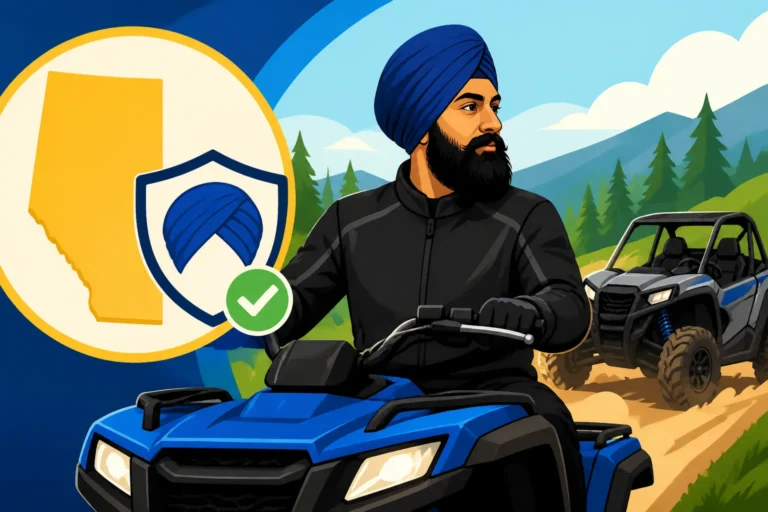
Alberta law also includes a specific exemption for individuals whose religious beliefs prevent them from wearing a helmet. This primarily applies to Sikh riders who wear a turban. If a rider can demonstrate that they are a member of the Sikh religion and are wearing a turban, they are exempt from the mandatory helmet requirement. This exemption is a recognition of religious freedom and cultural practice. It's important to note that this is a very specific exemption and does not extend to other forms of headwear or personal preferences. For instance, you can't simply wear a baseball cap and claim a religious exemption. This provision is carefully considered and applies only to a genuine religious requirement to wear a turban. [Alberta Turban Exemption for Sikh Riders] goes into more detail on this specific legal allowance.
Farm Work on Private Property
As mentioned previously, the helmet law focuses on OHV use on public land. Therefore, if you are operating an OHV strictly for farming or ranching operations on private land that you own or have explicit permission to use, the helmet is not legally required. This exemption acknowledges the practicalities of agricultural work, where riders may be frequently dismounting, mounting, and performing tasks that could make continuous helmet use cumbersome. However, the moment that farm quad, side-by-side, or dirt bike leaves the private property boundaries and enters a public road, ditch, or designated OHV trail, the mandatory helmet law immediately comes into effect. This means if you're moving your [Alberta Farm Exemption From Registration] machine from one field to another across a public road allowance, even for a short distance, you'll need to put that helmet on. It's a fine line, but one that officers are aware of and enforce.
Consequences of Not Wearing a Helmet
Ignoring Alberta's mandatory helmet law carries tangible risks, both legal and physical. It's not just about avoiding a fine; it's about avoiding serious injury and the potential for greater legal trouble.
The Cost of a Ticket
The most immediate consequence of not wearing an approved helmet on public land is a traffic ticket. In Alberta, the fine for this infraction is set and can be significant. It's not just a slap on the wrist; it's designed to be a deterrent. Currently, the [Alberta Helmet Fine Amount] can be around $162 for an adult rider or passenger. And remember, if both you and a passenger are unhelmeted, that's two separate tickets. These fines accumulate quickly and can put a serious damper on your riding budget, easily wiping out funds you might have saved for upgrades or a weekend trip. Beyond the financial hit, a ticket also means dealing with the process, which could involve contesting it in court if you believe it was issued in error, taking time out of your busy schedule.
Vehicle Seizure: A Real Possibility
While not as common for a first-time helmet violation alone, repeated infractions or a combination of serious safety violations can lead to more severe consequences, including vehicle seizure. For example, if you're riding without a helmet, don't have proper registration, and can't provide [Alberta Proof of Insurance on Demand], an officer might deem the situation serious enough to impound your machine. This isn't just an inconvenience; it means your OHV is towed, stored, and you'll incur substantial towing and impound fees before you can get it back, in addition to any fines. [Alberta Penalties for Riding Unregistered] and [Alberta Vehicle Seizure for No Insurance] are examples of other infractions that can lead to an impound. The idea is that if you're showing a blatant disregard for multiple safety and legal requirements, your machine might be temporarily removed from the public land to prevent further unsafe operation.
The Ultimate Cost: Serious Injury
Beyond the legal and financial penalties, the most severe consequence of not wearing a helmet is the risk of a serious or fatal head injury. OHV riding inherently involves risks of falls, collisions, and rollovers. A helmet is designed to absorb impact, reduce the force transmitted to your skull, and prevent penetration from sharp objects. Without it, your head is completely vulnerable. A minor tumble could result in a concussion, while a more serious impact could lead to skull fractures, traumatic brain injury, long-term cognitive impairment, or even death. The May 2017 law was a direct response to the tragic statistics of such injuries. No amount of experience or perceived skill can guarantee you won't have an accident. The choice to wear a certified helmet isn't just about complying with the law; it's about protecting your most vital organ and ensuring you can continue to enjoy the sport you love for years to come.
Practical Tips for Helmet Compliance
Making sure you're compliant with Alberta's helmet law doesn't have to be complicated. A few practical steps can ensure you're always ready to ride safely and legally.
Buying the Right Helmet
The first step is investing in an approved helmet. Don't cheap out on safety. Look for helmets clearly marked with CSA, Snell, ECE, or DOT certifications. When trying on helmets, ensure it fits snugly but comfortably. It shouldn't move around on your head if you shake it, but it also shouldn't pinch or cause pressure points. Different types of helmets offer different levels of protection and comfort:
- Full-face helmets: Offer maximum protection, covering the entire head, face, and chin. Great for aggressive riding or colder weather.
- Open-face (3/4) helmets: Good ventilation, but require separate goggles for eye protection. Less protection for the face and chin.
- Modular helmets: A hybrid that can switch between full-face and open-face.
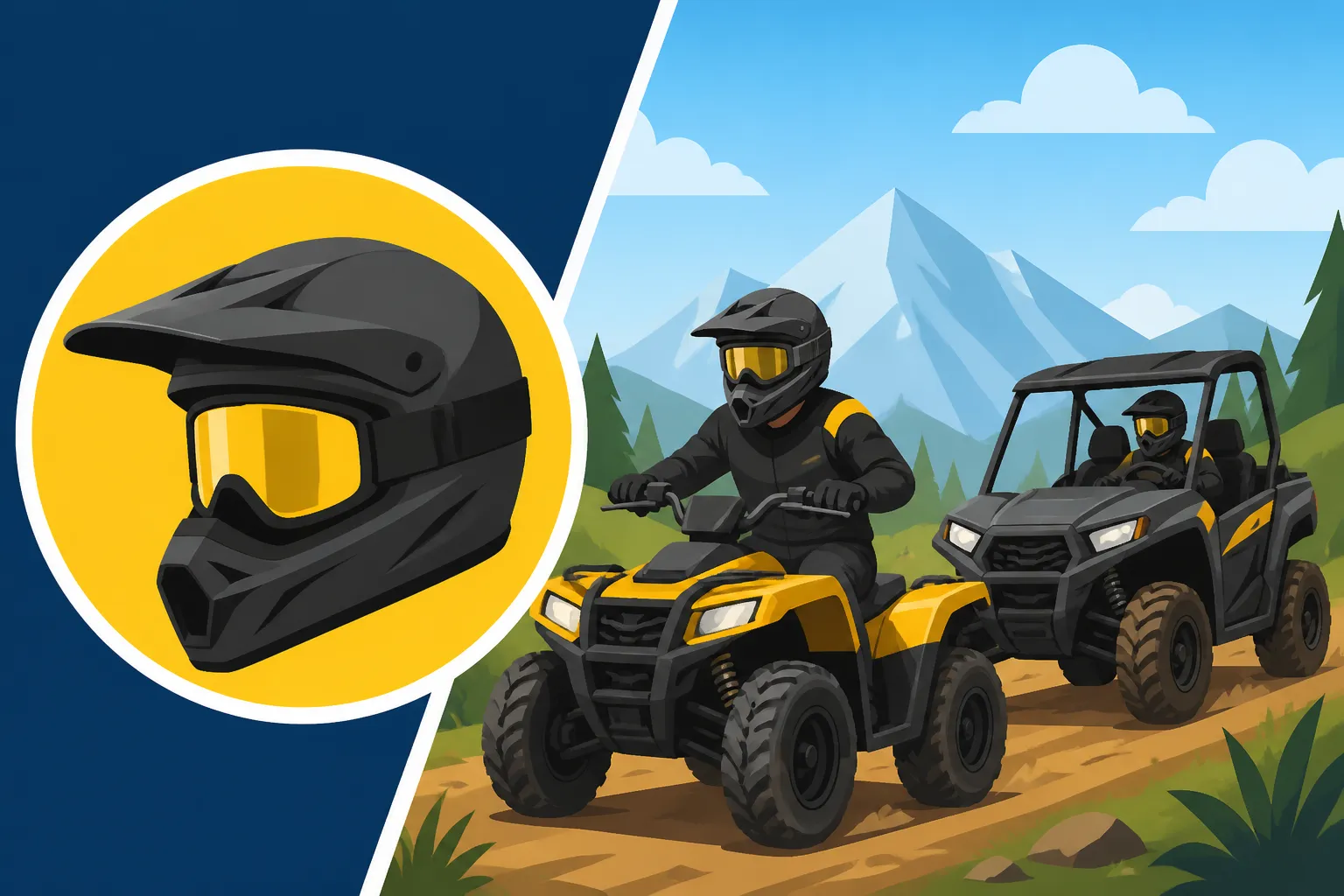
- Motocross-style helmets: Often lighter, with a sun visor and an extended chin bar, designed for aggressive riding, and always used with goggles.
Consider the type of riding you do most often. For trail riding in dusty conditions, a good quality motocross-style helmet with goggles or a full-face helmet might be ideal. When buying, remember that helmets have a shelf life, typically around 5 years, or after any significant impact. Even if it looks fine, the internal foam can degrade over time, reducing its protective capabilities. You can find quality helmets at powersports dealers, outdoor recreation stores, and even online, though it's always best to try one on in person to ensure a proper fit.
Carrying Proof and Staying Informed
While you won't typically need to show a physical "proof" of your helmet's certification to an officer, simply having an approved helmet on your head (and securely fastened) is the best evidence. However, it's always a good idea to keep your driver's license, vehicle registration, and [Alberta Proof of Insurance on Demand] easily accessible, as officers will ask for these. Beyond the helmet, make sure your OHV itself meets other equipment requirements, such as [Alberta Requires Working Head and Tail Lights] and [Alberta Requires a Spark Arrestor]. Staying informed means periodically checking provincial OHV regulations and any local bylaws in the areas you plan to ride. Municipalities can have specific rules regarding OHV use on local roads or within town limits, which can sometimes impact when and where helmets are required, especially concerning road access. A quick search for "County of Wetaskiwin's OHV Bylaws in Alberta" or "Brazeau County's OHV Rules in Alberta" before you head out can save you a lot of grief. Being a responsible rider means more than just having a helmet; it means understanding the full scope of your obligations on Alberta's public lands.
Here's a quick comparison of common helmet types and their suitability:
| Helmet Type | Key Features | Alberta Legality (if certified) | Pros | Cons | Best For |
|---|---|---|---|---|---|
| Full-Face | Full head, face, and chin protection | Legal | Maximum protection, good for all weather, quiet | Can be hot, restricted peripheral vision | Aggressive riding, high speeds, cold weather |
| Motocross/Off-Road | Visor, extended chin bar, excellent ventilation | Legal | Lightweight, excellent airflow, good for goggles | Requires separate goggles, less face protection | Trail riding, hot weather, competitive use |
| Open-Face (3/4) | Covers top, back, and sides of head | Legal | Good visibility, comfortable, less claustrophobic | No chin/face protection, requires separate goggles | Casual cruising, slower speeds, warm weather |
| Modular/Flip-Up | Can be worn as full-face or open-face | Legal | Versatile, good for communication, easy for breaks | Heavier, more complex, often not designed for impacts in open position | Touring, varied riding conditions |
| Novelty/"Brain Bucket" | Minimalist shell, poor padding | Illegal | Small, light, trendy | NO REAL PROTECTION, does not meet safety standards | Absolutely not for OHV riding on public land |
Disclaimer
This article is for general informational purposes only and does not constitute professional advice. Laws, prices and regulations vary by location and change over time. Consult a qualified professional for guidance on your specific situation.