Three Vehicles Under One $90 Kananaskis Pass
A Kananaskis trip can involve several vehicles: one towing the ATV, another carrying passengers, and a third joining from a different part of the province. The pass rules can be confusing because the Conservation Pass applies to certain vehicles and parking areas, not automatically to every quad or side-by-side. This guide explains how the three-vehicle arrangement works and what to check before you leave.
How one Kananaskis pass can cover three vehicles
What the three-vehicle allowance means
An annual Kananaskis Conservation Pass can be associated with as many as three eligible vehicle licence plates under the program’s rules. That can be useful for a household with a truck and a couple of other vehicles, or for a group that often travels to the same area in separate vehicles. The important detail is that the pass is tied to the vehicle plates recorded for it—not simply to the person who bought it.
Before relying on a shared pass, check the pass terms and make sure each vehicle’s plate is correctly registered. The number of vehicles allowed, eligibility details, and price are matters to confirm through the official pass information before travelling. Don’t assume that showing a receipt for one vehicle automatically covers a second vehicle that was never added.
It also helps to separate “one pass can be associated with several vehicles” from “one vehicle can be in several places at once.” If a group is travelling separately, check the conditions that apply to use of the registered plates, including any rules about simultaneous use. The practical test is simple: each vehicle that may be parked in a covered area should be covered by the pass arrangement under the current terms.
The pass is not an ATV registration or trail permit
A Conservation Pass and an off-highway vehicle registration serve different purposes. The pass relates to eligible motor vehicles in designated Kananaskis and Bow Valley areas. ATV or UTV registration, insurance, and public-land riding requirements are separate issues. A pass for the truck does not make an unregistered quad legal to ride, and registering an ATV does not automatically cover the truck parked at a trailhead.
That distinction matters when a group arrives with a pickup and trailer. The pickup is the vehicle that may need the Conservation Pass when it is parked in a covered area. The ATV or side-by-side still has to meet the rules that apply where it is ridden. Before heading out, review [Alberta Kananaskis Pass Rules] and [Why a Quad Does Not Need the Conservation Pass] so you can tell which parts of the trip each requirement applies to.
A useful way to think about it is to make two checklists. One is for the road vehicle: pass coverage, parking location, and any required road documents. The other is for the OHV: registration, insurance, equipment, permitted riding area, and any local restrictions. Keeping those lists separate prevents the familiar trailhead scramble where someone has a pass receipt but still can’t show the paperwork needed for the machine.
| Item | What it generally relates to | What to confirm before travelling |
|---|---|---|
| Kananaskis Conservation Pass | Eligible vehicles parked in designated areas | Whether the vehicle’s plate is covered and whether the location is included |
| ATV or UTV registration | The off-highway machine | Registration status, plate, and certificate requirements |
| Insurance | The machine and where it will be operated | Whether coverage meets the rules for the riding location |
| Trail or land access | The route and riding area | Current closures, permitted routes, and local restrictions |
| Camping pass | Certain public-land camping situations | Whether one is required for your planned overnight stay |
Who should be listed on the pass
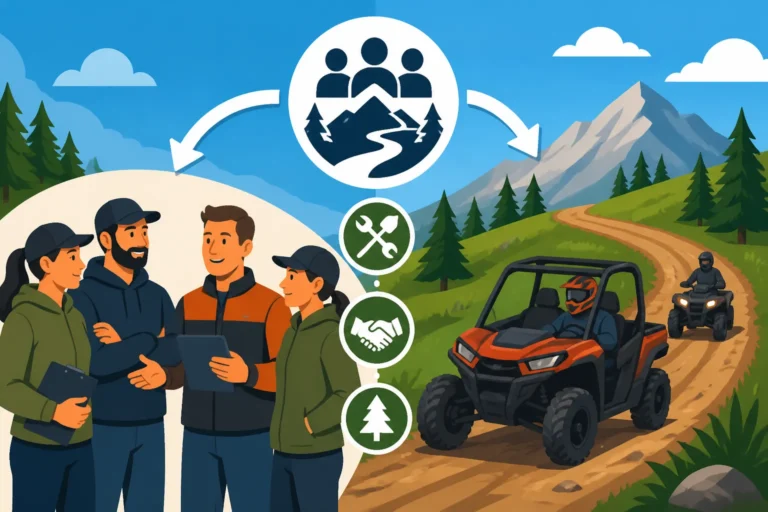
If three vehicles are registered to one household, check how the pass program defines eligible vehicles and what information it requires. Having the same family name or travelling together may not be enough if the plate details or household eligibility do not match the pass terms. If one vehicle belongs to a friend, relative, or another household member, don’t assume it can be added under the same arrangement without checking.
This matters most when a group plans to split up. Imagine one couple leaving Calgary in a truck with a trailer while another family drives a separate SUV to meet them near a staging area. If both road vehicles will park in an area where a pass is required, verify that both plates are covered before the group departs. A quick check at home is much easier than trying to sort out a plate mismatch with limited cell service.
For a plain-language breakdown of who needs coverage and where, see [Where a Kananaskis Pass Actually Gets Checked] and [Alberta Kananaskis Pass Exemptions]. Those details are especially helpful when some people in a group are only dropping off passengers, while others plan to leave a vehicle parked for the day.
Planning an ATV or UTV trip around Kananaskis
Pick the riding area before choosing the parking plan
“Kananaskis” describes a broad region, not one single OHV trail network. A scenic drive, a picnic stop, a designated off-highway riding area, and a staging location can all have different access rules. Start by deciding where the machine will actually be ridden, then identify where the truck or trailer will be parked. Don’t assume that a Conservation Pass opens every road or trail in the region.
For example, a group might be travelling from Calgary toward Bragg Creek and planning a ride near McLean Creek. The route, staging location, and designated riding area matter as much as the general destination name. Check current access information for the specific place you intend to use, and look for closures or seasonal conditions that could change your plan.
If you’re still comparing destinations, [Alberta Trails Near Calgary] can help narrow down the choices. For a side-by-side trip, [Alberta Trails That Allow Side-by-Sides] is a useful related topic, but always confirm the vehicle-size rules for the particular area. A trail suitable for a quad may not be suitable for a wider or heavier machine.
Confirm pass coverage for the actual parking spot
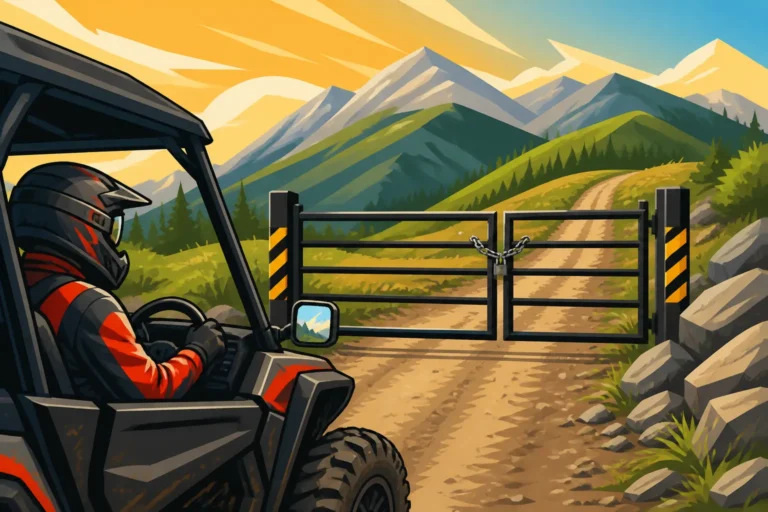
A pass isn’t a general licence to park anywhere in the region. Its requirements apply in designated areas, so identify the parking location rather than relying on a broad map label such as “Kananaskis.” Read the posted signs when you arrive, and check whether the lot or roadside area is included in the pass program. If you change plans and park somewhere else, the rules may be different.
This is easy to overlook when the riding area and the pass-controlled parking area are not the same thing. Your group may unload the OHVs at a staging area but leave the tow vehicle in a separate lot. The relevant question is whether the vehicle is parked in a location where the pass applies—not whether an ATV is being ridden nearby.
Keep a record of the plate details connected to the pass and the confirmation information. If the pass is managed digitally, make sure you know how to retrieve the confirmation before leaving home. A screenshot or saved confirmation can be handy, but it doesn’t replace checking that the licence plate is correct. For a broader comparison of passes used for different activities, see [Alberta's Public Lands Camping Pass]; it is a separate requirement, not a substitute for the Kananaskis pass.
Plan for weak signal and changing trail conditions
Cell reception can be inconsistent once you leave busy roads and head toward backcountry riding areas. Download or save maps before the trip, and don’t depend on being able to load a trail guide at the staging area. A map app such as onX Offroad can help with route planning and orientation, but use it as a planning aid rather than as proof that a trail is open or that motorized travel is permitted.
For extra confidence, compare your app map with official land or trail information. onX Offroad may help you understand where your group is in relation to roads and mapped routes, while official notices are the place to confirm access restrictions and closures. If you use onX Offroad, save the relevant map area ahead of time and make sure everyone knows how to read it.
It’s also smart to set a clear turnaround point and regrouping plan. A group that separates on a trail may find that one rider has a map loaded while another has lost signal and can’t see the same route. Agree on the intended route at the staging area, make sure riders know how to return, and carry a backup navigation option. [Alberta OHV Trail Map Downloads] and [Loading an Avenza Trail Map Onto Your Phone] offer additional ways to prepare for navigating away from reliable cell service.
A practical checklist for a three-vehicle riding day
Before you leave home
Start with the three licence plates. Confirm which vehicles are covered by the pass arrangement, check the current terms for how those vehicles may use it, and verify that the plate information is accurate. If the group has changed vehicles since the pass was purchased, don’t assume an old plate record will cover a replacement vehicle.
Next, confirm the destination and parking location. Check whether the pass applies there, whether the riding area is open, and whether any route restrictions affect your machine. If you’re crossing private land or a lease, don’t treat a map line as permission to ride through it. Access and riding rules depend on the specific land and route.
Then check each OHV separately. Confirm the registration and insurance requirements for the place you’ll ride, inspect the plate and lights, and make sure riders have the required safety equipment. A simple pre-trip conversation can catch a mismatch: for example, the truck is covered by the pass, but the side-by-side’s paperwork is still in a different vehicle at home.
At the staging area
Once you arrive, read signs before unloading. Look for parking instructions, closures, local restrictions, and any posted rules about where OHVs may travel. If the parking area is covered by the pass program, make sure the plate on the vehicle is one of the plates associated with the pass. A pass tied to a different truck won’t necessarily resolve a plate check for the vehicle you brought today.
Before heading out, take a moment to check the trailer, tie-downs, and gear. Confirm that every rider knows the planned route and where the group will meet if it gets separated. This is especially worthwhile when one vehicle is carrying fuel or supplies and another is transporting a passenger who may be less familiar with the area.
If you’re uncertain whether a lot is covered, don’t guess based on nearby signs or a previous visit. Check the posted information and the pass guidance for that location. [Alberta Kananaskis Pass Rules] and [Where a Kananaskis Pass Actually Gets Checked] are useful starting points for understanding why the exact parking location matters.
Common mistakes that are easy to avoid
One common mistake is treating a three-vehicle allowance as a pass for three people. The pass arrangement concerns vehicle plates, so the number of passengers doesn’t answer whether a vehicle is covered. Another is assuming that a pass for a truck covers the ATV being towed. The truck, trailer, and off-highway machine have different roles and may have different requirements.
A third mistake is assuming a pass is valid everywhere in Kananaskis. The covered areas and enforcement arrangements are specific, so the name of the region alone is not enough to establish whether a particular parking spot is included. And finally, a map that shows a road or trail does not by itself establish permission to ride it. Check official access information before setting out.
For a group ride, put the information in one message before departure: destination, staging area, vehicle plates covered by the pass, current route notes, and a meetup point. That small bit of coordination can prevent a long day from starting with a plate question or ending with riders trying to find each other after taking different trails.
Keeping the pass and trail rules straight
Use a simple order of checks
The easiest way to avoid mixing up the rules is to work through them in order. First, confirm the pass status of each road vehicle and the parking area. Second, verify that the OHV itself is properly registered and insured for the intended use. Third, confirm that the riding route is open to that type of machine. Finally, check whether other requirements apply, such as camping rules if you plan to stay overnight.
This order helps because each answer solves a different problem. A valid pass does not confirm that a trail is open. Registration does not grant permission to ride on private land. A mapped route does not necessarily mean public access. Treat each check as its own step rather than hoping one document covers the whole trip.
A quick planning note might look like this: “Truck plate covered; parking lot checked; staging area confirmed; ATV paperwork packed; route closure information reviewed; offline map saved.” That’s more useful than relying on someone in the group to remember what they checked last weekend.
Build a backup plan
Conditions and access can change, and a group may arrive to find a trail or parking area closed. Choose a second option before you leave, and make sure it also works for the vehicles and machines in your party. If the backup destination is in a different area, recheck both the pass requirements and the riding rules rather than assuming they are identical.
Save maps for both options, tell the group where you would regroup if the plan changes, and keep enough time to travel safely. onX Offroad can be one part of that preparation when you save the relevant area and review the route together. Keep official access information available too, because a map app should not be treated as a substitute for current closures or land-use rules.
The key takeaway is that one pass may cover multiple eligible road vehicles, but it does not combine every requirement for an ATV or UTV trip. Check the three plates, confirm the actual parking location, and verify the riding rules for the specific area. That little bit of planning makes it much easier to spend the day riding instead of untangling paperwork at the trailhead.
Disclaimer
This article is for general informational purposes only and does not constitute professional advice. Laws, prices and regulations vary by location and change over time. Consult a qualified professional for guidance on your specific situation.