Alberta Random Camping on a Ride
A ride that turns into an overnight trip takes more than a tent and a full fuel tank: you need to know whether camping is allowed where you plan to stop, whether your machine can legally reach the site, and what local restrictions apply. This guide explains how to plan an Alberta ATV or UTV ride with a responsible random-camping stop.
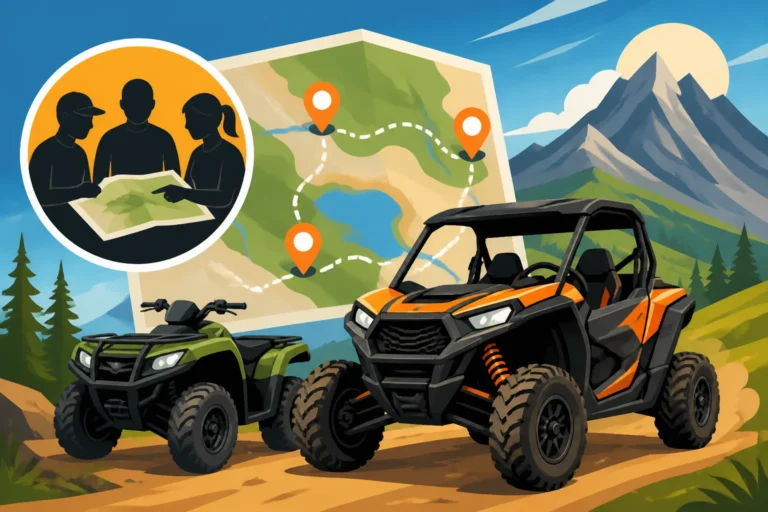
Plan the route and campsite together
Confirm where you are allowed to camp
“Random camping” usually means camping outside a developed campground on public land where that use is permitted. It does not mean you can pitch a tent anywhere that looks empty. Land may be privately owned, part of a grazing lease, inside a protected area, or subject to seasonal closures. Even on public land, some places restrict camping or require you to use designated sites.
Start by identifying the land-use area and the specific rules for it. Check official maps and current notices before leaving home, then check again before riding if weather, wildfire activity, or access conditions could affect your plan. The guide to [Alberta Random Camping Rules Explained] can help you understand the broader framework, but the rules for a particular location still matter.
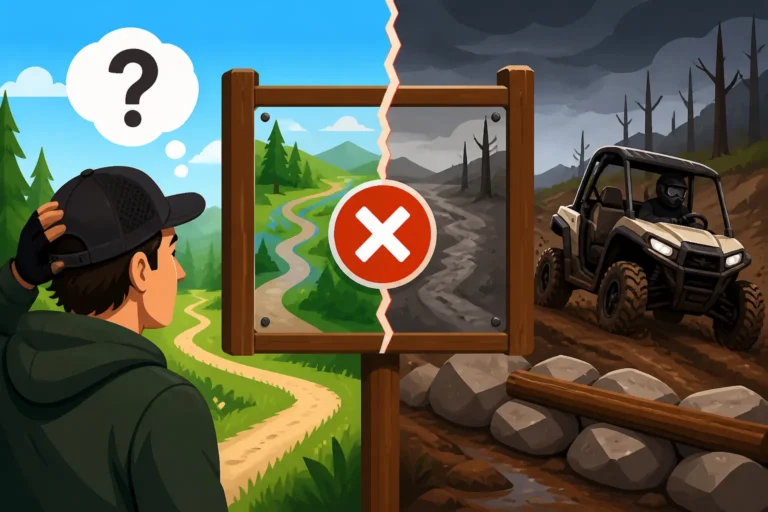
It’s tempting to treat a trail map as permission to camp beside any route it shows. Don’t. A mapped trail indicates a route, not necessarily a legal campsite or permission to ride off the trail to reach one. Plan a campsite you can access lawfully, and confirm the route between your staging area and the site is open to your machine.
Check the trail access separately
Camping permission and OHV access are two different questions. A site may be open to camping while nearby trails are closed to motorized use, or an open trail may pass through an area where overnight camping is limited. Your plan needs to satisfy both.
Look up the rules for the specific Public Land Use Zone or other managed area you intend to visit. Confirm which trails are open to your ATV or UTV, whether vehicle-size restrictions apply, and whether seasonal or temporary closures are in effect. [Checking a Zone Before You Go] and [Alberta OHV Trail Map Downloads] are useful starting points for understanding what to verify.
A mapping app such as onX Offroad can help you review routes and organize an offline map before you lose cell service. Use it as a planning aid, not as final proof that a road, trail, or campsite is currently open. Compare what you see with official land-use information, signs at the staging area, and closure notices. An old track on a screen can remain visible long after access conditions have changed.
Choose a campsite your machine can reach responsibly
A good campsite is not simply the closest flat patch to the trail. Look for a durable surface that can handle foot traffic and parking without damaging vegetation, wet ground, or a creek edge. Avoid setting up in a low spot that could collect rainwater, and keep your camp away from sensitive areas and any facilities or sites with required setbacks.
Before you commit, think through the final approach. Can you reach the site on a route that is open to your machine, without cutting across a meadow or creating a new track? Is there room to park without blocking a trail, gate, or access road? If the last stretch looks muddy, narrow, or uncertain, choose another site rather than forcing the route.
A planned alternative matters, too. A full staging area, unexpected closure, or soggy campsite can derail a ride that looked straightforward on a map. Choose a backup location that is legal and reachable, and make sure everyone in the group knows the plan before riding out.
Understand camping limits and passes
Keep track of how long you stay
Public-land camping limits are easy to overlook when a quiet site feels like a perfect base camp. In areas where a 14-day limit applies, the limit is not an invitation to treat the same spot as a permanent campsite. Rules may require you to move a minimum distance and stay away for a specified period before returning. Confirm the applicable requirements for your location rather than assuming they are identical across Alberta.
If you’re camping on a multi-day ride, note when you arrived and where you set up. That simple record is helpful when a group is staying longer than one night or returning to an area later in the season. For more detail, see [Alberta Camping Limits in One Spot] and [Alberta's 14-Day Camping Limit].
Moving your tent a short distance within the same small clearing may not meet a relocation requirement. When a rule specifies a minimum move, treat it as a genuine change of location, not a way to keep using one campsite indefinitely. The related guidance on [Alberta's 1-Kilometre Relocation Rule] explains why distance and timing can both matter.
Check whether a camping pass applies
A pass requirement depends on where you camp. Alberta’s Public Lands Camping Pass applies to designated public lands, rather than automatically covering every public-land campsite in the province. Requirements can also differ by land type and location. Check the official information for the exact area and make sure each adult in your group understands what applies before the trip.
Do not confuse a camping pass with permission to ride. A pass, where required, does not open a closed trail, authorize travel across private land, or replace the registration and insurance obligations that apply to an OHV on public land. The overview of [Alberta's Public Lands Camping Pass] is a useful way to understand the pass’s role and boundaries.
If you’re using onX Offroad to plan, mark the intended campsite and access route, then confirm the land status and pass rules through official information. Save the relevant details offline where possible. Cell service can disappear quickly in foothill and backcountry areas, and a screenshot of a general map is not a substitute for checking the rules that apply to the location.
Use setbacks and nearby facilities as part of site selection
A site can look secluded and still be too close to a recreation area, road, well site, or other facility under the rules that apply there. Distances and restrictions may vary by land designation, so check the requirements before choosing where to pitch a tent. The guidance on [Alberta Camping Distance From Facilities] can help you identify the kinds of distances to investigate.
When you arrive, look for signs, marked boundaries, gates, and obvious signs of active industrial or agricultural use. Don’t assume an existing fire ring or flattened area makes a location legal for your group. If the site’s status is unclear, move on or contact the relevant land manager before settling in.
| Planning question | What to verify before the ride |
|---|---|
| Is camping allowed here? | Land status, local restrictions, closures, and any site-specific conditions |
| Can my machine reach it? | Open route, permitted vehicle type, seasonal access, and trail closures |
| Is a camping pass required? | Whether the site is in an area where a pass applies and who needs one |
| How long can we stay? | The local camping limit, relocation distance, and any return-time requirement |
| Is the site suitable? | Durable ground, distance from facilities, safe parking, and room to avoid blocking access |
| What if conditions change? | Backup campsite, alternate route, weather plan, and fire restriction information |
Set up camp and ride with care
Protect the ground around your campsite
A campsite beside an OHV trail can take a surprising amount of wear. A machine parked repeatedly on soft ground can leave deep ruts, while a short shortcut around a puddle can widen a trail or damage vegetation. Park on a durable surface, keep wheels on the established route, and don’t ride around obstacles by cutting into the surrounding ground.
Keep the tent and cooking area out of the way of vehicle traffic. At a busy staging area or shared camping spot, a tent tucked close to a trail can become a hazard for both riders and people on foot. Leave room for other users to pass safely, and never block a gate, road, or marked access point.
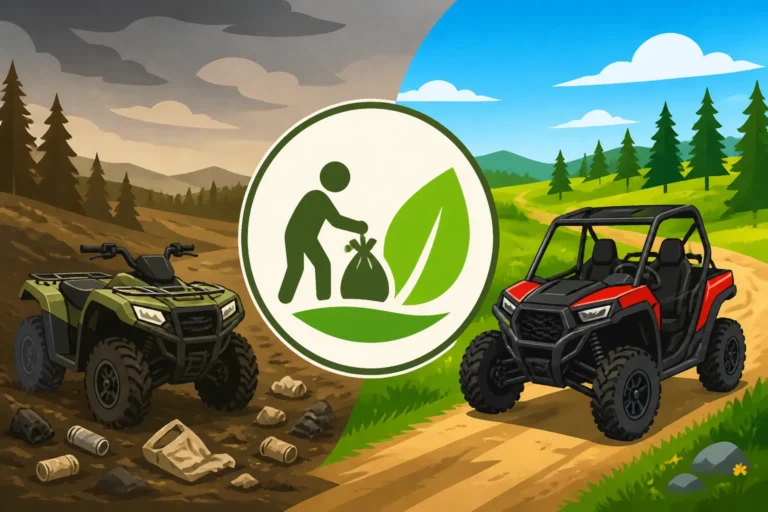
Pack out everything you bring in, including food scraps and small bits of packaging. Put away food and scented items so they don’t attract wildlife, and leave the site clean for the next visitor. Reviewing [Alberta Trail Etiquette Locals Expect] before a group trip can also help set shared expectations about noise, passing, and keeping trails in good condition.
Plan for fire restrictions and changing conditions
Before lighting a fire, check the current fire rules for the area. Restrictions can change with dry weather and wildfire conditions, and a fire that was permitted when you planned the trip may not be permitted when you arrive. Use [Alberta Fire Ban Lookups] to find the right information for your destination, and follow signs and local instructions on the ground.
Where fires are allowed, use an established fire area if one is provided, keep the fire manageable, and never leave it unattended. Have water available and make sure the fire is fully out before leaving camp or going to sleep. If the area is dry, windy, or under a restriction, choose a stove or cold meal instead of risking a wildfire.
Weather can also change a route without warning. Rain may make a trail difficult, a creek crossing may rise, or an access road may become unsuitable for a trailer. Keep a conservative turnaround plan: if conditions are beyond your group’s experience or the machine’s capability, turn back rather than counting on a campsite being reachable at any cost.
Keep the group prepared for an overnight ride
A day ride can become an overnight stay because of a breakdown, injury, weather delay, or navigation mistake. Bring enough water, food, warm layers, and basic first-aid supplies for the possibility that you’ll be out longer than planned. Tell someone who is not on the ride where you’re going and when you expect to check in.
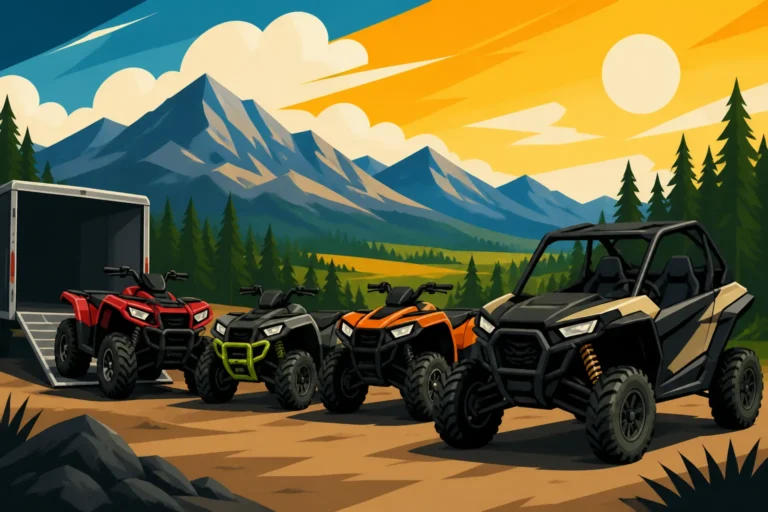
Before leaving the staging area, make sure each rider knows the route, the planned campsite, and the backup option. Agree on what the group will do if someone becomes separated or a machine cannot continue. In an area with limited reception, download maps in advance and carry a way to contact help that does not depend on a mobile signal.
Apps such as onX Offroad can be useful for keeping a planned route available offline, but batteries can run down and devices can be damaged. Carry a backup navigation option and a power source, and make sure at least one other person in the group knows how to use the route information. A little preparation is far easier than trying to solve a navigation problem after dark.
Avoid the common mistakes that spoil a trip
Don’t assume an old campsite is still available
A fire ring, tire tracks, or a worn patch of ground can make a place look established, but those signs don’t confirm that camping is allowed today. The area may be closed, the site may be too close to a facility, or the route may now be restricted. Treat visible evidence as a reason to check, not as permission.
The same caution applies to trail tracks saved on a phone. An old line may show where someone rode, not where the public is allowed to ride now. Check for closures and land-use changes before setting out, and obey posted signs even when they differ from an older map or downloaded route.
Don’t ride off-trail to make camp easier
When a campsite is just beyond a muddy section or a narrow trail, it can be tempting to create a shortcut. That decision can cause damage, create a new track that other riders follow, and put the group in conflict with local access rules. If the legal route is unsuitable for your machine or skill level, choose a different campsite.
A useful test is to ask whether you can explain the route using the official access information, rather than only pointing to a track on your device. If you can’t confirm that the route is open, don’t ride it. It’s better to adjust the plan before unloading the machines than to discover the problem after the group is committed.
Don’t treat camping permission as permission to use nearby land
A campsite does not grant access across a private parcel or grazing lease. Gates, fences, livestock, and posted signs deserve particular care. Get permission where required, leave gates as you found them, and avoid disturbing animals or farm operations. If the route crosses land you do not control, confirm access before the trip rather than relying on assumptions.
Finally, make sure your riding documents and equipment are ready for the area. Requirements for OHV registration, insurance, lights, helmets, and other equipment can apply independently of camping rules. A well-planned overnight ride respects the campsite, the trail, and the people who use or manage the land.
Disclaimer
This article is for general informational purposes only and does not constitute professional advice. Laws, prices and regulations vary by location and change over time. Consult a qualified professional for guidance on your specific situation.