Alberta Bear Encounters While Riding
An ATV or side-by-side can cover a lot of ground quickly, but Alberta’s backcountry can still bring you close to a bear before you have much time to react. This guide explains how to lower the chance of an encounter, what to do if you see a bear, and how to prepare for a ride in bear country.
Reduce the chance of a bear encounter before you ride
Plan your route and check conditions
Before loading the machines, check the riding area for current closures, access notices, and advisories. Conditions can change because of wildlife activity, fire, weather, or land-management work. Routes near McLean Creek, the Ghost Public Land Use Zone, and the Eastern Slopes pass through varied terrain; a route that looks straightforward on a map may take you through dense trees, creek bottoms, or areas with limited visibility.
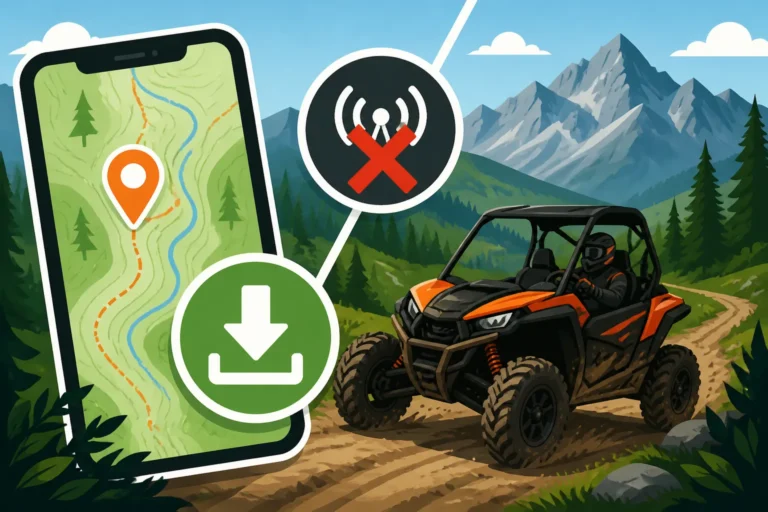
Use an up-to-date official trail or land-use source to confirm where riding is permitted. An app such as onX Offroad can help you review a route and keep a map available when cell service drops, but treat it as a planning aid—not confirmation that a route is open or safe today. Check the relevant land manager’s notices before setting out. For broader route-planning context, see [Alberta OHV Trails: Riding Public Land] and [Checking a Zone Before You Go].
Think about the time of year and what the route passes through. Bears may be harder to spot in thick brush, and food sources such as berries or animal carcasses can attract wildlife. If you see fresh tracks, scat, digging, or a carcass, don’t stop to investigate. Turn around or choose another route, giving the area a wide berth.
Keep your group together and stay alert
A group can be easier for a bear to notice than a single quiet person, but riding noise is not a guarantee that wildlife will move away. Wind, terrain, water, and vegetation can muffle engine sounds. Keep a sensible distance between machines so riders can communicate and respond to a hazard, but don’t let the group stretch so far that someone becomes isolated.
Pay extra attention where visibility is limited: around blind corners, in willow or alder, near creeks, and at trail edges with dense vegetation. Slow down enough to react. If you’re stopped, avoid scattering riders into the bush or leaving one person well behind while others continue. [Alberta Group Ride Planning] can help with the wider logistics of keeping a riding party organized.
Don’t assume that a quiet stretch means wildlife is absent. Pause to look and listen before entering a tight or obstructed section. If you’re on foot, make your presence known in a calm, conversational voice, especially when approaching a blind bend or dense cover. Avoid shouting continuously or making sudden movements that could surprise an animal at close range.
Manage food and smells at stops
Food, garbage, and strongly scented items can draw wildlife to a staging area or campsite. Keep snacks and waste contained, and don’t leave food sitting unattended on a machine or picnic table while the group walks away. Pack out everything you bring in, including food scraps and wrappers. If camping, follow the applicable land-use rules and keep your camp orderly; [Alberta Random Camping Rules Explained] covers the basics of camping on public land.
A carcass is a particularly important reason to leave an area. A bear may be feeding nearby or may return to defend the food source. Don’t approach for a photo, ride closer to get a better look, or try to move the carcass. Turn around without lingering and alert the appropriate land manager or wildlife authority when you can do so safely.
Carry the right equipment and know how to use it
Keep bear spray accessible
Bear spray is useful only if you can reach it quickly and know how to use it. Keep it on your person in a secure, accessible holster—not buried in a backpack, strapped to a rear rack, or tucked under cargo. A canister that’s difficult to retrieve while wearing riding gear may not be available when you need it. Check that it is in usable condition and that you understand its instructions before leaving home.
Riding gear creates a practical challenge: gloves, helmets, and layers can make a canister harder to reach. Choose a carry position you can access with your usual equipment, and practise drawing it before the ride. Don’t remove the canister from its holster to show it around or leave it somewhere you can’t quickly grab it. For more focused preparation, see [Carrying Bear Spray on a Foothills Ride].
Bear spray is intended for use on an approaching bear, not as a repellent to spray on people, machines, or campsites. Follow the product instructions, and avoid testing it near your group or vehicle. If you have questions about a canister’s condition or handling, consult its manufacturer’s instructions.
Prepare for poor signal and a delayed return
Some Alberta riding areas have limited or no cell service. Tell someone where you plan to go, who is in your group, and when you expect to return. Agree on what they should do if you miss your check-in. Carry a reliable way to navigate and know how to use it without relying on a live connection. An offline map in onX Offroad can be helpful for orientation, but download and check what you need before you lose signal.
Bring basic first aid, water, suitable clothing, and enough supplies to manage an unexpected delay. A minor breakdown can become a more serious problem if the group is cold, dehydrated, or unsure how to get back. [Cell Dead Zones in the Foothills] and [First Aid on a Backcountry Loop] offer useful preparation for trips where help may not arrive immediately.
Make sure someone in the group understands the route and can make a calm decision if plans change. If a bear encounter forces you to turn back, don’t split up to retrieve gear or continue toward a staging area by a different route without telling the others. Keeping the group together is usually safer and makes it easier to respond if someone is hurt.
Use a simple pre-ride safety check
Before starting the machines, check that bear spray is on a rider rather than packed away, that everyone knows the route and turnaround plan, and that the group has a way to communicate if riders get separated. Confirm that maps are available offline where needed, and that someone outside the group knows the return plan.
| Before the ride | What to check |
|---|---|
| Route | Confirm permitted access, closures, and current advisories |
| Navigation | Save maps for areas where service may be unreliable |
| Bear spray | Keep it accessible, secure, and ready to use as directed |
| Group plan | Agree on spacing, communication, and a turnaround point |
| Check-in | Tell someone your route and expected return time |
| Supplies | Carry water, first aid, and weather-appropriate layers |
Use onX Offroad or another mapping tool to review your planned route, but compare it with current information from the relevant land manager. A line shown on a map does not, by itself, establish that a trail is open to OHVs.
What to do if you see a bear
Stop, give it space, and leave a way out
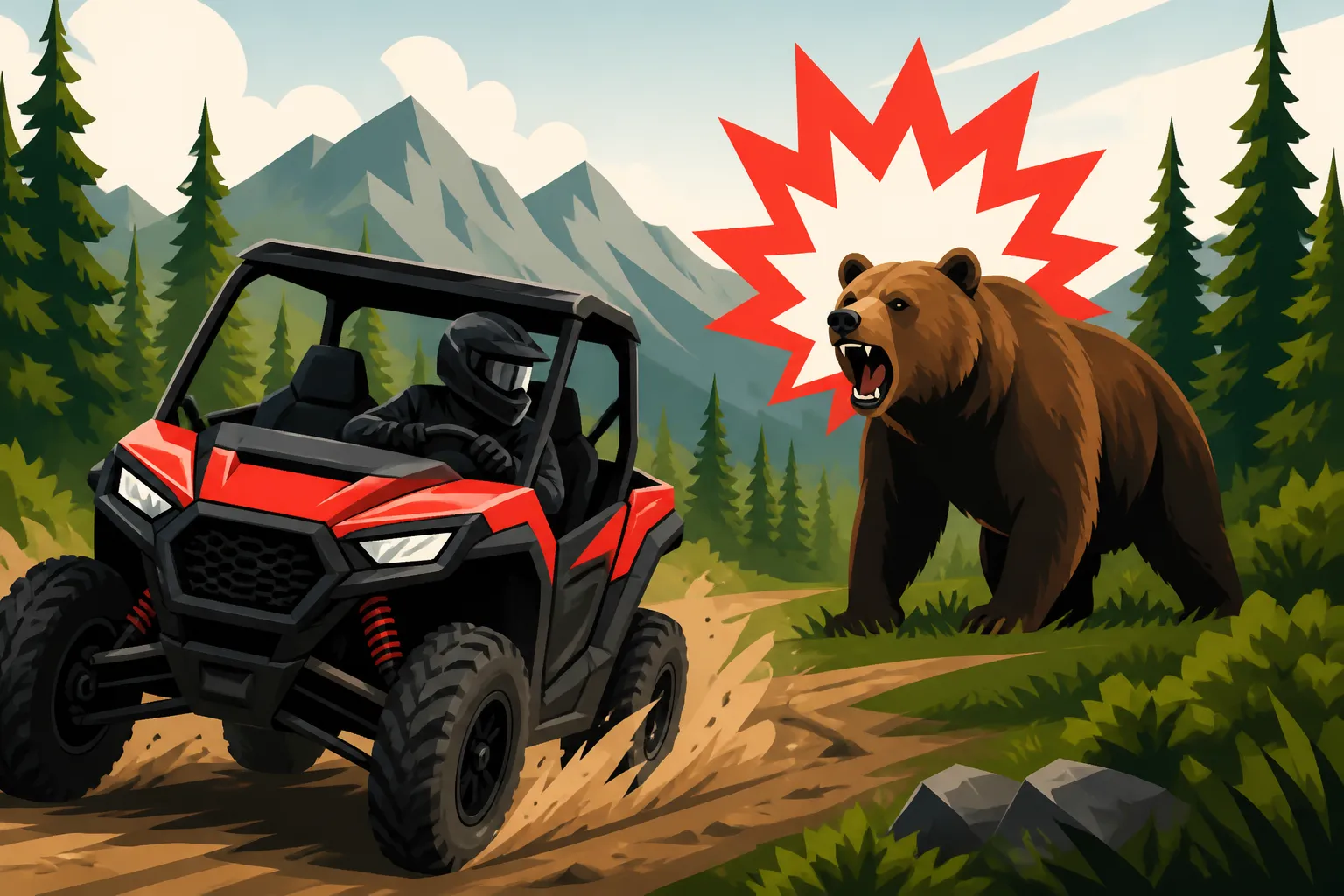
If you spot a bear, don’t accelerate toward it, crowd it, or try to pass close by. Stop at a safe distance if you can do so without trapping yourself or the animal. Keep your group together, speak calmly, and give the bear room to move away. If it is on the trail, wait or retreat slowly along the route you came from. Don’t try to squeeze past through brush.
A bear may not notice you right away. Avoid sudden movements and don’t approach for a photograph. If the animal is feeding, appears focused on something, or is near cubs, give it even more space. Never position yourself between a mother and her cubs. A bear that seems calm is still a wild animal, and its behaviour can change quickly if it feels cornered or surprised.
If the bear approaches, keep bear spray ready and follow its instructions for use. Keep the machines between your group and the bear only if doing so does not block the animal’s escape route or leave someone exposed. Don’t rely on engine noise, a horn, or a quick ride away as a substitute for distance and a clear retreat.
Respond carefully if a bear charges
A charge can be frightening, and it can happen quickly. Stand your ground rather than turning and running. Running may provoke a chase, and climbing a tree is not a dependable escape. Keep your spray ready and use it according to the canister’s directions if the bear comes within effective range. If you can retreat without turning your back or moving closer, do so slowly.
A defensive charge may stop before contact, but don’t assume that will happen. Continue to face the bear, keep it in view, and avoid sudden movements. If a bear makes contact, the appropriate response can depend on the circumstances and the species. General bear-safety guidance distinguishes a defensive attack from a predatory one, but it is difficult to judge the situation perfectly in the moment. Learn Alberta’s bear-safety guidance before your trip and follow the advice of trained local authorities.
If a bear is persistently following, stalking, or acting in a way that seems predatory, fight back rather than playing dead. Use anything available to defend yourself and protect your head and neck. The safest response depends on what the bear is doing; there is no single action that fits every encounter. That’s one reason it helps to learn how to identify the difference between a defensive reaction and persistent predatory behaviour before riding.
Report a serious encounter and reassess the ride
Once you are at a safe distance, don’t circle back to see whether the bear has moved. Leave the area, tell the rest of the group what happened, and choose a different route or end the ride. If anyone is injured or in immediate danger, contact emergency services. For a concerning wildlife encounter, follow the reporting instructions provided by the relevant Alberta authority or land manager.
After a close encounter, take time to check on every rider. Adrenaline can make it easy to overlook a fall, a twisted wrist, or someone who is shaken and not ready to continue. Don’t pressure a nervous rider to get back on the machine just to stay on schedule. A ride that ends early is better than pushing a rattled group into another blind or brushy section.
Common mistakes to avoid in bear country
Don’t treat the machine as protection
An ATV or UTV is not a guarantee of safety. A vehicle can help you leave an area, but a bear may be close before you see it, especially in dense cover or around a blind corner. Riders can also create risk by stopping suddenly, leaving machines scattered across the trail, or getting off to approach wildlife.
Keep machines under control and avoid speeding through areas where sightlines are poor. If the group sees a bear, don’t rev engines, chase it, or use the machines to herd it away. Give it space and a clear exit. [Alberta Trail Etiquette Locals Expect] offers broader guidance on sharing riding areas responsibly.
Don’t approach wildlife for photos or video
A close-up photo is never worth crowding a bear. Stay in your vehicle or on your machine only if doing so keeps a safe distance and does not interfere with the bear’s escape. Don’t walk toward it, ask another rider to move closer for a better angle, or stop the group in a way that blocks the trail.
If you need to document an encounter for a report, do it only from a safe location and without delaying your retreat. Keep the sighting details simple: where it occurred, when, and what the bear was doing. Avoid sharing precise location details publicly if doing so could encourage others to approach the animal.
Don’t assume every trail is suitable for every group
A route that works well for experienced adults may be a poor choice for a group with young riders, new operators, or people who are uncomfortable in remote terrain. Consider visibility, distance from help, cell coverage, weather, and the group’s ability to turn around safely. Stay on designated routes and respect closures; [Staying on the Trail Tread] explains why avoiding shortcuts matters for both land and riders.
If you want to check a route before heading out, use a map to understand the general layout, then confirm access and conditions through current land-management information. onX Offroad can support route planning and offline navigation, but it cannot replace good judgment, preparation, or local closure notices. When signs of wildlife activity or poor visibility make the plan feel uncomfortable, choose another route.
Disclaimer
This article is for general informational purposes only and does not constitute professional advice. Laws, prices and regulations vary by location and change over time. Consult a qualified professional for guidance on your specific situation.