Alberta Poker Runs and Club Rides
A poker run or club ride can be a fun way to explore Alberta’s trails, but the event details matter: a route may cross different land types, a staging area can fill early, and a group ride moves differently from a solo outing. This guide explains how these rides work, how to choose one, and what to check before you unload your ATV or side-by-side.
What to expect at an Alberta poker run or club ride
How a poker run usually works
A poker run is generally a ride with a series of checkpoints. At each stop, participants may receive a playing card or another marker; at the end, the collected cards make up a hand that can be compared with other riders’ hands. Some events also include door prizes, skill challenges, or a shared meal, but the format is set by the organizer. Ask what is included rather than assuming every event follows the same plan.
The checkpoints give the ride a structure, but they do not necessarily mean the route is short or easy. A course might use broad gravel roads, narrow wooded trails, muddy sections, or a combination. In the foothills, weather can change the character of a route quickly: a passable trail in dry conditions may become slick after rain. Look for a route description and difficulty notes before you commit.
A poker run is often social and self-paced, but “self-paced” does not mean there are no event rules. Organizers may set a start window, require riders to visit checkpoints in order, or ask groups to stay together. They may also identify routes that are off limits because of closures, land access restrictions, or safety concerns. Follow the event instructions, even if a tempting side trail looks open.
How a club ride differs
A club ride is often more focused on riding together than on collecting cards. A club might arrange a meeting place, organize riders into groups, and choose a route suited to the machines and experience levels attending. Some rides are open to guests, while others may require advance registration or membership. Check the event notice or contact the club before showing up with a trailer full of riders.
The pace can feel very different from a solo ride. A group may stop at trail junctions, wait for the last machine, or pause to help someone with a minor repair. Those stops are part of riding as a group, not a sign that the event is poorly organized. If you prefer a faster pace or a quieter day, ask about the ride style and expected group size before deciding.
Clubs can also be a useful source of local knowledge. Riders may know where a staging lot is, which trails are appropriate for a stock machine, or whether recent conditions have made a route difficult. To find local organizations and compare what they offer, start with [Alberta OHV Clubs Worth Joining]. For a more detailed look at keeping a group ride organized, see [Alberta Group Ride Planning].
Picking an event that suits your machine and experience
Read the event description with your actual machine in mind. A two-wheel-drive quad, a high-clearance ATV, and a large side-by-side can all handle trails differently. A route described as “easy” may still include uneven ground, tight turns, water, or a long distance from the staging area. If the description is vague, ask the organizer about terrain, riding time, and whether the route has a turnaround option.
Be honest about your own comfort level, too. If you have limited experience, a relaxed club ride on familiar terrain may be a better first outing than a long event through unfamiliar backcountry. New riders can also benefit from [Best Alberta OHV Trails for Beginners] when deciding what kind of terrain to practise on before joining a more demanding group ride.
| Event detail | What to ask | Why it matters |
|---|---|---|
| Route and terrain | What surfaces, obstacles, and trail grades should riders expect? | Helps match the ride to your skills and machine |
| Distance and timing | How long is the ride, and when does the group expect to return? | Helps with fuel, food, daylight, and family plans |
| Group format | Is the ride led, self-guided, or divided into pace groups? | Sets expectations for navigation and waiting |
| Machine requirements | Are there size, equipment, or passenger limits? | Avoids arriving with a machine that does not suit the route |
| Event logistics | Where is staging, and what should participants bring? | Makes arrival and unloading smoother |
| Land and route rules | Which rules, passes, or permissions apply? | Helps prevent access and compliance problems |
Finding a ride and checking the route
Where Alberta riders find organized outings
Start with local OHV clubs, community event listings, and riding groups in the region you want to visit. Events may be based near larger centres such as Calgary, Edmonton, Red Deer, Grande Prairie, or Rocky Mountain House, but the actual ride could take place well outside town. Confirm the location using the organizer’s directions rather than relying on a general map pin or an old social post.
Ask whether guests can attend, whether sign-up is required, and what happens if weather or trail conditions change. Some organizers publish updates through a club page or event message thread. Keep an eye on those notices close to departure; a route change can affect where you park, what equipment you need, and how long you should expect to be out.
If you are considering a ride in a public land area, learn the access rules before heading there. Trail access can depend on the specific zone, route designation, seasonal closures, and current land conditions. [Alberta's Public Land Use Zones Explained] is a helpful starting point for understanding why “public land” does not automatically mean every trail is open to every machine. For a broader overview of riding on public land, see [Alberta OHV Trails: Riding Public Land].
Map the route before you lose cell service
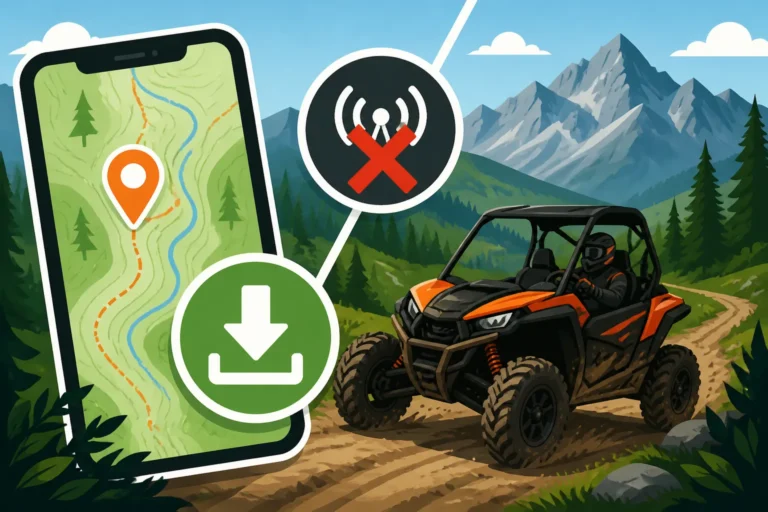
Do not assume that your phone will have reliable service throughout a ride. Foothills and backcountry routes can include dead zones, and a route that looks simple on a screen may have confusing forks on the ground. Review the event route in advance, save any available map for offline use, and agree with your group on what to do if machines get separated.
Tools such as onX Offroad can help riders review mapped routes and orient themselves, but a digital map should be one part of your navigation plan, not the whole plan. Check the organizer’s route information against current access notices and posted signs. Carry a charged phone, consider a backup navigation option, and make sure someone in the group knows how to use the map before the ride begins.
When available, download maps before leaving home or a town with dependable service. [Alberta Trail Maps Worth Downloading] covers the value of preparing route information in advance. If you are riding in an unfamiliar area, mark the staging location, planned route, and a sensible regroup point. Do not treat a mapped line as proof that a route is open: closures, gates, and access restrictions can change what is rideable.
Choose the riding area with care
The right event location depends on the group’s experience, vehicle types, and appetite for a long day. McLean Creek, west of Calgary, is a well-known OHV destination, but a familiar name does not make every route suitable for every rider. Read the organizer’s description and check area conditions before travelling. [McLean Creek: Alberta's Best Known OHV Area] offers a place to start if that area is on your list.
Other rides may use rail trails, designated routes, or regional riding areas with different surfaces and access rules. Before choosing a destination, look for the official area information, current closures, and any restrictions that apply to your machine. A trail can be open to one vehicle type and unsuitable or restricted for another. If the event does not explain where it goes, ask for clarification before registering or driving out.
Getting ready for the day
Confirm paperwork and required equipment
Before loading up, check that your machine’s registration and insurance arrangements are appropriate for the ride and the land where it will operate. Public-land riding can bring specific requirements, and event participation does not replace them. Review [Alberta Registration Before Riding Crown Land] and [Alberta Insurance Requirements on Public Land] if you are unsure what applies to your situation.
Also check the required safety equipment for the type of riding and location. Alberta’s public-land rules include requirements that riders should understand before setting out. Helmets, working lights, and a compliant spark arrestor may be relevant, along with any additional equipment the organizer recommends. Do not wait until a staging-area inspection or trailhead sign to discover that something is missing.
Pack the items your group is likely to need, not just what fits conveniently in a rack. Useful basics often include water, food, weather-appropriate layers, gloves, a first-aid kit, a tire repair kit, and tools suited to your machine. A winch or recovery gear may be sensible for some routes, but extra equipment does not make an unsuitable trail safe. Ask the organizer what is appropriate for the planned terrain.
Plan fuel, arrival, and parking
Fuel planning is easy to underestimate when a ride includes slow, technical sections or long waits between checkpoints. Start with a full tank where practical, know your machine’s approximate range, and ask whether fuel is available near the route or staging area. Do not count on a small community or trailhead having the supplies you need.
Arriving early can make the start less stressful. You may need time to find the staging lot, unload, complete event check-in, and make last-minute adjustments. Large trailers need space to turn and park, and a busy event can make the lot feel crowded. Follow parking directions and leave enough room for other participants to unload safely.
For more background on where riders can stage and camp, see [Alberta OHV Camping and Staging Areas]. Remember that a staging location is not automatically permission to camp, and camping rules are separate from the rules for riding. Confirm what the event allows before planning an overnight stay.
Agree on simple group safety habits
Before starting, decide who is leading, who is riding at the back, and where the group will regroup if it stretches out. Make sure everyone knows the route plan and what to do if they miss a turn. A simple rule—stop at major junctions until the rider behind you arrives—can prevent a small gap from turning into a confusing search.
Set expectations about passing and pace. Riders should not feel pressured to follow someone onto terrain beyond their skill or machine’s capability. If you need to stop, signal clearly and choose a safe spot where others can see you. Keep a comfortable distance from the machine ahead, particularly in dust, mud, or on uneven ground.
Trail courtesy matters just as much on an organized ride as it does on a quiet day. Stay on the designated route, avoid damaging soft ground, and give other trail users room. Review [Alberta Trail Etiquette Locals Expect] before attending, especially if you are new to the area or riding with a large group.
Riding responsibly and making the event enjoyable
Follow the route and respect access restrictions
A poker run checkpoint is not a reason to shortcut across closed ground or take an unmarked trail. Stay on the route provided by the organizer and obey signs, gates, and closures. Access may involve public land, private property, grazing leases, or roads managed under local rules. If the group reaches a gate, do not assume it can be opened or bypassed; follow the organizer’s instructions and leave access points as you find them.
Road and ditch riding rules can also be more complicated than riders expect. A route that appears to connect two trails may cross a road or right-of-way where different rules apply. Local bylaws can affect where OHVs may travel. If an event includes any road section, ask the organizer how that section is authorized and what riders must do there.
Be considerate of people who live, work, or recreate in the area. Slow down near homes, livestock, trail users, and busy staging areas. Avoid unnecessary revving and keep dust away from other people where possible. A well-run club ride should leave a good impression, not create problems for the next group hoping to use the same area.
Handle changes without turning them into a scramble
Weather, closures, mechanical problems, and slower-than-expected conditions can all change the day’s plan. If the route becomes unsafe or inaccessible, follow the event leader’s decision to shorten, reroute, or end the ride. Trying to finish a checkpoint route at all costs is not worth getting stranded or damaging a machine.
If your machine develops a problem, tell the group early. The leader may choose a safe place to stop, help assess the issue, or arrange for part of the group to return. Keep riders together where practical, and do not leave someone alone on the trail without a clear plan. If you become separated, follow the regroup procedure agreed on before departure rather than wandering onto unfamiliar routes.
For first-time participants, the best outcome is not necessarily completing every mile or collecting every card. It may be learning how the group communicates, discovering what your machine handles comfortably, and finishing the day with enough energy to load safely. That experience makes it easier to choose a better-fitting ride next time.
Ask thoughtful questions before you sign up
A few clear questions can prevent common frustrations. Ask what kind of machine is suitable, whether passengers are allowed, how difficult the route is, and whether riders need to bring anything beyond normal gear. Confirm the meeting location, start procedure, and how the organizer will share last-minute updates.
If the ride is a fundraiser or has a prize component, ask how participation works and whether there are separate event rules. If you are travelling from far away, confirm what happens if the event is cancelled or the route changes. These questions are not being difficult; they help you arrive prepared and let the organizer answer once rather than troubleshoot confusion at the trailhead.
A good Alberta poker run or club ride balances the fun of riding together with respect for the land and the group’s limits. Choose an event that fits your experience, check the route and requirements, prepare for changing conditions, and keep communication open throughout the day. That gives everyone a better chance of enjoying the ride and getting home safely.
Disclaimer
This article is for general informational purposes only and does not constitute professional advice. Laws, prices and regulations vary by location and change over time. Consult a qualified professional for guidance on your specific situation.