Alberta Riding in Fall Hunting Season
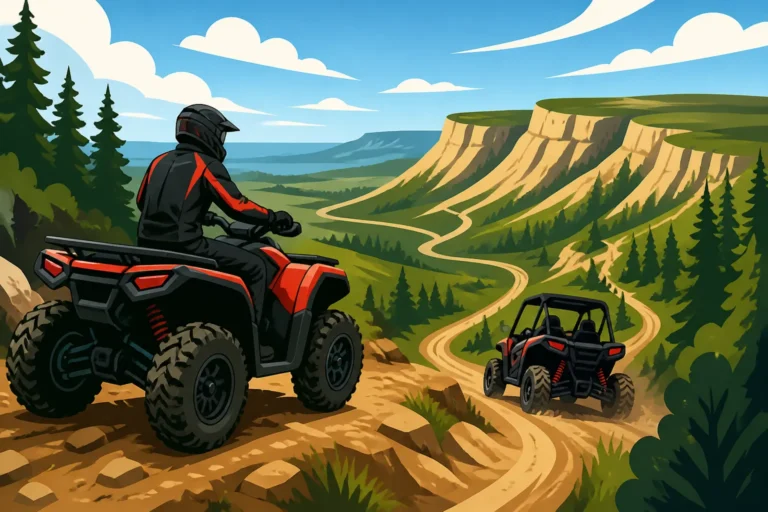
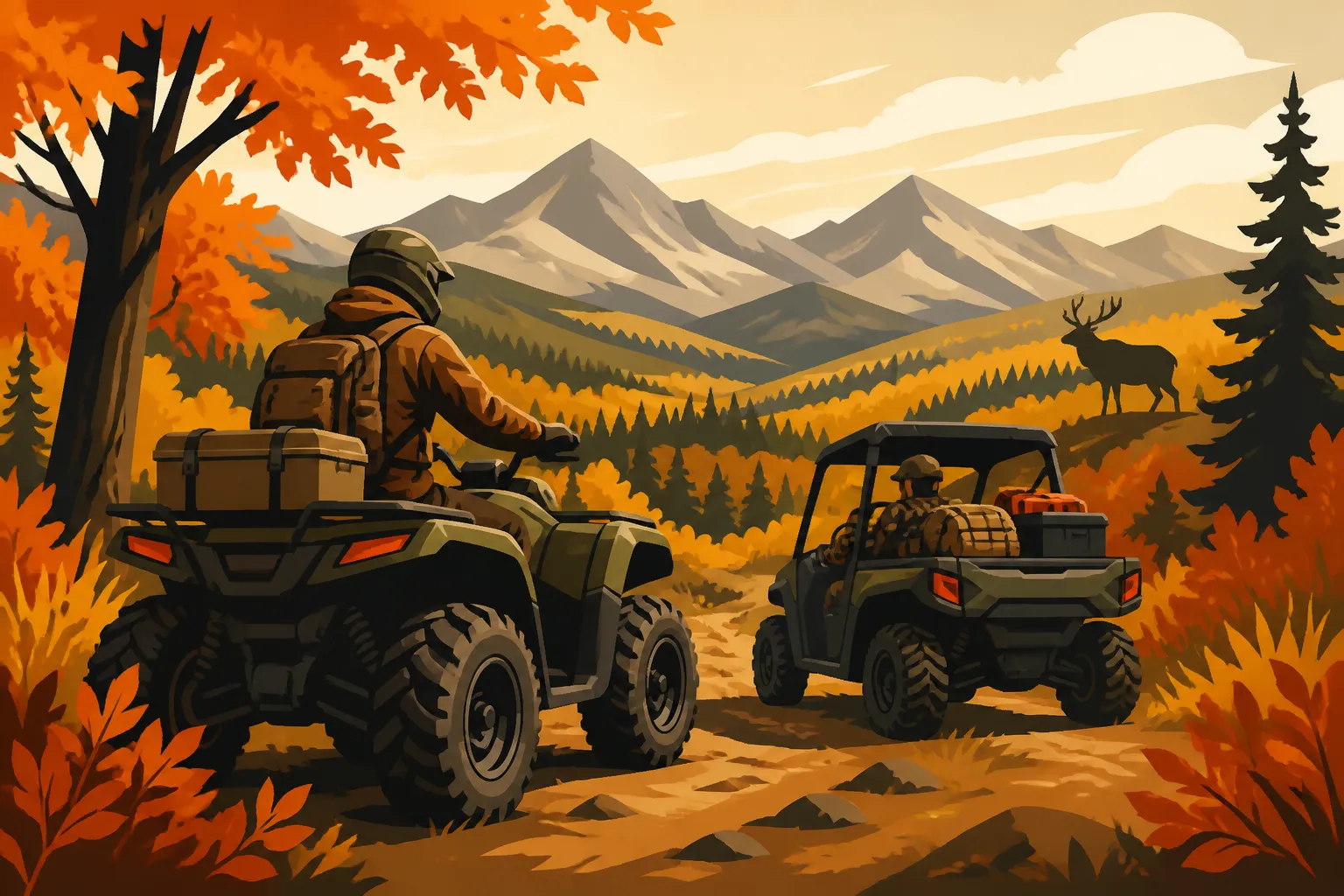
Fall riding in Alberta can feel like a different sport: daylight shrinks, mud freezes overnight, and hunters may be using the same roads and public land. This guide explains how to plan an ATV or UTV ride during hunting season, check access before you leave, and reduce risks for your group and other land users.
Plan Your Route Around Hunting Activity
Check what is open before you head out
Hunting activity and riding access can overlap, but access is not the same everywhere. Rules depend on the land, the area’s current restrictions, and any local closures or notices. Before loading the machine, check the rules for the specific Public Land Use Zone, trail system, or other destination you plan to visit. A trail that was open last weekend may be affected by a temporary closure, forestry activity, weather, or a seasonal restriction.
Use official land and trail information as your starting point, then check for updates close to your departure. If you use onX Offroad to review a route, download the map before leaving an area with reliable service and compare it with official access information. A map can help you understand where you are; it does not establish that a route is currently open or that every road shown is legal to ride.
It also helps to have a backup plan. If a staging area is crowded, a route is closed, or you encounter active hunting activity near a trail, turning around is often the simplest choice. Pick an alternate destination before you leave home instead of trying to improvise in a low-service area.
For a broader look at route planning on public land, read [Alberta OHV Trails: Riding Public Land] and [Checking a Zone Before You Go]. If you are riding in a designated area, confirm the zone’s rules and trail designations rather than assuming that a visible track is open to motorized use.
Understand where your group is riding
In Alberta, “public land” is not a single set of conditions. A route may pass through a Public Land Use Zone, a provincial recreation area, a grazing lease, or land with other access rules. A trail may also cross a road or right-of-way where different requirements apply. Check each part of the route, especially if you plan to connect several trails or travel a long distance from the staging area.
Grazing leases deserve particular care. A lease road or cutline is not automatically an invitation to ride wherever you like. Respect gates, livestock, signs, and landowner or leaseholder instructions. If your route depends on crossing private land or accessing a lease, confirm what permission is needed before your trip. [Alberta Grazing Lease Access Rules] and [Alberta Private Land Permission] are useful starting points.
If you are riding around the Eastern Slopes, foothills, or forested areas, do not rely on memory alone. Conditions, gates, and access can change. Check for closures, remain on designated routes where required, and keep your route flexible if a trail is busy with hunters or other users.
Share the Area Safely With Hunters
Make your machine and group easy to see
Fall light can be flat and dim, particularly under trees or in a valley. Wear visible outer layers, and consider high-visibility clothing for everyone in the group. Bright colours are useful because they help other people distinguish riders from the background. Do not assume that a helmet, dark jacket, or machine lights will be easy to notice through brush, dust, fog, or falling snow.
Keep your lights working and use them when conditions make your group harder to see. Alberta’s public-land equipment requirements include lighting rules, so check that your machine meets the requirements before setting out. A UTV with a roof, windshield, and enclosed sides can feel sheltered, but those features do not guarantee that someone outside can see you approaching. For more detail, see [Alberta Lighting Rules on Public Land].
Choose a speed that lets you stop within the distance you can see. Slow down near blind corners, trail junctions, parked vehicles, and places where a side trail or cutline meets your route. If you encounter a hunter, stop at a safe distance, give them room, and communicate calmly. Do not drive toward someone who is carrying a firearm simply because you want to ask a question.
Reduce noise and avoid disturbing hunting activity
A loud machine can carry a long way through a quiet forest, especially early in the morning. Even when your route is open, riding close to active hunting activity can disrupt another person’s plans and create an uncomfortable encounter. If you notice people, vehicles, or signs of a hunting setup near a trail, keep your distance and consider using another route.
Avoid stopping beside a parked hunting vehicle or riding repeatedly past the same area. If you need to regroup, choose a safe pullout away from the active trail and make sure your group is not blocking access. Keep conversations and engine revving low, and do not leave the trail to investigate a sound, animal, or camp.
Check that your exhaust is in good condition and compliant with the rules that apply to your ride. A modified or unusually loud exhaust can create friction with nearby land users and may violate public-land requirements. [Alberta Muffler Noise Rules] explains why sound matters beyond simple trail etiquette.
| Situation | Safer choice |
|---|---|
| You see a hunter or a parked hunting vehicle near the trail | Slow down, keep a respectful distance, and choose another route if needed |
| You come to a blind corner or brushy junction | Reduce speed enough to stop within the visible trail |
| Your group needs to regroup | Pull fully off the travelled route at a safe, visible spot |
| You find a gate or closure sign | Stop and follow the posted direction; do not go around the barrier |
| You are unsure whether a route is open | Check official information or turn back rather than guessing |
Prepare for Fall Conditions
Expect changing weather and shorter daylight
Fall rides can begin on firm ground and end in wet snow, freezing rain, or deep mud. Temperatures may vary sharply between a sunny staging area and a shaded trail. Dress in layers, bring rain protection, and pack warm gloves and dry clothing. For UTV passengers, a cab can help block wind, but it is still worth carrying clothing for a stop or breakdown.
Plan your ride so you can return before dark rather than treating sunset as a target. Shorter daylight leaves less room for delays, a wrong turn, or a mechanical problem. Check the forecast for the riding area, not only the nearest town, and think about how rain or freeze-thaw conditions could affect the route. A trail that looks manageable on a map may become difficult when ruts fill with water or shaded sections turn icy.
Share your route and expected return time with someone who is not on the ride. Set a check-in plan, especially if your group will travel beyond cell coverage. Carry a charged phone, but do not make it your only navigation or emergency tool. If you use onX Offroad, saving an offline map in advance can help you follow your planned route where mobile service drops; still carry a backup plan and know how to retrace your route.
Pack for a delay, not just the ride you expect
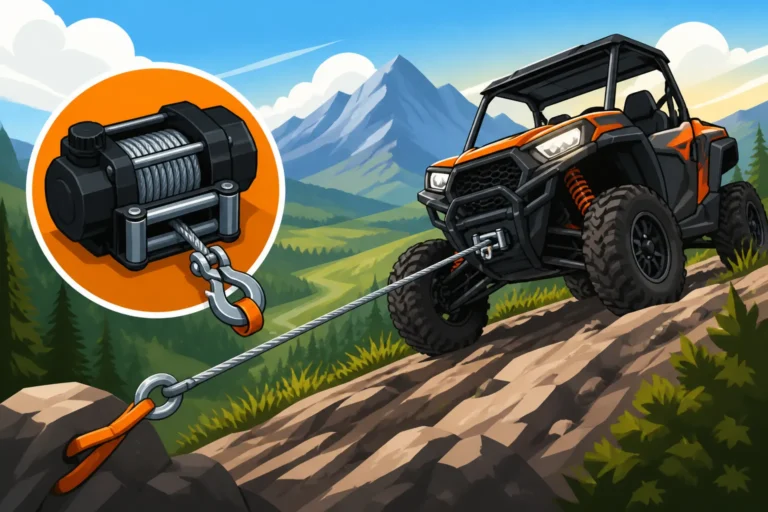
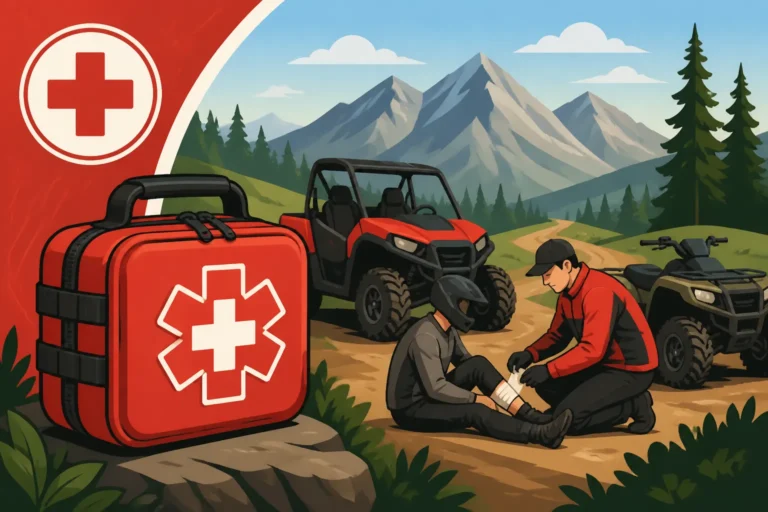
A practical fall kit is about staying comfortable and making a delay manageable. Pack water, food, a basic first-aid kit, a flashlight or headlamp, a small repair kit, and a way to contact help if your phone has no service. Bring the tools and spare items that suit your machine, such as a tire repair kit or a means of recovering a stuck vehicle. For a remote route, consider what your group would need if a machine could not be driven back to the staging area.
Before leaving, check the tires, brakes, lights, fuel, and any recovery equipment you expect to use. Make sure every rider knows how to stop the group safely and what to do if someone becomes separated. A UTV group should also confirm that passengers know where the machine’s safety equipment is and how to use it.
Do not let a planned destination push you into continuing when weather or trail conditions deteriorate. If visibility drops, the route becomes icy, or your group is moving more slowly than expected, shorten the ride. Returning early is not a failed trip; it is a sensible decision when conditions have changed.
Make a Simple Hunting-Season Ride Plan
Use a pre-ride checklist
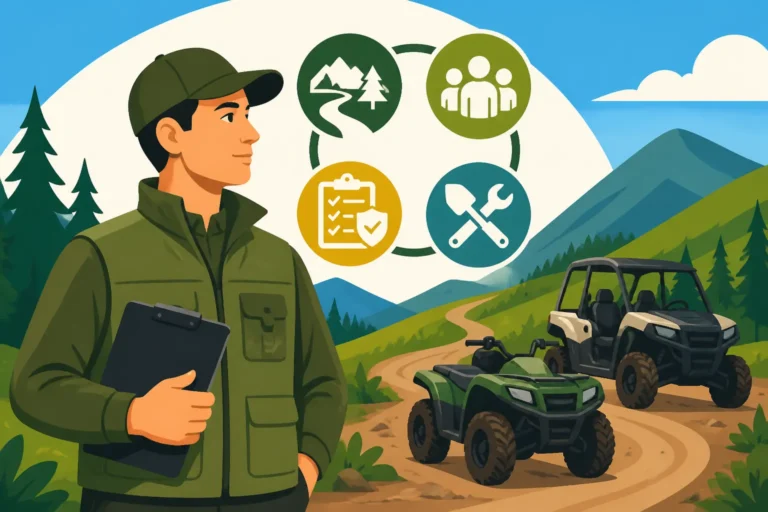
A short check before departure can prevent avoidable problems. Confirm where you are allowed to ride, whether the route has current closures, and whether your group has the required documents and equipment. Tell everyone the route, turnaround time, and meeting point in case the group separates.
Use this checklist as a practical starting point:
- Confirm the route is open and permitted for your machine.
- Check for current access notices, weather changes, and seasonal restrictions.
- Download maps for offline use and identify a backup route.
- Make sure lights, tires, brakes, and exhaust are in good condition.
- Pack visible clothing, layers, water, food, first aid, and emergency supplies.
- Share your route and expected return time with someone at home.
- Agree on group spacing, stopping points, and what to do if you meet hunters.
- Set a firm turnaround time that leaves daylight for the ride back.
If your route crosses a road, ditch, or other right-of-way, check the rules for that specific location. Do not assume that a route is open to OHVs simply because it appears on a map or is commonly used. [Alberta Rules for Riding Crown Land] and [Alberta Rules for Riding a Ditch] cover two situations where the details can matter.
Decide in advance when to turn around
Groups often get into trouble not because anyone intends to take a risk, but because small delays add up. One person wants to check a side trail, another needs to stop, and suddenly the group is farther from the staging area than planned. Agree ahead of time that anyone can call for a turnaround if visibility, weather, trail conditions, or nearby hunting activity makes the ride feel unsafe.
If you encounter a closure, a blocked route, or an unclear boundary, do not treat the obstacle as a puzzle to solve by driving around it. Stop, check the available information, and choose a permitted alternative. Likewise, if a hunter asks you to avoid an area, respond respectfully and leave room for a calm conversation. Do not assume that every request changes the legal access rules, but do take the encounter seriously and avoid escalating a tense situation.
The best fall rides are usually the ones with enough flexibility to adapt. A mapped route, a daylight buffer, visible clothing, and a courteous approach to other land users make it easier to enjoy Alberta’s trails without turning hunting season into a source of conflict.
Disclaimer
This article is for general informational purposes only and does not constitute professional advice. Laws, prices and regulations vary by location and change over time. Consult a qualified professional for guidance on your specific situation.