Alberta Trails for Kids
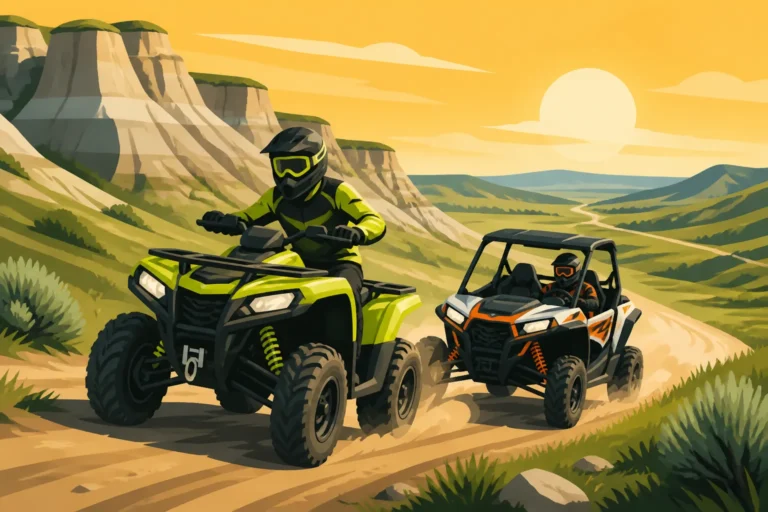
Taking kids on an Alberta ATV or UTV ride can sound like an easy family adventure—until you’re faced with unfamiliar trails, changing conditions, and the question of whether a route is actually suitable for your child. This guide explains how to choose a manageable riding area, check the rules, and prepare for a safer outing without assuming every trail is family-friendly.
How to Choose an Alberta Trail for Kids
Look for predictable terrain, not just an easy label
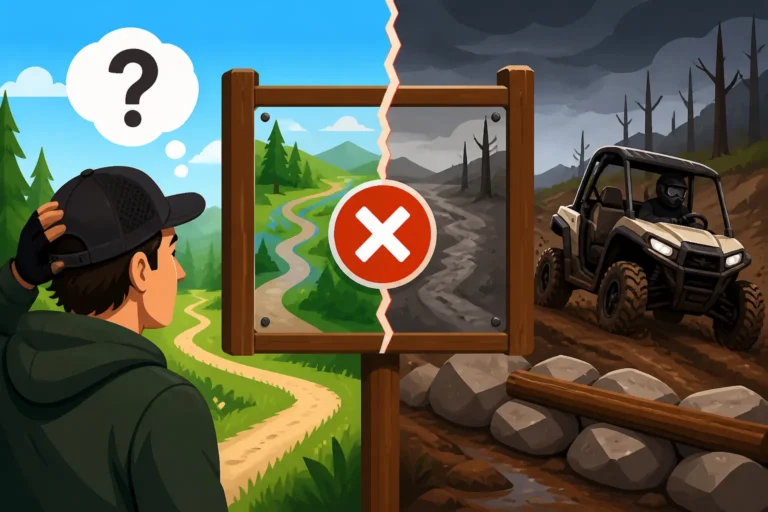
A beginner-friendly trail is generally one with a clear route, moderate grades, room to stop safely, and few surprises. For a child, a long stretch of manageable riding can be more suitable than a short route with steep climbs, deep mud, loose rock, narrow bridges, or tight turns. Even a route that looks straightforward on a map can become difficult after rain, snowmelt, or heavy use.
Think about what your child can comfortably handle right now, not what they might manage after a few more rides. A young rider who is confident on a flat field may feel overwhelmed by ruts, traffic, dust, or a steep descent. If your family is new to riding, plan a short outing with an easy place to turn around rather than committing to a long loop.
A trail’s condition can also change within a single ride. A route that was dry near the staging area may become muddy or uneven farther in. Check current land and trail information before setting out, and be ready to turn around if the surface or traffic feels beyond your child’s ability. Online mapping tools such as onX Offroad can help you review route options and orient yourself, but a mapped line is not a guarantee that a trail is open, suitable, or easy.
Match the machine and ride to the child
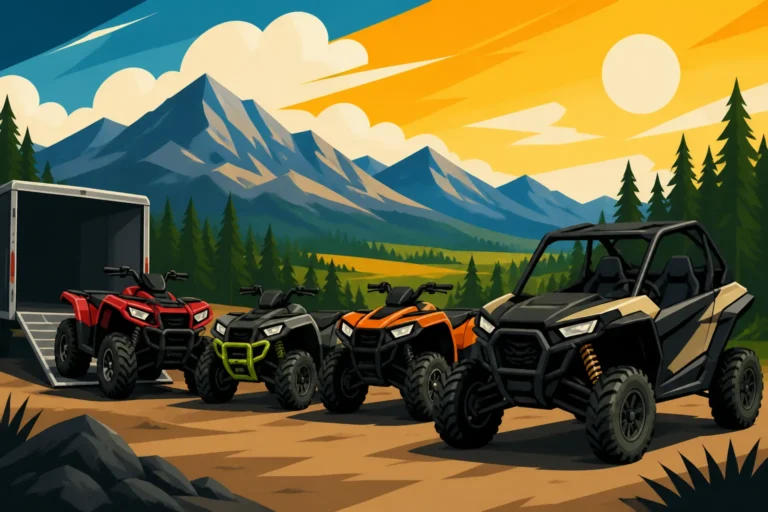
The machine matters just as much as the trail. A child should be able to reach and operate the controls comfortably, maintain a stable riding position, and follow instructions without becoming distracted by the effort of handling the vehicle. Follow the manufacturer’s age and size guidance for youth machines, and don’t put a child on an adult-sized ATV simply because they can sit on it.
For UTVs and side-by-sides, check the manufacturer’s passenger limits and seat-belt requirements. A passenger must have an appropriate seat and be able to ride securely; carrying extra passengers on a machine not designed for them is not a safe workaround. Review [Alberta Passenger Limits by Manufacturer](Alberta Passenger Limits by Manufacturer) before planning who will ride in each vehicle.
A child who is a passenger may still find a bumpy ride tiring or frightening. Keep the first trip short, explain that you can stop at any time, and agree on a simple way for them to signal that they need a break. Avoid making the ride feel like a test of bravery. A comfortable child is more likely to pay attention, communicate clearly, and enjoy the day.
Alberta Riding Areas and Route Planning
Consider established areas, but check the exact route
Families near Calgary often look at McLean Creek, a well-known OHV area west of the city. It has a range of terrain and route choices, which means it can offer options for different experience levels—but it should not be treated as uniformly easy. Choose a conservative route, confirm what is open, and avoid following more experienced riders onto trails your child has not assessed. The overview [McLean Creek: Alberta's Best Known OHV Area](McLean Creek: Alberta's Best Known OHV Area) can help you understand the area before you go.
The Ghost Public Land Use Zone is another area people consider for riding near the Calgary region. Conditions and terrain vary, and access rules can be specific. Staying on permitted designated trails is especially important; don’t assume a visible track is legal to ride. Review [Ghost PLUZ Riding in Alberta](Ghost PLUZ Riding in Alberta) and check current zone information before choosing a route.
For families who prefer a more linear ride, the Iron Horse Trail in northern Alberta may be worth investigating. It follows a former rail corridor, but that doesn’t mean every section is automatically appropriate for every child or machine. Confirm which sections allow the type of OHV you plan to use, look into the surface and access points, and plan how you’ll return to your vehicle. [Alberta's Iron Horse Trail](Alberta's Iron Horse Trail) is a useful starting point for learning about the route.
Build the day around your child’s energy
The best family ride is not necessarily the one with the most kilometres. A short route with time for snacks, water, and a relaxed stop can be a better experience than a full day of pushing to reach a distant destination. Set a turnaround point before you leave, and choose one that leaves enough time to get back before your child is tired or conditions change.
Before the ride, look at the route using a map and note the staging area, junctions, possible exits, and places where you could stop without blocking other riders. onX Offroad can be one part of that planning, but bring a reliable offline map or other navigation option as well. Cell coverage can be inconsistent in backcountry areas, and a phone battery can run down faster than expected.
Give your child a simple picture of the plan: where you’re starting, what a junction looks like, when you’ll stop, and what to do if the group gets separated. For a first outing, ride with a responsible adult group and keep the pace slow enough that riders can stay together. For more planning ideas, [Alberta Group Ride Planning](Alberta Group Ride Planning) covers considerations that help keep a group organized.
Rules and Safety for Children on Alberta OHV Trails
Know the age, supervision, and helmet requirements
Alberta’s public-land rules include age and supervision requirements for young OHV riders. Children under 14 need close supervision by an adult, and the supervising adult should be able to monitor the child and respond promptly—not simply be somewhere else on the trail. Check the details in [Alberta Supervision Rules for Young Riders](Alberta Supervision Rules for Young Riders) and [Alberta Rules for a Supervising Adult](Alberta Rules for a Supervising Adult) before your ride.
Helmet requirements also matter. Public-land riding generally requires riders to wear a helmet that meets the applicable standard, subject to specific exemptions. Make sure each child’s helmet fits properly, is secured, and is suitable for the machine and activity. A helmet borrowed from an adult may be too loose even if it looks fine from the outside. The guide [Alberta ATV Helmet Law Explained](Alberta ATV Helmet Law Explained) can help you review the rules.
Before leaving home, check that the child understands basic ride signals and the rules for stopping. Keep children within sight and hearing, and use a riding order that makes it easy for the supervising adult to observe them. Don’t let a child ride ahead out of view or follow another group whose route and pace you cannot control.
Do a simple equipment and conditions check
Before starting, inspect the machine, tires, brakes, lights, and fuel level. Confirm that the vehicle is appropriate for the planned route and that helmets and other protective gear fit. Pack water, weather-appropriate layers, snacks, basic first aid supplies, and a charged phone. If the route is remote, think carefully about how you would get help if someone becomes injured or a machine stops working.
Children often need more frequent breaks than adults, particularly on a noisy, dusty, or bumpy ride. Ask how they’re feeling rather than waiting for them to say they’re uncomfortable. Heat, cold, thirst, and fatigue can make a child less attentive, so shorten the outing when needed. On a long family day, a planned early finish is better than trying to coax an exhausted child through one more section.
Use an up-to-date map, but verify trail status and restrictions through the relevant land manager or local authority. Tools such as onX Offroad may help with route awareness, while local trail information can clarify whether a route is open and what rules apply. [Alberta Trail Maps Worth Downloading](Alberta Trail Maps Worth Downloading) is another helpful planning topic, and [Alberta OHV Equipment Checks by Officers](Alberta Equipment Checks by Officers) can help you think through what may be checked on public land.
A Practical Family Ride Plan
Compare the choices before you leave
Use this checklist to compare possible rides. “Easy” is relative: a route that suits one family may not suit another, especially if the child has limited experience or the terrain has changed.
| Planning question | What to look for | Why it matters for kids |
|---|---|---|
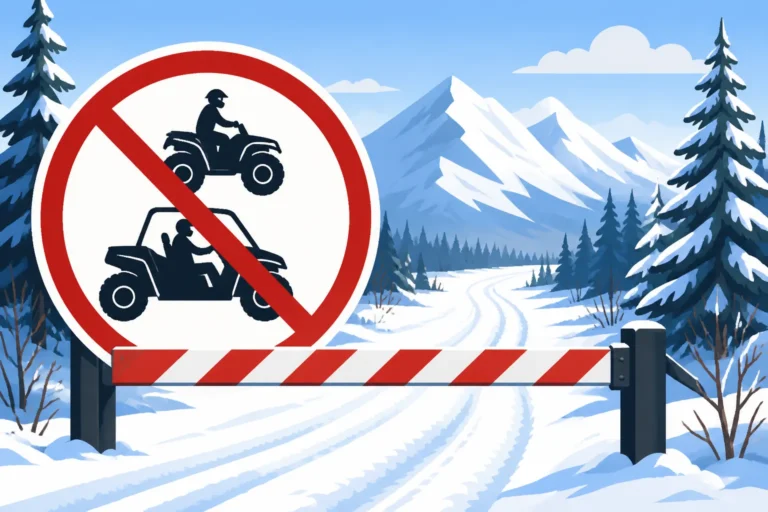
| Is the route permitted for your machine? | Current trail and land-use information | A visible track may not be open to OHVs |
| What is the surface like? | Manageable grades and few major obstacles | Technical terrain can quickly overwhelm a new rider |
| Can you turn around? | Clear junctions or practical exit options | You can shorten the ride if a child is tired |
| How long is the outing? | A distance and duration suited to the least experienced rider | Fatigue makes it harder to focus and communicate |
| Is there a suitable machine and seat? | Youth-sized controls or a proper passenger seat | Fit and secure positioning are essential |
| What will conditions be like? | Weather, mud, snowmelt, closures, and visibility | Conditions can change the difficulty of a familiar trail |
Before setting off, tell another adult where you’re going and when you expect to return. At the staging area, take a moment to review helmets, seat belts where applicable, and the group’s plan. If you are unsure whether a trail suits your child, start with a shorter option or choose a different activity.
Keep the first ride low-pressure
A first family ride can be as simple as practicing in a suitable, permitted area, stopping often, and heading home while everyone is still enjoying it. There is no need to cover a particular distance or keep up with other riders. Give children time to ask questions and let them know that turning back is always an acceptable choice.
If the family has different experience levels, plan around the youngest or least experienced rider. Experienced adults can ride more challenging routes another day rather than splitting the group without a clear supervision plan. On a shared ride, keep enough space between machines to avoid dust and sudden stops, but close enough to communicate and respond if someone needs help.
A successful day is one where your child feels secure, follows the rules, and wants to ride again. Careful route selection, the right machine, attentive supervision, and a flexible plan will do more for that experience than choosing the longest or most famous trail.
Disclaimer
This article is for general informational purposes only and does not constitute professional advice. Laws, prices and regulations vary by location and change over time. Consult a qualified professional for guidance on your specific situation.