Alberta Trails With Camping
Finding an Alberta riding area where you can camp nearby takes more than spotting a trail on a map. Some places allow camping only at designated nodes, while others have campgrounds a drive from the trailhead or seasonal access restrictions. This guide explains how to match a riding area with a suitable campsite and what to check before you load the trailer.
How camping and ATV access fit together
Camping beside a trail is not always allowed
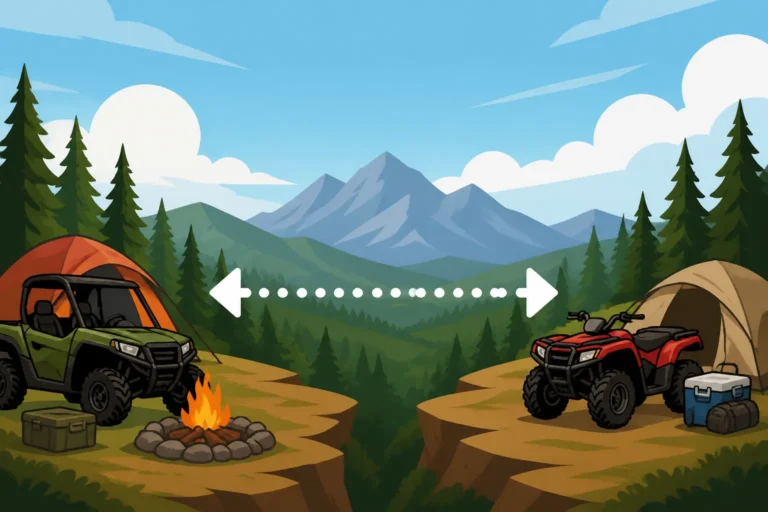
A trail may cross public land without giving you permission to pitch a tent or park a trailer beside it. Riding access and camping access are separate questions: a route can be open to OHVs while camping is limited to specific sites, recreation areas or designated camping nodes.
This distinction matters in Alberta’s Public Land Use Zones, or PLUZs. In the Ghost PLUZ, for example, riders need to distinguish designated riding routes from places where camping is allowed. A pin that looks close to a trail on a map is not, on its own, confirmation that overnight camping is permitted there. Review the applicable land-use rules and local notices before choosing a spot. [Alberta Designated Trails Only in the Ghost](Alberta's Ghost PLUZ)
Camping rules can also differ between public land, a managed campground and private land. A commercial campground may have its own booking, vehicle and quiet-hour rules, while public-land camping may have separate requirements. If you are arranging a ride and an overnight stay, check both sets of rules rather than assuming that one covers the other.
Choose a camping style before choosing a riding area
For some groups, a developed campground is the easiest fit. It gives you a clear place to park and set up, which can be especially helpful if you are bringing children, a larger trailer or riders who are new to backcountry trips. The trade-off is that the campground may not be directly beside the trails, so you may need to tow the machines to a staging area or ride only where the campground’s rules and access allow.
Other riders prefer public-land camping because it can put them closer to a riding area. That approach requires more homework: confirm that camping is permitted at the intended location, check whether a public lands camping pass applies, and make sure you understand any fire restrictions or site limits. [Alberta Random Camping Rules](Alberta's Random Camping Rules)
A third option is to camp in a nearby community or established campground and travel to the trailhead each day. This can be a good compromise when the riding zone has limited camping facilities, when weather makes an exposed campsite less appealing, or when your group wants easier access to fuel and supplies.
Alberta riding areas to pair with camping
Ghost PLUZ and its camping nodes
The Ghost PLUZ is a popular choice for riders looking for a backcountry setting, but it rewards careful planning. Camping is not simply a matter of pulling off wherever there is room. Check the current map and rules for designated camping locations, riding routes, closures and access conditions. [Ghost PLUZ Camping Nodes in Alberta](Ghost PLUZ Camping Nodes in Alberta)
The practical challenge is that a group may be able to find a riding route but still need to adjust its overnight plan. A campsite that works for a tent may not suit a long trailer, and a place that looks close on a map may be separated from the trail by a road, a closed route or terrain that is not appropriate for your machine. Confirm the exact location and approach before you leave home.
For navigation, compare an official land-use map with a detailed trail map and save the information you need before entering an area with weak or no cell service. onX Offroad can be one supplemental planning tool for reviewing routes, but do not treat a commercial map as permission to ride or camp. Cross-check access and closures with the applicable official information. [Alberta Trail Maps Worth Downloading](Alberta Trail Maps Worth Downloading)
McLean Creek and the surrounding foothills
McLean Creek is a well-known OHV riding area west of Calgary, and it can suit groups hoping to combine a day on the trails with a camping trip. Before you choose a campsite, confirm whether it is within a managed recreation area, at an approved camping location or elsewhere on public land. Those settings can have different rules and facilities, and “near McLean Creek” does not necessarily mean “at the staging area.”
Think through how your group will get from camp to the trail. If you plan to haul machines, confirm that the campground allows the trailer and that you have a suitable place to park. If you expect to ride directly from your overnight spot, check that the connecting route is open and legal for your machine. A short distance on a map can still involve a road or route where OHV access is restricted.
Weather and seasonal conditions can change the experience, too. Rain can make foothills trails muddy, while snow, maintenance work or temporary closures may affect access. Check conditions close to departure and have a backup plan, especially if your trip depends on a particular staging area. [Alberta OHV Camping and Staging Areas](Alberta OHV Camping and Staging Areas)
Iron Horse Trail and community-based overnights
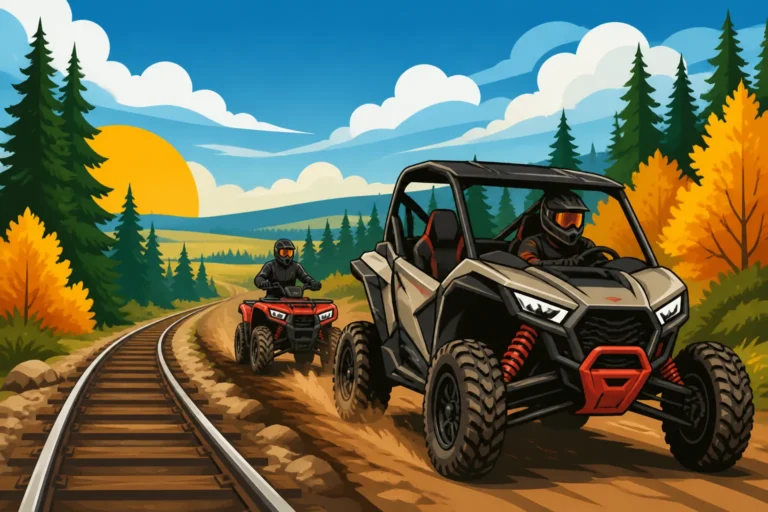
The Iron Horse Trail offers a different kind of riding trip: it follows a long rail-trail corridor through communities in northeastern Alberta. That makes a community-based overnight plan worth considering. Instead of relying on a remote campsite beside the route, you can investigate established camping or lodging options along the corridor and organize your ride around the places where your group plans to stop.
Do not assume every section has the same services or that every overnight option allows OHVs, trailers or direct trail access. Contact the campground or accommodation provider about machine parking, trailer space and how riders can reach the trail legally. It is also sensible to check the route’s current access information before setting out, since conditions and local arrangements can change.
This style of trip may be especially comfortable for a mixed-experience group. Riders can plan manageable daily sections, stop in communities for supplies, and avoid the uncertainty of choosing an unverified remote campsite. [Alberta's Iron Horse Trail From Smoky Lake](Alberta's Iron Horse Trail From Smoky Lake)
Match the trip to the kind of campsite you need
The best area depends on what your group considers a workable campsite. A tent-only trip has different needs from a side-by-side group towing a long travel trailer. Before booking or driving out, confirm practical details such as parking, trailer length, toilets, water, fire rules and whether the campsite is open during your travel dates.
| Trip style | Camping approach to investigate | Main thing to verify |
|---|---|---|
| Backcountry ride | Approved public-land site or designated camping node | Camping permission, access and current closures |
| Family weekend | Established campground near a riding area | Machine and trailer parking, rules for connecting to trails |
| Multi-day route | Community campground or lodging along the route | Legal trail access and services between stops |
| Large group ride | Campground with enough space for vehicles and trailers | Group capacity, booking requirements and noise rules |
Use this table as a starting point, not as a list of guaranteed facilities. Availability and rules vary by location. If a campsite’s website or map is unclear, contact the operator or land manager before you commit to a long drive.
Plan the campsite, route and paperwork together
Check maps and rules before leaving home
Start with the land manager’s current information for the area you plan to visit. Confirm which trails are open to your type of machine, whether camping is permitted where you intend to stay, and whether there are seasonal or temporary restrictions. In a PLUZ, knowing that the area is open does not mean every route or campsite is available.
Then compare that information with a map that helps you understand distances, trail connections and the location of staging areas. Download maps or save the details you need before heading out; cell coverage can be unreliable in the backcountry. onX Offroad may help with trip planning, but use it alongside official information rather than as a substitute for checking land-use rules. [Alberta OHV Trail Map Downloads](Alberta OHV Trail Map Downloads)
Be specific when checking an uncertain campsite. Ask whether OHVs can be ridden from the site to the trail, whether machines must be trailered to the staging area, and whether the site accepts your kind of camping setup. Getting clear answers ahead of time is much easier than discovering after dark that the planned campsite does not work for your group.
Check passes, fire rules and campsite limits
Public-land camping requirements are not identical across Alberta. Check whether the camping area you have chosen is covered by a public lands camping pass requirement and whether other passes apply to your route or destination. Do not assume that a pass for one purpose covers a separate activity or location. [Alberta Public Lands Camping Pass](Alberta's Public Lands Camping Pass)
Fire restrictions deserve a separate check shortly before departure. A campsite that allows fires under ordinary conditions may be affected by a ban or restriction during dry weather. Bring a cooking alternative if your plan depends on a campfire, and follow any posted instructions at the site. [Alberta Fire Bans and Riding](Alberta Fire Bans and Riding)
Also check for limits on how long you may stay, where you can set up and how you should manage waste. Pack out what you bring in, keep vehicles on appropriate surfaces, and leave gates as you found them. Small oversights can create problems for land managers, nearby campers and the next riding group.
Prepare the machine and campsite for a backcountry weekend
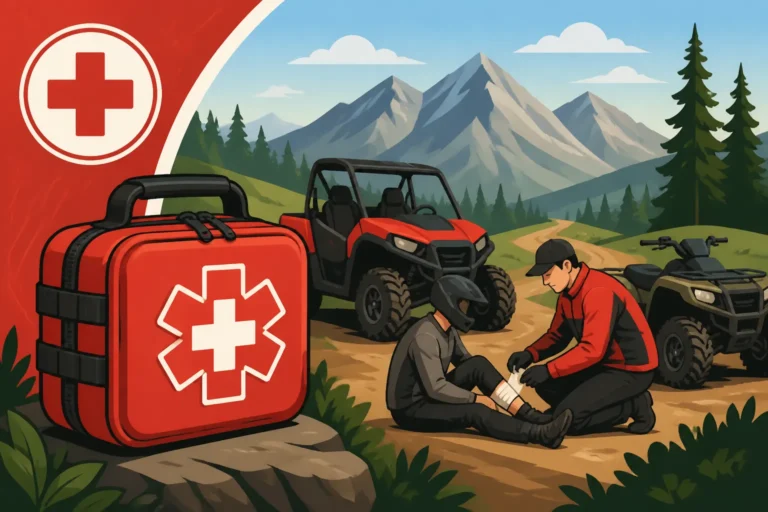
A camping trip can make a small equipment issue much more frustrating. Before leaving, inspect your ATV or UTV, load basic repair supplies and make sure your machine’s registration and insurance documents are ready for the kind of riding you plan to do. Pack essentials for the route, including food, water, weather-appropriate clothing and a first-aid kit.
Think about how the campsite affects your riding schedule. If it takes time to unload, set up camp and reach the trailhead, plan a shorter first day rather than assuming you will start riding as soon as you arrive. For a group, agree on a meeting point and a simple plan if someone gets separated or a machine needs attention.
Finally, leave room for a change of plan. A closure, poor weather or a full campground can derail a tightly scheduled trip. Keep a backup campground or riding area in mind, and avoid making the whole weekend depend on an unconfirmed campsite. That little bit of flexibility can turn a frustrating late-night scramble into a manageable change of plans.
A simple checklist for choosing a camping ride
Confirm the overnight location first
Before you set off, confirm that your intended campsite is open and appropriate for your setup. Check whether it is a public-land site, a designated node, a managed campground or private land. If it is private, get permission rather than assuming that proximity to a public trail gives you access.
Next, confirm that your group can legally and practically get from the campsite to the riding area. Check route access, machine restrictions, parking and whether you need to trailer to a staging area. If you are relying on a map app such as onX Offroad to plan the route, compare it with current official maps and notices.
A quick call to a campground or land manager can prevent a common mistake: choosing a site based on its name or map pin without checking whether it is suitable for OHV users. Ask direct questions about trailers, machine storage, trail access and current conditions.
Use this pre-trip checklist
- Identify the riding area and the land manager responsible for it.
- Confirm which trails are open to your machine and whether any closures apply.
- Verify that camping is allowed at your chosen location.
- Check campground rules, trailer space, facilities and reservation requirements.
- Confirm any public-land camping pass or other access requirements.
- Check fire restrictions and pack a backup cooking option.
- Download maps and save key locations before you lose cell service.
- Prepare a backup campsite or riding area in case conditions change.
A little planning helps you spend less time sorting out access at the trailhead and more time enjoying the ride. For Alberta trails with camping, the most dependable plan is the one that treats the campsite, the route and the rules as parts of the same trip.
Disclaimer
This article is for general informational purposes only and does not constitute professional advice. Laws, prices and regulations vary by location and change over time. Consult a qualified professional for guidance on your specific situation.