Does Someone Being Towed Need a Helmet?
Alright, let's talk about something that might seem like a small detail, but it could make a huge difference in safety – and even your wallet – when you're out riding your ATV or UTV in Alberta. We've all seen machines towing things, whether it's a sled full of kids for a winter thrill, a utility trailer loaded with gear, or even another broken-down quad. But what about the person being towed? Do they need to wear a helmet? It's a question that often catches riders off guard, and the answer isn't always as straightforward as you might think. This guide will dive deep into Alberta's rules and, more importantly, the crucial safety aspects involved.
The Core Question: Helmet Laws for Towed Passengers
It’s easy to focus on the person operating the off-highway vehicle (OHV) when discussing helmet laws, but when you introduce a towed element with another person on it, the waters can get a little murky. While the specific act of "being towed" with a person on the towed device isn't always explicitly singled out in black and white for helmet requirements, we need to look at the broader regulations and the spirit of the law.
Understanding Alberta's General Helmet Law for OHVs
First off, let's clarify Alberta's foundational rules regarding helmets for OHV riders. Since May 15, 2017, it's been mandatory for anyone operating or riding as a passenger on an OHV on public land to wear a helmet. This isn't just a suggestion; it's the law. The purpose is crystal clear: to reduce serious head injuries, which are unfortunately all too common in OHV accidents. This includes quad riders, side-by-side occupants, dirt bike riders, and even snowmobilers. The law, primarily enforced under Alberta's Traffic Safety Act and the Off-Highway Vehicle Regulation, aims to protect everyone.
The "public land" distinction is key here. If you're riding exclusively on your own private property, or land you have explicit permission to be on where the public doesn't have access, the helmet law doesn't apply. However, the vast majority of our incredible riding areas – from designated public land use zones (PLUZ) to forestry roads and even highway ditches – fall under the "public land" umbrella. A properly approved helmet is one that meets standards like CSA, Snell, or ECE. You'll find a sticker or label inside the helmet indicating this. [Helmets Since May 15, 2017] made it clear that this applies to nearly everyone.
The Nuance of "Being Towed" in Alberta Law
Now, let's zero in on the "being towed" part. The Off-Highway Vehicle Regulation generally refers to persons operating or riding as a passenger on an OHV. When someone is being towed on a separate device, like a tube, a sled, or even another OHV that isn't under its own power, are they considered a "passenger on an OHV"? This is where the interpretation comes in.
Technically, if the person being towed is on a device separate from the primary OHV, they are not directly "on" the OHV itself. However, law enforcement and courts often look at the intent and the practical realities of the situation. The towed device, while separate, is directly connected to and propelled by the OHV. In many interpretations, the safety provisions for OHV use would extend to anyone directly involved in the OHV activity, especially when that activity carries similar risks of impact and injury. Even if not explicitly named, the spirit of the law, focused on protecting all participants in OHV activities, would strongly suggest a helmet is needed.
Think about it this way: if a child is riding on a tube being pulled behind a quad, the risk of falling off, hitting an obstacle, or experiencing whiplash is arguably as high, if not higher, than riding as a passenger on the quad itself. From a legal standpoint, it's safer to assume that the helmet requirement extends to anyone participating in the OHV activity, regardless of whether they are directly on the machine or on a device being pulled by it. This is a situation where common sense safety should always override looking for loopholes.
Legal Interpretations and What Enforcement Looks For
When an Alberta Fish and Wildlife officer, RCMP, or local bylaw enforcement officer sees an OHV towing someone without a helmet, they are likely to err on the side of caution and safety. They're not looking to write tickets just for the sake of it, but their primary goal is to ensure public safety. If a situation presents a clear and present danger of head injury, they will act.
What they look for is simple: Is a person involved in an OHV activity on public land, and are they protected from head injury? If you're pulling a child on a sled, or a friend on a broken-down quad, and they're not wearing a helmet, an officer would reasonably interpret this as a violation of the spirit, if not the direct letter, of the helmet law. The enforcement officer's job is to prevent harm. They might issue a warning, or they might issue a ticket. The cost of a ticket is far less than the cost of a head injury, but the best approach is to avoid both. What an officer can ask to see includes proof of registration, insurance, and compliance with safety gear. [What an Alberta Officer Can Ask to See] makes this clear.
Safety First: Why Helmets Are Crucial Even When Towed
Beyond the legal technicalities, the most compelling reason for wearing a helmet when being towed is plain old safety. The physics of being pulled behind an OHV, often over unpredictable terrain, introduce a unique set of risks that make head protection absolutely paramount.
Unpredictable Terrain and Sudden Stops
Riding an OHV, or being towed by one, means navigating trails that are rarely perfectly smooth. You're going to encounter bumps, ruts, rocks, roots, and sudden changes in elevation. When you're being towed, any of these obstacles can cause the towed device to jerk violently, swing unexpectedly, or even flip. Imagine being on a sled and hitting an unexpected dip – your head can snap forward or backward, leading to severe whiplash or even direct impact with the ground or the sled itself.
Sudden stops are another major hazard. The OHV operator might brake quickly to avoid an obstacle, or perhaps the tow rope snags. When this happens, the momentum of the towed person continues, often resulting in them being thrown forward or sideways. A helmet acts as a critical shock absorber, distributing impact forces and preventing direct trauma to the skull. Without it, even a seemingly minor jolt can lead to a concussion or worse.
Risk of Ejection and Secondary Impacts
Perhaps the most terrifying scenario when being towed is being ejected from the towed device. This can happen for numerous reasons: hitting a large bump, the tow rope breaking or becoming detached, or the operator making a sharp turn. If you're thrown off, the ground, rocks, trees, or even the towing OHV itself become immediate and dangerous obstacles.
In such a situation, a helmet is your last line of defense. It significantly reduces the risk of skull fractures, brain hemorrhages, and other life-altering head injuries. Even if the impact isn't directly with a hard object, the rapid deceleration and twisting forces on the neck and head can be devastating without the support and protection a proper helmet provides. This is where brands like SuperATV, known for robust accessories, also indirectly remind us that the forces involved in off-roading are no joke – and neither should be your safety gear.
Factors Increasing Risk: Speed, Terrain, and Rider Experience
Several factors amplify the risks involved in being towed, making the helmet requirement even more critical:
- Speed: The faster the towing OHV goes, the greater the kinetic energy involved. This means any fall or impact will have exponentially more force behind it, increasing the severity of potential injuries. A helmet becomes even more vital at higher speeds.
- Terrain: As mentioned, rough, uneven, or unfamiliar terrain dramatically increases the chances of losing control, jerking, or rolling the towed device. Rocky trails in the foothills or icy conditions in winter demand maximum protection.
- Rider Experience: The person being towed, especially if they are a child or inexperienced, might not know how to brace themselves for impacts, shift their weight properly, or anticipate the movements of the towing OHV. This lack of experience makes them more vulnerable to injury.
- Visibility: Dust, mud, or snow kicked up by the towing OHV can impair the vision of the person being towed, reducing their ability to react to upcoming terrain changes. This makes [Alberta Requires Working Head and Tail Lights] for the OHV even more important for visibility, but a helmet with a good visor or goggles still protects the person being towed.
Considering these factors, asking "Does someone being towed need a helmet?" is really asking, "Are they at risk of head injury?" The answer is almost always yes.
Practical Considerations for Safe Towing in Alberta
Knowing the rules and the risks is one thing; putting that knowledge into practice is another. When you plan to tow someone, there are several practical steps you can take to ensure maximum safety for everyone involved.
Choosing the Right Helmet and Gear
This isn't just about grabbing any old helmet; it's about selecting one that meets safety standards and fits correctly. In Alberta, helmets for OHV use must meet specific certifications such as CSA (Canadian Standards Association), Snell, or ECE (Economic Commission for Europe). These standards ensure the helmet has been rigorously tested to withstand impacts and protect your head. [CSA CAN3-D230-M85 Label] is an example of what to look for.
When trying on a helmet, it should feel snug but not uncomfortably tight, with no side-to-side or front-to-back movement when the chin strap is fastened. For children, resist the urge to buy an oversized helmet they can "grow into." An ill-fitting helmet offers minimal protection. Beyond the helmet, consider other protective gear:
- Goggles: Essential for protecting eyes from dust, debris, branches, and wind.
- Gloves: Provide grip, prevent blisters, and protect hands in a fall.
- Sturdy Footwear: Boots that cover the ankles offer protection from impacts and provide better grip.
- Long Sleeves and Pants: Protect against scrapes, branches, and sun exposure.
Think of it this way: if you wouldn't ride your quad without proper gear, why would someone being towed, facing similar or even elevated risks, go without?
Safe Towing Practices and Equipment
The equipment and method you use for towing are just as important as the helmet. Cutting corners here significantly increases risk.
- Appropriate Tow Rope or Bar: Never use just any old rope. Tow ropes designed for vehicles have specific breaking strengths and often include bungee sections to absorb shock, preventing sudden jerks. A rigid tow bar is even better as it maintains a fixed distance. SuperATV, for instance, offers robust recovery gear that could be adapted for safe towing, emphasizing the importance of quality equipment.
- Secure Attachment Points: Ensure the tow rope or bar is securely attached to both the towing OHV and the towed device. Use dedicated tow points or sturdy frame components. Never attach to axles, suspension parts, or anything that could easily break or detach.
- Suitable Towed Device: Is the sled, tube, or utility trailer actually designed for carrying a person safely? It should be stable, have handholds if possible, and be free of sharp edges. If it's a utility trailer, ensure the person is properly seated, not just perched precariously.
- Clear Communication: Establish hand signals or use communication devices (if practical) between the OHV operator and the person being towed. This allows the towed person to signal for slower speeds, stops, or if they are in distress.
- Maintain Moderate Speeds: Slow and steady wins the race. Keep speeds low, especially on uneven terrain or when making turns. Rapid acceleration or deceleration puts immense stress on the tow system and the towed person.
- Anticipate Terrain: The operator of the towing OHV should constantly scan the terrain ahead, anticipating bumps, dips, and obstacles, and adjusting speed and direction accordingly to provide the smoothest possible ride for the towed person.
By using proper equipment and following safe practices, you drastically reduce the chances of an incident. [Alberta Insurance Requirements on Public Land] also apply to the towing OHV, reinforcing the need to operate safely and legally.
Understanding Your Responsibilities as an Operator
As the operator of the OHV doing the towing, you bear a significant responsibility for the safety of everyone involved, including the person you are pulling. This isn't just a moral obligation; it can have legal ramifications. You have a "duty of care" to operate your OHV in a safe manner that does not endanger others.
If an accident occurs while you are towing someone, and they are injured – particularly if they sustain a head injury because they weren't wearing a helmet – you could face serious consequences. These might include:
- Fines and Penalties: For violating helmet laws or other safety regulations. [Alberta Penalties for Riding Unregistered] might be about registration, but it highlights that there are penalties for non-compliance with OHV laws.
- Civil Liability: The injured party (or their family) could sue you for negligence. Your OHV insurance might not cover damages if you were operating outside of legal requirements or acting negligently.
- Criminal Charges: In cases of gross negligence leading to serious injury or fatality, criminal charges are a possibility.
Ensuring that anyone you tow is wearing an approved, properly fitted helmet, and that you are using safe towing practices, is not just about avoiding trouble. It's about protecting the people you care about and enjoying our incredible Alberta outdoors responsibly. [Alberta ATV Helmet Law Explained] covers the general requirements, and it's always best to assume these apply to any active participant.
Common Scenarios and the Helmet Question
Let's look at a few common scenarios where towing happens and how the helmet question plays out in each. Understanding these can help you make informed safety decisions.
Towed on a Sled or Tube for Recreation
This is perhaps the most common scenario where the "no helmet" mistake happens. It's winter, there's fresh snow, and pulling a child (or even an adult) on a sled or tube behind an ATV or snowmobile seems like harmless fun. But the risks here are immense. Sleds and tubes offer very little in the way of protection, and being low to the ground, the rider is susceptible to being thrown, hitting bumps, or colliding with objects.
Even though it's "just for fun," if this activity occurs on public land, the general helmet law for OHV activities applies. From an enforcement perspective, it's very likely they would expect the person being towed to be wearing a helmet. The fun can turn tragic in an instant if a head injury occurs. Therefore, if you're pulling a recreational device with a person on it, absolutely insist on a helmet. It's non-negotiable for safety, and for staying on the right side of the law.
Being Pulled on a Utility Trailer or Device for Work
What if you're using your ATV or UTV for work, perhaps on a farm or oilfield lease, and you're pulling a utility trailer with a person riding on it? Again, the question hinges on whether the location is public or private land.
If you are on public land – which includes many lease roads, forestry roads, and even highway ditches – then yes, anyone riding on that utility trailer, being pulled by an OHV, should be wearing a helmet. They are participating in an OHV activity on public land. Even if they're seated, the jarring and potential for ejection are still present. This includes scenarios like hauling a field hand from one part of a remote lease to another.
However, if you're exclusively on private property, like your own farm, then the helmet law typically does not apply. Many farmers use their quads to haul tools, feed, or even people on trailers between fields. [Alberta Farmer-Owned Machines on Private Land] outlines some exemptions for registration on private land, but remember that safety is always paramount, regardless of specific legal mandates on private property. Even if not legally required, wearing a helmet is still a smart choice for work on a farm, given the inherent risks.
Being Towed Because of a Breakdown
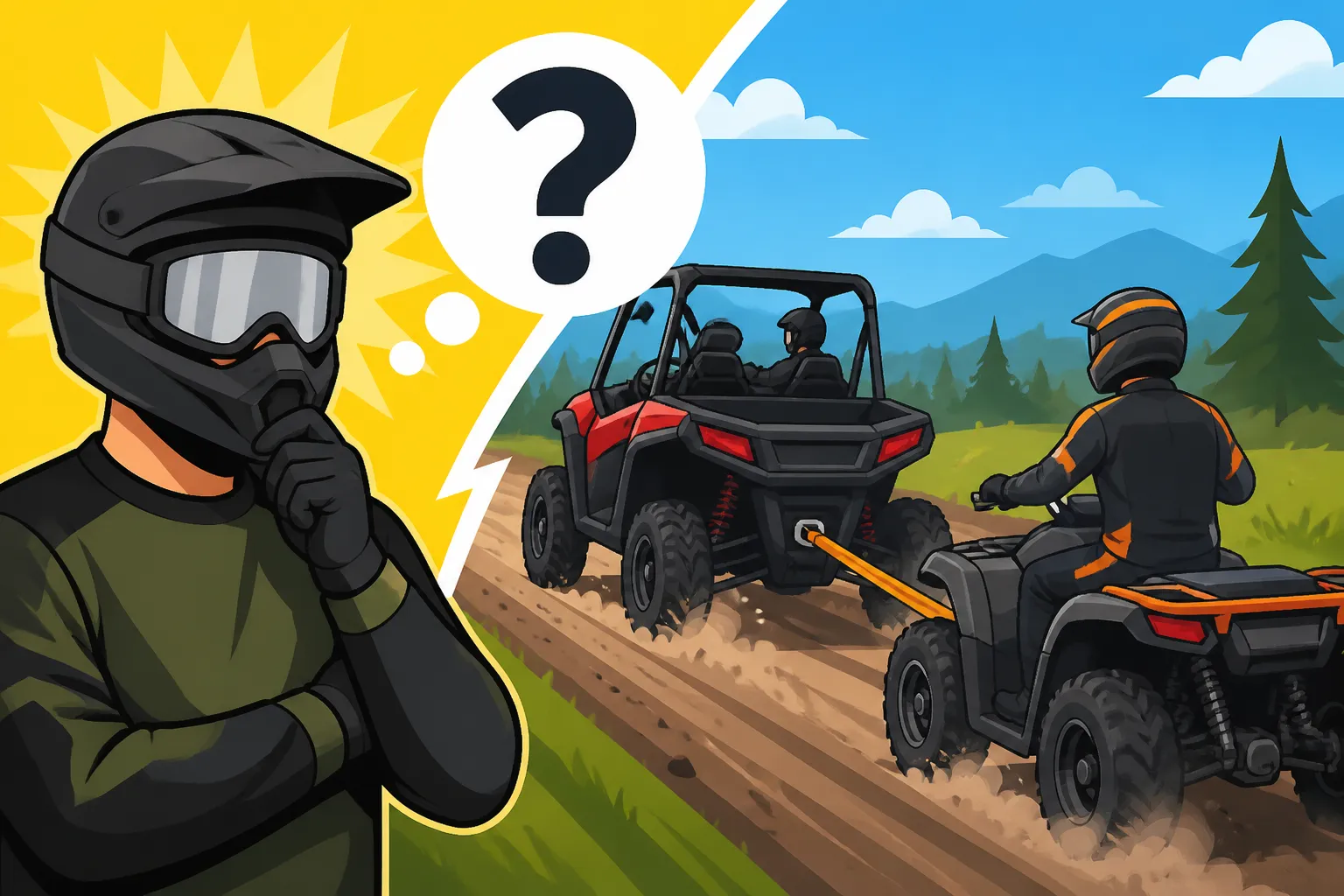
Picture this: you're out on the trails, and a friend's quad suddenly breaks down. You decide to tow them back to the staging area. Your friend stays on their disabled machine while you pull them with yours. Does your friend, who is still "on" their quad, need a helmet?
In this scenario, your friend is essentially a "passenger" on a non-powered OHV that is being moved by another OHV. They are still actively participating in an OHV activity on public land. They are exposed to the same risks of falling, impacts, and head injuries as if their machine were running, perhaps even more so due to the unpredictable nature of being towed. Therefore, yes, the person on the broken-down machine being towed should absolutely be wearing a helmet. The fact that the machine isn't running doesn't magically negate the need for head protection.
Think of it as a safety blanket. You hope you never need it, but when you do, you're grateful it's there. Always wear the helmet, and insist that anyone being towed wears one too.
Consulting the Authorities and Staying Informed
Navigating regulations can be tricky, and while this guide provides extensive information, there's no substitute for official sources or direct clarification from the authorities.
Where to Find Official Alberta OHV Regulations
The best place to find the most current and accurate information on OHV regulations in Alberta is the official Government of Alberta website. Look specifically for the Traffic Safety Act and the Off-Highway Vehicle Regulation (319/2002). These documents are the ultimate source of truth. They outline everything from helmet requirements to registration, insurance, and permissible riding areas. Reading these documents can give you a deeper understanding of the laws governing OHV use. [Off-Highway Vehicle Regulation 319/2002] and [What the Traffic Safety Act Requires of Alberta OHVs] are crucial reads for any responsible rider.
Keep in mind that regulations can change, so it's a good habit to check the provincial government's resources periodically, especially before heading out for a ride after a long break or if you're venturing into a new Public Land Use Zone.
Seeking Clarification from Registry Agents or Enforcement
If you have a very specific or unusual scenario and the official documents don't provide a clear answer, don't hesitate to reach out to the experts. Your local Alberta Registry Agent office is a fantastic resource for general questions about OHV registration, plates, and common regulations. They deal with these inquiries daily and can often provide helpful guidance. [Alberta Registration Questions Agents Hear] is a good indicator of the types of queries they handle.
For more nuanced questions regarding enforcement or specific interpretations of the law, you can contact your local Fish and Wildlife office (for public land use questions) or the non-emergency line of your local RCMP detachment. They can offer insights into how enforcement officers would interpret a particular situation. Always be polite and clearly state your question; they are there to help ensure public safety.
The Spirit of the Law: Prioritizing Personal Safety
Ultimately, regardless of how a particular clause is worded or interpreted, the underlying goal of all OHV regulations is safety. When it comes to helmets, this is especially true. Head injuries are devastating, often leading to lifelong disabilities or worse. The choice to wear a helmet, or to ensure someone being towed wears one, is a choice to prioritize personal safety above all else.
Even if you find a technicality that might, in a very narrow interpretation, suggest a helmet isn't explicitly required for a person being towed, ask yourself: Is it worth the risk? Is saving the hassle of wearing a helmet worth the potential for a severe head injury? For any responsible rider, the answer should always be a resounding "no." Always err on the side of caution. Protect your head, protect the heads of those you ride with, and enjoy the incredible Alberta outdoors safely.
Disclaimer
This article is for general informational purposes only and does not constitute professional advice. Laws, prices and regulations vary by location and change over time. Consult a qualified professional for guidance on your specific situation.