Bylaws That List Exactly Which Roads You May Ride
One of the biggest head-scratchers for ATV and UTV riders in Alberta is figuring out exactly where they're allowed to legally ride their machines on roads. It's not a simple yes or no, and the frustration of trying to get a straight answer is something we hear all the time. This guide will walk you through how to understand the local bylaws that dictate where your off-highway vehicle (OHV) can and cannot go on public roads, helping you ride confidently and legally.
The Patchwork of Local Regulations: Why It's So Confusing
Navigating the rules for riding your quad or side-by-side on Alberta roads can feel like trying to solve a complicated puzzle with missing pieces. The province sets the overarching framework, but it's the individual cities, towns, municipal districts (MDs), and counties that hold the real power when it comes to opening up local roads. This creates a patchwork of regulations across the province, making it incredibly difficult for riders to know what's allowed from one community to the next. You might be perfectly legal riding down a gravel road in one county, only to find yourself facing a hefty ticket for doing the exact same thing a few kilometres down the highway in another jurisdiction. It's a source of constant confusion and a major pain point for riders who just want to enjoy their machines responsibly.
The Default Position: No OHVs on Roads
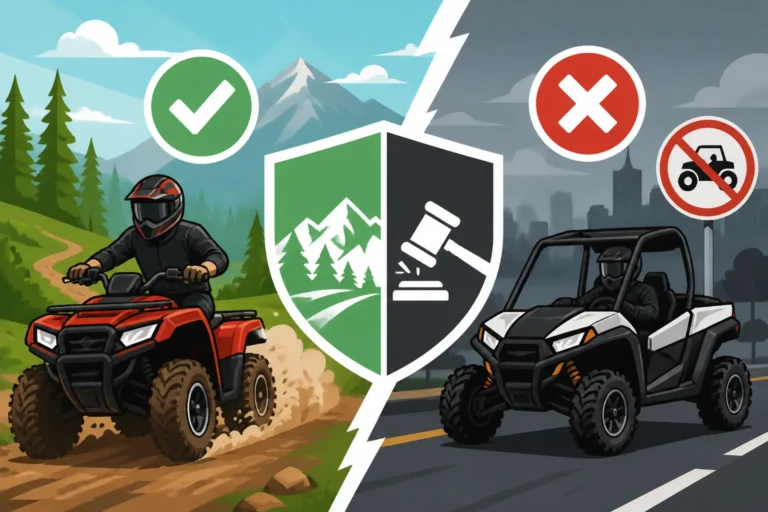
It’s crucial to understand that, by default, the Traffic Safety Act in Alberta prohibits OHVs from operating on what it defines as a "highway." Now, when we say "highway" in this context, it’s much broader than just the big multi-lane freeways. The legal definition of a highway under the Act includes pretty much any road, street, alley, ditch, or public place that the public has a right to use for the passage of vehicles. This means that, unless a specific local bylaw explicitly states otherwise, your ATV or UTV is generally not allowed on any of these public thoroughfares. This is why you can't just hop on your quad and ride to the corner store, even if it feels like a short, harmless trip. Many riders don't realize that even the ditch beside a paved road falls under this prohibition without specific permission. [What the Traffic Safety Act Calls a Highway] provides more detail on this often-misunderstood definition.
The intent behind this provincial default is largely safety-related, given the different operating characteristics of OHVs compared to traditional road vehicles. They aren't designed for high speeds, they don't always have the same signalling or lighting equipment, and their handling can be quite different. However, the rigidity of this default often clashes with the practical realities of rural living, where an OHV might be the most convenient, or even only, way to get from a property to a nearby trail system or to access a field for agricultural work. This tension is exactly what local bylaws attempt to address, by carving out specific exceptions to the general rule.
Why Municipalities Create Bylaws
So, if the province generally says "no," why do some municipalities go to the trouble of creating bylaws to say "yes" (at least in part)? There are several key reasons that drive local councils to open up their roads to OHVs, often in very specific ways. For many rural communities, OHVs are an integral part of life. Farmers and ranchers use them daily for work, and residents rely on them for transportation to access hunting grounds, fishing spots, or simply to get around their expansive properties. In these areas, a blanket ban can feel out of touch with local needs and lifestyles.
Another major factor is tourism and recreation. Regions rich in natural beauty and trail systems often find that allowing OHV access on certain roads can boost their local economy. Riders need to get from staging areas to trails, or from their campsites to nearby services, and a well-thought-out bylaw can facilitate this. It allows visitors who are eager to spend money in local shops, restaurants, and accommodations to do so more easily. Some areas have seen a real boom in business after implementing bylaws that permit limited road riding for recreational purposes.
Finally, some bylaws are created as a compromise. While a community might not want OHVs on every street, they might recognize the need for specific designated routes that connect residential areas to approved riding zones, or that allow for the efficient movement of farm equipment. These bylaws are a way for local governments to balance the concerns of residents about noise and safety with the practical needs and recreational desires of OHV owners. They're often the result of extensive community consultation and a desire to find a middle ground that works for everyone. [Alberta ATV Road Rules: Bylaws Decide] further explores how municipal decisions shape your riding options.
How to Find the Bylaws That Apply to Your Ride
Knowing that bylaws exist is one thing; actually finding them and understanding what they mean for your specific riding plans is another challenge entirely. It's not always as simple as a quick Google search, as municipal websites can vary widely in their user-friendliness and the accessibility of their legal documents. The good news is there are reliable methods to get the information you need, but it often requires a bit of proactive legwork on your part. Don't assume that because your buddy rode a certain road last year, it's still legal today, or that a rule in one county applies to the next.
Start With the Local Municipal Office
The most direct and reliable way to find out about OHV bylaws for a specific area is to contact the local municipal office. This means reaching out to the county, municipal district, city, town, or village administration directly. These offices are responsible for drafting, approving, and enforcing the bylaws, so they are the definitive source of information. You can usually find their contact information on their official website. Many municipal offices have a dedicated bylaw enforcement or planning department that can answer your questions.
When you call or email, be specific about your intentions. Tell them you're an OHV owner (or planning to be one) and you want to know what the current bylaws are regarding the operation of ATVs or UTVs on public roads within their jurisdiction. Ask for the specific bylaw number or title if possible, as this will help you locate it later if you want to read the full text yourself. Don't be shy about asking for clarification if the language of the bylaw seems confusing. The staff are there to help residents understand the rules. [Asking a County Office What Applies] gives more insights into how to approach these conversations effectively. Sometimes, they might even have maps available that visually show which roads are open to OHV traffic, which can be incredibly helpful for planning your route.
The Specifics to Look For in a Bylaw
Once you get your hands on a bylaw, whether it's a digital copy or a printed one, you need to know what to look for. These documents can sometimes be quite dry and filled with legal jargon, but there are key pieces of information that will directly impact your riding.
Here’s a checklist of what to keep an eye out for:
- Designated Roads/Areas: Does the bylaw list specific roads, road segments, or entire areas where OHVs are permitted? This is the most critical piece of information. Some bylaws will have an attached map for clarity.
- Vehicle Types: Does it specify which types of OHVs are allowed (e.g., ATVs only, UTVs, snowmobiles, dirt bikes)? Some bylaws might permit ATVs but not necessarily larger side-by-sides on certain roads.
- Times and Seasons: Are there restrictions on the hours of operation (e.g., only during daylight hours, no late-night riding)? Are there seasonal closures or times when OHVs are prohibited (e.g., during spring thaw to protect road integrity, or during specific events)?
- Speed Limits: Most bylaws that permit OHV use on roads will impose specific, often lower, speed limits for these vehicles to enhance safety.
- Operator Requirements: Does the bylaw mention any specific operator requirements, such as minimum age, valid driver's licence, or helmet use (beyond provincial requirements)? While provincial law dictates much of this, local bylaws might add further nuances for road use.
- Equipment Requirements: What specific equipment must your OHV have to be ridden on these roads? This often goes beyond what's required for off-road use and might include things like mirrors, turn signals, working brake lights, or even a horn. If you're looking to make your UTV more versatile for these situations, aftermarket parts from companies like SuperATV can be incredibly useful for adding essential safety components that might not come standard, helping you meet bylaw requirements.
- Purpose of Travel: Sometimes, bylaws differentiate between agricultural use, access to adjacent property, or recreational use, allowing OHVs for one purpose but not another.
- Penalties: The bylaw should also outline the fines or other penalties for non-compliance. Knowing the consequences can certainly motivate you to stay within the rules!
Understanding these details will help you determine if your planned ride is legal and if your machine is properly equipped. Don't just skim it; read it thoroughly, especially the sections that pertain to your specific vehicle and riding intentions.
What to Expect from an OHV-Permitting Bylaw
Once you've located a bylaw that allows OHV use on roads, you'll likely notice some common themes and restrictions. These aren't designed to make your life harder, but rather to ensure the safety of all road users and to minimize disruption to residents. Each municipality tailors its bylaws to its unique environment, so while there are commonalities, there will also be distinct differences.
Common Restrictions and Designated Roads
The vast majority of OHV-permitting bylaws do not grant blanket access to all roads within a municipality. Instead, they typically designate specific routes where OHVs are allowed. These designated roads are often:
- Gravel or Rural Roads: Frequently, you'll find that OHVs are permitted on unpaved roads, often in more sparsely populated rural areas. These roads tend to have less traffic and are more conducive to OHV travel. [Alberta Rules for Riding a County Road] delves into this.
- Access Routes to Trails or Private Property: Many bylaws will allow OHVs on short segments of roads that act as connectors – for example, a road that leads from a residential area or a farm to a provincial trail system, or a road segment providing access to a remote private property.
- Roads with Lower Speed Limits: To ensure safety, OHVs are usually restricted to roads with lower posted speed limits. The bylaw might specify a maximum speed for OHVs, which could be even lower than the posted limit for other vehicles.
- Daylight Hours Only: For visibility and noise considerations, many bylaws limit OHV road use to specific hours, often from sunrise to sunset. Riding at night on public roads is generally seen as a higher risk. [Alberta Rules for Riding at Night] can explain provincial regulations that impact this.
- Specific Safety Equipment: Beyond provincial requirements for OHVs on public land, bylaws for road access might mandate additional safety features like a horn, turn signals, or specific mirrors. Always ensure your machine is up to snuff before hitting these designated roads.
It’s important to remember that even on a designated road, you’re still sharing it with cars, trucks, and potentially pedestrians or cyclists. Defensive riding and adherence to all traffic laws are paramount. Ignoring these rules can lead to significant penalties, including tickets and even seizure of your machine. [Alberta Penalties for Illegal Road Riding] is worth reviewing to understand the consequences.
Variations Between Rural and Urban Areas
The starkest differences in OHV bylaws are usually found between rural and urban settings. This makes perfect sense when you consider the population density, traffic volume, and primary activities in these areas.
Rural Municipalities (Counties, Municipal Districts):
In rural areas, OHVs are often essential tools for agriculture, ranching, and resource industries. They also play a huge role in recreation, providing access to vast tracts of Crown land or private property. Because of this, bylaws in rural municipalities tend to be more permissive, allowing OHVs on a wider network of roads. You might find entire categories of roads (e.g., all gravel roads within the MD) open to OHV traffic, sometimes with fewer time restrictions. These bylaws often acknowledge the practical necessity of OHVs for local residents. They might also specifically mention provisions for [Alberta Farmer-Owned Machines on Private Land] or use for traplines.
Urban Municipalities (Cities, Towns, Villages):
Conversely, bylaws in cities, towns, and even smaller villages are typically much more restrictive. High population density, heavy vehicle traffic, and concerns about noise, dust, and safety mean that OHV access on urban streets is rare. If it is permitted at all, it's usually limited to very specific, short connector routes, perhaps linking a residential area to an official trail system on the outskirts of town. These bylaws often come with strict speed limits, time restrictions, and mandatory safety equipment requirements. It's very common for towns to have explicit bans on OHVs within their corporate limits, except for specific work-related purposes or emergencies. [Alberta Rules for Riding a Town Street] will offer more insight here.
The table below illustrates some common differences you might encounter:
| Feature | Rural Municipality (County/MD) | Urban Municipality (Town/City/Village) |
|---|---|---|
| Road Access | Broader network of designated gravel/secondary roads allowed. | Limited to very specific, short connector roads, if any. |
| Primary Use | Agricultural, industrial, recreational access. | Usually recreational access to trails, or specific work purposes. |
| Time Limits | Often more flexible, sometimes 24/7 on certain roads. | Strict daylight hours, specific weekdays. |
| Speed Limits | Often match posted limits or slightly reduced. | Significantly reduced, often 20-30 km/h. |
| Equipment | Provincial requirements often suffice, maybe minor additions. | More stringent requirements (mirrors, signals, horn). |
| Public Opinion | Generally more accepting, integrated into community. | Often more negative perception, noise/safety concerns prevalent. |
This variation highlights why it's so vital to check the local bylaws every single time you plan to ride in a new area, or even if you haven't ridden in a familiar area for a while, as bylaws can change. [Alberta Bylaw Lookups Before You Ride] can help you find where to start.
The Importance of Due Diligence Before You Ride
It cannot be stressed enough: your responsibility as an OHV rider is to know and follow the rules wherever you operate your machine. This isn't just about avoiding a ticket; it's about ensuring your safety, the safety of others, and protecting the future of OHV riding in Alberta. Ignoring bylaws or simply guessing about what's allowed can have serious repercussions, far beyond just a financial penalty.
Consequences of Riding Where You Shouldn't
The fines for operating an OHV on a prohibited road or in violation of a bylaw can be substantial. These tickets can quickly add up, turning what was supposed to be a fun day out into a very expensive lesson. Beyond the financial hit, there are other, more severe consequences to consider:
- Vehicle Seizure: In some cases, and particularly if you're a repeat offender or if your actions are deemed reckless, your OHV could be seized by law enforcement. Getting your machine back can be a lengthy, costly, and frustrating process, often involving towing fees, impoundment costs, and administrative hurdles. [Alberta Vehicle Seizure for No Insurance] or other serious violations can give you an idea of how this process works.
- Insurance Issues: If you're involved in an accident while riding illegally on a public road, your insurance company may deny your claim. Most OHV insurance policies are specific about where you are covered, and riding on a public highway where it's prohibited could void your coverage, leaving you personally liable for damages, injuries, or legal fees. [Alberta Insurance Requirements on Public Land] is a good read.
- Legal Charges: Depending on the severity of the offense, you could face more serious legal charges, especially if your actions lead to injury or significant property damage. This could impact your driving record and have long-term consequences.
- Negative Public Perception: Every time an OHV rider breaks a rule, it contributes to a negative public perception of the entire OHV community. This makes it harder for responsible riders to gain access to trails and designated riding areas, and it can deter municipalities from creating or expanding OHV-friendly bylaws. We all need to be ambassadors for responsible riding.
It's a lot to consider, but taking the time to understand the rules upfront is always a better option than dealing with the aftermath of a violation.
Carrying Proof and Being Prepared
To protect yourself and demonstrate your commitment to responsible riding, it's always a good idea to carry certain documents and be prepared for potential interactions with law enforcement. When you're out on the trails or roads, you should have:
- Your Valid Driver's Licence (if required): While you don't always need a driver's licence to operate an OHV on private land, many bylaws permitting road use will require one. Always have it with you. [Do You Need a Licence for an ATV in Alberta?] answers this common question.
- Proof of OHV Registration: Your machine must be properly registered with Alberta Registries. [What Alberta OHV Registration Costs] is a popular question, and you should always have your current registration certificate.
- Proof of Insurance: On public land, including any public roads, OHVs are required to have insurance. Carry your proof of insurance with you at all times. [Alberta Requires Insurance on Public Land] and [Producing Insurance on Demand] emphasize this requirement.
- A Printed Copy of the Relevant Bylaw (or Digital Access): If you're riding on a specific designated road based on a municipal bylaw, having a copy of that bylaw (or easy digital access on your phone) can be incredibly useful. In the rare event of a misunderstanding with an enforcement officer, being able to point to the exact section of the bylaw that permits your activity can resolve the situation quickly.
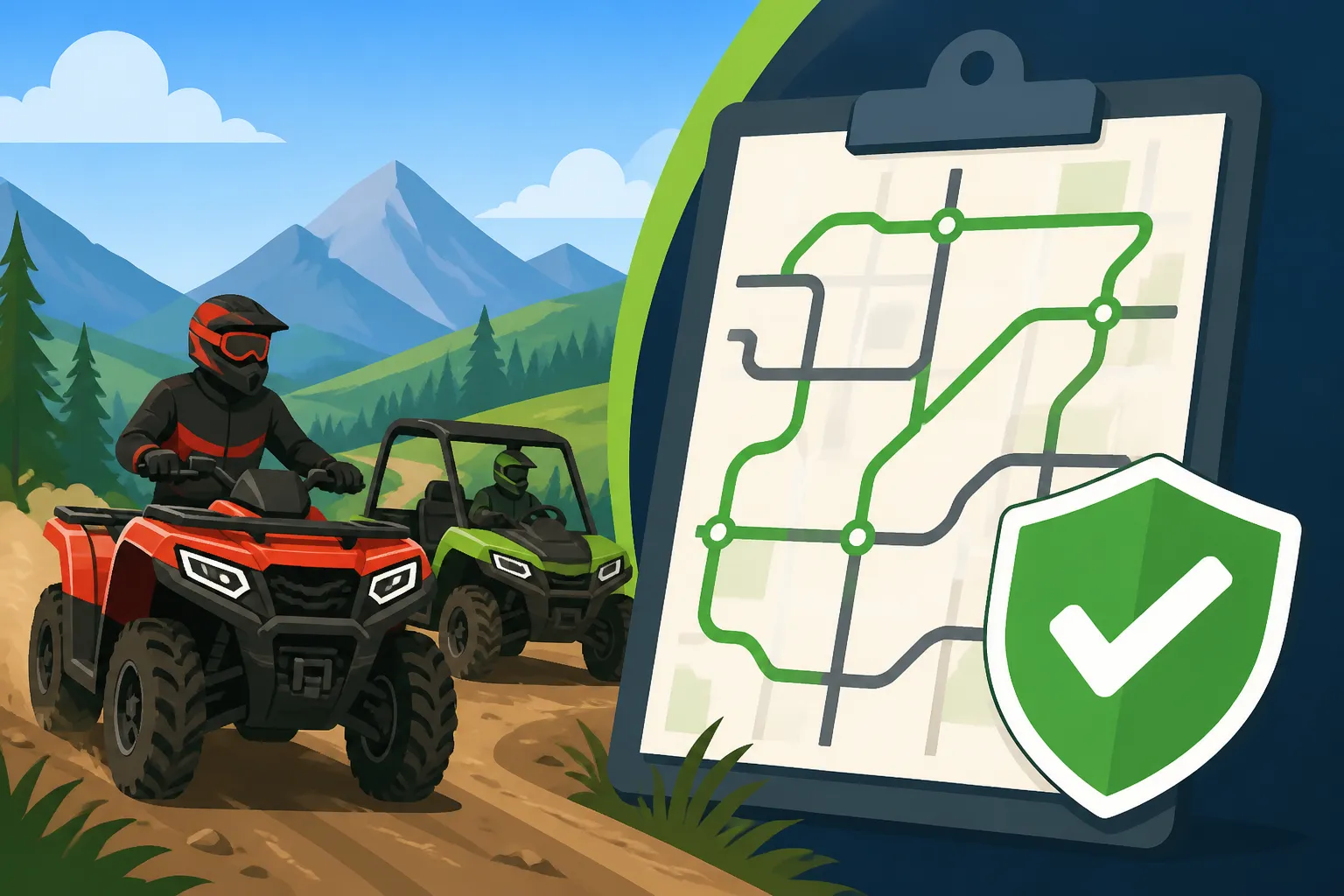
- A Map of Designated Routes: If the municipality provides one, having a map that clearly shows the approved OHV routes can be invaluable, especially in areas with a complex network of roads. [Finding a County Map of Roads Open to OHVs] can help here.
Being prepared isn't just about avoiding trouble; it's about showcasing that OHV riders are responsible, informed, and respectful members of the community. By doing our part, we help ensure that opportunities for legal and enjoyable riding continue to grow in Alberta.
Disclaimer
This article is for general informational purposes only and does not constitute professional advice. Laws, prices and regulations vary by location and change over time. Consult a qualified professional for guidance on your specific situation.