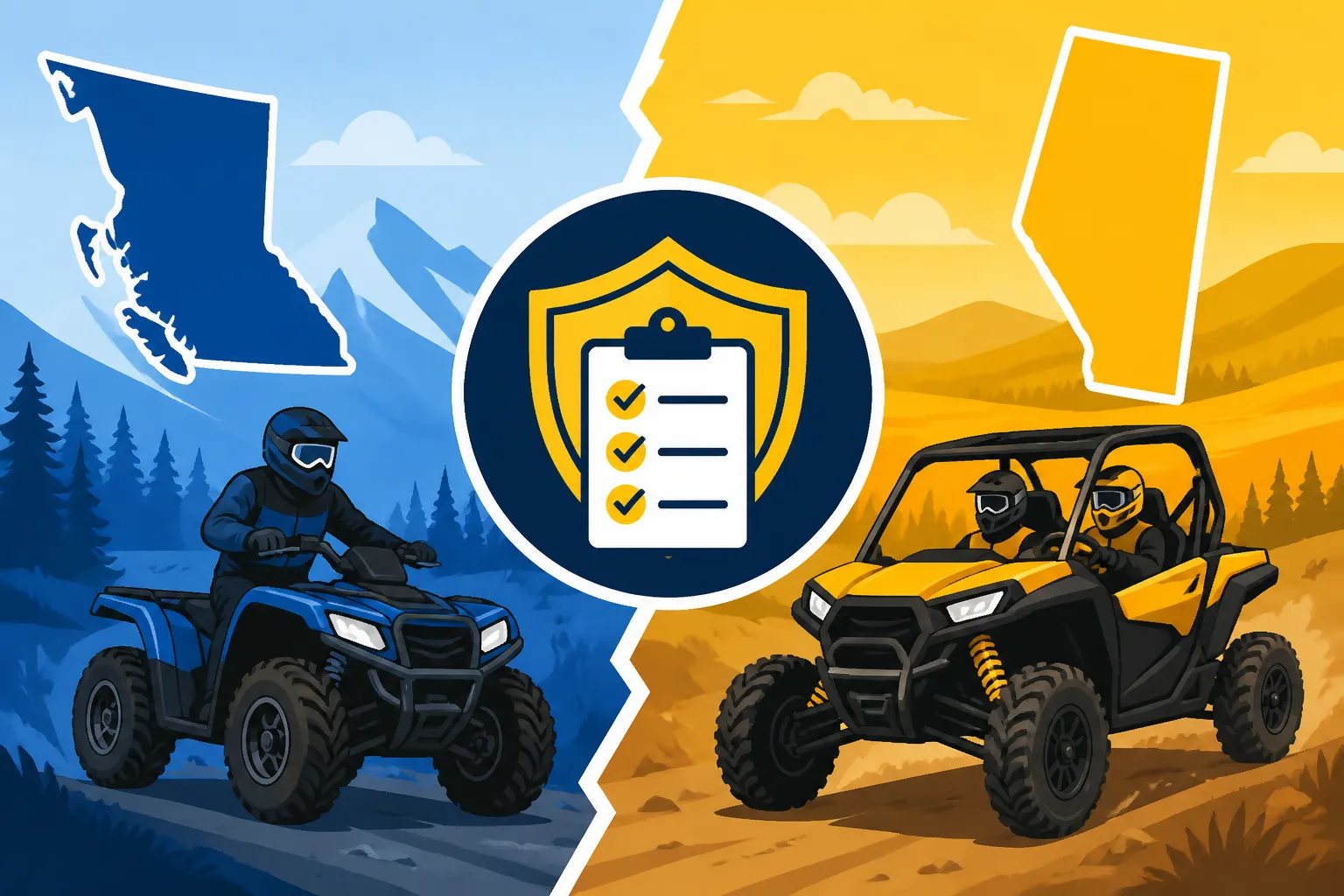
Alberta Rules for a Visiting BC Rider
It can be incredibly confusing and even a little frustrating when you're used to hitting the trails in your home province, only to find the rules shift once you cross into Alberta. Many BC riders dream of exploring Alberta's vast and diverse landscapes, from the foothills to the northern forests, but they often get tangled up wondering if their BC registration and insurance will cut it here. This guide is here to clear up that confusion, giving you the peace of mind to plan your next off-highway vehicle (OHV) adventure in Alberta without worrying about unexpected fines or legal headaches.
Initial Registration & Plate Rules for BC Visitors
One of the biggest questions BC riders have when planning a trip to Alberta is whether their off-highway vehicle (OHV) needs to be registered in Alberta. It's a valid concern, as provinces often have their own unique systems, and the last thing anyone wants is to get a ticket on vacation. The good news is, Alberta offers a significant grace period for out-of-province visitors, meaning you usually don't need to immediately re-register your machine.
The 30-Day Rule for Out-of-Province Machines
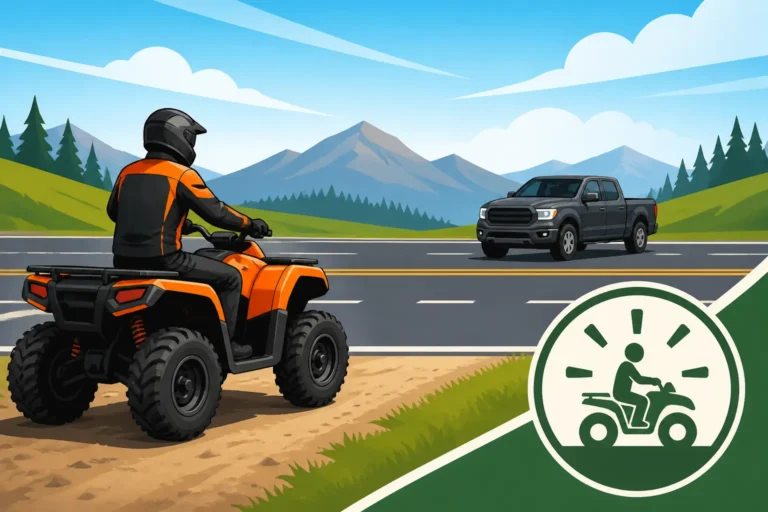
Alberta's Traffic Safety Act is pretty clear on this: if you're visiting from another province or territory, your off-highway vehicle (ATV, UTV, dirt bike, or snowmobile) can be operated in Alberta for up to 30 consecutive days using your home province's registration. This is a huge relief for many short-term visitors, as it means you can enjoy a weekend trip or even a couple of weeks of exploration without jumping through extra hoops. However, "consecutive days" is key here. It means the clock starts ticking the moment your machine enters Alberta, and it doesn't reset until you've left the province. If you come for 10 days, leave for 5, and then return for another 20, that second trip doesn't automatically grant you a fresh 30 days if it's within the same overall stay. The intent is for true visitors, not those who frequently cross back and forth without establishing residency. You can read more about [Alberta's 30-Day Rule for Out-of-Province Machines] to understand the nuances.
It's also important to remember that during this 30-day period, your machine must display valid registration and a plate from British Columbia. Just like at home, this plate needs to be clearly visible and securely mounted on the rear of your machine. Alberta law specifies proper [Alberta Plate Placement on a Machine], and while you're visiting, your BC plate should adhere to your home province's display requirements, which generally means visible from the rear. If your machine's BC registration expires while you're in Alberta, you won't be able to continue riding on public land here without a valid renewal from BC or registering it in Alberta.
When You Need to Register in Alberta
So, what happens if your adventure turns into a longer stay, or you're considering a move to Alberta? If your OHV will be in Alberta for more than 30 consecutive days, or if you become an Alberta resident, then you absolutely must register it in Alberta. This isn't just a suggestion; it's a legal requirement. Moving here, even if you intend to move back to BC eventually, typically triggers the need for Alberta registration if you plan to use your OHV.
The process for [Alberta Registration for a New Resident] is fairly straightforward, but it does require specific documentation, including proof of ownership (like a bill of sale or Manufacturer's Statement of Origin) and proof of your Alberta residency. You'll also need to get an Alberta OHV plate. When it comes to what a registry agent needs, you can find a good checklist in [What a Registry Agent Needs to Register Your Quad]. Don't forget that even if you've registered your machine in Alberta, you'll receive a digital certificate that needs to be printed and carried with you on the trails, as outlined in [Does a Printed Registration Certificate Count on the Trail?].
Insurance Requirements for Out-of-Province Riders
Registration is one piece of the puzzle, but insurance is another critical aspect that often causes confusion for visiting riders. The good news is that if your BC-registered OHV has valid insurance coverage from British Columbia, it is generally recognized in Alberta for that initial 30-day visiting period. However, "generally recognized" isn't a blank cheque; there are some key details you need to be aware of to ensure you're fully compliant and protected.
Public Land Insurance Requirements
Alberta mandates that all off-highway vehicles operating on public land must carry liability insurance. This isn't optional; it's a non-negotiable part of riding responsibly and legally. For BC riders, this means your existing ICBC (or private insurer, if applicable) OHV policy must meet Alberta's minimum liability coverage requirements. Typically, provinces have similar minimums, but it's always a good idea to confirm with your insurance provider before you cross the border. You'll want to ensure your BC policy extends to out-of-province use, which most do for temporary travel. An officer can ask for [Alberta Proof of Insurance on Demand], so make sure you have it readily accessible – digitally on your phone, or preferably a printed copy tucked away safely in a waterproof bag on your machine.
What happens if you're found riding on public land without adequate insurance? The consequences can be severe. Alberta has strict [Alberta Penalties for Riding Unregistered] and uninsured. Not only can you face hefty fines, but in some serious cases, your vehicle could even be subject to [Alberta Vehicle Seizure for No Insurance]. It’s simply not worth the risk, especially when you're just trying to enjoy a new riding area.
Private Land and Exceptions
While public land riding has strict insurance requirements, the rules can differ if you're strictly riding on private land with the owner's permission. For instance, if you're visiting a friend's acreage near Red Deer and you only plan to ride on their property, Alberta's public land insurance mandates might not apply directly in the same way. However, this doesn't mean you're off the hook for personal liability. Any incident on private land could still result in significant costs if you don't have personal liability coverage. Your BC insurance policy should still cover you for liability regardless of where you ride, but again, confirm this with your insurer.
The safest bet is always to ensure your OHV is adequately insured, no matter where you plan to ride. Accidents can happen anywhere, and having the right coverage provides peace of mind. For a deeper dive into the expectations, check out [Alberta Insurance Requirements on Public Land].
Rider & Machine Equipment Rules in Alberta
Beyond registration and insurance, Alberta has specific requirements for the machine itself and the rider operating it. These rules are in place for safety, environmental protection, and to ensure everyone can enjoy the trails harmoniously. As a visiting BC rider, you'll need to make sure your setup complies with Alberta's standards, which might have some subtle differences from what you're used to back home.
Mandatory Safety Equipment for Riders
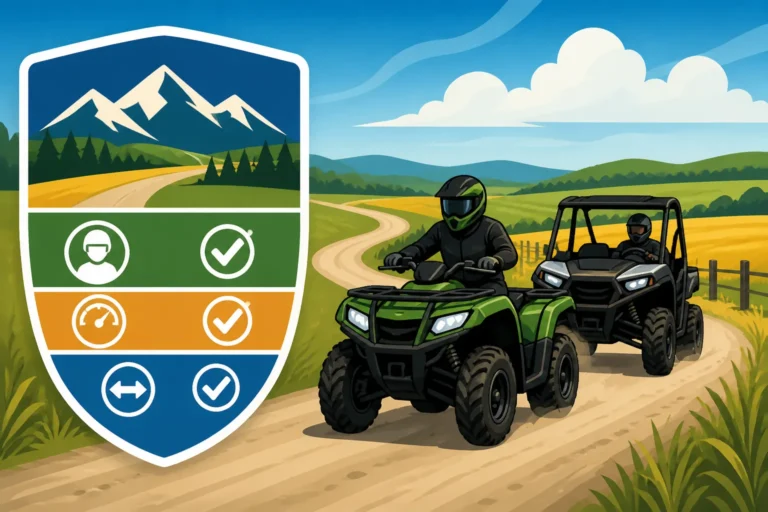
The most prominent safety rule for riders in Alberta is the helmet law. Since May 15, 2017, it has been mandatory for all riders and passengers on public land to wear a helmet that meets an approved safety standard (CSA, Snell, or ECE). This applies universally, whether you're on a quad, dirt bike, or even in a side-by-side unless it has a full cage and seatbelts. This is a critical rule to remember; an officer conducting [Alberta Equipment Checks by Officers] will definitely be looking for this. If you’re caught without one, the [Alberta Helmet Fine Amount] can be quite substantial. Familiarize yourself with the full [Alberta ATV Helmet Law Explained] to avoid any issues.
While a helmet is the only legally mandated piece of personal protective equipment for OHV riders in Alberta, it's always wise to wear proper riding gear. This includes eye protection, gloves, sturdy boots that cover the ankle, and durable clothing (like riding pants and a jacket). These items might not be required by law, but they are essential for your safety and comfort on Alberta's often rugged terrain.
Machine Equipment Requirements
Your OHV itself also needs to meet certain requirements to be legal on Alberta's public lands. These are designed to ensure the machine is safe to operate and doesn't pose an undue environmental risk.
- Head and Tail Lights: All OHVs operating on public land must have working head and tail lights. This isn't just for night riding; it's a general requirement, as conditions can change rapidly on the trail, or you might find yourself in dusty or low-visibility situations. Lights need to be in good working order, so check them before you head out. [Alberta Requires Working Head and Tail Lights] is a good resource to review.
- Spark Arrestor: Every OHV operating in Alberta, whether resident or visitor, must have a working spark arrestor on its exhaust system. This is a crucial wildfire prevention measure, especially in Alberta's dry summers. Many stock exhausts come with a spark arrestor built-in, but if you have an aftermarket exhaust, you'll need to confirm it has one. [Alberta Requires a Spark Arrestor] provides more detail on this often-overlooked but very important requirement.
- Muffler and Noise: Alberta has regulations concerning exhaust noise. Modified exhausts that are excessively loud are prohibited on public land. These rules are in place to reduce noise pollution and impact on wildlife and other recreational users. While many BC riders might be used to slightly louder exhausts, it’s best to err on the side of caution when visiting Alberta. A loud exhaust can quickly draw unwanted attention from authorities. [Alberta Bans Modified Exhausts] has more information on this. If you're looking for durable, compliant exhaust options or other parts to keep your machine trail-ready, checking out reputable brands like SuperATV can be a good idea for quality replacements or upgrades.
Important Considerations for Extended Stays or Relocation
For many BC riders, a trip to Alberta is just that – a trip. But sometimes, those trips turn into longer stays, or even a permanent move. If you find yourself in this situation, there are additional steps you'll need to take to ensure your OHV remains legal and compliant in Alberta. Ignoring these steps can lead to significant headaches down the road, including fines or impoundment.
Establishing Alberta Residency and Registration
If you decide to stay in Alberta for more than the 30-day grace period, or if you establish residency in Alberta, you must register your OHV in the province. This involves visiting an Alberta registry agent with your proof of ownership (like a bill of sale) and your valid Alberta identification (such as an Alberta driver's license). You'll be issued an Alberta OHV plate and a registration certificate. It's a fairly straightforward process, but ensure you have all your paperwork in order. This transition is essential for ensuring you remain compliant with provincial laws and can continue to enjoy Alberta's fantastic riding opportunities. Further details on this process can be found in [Registering an ATV in Alberta Online] and [What a Registry Agent Needs to Register Your Quad].
Carrying Your Documents
Regardless of whether you're still on your BC registration or have switched to Alberta's, you must carry proof of registration and insurance with you whenever you're riding on public land. This isn't just a suggestion; it's a legal requirement. An officer can request to see these documents at any time. It's best to have physical copies that are protected from the elements, as cell service can be spotty in many of Alberta's remote riding areas, making digital access unreliable. Many riders use a small, waterproof document holder that attaches to their machine or fits into a riding bag. This ensures you can always produce [Carrying Papers on a Long Alberta Ride] when asked.
Respecting Local Bylaws and Public Land Use Zones
Beyond provincial regulations, it's crucial for all riders, including visitors, to be aware of and respect local bylaws and Public Land Use Zone (PLUZ) rules. Alberta has many designated OHV areas, but also areas where OHVs are restricted or prohibited. This is particularly true in areas like [McLean Creek: Alberta's Best Known OHV Area] or the [Ghost PLUZ Riding in Alberta], which have specific trail designations and rules.
Always check local regulations for the area you plan to ride before you head out. These can include rules about noise, time of day for riding, or even specific trail closures due to weather or wildlife. Many counties have their own [Alberta OHV Road Rules: Bylaws Decide] that may affect how you access trails or ride near communities. Understanding and adhering to these rules is not only about avoiding tickets but also about being a responsible rider and respecting the environment and other users. For example, if you're outfitting your machine for rugged Alberta trails, ensuring it has adequate protection with aftermarket parts from a brand like SuperATV can help prevent damage, but respecting trail conditions is paramount.
Here's a quick reference table summarizing key considerations for BC riders visiting Alberta:
| Aspect | BC Rider (Under 30 Days) | BC Rider (Over 30 Days / New Resident) |
|---|---|---|
| Registration | BC registration & plate valid | Must register OHV in Alberta; obtain Alberta plate |
| Insurance | BC liability insurance must meet Alberta minimums | Alberta liability insurance required |
| Helmet | Mandatory on public land (CSA, Snell, ECE approved) | Mandatory on public land (CSA, Snell, ECE approved) |
| Spark Arrestor | Mandatory on exhaust | Mandatory on exhaust |
| Head/Tail Lights | Mandatory and working | Mandatory and working |
| Muffler | No excessively loud/modified exhausts | No excessively loud/modified exhausts |
| Proof of Documents | Carry BC registration & insurance | Carry Alberta registration & insurance |
| Local Bylaws | Adhere to all Alberta PLUZ and local bylaws | Adhere to all Alberta PLUZ and local bylaws |
Disclaimer
This article is for general informational purposes only and does not constitute professional advice. Laws, prices and regulations vary by location and change over time. Consult a qualified professional for guidance on your specific situation.