Registering a Quad You Keep at a Work Lease
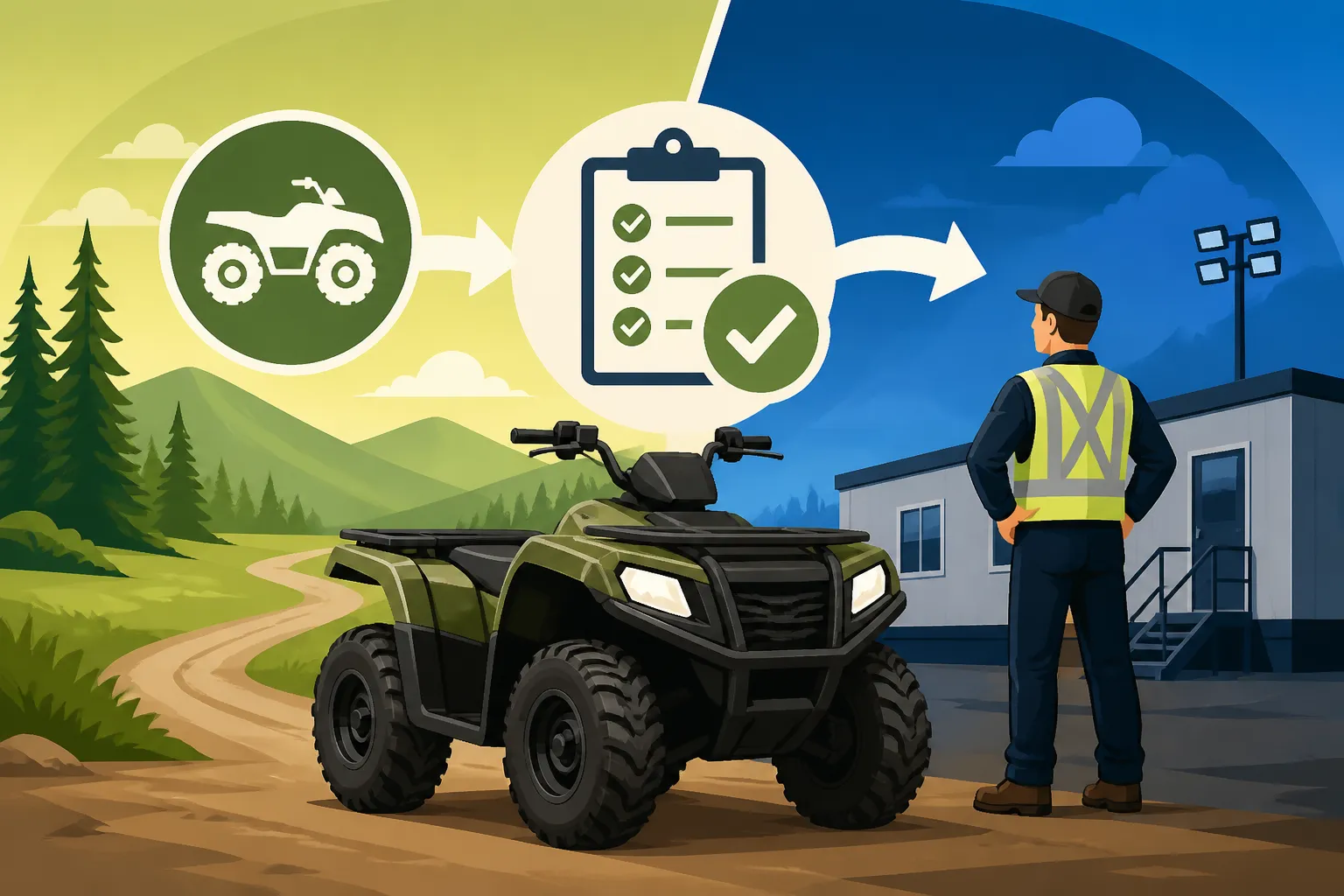
It's a common scenario in Alberta: you've got a quad or side-by-side that's a workhorse, not just a weekend toy. Perhaps it's kept on a remote work lease, far from your main residence, and you're wondering if it needs to be registered just like your recreational machine. The short answer is often yes, and navigating the requirements for a work-specific off-highway vehicle (OHV) can feel like a whole different ballgame. This guide is here to help you understand the ins and outs of registering an OHV that lives and works on an Alberta lease.
Why Your Work Lease Quad Needs to Be Registered
Many people assume that because their quad is strictly for work on a lease – be it an oilfield site, a trapline, a forestry block, or a grazing lease – it operates under a different set of rules, perhaps even an exemption. The reality in Alberta is a bit more nuanced, and often, that trusty work machine absolutely needs proper registration. This isn't just about bureaucracy; it's about safety, accountability, and legal compliance when operating on lands that, while managed for specific purposes, still fall under Alberta's Off-Highway Vehicle Regulation.
Public Land vs. Private Property Distinction
The critical distinction here lies in whether the work lease is considered "private land" or "public land" under Alberta law. For most work leases, even if they are held by a private company or individual, the underlying land often remains Crown land (public land) that is leased out for specific purposes. This means that when you operate your quad on these leases, you are generally operating on public land. The Traffic Safety Act and the Off-Highway Vehicle Regulation apply directly to public land, requiring registration, a visible plate, and proof of insurance. Without this, you could face significant penalties, including fines or even having your vehicle seized. It's a common misconception, and many riders only learn about it after a run-in with enforcement.
Consider a scenario where you're out checking remote equipment on an oilfield lease. You might think you're "on private company property," but if that lease sits on provincial Crown land, an enforcement officer could still ask for your registration and insurance. If you're missing either, you're looking at a ticket. It's not about what the land is used for, but its legal designation. Even if the access road to your remote trapline crosses a small section of public access road or a designated trail, your machine must be registered. This is especially true if you're riding a ditch, which Alberta considers part of the highway system and thus public land, even if it's just to get to an access point for your lease. [What the Traffic Safety Act Requires of Alberta OHVs] clearly outlines these responsibilities.
Employer Responsibility and Due Diligence
If you're operating a quad owned by your employer on a work lease, the responsibility for registration typically falls to the company. However, as the operator, you still bear the personal risk if the machine isn't compliant. It's crucial to confirm that any company-provided OHV is properly registered and insured before you take it out. Imagine being tasked with ferrying supplies across a remote site, only to be stopped by Fish and Wildlife or an RCMP officer for an OHV check. If the machine isn't registered, you might be the one facing questions, even if it's not your personal vehicle.
Employers have a vested interest in ensuring their fleet is compliant. An unregistered or uninsured OHV isn't just a legal risk; it's a huge liability in case of an accident. Regular checks and proper record-keeping are essential. As an employee, don't assume the paperwork is in order. It's always best practice to ask to see the current registration certificate and proof of insurance for any company vehicle you operate, especially an OHV used in remote areas where enforcement might be less frequent but still very much a possibility.
The Registration Process for a Work Lease OHV
Registering an OHV for work lease use follows much the same process as registering a recreational machine, but with some specific considerations given its purpose. You'll need to gather the right documents, visit a registry agent, and ensure all details accurately reflect the vehicle's ownership and intended use. The goal is to make sure that when an officer asks for your papers, everything is in order.
Required Documentation and Information
To register any OHV in Alberta, whether it's for work or play, you'll need a specific set of documents. This typically includes proof of ownership, proof of insurance, and identification. For a machine used on a work lease, especially if it's company-owned, some additional considerations come into play regarding who signs the paperwork and what proof of ownership is accepted.
Here’s a breakdown of what you'll generally need:
- Proof of Ownership: This is paramount. For a new machine, you'll need the original New Vehicle Information Statement (NVIS) or Manufacturer's Statement of Origin (MSO). For a used machine, a bill of sale signed by both the buyer and seller, along with the previous registration certificate, is usually required. If the OHV is owned by a company, the bill of sale should clearly state the company name as the purchaser. If paperwork is missing, you might need to create a bill of sale or even an affidavit, which legal document services like LawDepot can help you draft to ensure it meets legal standards. Remember, accurate proof of ownership is the foundation of your registration. [Alberta Registration Paperwork Checklist] provides a comprehensive list.
- Proof of Insurance: In Alberta, all OHVs operated on public land, which includes most work leases, must be insured. You'll need a valid pink card or insurance certificate specifically for that OHV. The insurance policy must be in the name of the registered owner (the individual or company). [Alberta Requires Insurance on Public Land] is a critical read for understanding these requirements.
- Identification: If you're registering as an individual, you'll need a valid government-issued photo ID (like an Alberta driver's license). If you're registering on behalf of a company, you'll need to provide your personal ID, proof of your authority to act on behalf of the company (e.g., a letter of authorization, corporate registration documents), and the company's business registration details.
| Document Type | Individual Owner (Work Lease) | Company Owner (Work Lease) | Notes |
|---|---|---|---|
| Proof of Ownership | Bill of Sale/NVIS/MSO | Bill of Sale/NVIS/MSO (Company Name) | Ensure all details match the buyer. LawDepot can help with robust bill of sale templates. |
| Proof of Insurance | Valid Pink Card | Valid Pink Card (Company Name) | OHV-specific insurance required for public land operation. |
| Personal ID | Valid Photo ID (e.g., Driver's License) | Valid Photo ID (for representative) | Must be current. |
| Company Authorization | Not applicable | Letter of Authorization, Corporate Reg. | Proves the individual can act for the company. |
| Registry Fees | Applicable | Applicable | Fees vary; check with your local Alberta registry agent for current rates. |
Visiting an Alberta Registry Agent
Once you have all your documents in order, you'll need to visit an authorized Alberta registry agent. You cannot register an OHV online for the first time; this must be done in person. The registry agent will review your paperwork, verify your identity (and company's authority, if applicable), and process your registration. They will also issue your OHV plate, which must be affixed to the machine in a visible location.
When you go, be prepared to answer questions about the machine, its VIN, and its intended use. While "work on a lease" is a common scenario, it's good to be clear about it. The registry agent's role is to ensure all legal requirements are met. It's always a good idea to call ahead to your chosen registry office to confirm their hours and any specific requirements they might have, especially for company registrations, as this can save you a trip. [Alberta Registry Agents and OHV Paperwork] provides more insights into this process.
Maintaining Compliance for Your Work Lease Quad
Getting your quad registered is the first step. Keeping it compliant is an ongoing responsibility, especially for a machine that sees regular use in potentially remote work environments. This includes understanding renewal cycles, ensuring the plate is properly displayed, and always carrying the necessary documentation.
Registration Renewal and Expiry
Alberta OHV registrations are valid for either one or two years, depending on what you choose at the time of initial registration or renewal. Unlike passenger vehicles, there is no sticker on the plate to indicate expiry, as Alberta Dropped Plate Stickers in 2021. Instead, the expiry date is printed on your registration certificate. It's crucial to keep track of this date, especially for a work machine, as letting it lapse can lead to significant issues.
Many companies set up reminders for fleet vehicle renewals, but if you're managing it yourself, mark your calendar. You can renew your OHV registration online or in person at a registry agent. Online renewal is convenient, but you still need to print your digital certificate to carry with you. Renewing within the six to ten days before expiry is a good window, as it ensures continuous coverage without getting caught with an expired registration. [When an Alberta OHV Registration Expires] offers more details on managing these timelines.
Proper Plate Placement and Carrying Documents
Once registered, you'll receive an OHV plate. This plate must be securely fastened to your quad in a clearly visible location. While there isn't one universal spot, it generally needs to be mounted on the rear of the machine, unobstructed by cargo or accessories, and maintained in a clean, readable condition. This is crucial for identification by law enforcement or in case of an accident. A bent, muddy, or obscured plate can lead to a ticket. [Alberta Plate Placement on a Machine] delves into the specifics of proper mounting.
Beyond the physical plate, you must carry your printed registration certificate and proof of insurance with you whenever you're operating the OHV on public land, which, as discussed, often includes work leases. A digital copy on your phone usually isn't sufficient; a physical printout is generally required. Keep these documents in a waterproof bag on the machine. If an officer asks for your papers, having them readily available and in good condition makes the interaction much smoother.
Insurance and Incident Reporting
Maintaining valid insurance for your work lease quad is non-negotiable. It protects you, your employer, and others in case of an accident. Even if you're careful, unforeseen circumstances can arise, and an uninsured accident can have severe financial and legal repercussions. Make sure your policy is current and covers the type of operation you're performing.
In the unfortunate event of an incident or accident while operating the OHV on a work lease, especially one involving injury or significant property damage, reporting procedures are critical. Beyond internal company protocols, provincial regulations may require reporting to the police or other authorities, particularly if it occurred on public land. Always prioritize safety, assess the situation, and follow both company and legal requirements for reporting. An incident report might be required, and having clear, well-maintained documentation of your OHV's registration and insurance status will be invaluable. [Alberta Accident Reporting on Public Land] gives a broader view of these requirements.
Troubleshooting Common Work Lease Registration Issues
Even with all the right information, you might encounter specific challenges when registering or maintaining your work lease quad. These often stem from unique circumstances related to ownership, machine history, or remote operations. Knowing how to address them can save you a lot of headache and keep your operations running smoothly.
Missing or Incomplete Ownership Documents
It's not uncommon for older work machines, or those purchased through a company liquidation or auction, to come with incomplete or missing ownership documents. This can be a major hurdle for registration. While a traditional bill of sale is preferred, if you're in a situation where the previous owner can't be found or the documentation is lost, you may need to pursue alternative routes.
One option is to prepare a sworn affidavit of ownership, outlining the circumstances under which you (or your company) acquired the OHV. This affidavit needs to be signed in front of a Commissioner for Oaths or a Notary Public. Some registry agents may accept this in conjunction with a vehicle serial number (VIN) inspection to confirm the machine's identity and that it hasn't been reported stolen. Websites like LawDepot offer templates for affidavits and bills of sale that can be customized to your specific situation, ensuring the legal language is sound. Remember, the registry agent has the final say on what documentation is acceptable, so it's always best to consult them first if you have missing paperwork. [Alberta Registration Without a Bill of Sale] can offer additional guidance here.
Transferring Registration for Company-Owned Machines
If a work lease quad is being transferred between companies (e.g., after an acquisition or internal transfer), or from an individual to a company, the registration must be updated to reflect the new owner. This involves a transfer of registration process, essentially treating it as a sale from the old owner to the new. All the standard proof of ownership requirements apply, but the details must clearly name the legal entities involved.
For example, if a company is selling a quad to another company, the bill of sale must specify both companies as the seller and buyer, respectively. The signing authority for both companies must be clearly indicated, often requiring corporate seals or specific signatory names. Ensure all existing liens are cleared before transfer, as new owners don't want to inherit financial encumbrances. [Alberta Registration Transfer After a Sale] explains the general process, which applies equally to business transfers.
Addressing Address Changes and Multiple Machine Management
For companies with multiple work leases or field offices, keeping track of registration addresses can become complicated. While the OHV itself might be kept at a remote lease site, its registration should typically reflect the primary business address or the address where the OHV's administrative matters are handled. If your company moves its main office, remember to update the registration address for all company-owned OHVs to ensure all official correspondence reaches the correct location. This can be done relatively easily through an [Alberta Registration Address Change] at any registry agent.
If your company operates a fleet of OHVs across various work leases, consider implementing a centralized system for tracking registration expiry dates, insurance policies, and maintenance schedules. This proactive approach helps prevent lapses in compliance and ensures all machines are road-ready and legally compliant whenever they're deployed. A simple spreadsheet or dedicated fleet management software can be invaluable for managing multiple registrations efficiently.
Disclaimer
This article is for general informational purposes only and does not constitute professional advice. Laws, prices and regulations vary by location and change over time. Consult a qualified professional for guidance on your specific situation.