What Paperwork Comes With a Farm Auction Quad
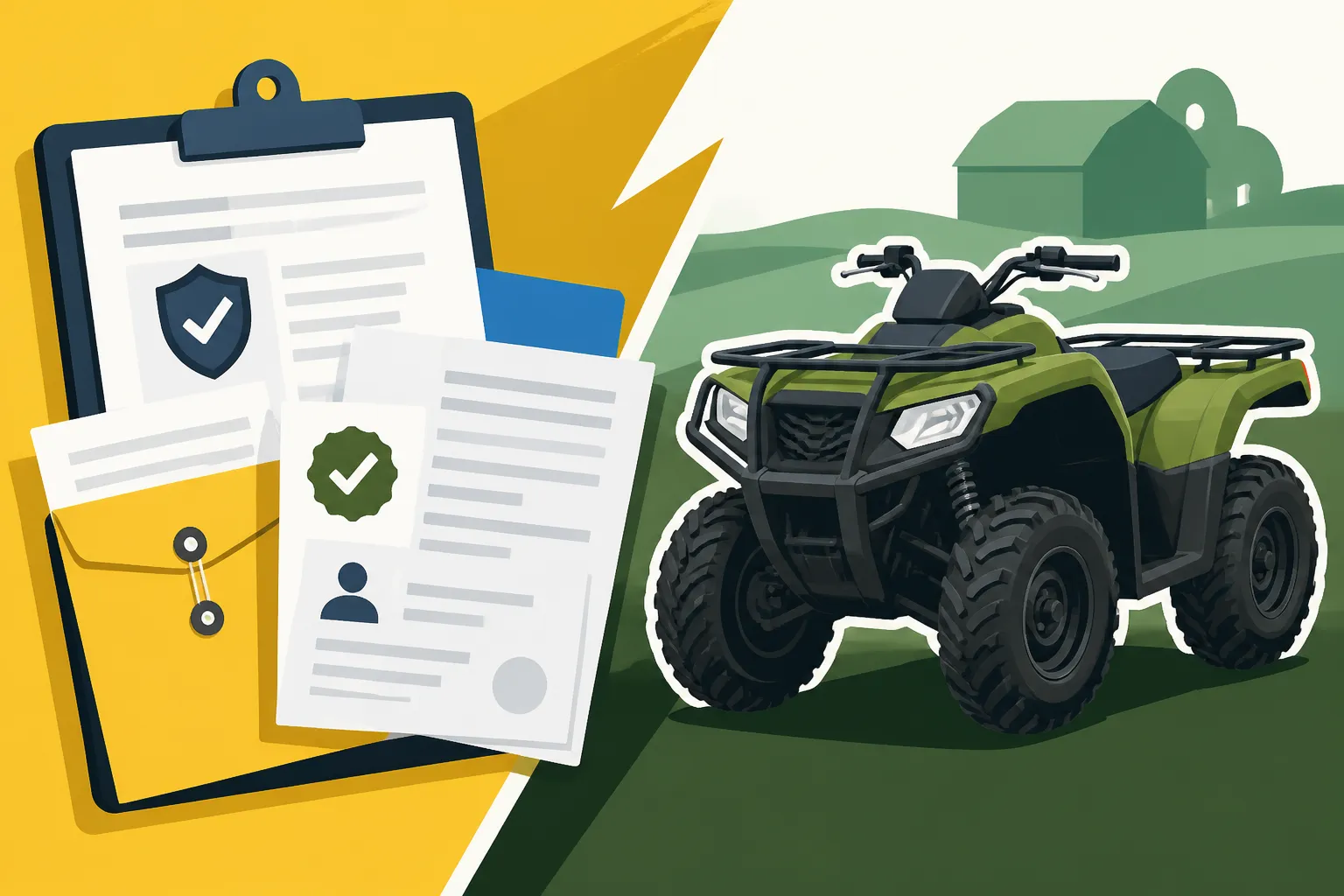
So, you’ve just scored what feels like a fantastic deal on a quad or side-by-side at a farm auction. It’s got good tires, starts right up, and the price was definitely right. But then it hits you: what exactly are you supposed to do for paperwork? Farm auctions can be a bit of a Wild West when it comes to titles and traditional bills of sale, leaving many riders scratching their heads about how to actually get their new machine registered in Alberta. This guide is here to untangle that knot, explaining what paperwork to realistically expect from a farm auction purchase, what to do if it’s sparse, and how to navigate the Alberta registration process with confidence.
The Reality of Farm Auction Purchases
Buying an off-highway vehicle (OHV) at a farm auction can be a different beast entirely from picking one up at a dealership or even from a private seller with all their ducks in a row. There’s a certain charm and often great value to be found, but it comes with its own set of unique challenges, especially when it comes to the paper trail.
Why Auctions Often Lack Traditional Paperwork
Imagine a long-time farmer, perhaps retiring or downsizing, selling off equipment they've owned for decades. The original purchase receipt for their quad might be long gone, faded, or buried in a box somewhere in an old shed. Sometimes, the machine itself was inherited, making its history even murkier. For these sellers, the focus at an auction is often on the physical item itself – its condition, its functionality, and getting a fair price – rather than meticulously documenting its entire chain of ownership back to day one.
Auction houses, too, often operate on the principle of "as-is, where-is." This means you’re buying the item exactly as you see it, with all its existing conditions and, yes, its existing paperwork (or lack thereof). While they facilitate the sale, their primary role is to connect buyers and sellers, not to act as a title office or to track down every historical document for every item on the block. They assume the seller has the right to sell, and the buyer assumes the responsibility of figuring out the next steps. This can leave you, the proud new owner, holding a great piece of machinery but with minimal documentation, wondering if it'll ever see a registration plate.
The Importance of a Bill of Sale from the Auction House
Even in the often-informal environment of a farm auction, one piece of paperwork is absolutely critical: the bill of sale or receipt directly from the auction house itself. This document, no matter how basic, serves as your initial and most fundamental proof of ownership. Without it, you truly have nothing connecting you to the machine you just bought, and you’ll hit a brick wall at the registry.
Ideally, this bill of sale should contain a few key pieces of information. At a minimum, it needs to clearly identify the auction house, the date of the sale, the item purchased (with enough detail to identify your specific quad or side-by-side, including its Vehicle Identification Number or VIN if recorded), the price you paid, and your name as the buyer. Some auction houses are more thorough than others; some might just give you a numbered receipt for your payment. However simple, hold onto this like gold. It’s your first link in the chain of ownership and will be the foundational document you present to an Alberta Registry Agent when you go to register your machine. Even if it’s not a polished, multi-page document like you'd get from a dealership, it’s still legally binding proof that you acquired the OHV through a legitimate sale channel.
Essential Documents for Alberta OHV Registration
When it comes to registering an OHV in Alberta, especially one acquired through unconventional means like a farm auction, knowing exactly what documents are truly essential can save you a lot of headaches and repeat trips to the registry. The good news is, for a used machine, the requirements are often simpler than for a brand-new one.
The Holy Trinity: What You Really Need
For any used OHV registration in Alberta, there are generally three core requirements that a registry agent will look for, which I like to call the "holy trinity" of documentation. These are:
-
Proof of Ownership: This is paramount. For a farm auction purchase, your auction house bill of sale is your primary document. It clearly shows you purchased the machine, from whom (the auction house representing the seller), and on what date. Unlike purchasing a car, you typically won't be expected to produce a "title" document for an OHV in Alberta. For a used machine, especially older ones, the registry understands that the original Manufacturer's Statement of Origin (MSO) is long gone and a prior registration certificate might not even exist, or might not be passed along. What they care about most is the most recent, legitimate transfer of ownership to you.
-
Proof of Identity: You, the person registering the OHV, need to prove who you are. This typically means presenting valid government-issued photo identification, such as an Alberta driver's licence or a provincial identification card. Ensure your ID is current and matches the name you want on the registration. The registry needs to confirm you are who you say you are and that you are an adult capable of owning and registering a vehicle.
-
Machine Information: This boils down to the Vehicle Identification Number (VIN) and a basic description of the OHV (make, model, year, type). The VIN is crucial for the registry to identify the specific machine and conduct any necessary searches, like checking for liens. If the auction bill of sale doesn't include the VIN, you will need to locate it on the machine itself and be prepared to provide it. This information is vital for linking your proof of ownership to the physical machine you're registering. For a more detailed look at what agents need, check out [What a Registry Agent Needs to Register Your Quad].
Crafting a Legitimate Bill of Sale When the Auction One is Sparse
Sometimes, the receipt you get from an auction house is incredibly basic. It might just be a ticket number, a total amount paid, and a vague description like "ATV" or "quad." While it serves as proof of purchase from the auction, it might lack the specific details a registry agent prefers to see on a bill of sale, such as the full VIN, a more precise make and model, or the specific names of the original seller (if known by the auction house).
In such cases, you might consider creating a more formal bill of sale yourself, using the auction receipt as your foundation. This is where tools like LawDepot can be incredibly helpful. Online legal document services often provide templates for a comprehensive bill of sale that you can customize. You would use the information from your auction receipt (date, amount, your name as buyer, auction house as seller) and then add all the specific details of the OHV that you can gather from the machine itself – make, model, year, and crucially, the VIN.
A robust bill of sale, even if you compile it, should include:
- Full legal names and addresses: Of both the buyer (you) and the seller (which, in this case, would be the auction house or the original consignor if the auction house provides that detail).
- Date of sale: The exact date you purchased it at auction.
- Clear description of the OHV: Include the make, model, year, and the all-important VIN. Don’t forget the colour if you know it!
- Purchase price: The amount you paid at the auction.
- Signatures: Ideally, if the auction house is willing, have them sign this more detailed bill of sale as the seller, or acknowledge their original receipt is the proof. If not, your signed acknowledgement as the buyer, along with the auction receipt, should generally suffice.
The goal here isn't to replace the auction receipt, but to supplement it with all the specific data points that a registry agent will need to enter into their system. While a simple handwritten bill of sale can sometimes work, as discussed in [Will a Handwritten Bill of Sale Register a Quad?], a well-structured document, perhaps using a template from a service like LawDepot, can make the process smoother and demonstrate that you've diligently tried to provide all necessary information. Always keep your original auction receipt alongside any supplementary documents you create.
Navigating Registration Without Perfect Papers
Let's be realistic: when buying a quad at a farm auction, "perfect papers" are often a pipe dream. You might encounter challenges like an illegible VIN or the complete absence of any prior registration documents. But don't despair – there are often pathways to getting your machine officially registered, even when the paperwork trail isn't pristine.
The Missing VIN or Unreadable Serial Number Dilemma
This is perhaps one of the most significant hurdles you can face when trying to register an older machine, especially one from an auction. The Vehicle Identification Number (VIN) is the unique identifier for your OHV, like a fingerprint. Without a clear, verifiable VIN, the registry simply cannot register the machine, as they have no way to track its identity or confirm it isn't stolen.
If you can't easily find or read the VIN, here's what to do:
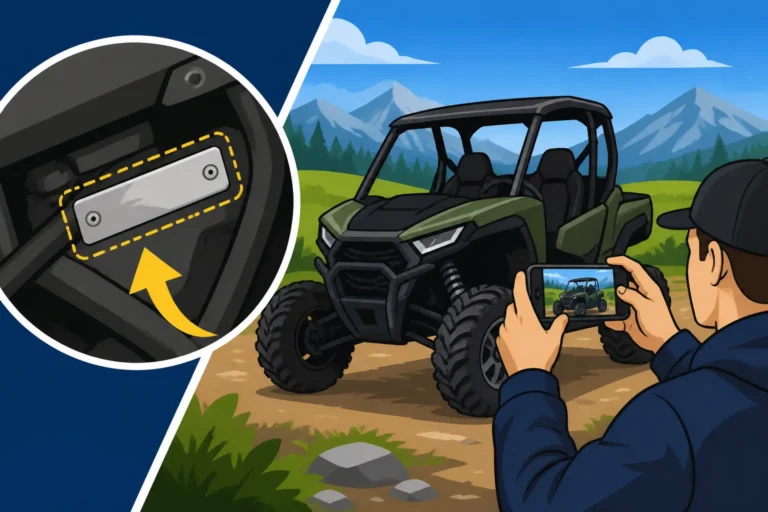
- Exhaustive Search: Start by looking in all the common places. The VIN is typically stamped into the frame of the OHV. Check the steering head, near the footpegs, on the frame near the engine, or even on a small plate attached to the frame. Sometimes it’s on a sticker, but these can fade or peel off. Get a good flashlight and a wire brush if needed to clean away dirt and rust. Photograph any numbers you find, even if they're partial or hard to read.
- Manufacturer Contact: If you can identify the make and model, try contacting the manufacturer. They might have a database of VIN locations or other identifying marks for older models.
- Registry Agent Consultation: If, after all your efforts, the VIN is still missing or completely unreadable, your next step is to speak directly with an Alberta Registry Agent. Explain your situation fully. While OHVs generally don't undergo physical inspections like road vehicles, a registry agent might advise you on specific procedures for a "VIN verification" or a similar process that might be available in rare cases. In some instances, for unique situations, an affidavit might be an option, but this is less common for VIN issues and more for ownership disputes. Understand that a missing VIN is a serious issue, and the registry has a duty to prevent stolen vehicles from being registered. For more on this, you can look up [Alberta Registration When the VIN Is Gone].
When You Have No Prior Registration or MSO
It’s crucial to understand that for most used OHVs, especially those bought at auction, you likely won’t receive a previous registration certificate or a Manufacturer’s Statement of Origin (MSO). And that’s usually okay!
- Manufacturer's Statement of Origin (MSO): This is the document issued by the manufacturer when the vehicle is brand new. It's essentially the birth certificate of the OHV. Once the machine is registered for the first time, the MSO is typically surrendered to the registry. So, if you're buying a used quad, whether it's five or fifteen years old, expecting an MSO is unrealistic. For context on what an MSO proves, see [What a Manufacturer's Statement of Origin Proves]. Your auction receipt and your identity are generally what's needed for an older, used machine.
- Previous Registration Certificate: While some private sellers might provide a copy of their old registration, it's not strictly necessary for you to register the machine in your name, particularly when the change of ownership is from an auction house. Your bill of sale from the auction house is your direct proof of ownership from the most recent transaction. The registry will focus on establishing your ownership from that point forward.
The key takeaway here is that the auction house's legitimacy is paramount. When you purchase from a recognized business like an auction house, it provides a clearer, more formal chain of custody than, say, buying a machine with absolutely no paperwork from a stranger off the street. The auction receipt itself is strong evidence of a legitimate sale, and it’s usually enough to satisfy the registry's need for proof of ownership for a used OHV.
Your Journey to the Alberta Registry
So, you've gathered all your documents – your auction bill of sale, any supplementary detailed bill of sale (perhaps using a template from LawDepot), your personal ID, and you've located the VIN on your machine. Now it's time to head to an Alberta Registry Agent office.
Here's what to bring and expect:
- All Your Paperwork: Bring every scrap of paper related to the purchase. The auction receipt, any additional bill of sale you drafted, and your identification. It's better to have too much than too little.
- Be Prepared for Questions: The registry agent might ask about the circumstances of the purchase, especially since it's from an auction. Be honest, clear, and concise. Explain that you bought it at a farm auction and the auction receipt is your proof of purchase.
- Patience is a Virtue: Sometimes, registering a machine with less-than-perfect traditional paperwork can take a bit longer. The agent might need to consult with a supervisor or look up specific procedures. Remain polite and patient. Remember, they are there to help you, but they also have to ensure all regulations are followed. They are generally very knowledgeable and can guide you through any unexpected roadblocks. For general information on what registry agents do, check out [Alberta Registry Agents and OHV Paperwork].
By being organized, honest, and patient, you significantly increase your chances of a smooth registration process, even with an auction-acquired OHV.
After Registration: What's Next for Your Farm Quad
Congratulations! You’ve navigated the paperwork maze, dealt with any VIN mysteries, and successfully registered your farm auction quad. But getting that registration certificate isn't the very end of the story. There are a few more crucial steps and considerations to keep in mind, especially if you plan to ride your OHV anywhere beyond your own private land.
Getting Your Plate and Certificate
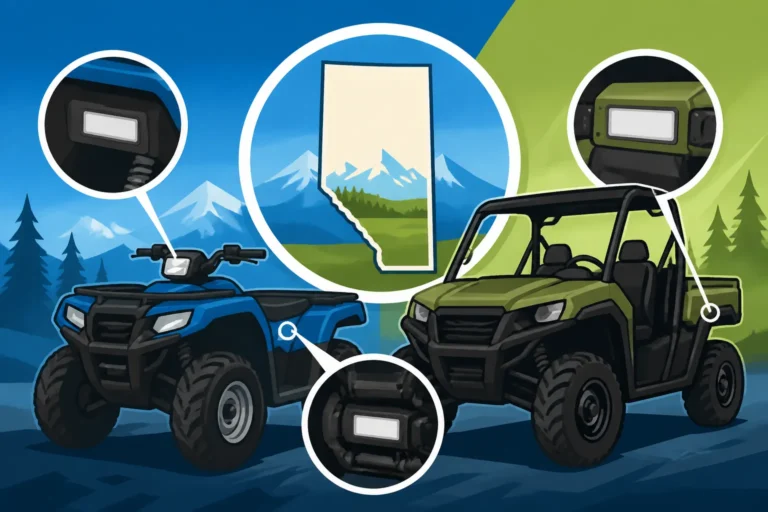
Once your registration is processed, the registry agent will issue you a physical license plate for your OHV. Unlike previous years, Alberta no longer issues stickers for OHV plates, so you'll just receive the plate itself. You'll need to securely mount this plate on your quad or side-by-side where it is clearly visible from the rear. For more details on the current plate system, see [Alberta Issues a Plate, Not a Sticker].
In addition to the physical plate, you will receive a registration certificate. This certificate is often issued digitally, but it's absolutely vital that you print it out and keep a physical copy with you whenever you are riding. While a digital copy on your phone might seem convenient, electronics can fail, and officers on the trail may require a physical document. Having that printed certificate ensures you can always provide proof of registration on demand. Make sure you understand the importance of printing your certificate before you hit the trails, as explained in [Printing a Certificate Before You Ride].
Insurance: Don't Forget This Crucial Step
Here's a critical point that many farm quad owners sometimes overlook: even if you bought it primarily for work on your farm, if you ever take that OHV onto any public land, it must be insured. This includes Crown land, designated OHV trails, and even the ditches alongside public roads. Public liability insurance is a non-negotiable requirement under Alberta law for OHVs operating on public land.
Many assume "farm quads" are exempt, but this exemption typically only applies if the machine never leaves your private property or is used strictly for farming operations on contiguous private land. The moment a wheel touches a publicly accessible area, the insurance requirement kicks in. Imagine a scenario where you're just crossing a short public road allowance to get to another field, or taking a quick run down a ditch to check fences – legally, you need insurance. Failing to have proper insurance can lead to significant fines and even vehicle seizure. For a deep dive into this, see [Alberta Requires Insurance on Public Land] and [Alberta Insurance Requirements on Public Land]. Don't let a great auction deal turn into a costly legal headache!
Understanding Farm Exemptions
While we've touched on it, it's worth reiterating the specifics of farm exemptions more clearly. Alberta's Traffic Safety Act does provide some limited exemptions for farm vehicles, but they are often narrower than people realize.
Generally, an OHV used exclusively for farm purposes on private land owned or leased by the farmer is exempt from registration. This is meant to ease the burden on farmers whose machines might spend their entire operational life moving feed, checking cattle, or doing other agricultural tasks without ever venturing onto public trails or roads. However, the definition of "private land" is key here. If your farm machine is used to cross a road allowance, or is driven in a municipal ditch, or taken to a nearby Crown land lease for work, it typically loses its exemption and needs to be registered and insured.
It's a nuanced area, and the best advice is always to err on the side of caution. If there's any chance your quad will leave your strictly private, contiguous farm property for any reason, get it registered and insured. The peace of mind, and avoiding potential fines, is well worth the effort. For a comprehensive look at what counts as a farm exemption, refer to [Alberta's Farm Exemption From Registration] and [Does a Farm Quad That Never Leaves Need Registration?]. Understanding these rules is crucial for any owner of an [Alberta Registration for a Farm Quad].
Comparing OHV Registration Requirements: New vs. Auction Used
To summarize the differences in paperwork expectations, here’s a quick comparison of what you typically need when registering a brand-new OHV versus a used one from a farm auction in Alberta.
| Document Type | New OHV (Dealership Purchase) | Used OHV (Farm Auction Purchase) |
|---|---|---|
| Proof of Ownership | Manufacturer's Statement of Origin (MSO), Dealership Bill of Sale | Auction House Bill of Sale/Receipt, supplementary Bill of Sale |
| Previous Registration | Not applicable | Not typically required or expected |
| Proof of Identity | Valid Government Photo ID | Valid Government Photo ID |
| Machine Information (VIN) | Found on MSO & Bill of Sale | Located on the machine itself, noted on Bill of Sale |
| Lien Search | Often handled by dealer; recommended for buyer | Highly recommended for buyer |
| GST Payment | Usually collected by dealer | Included in auction price, no extra GST at registry |
This table highlights why your auction receipt is so powerful. It serves as your primary evidence of a legal transaction, filling the gap left by an absent MSO or previous registration, which aren't typically part of a used auction purchase.
Disclaimer
This article is for general informational purposes only and does not constitute professional advice. Laws, prices and regulations vary by location and change over time. Consult a qualified professional for guidance on your specific situation.