Alberta Registration Compared to BC
It can be incredibly frustrating to keep track of off-highway vehicle (OHV) regulations, especially when you're used to riding in one province and then find yourself planning a trip or even moving to another. Many riders from Alberta or British Columbia are often left scratching their heads, wondering if their existing registration and insurance are still valid across provincial lines, or what they need to do to make things legal. This guide will walk you through the key differences in how Alberta and British Columbia approach ATV and UTV registration, helping you understand what's required so you can ride with confidence and peace of mind.
The Core Philosophy: Different Roads to Legal Riding
When you look at Alberta and British Columbia, you'll quickly realize that while both provinces want to ensure safe and responsible OHV use, their foundational approaches to registration and regulation are quite distinct. It’s not just a matter of different paperwork; it’s a difference in how they view and manage off-road vehicles. Understanding this core philosophy helps make sense of all the specific rules.
Alberta's Approach: Registration as a Baseline Requirement
In Alberta, the philosophy is fairly straightforward: if you're riding your ATV or UTV on public land, it needs to be registered. This isn't just a suggestion; it's a fundamental requirement under the province's Traffic Safety Act and Off-Highway Vehicle Regulation. Think of it like a vehicle for the road – you need to register it, get a plate, and carry proof of ownership. This applies whether you're ripping through a designated Public Land Use Zone (PLUZ) like McLean Creek, crossing a highway ditch, or just exploring some Crown land.
The process for [How to Register an ATV in Alberta] is managed through authorized registry agents across the province. They are your one-stop shop for getting your machine on the books. Once registered, your machine will be issued a durable plate, which must be displayed clearly on the back of your ATV or UTV. Unlike the old days, [Alberta Issues a Plate, Not a Sticker] on that plate, as stickers were phased out a few years back. The focus here is on universal compliance for public land access. This means that if you plan on riding anywhere other than your own private property, registration is a non-negotiable step. It ensures a basic level of accountability and traceability for all machines operating in the public sphere.
British Columbia's System: More Nuance for Off-Road Vehicles
British Columbia's approach to OHV regulation, primarily governed by the Off-Road Vehicle Act (ORVA), introduces a bit more nuance. While registration is also mandatory in BC, the context in which it's applied, and the additional requirements, can differ from Alberta. BC categorizes off-road vehicles more granularly and has specific rules for operating on what they define as "designated ORV trails" versus other types of land.
In British Columbia, off-road vehicles also require a registration number and a decal, which acts similarly to Alberta's plate in identifying the machine. However, depending on where and how you ride, other layers of regulation, particularly concerning road crossing or dual-purpose use, might come into play. The BC system, historically managed by ICBC (Insurance Corporation of British Columbia), aims to ensure that ORVs are identified and operators are accountable, but it often feels like there are more specific scenarios where different rules apply. This can make it feel a bit more complex, especially for riders accustomed to Alberta's more blanket public land registration requirement.
Documentation and Process: What You'll Need to Bring
The paperwork needed to register your off-highway vehicle is a common sticking point for many. Each province has its specific demands, and missing even one document can mean a wasted trip to the registry or a delay in getting out on the trails. It's not just about proving ownership; it's about meeting the legal prerequisites for identification and compliance.
Registering in Alberta: The Essentials
When you head to an [Alberta Registry Agents and OHV Paperwork] office in Alberta, you'll need to be prepared with a few key items. The most crucial piece of information is your machine's Vehicle Identification Number (VIN). This unique identifier is paramount for tracking and ownership. You'll also need proof of ownership, which usually comes in the form of a bill of sale. For new machines, this might be a Manufacturer's Statement of Origin (MSO) from the dealer. For used machines, a clear, dated bill of sale from the previous owner is essential. This document needs to detail the buyer, seller, date, price, and VIN. If you're buying privately, especially from someone you don't know well, it's wise to use a template to ensure all necessary details are included. Services like LawDepot can be invaluable for drafting a professional and legally sound bill of sale, ensuring you don't miss any critical information that could cause issues during registration.
You'll also need to provide valid personal identification. This is standard procedure to confirm your identity as the owner. Unlike some other jurisdictions, Alberta doesn't typically require you to have completed a mandatory OHV safety course as a prerequisite for registration, though these courses are always highly recommended for safe riding. The whole process is designed to be relatively straightforward, as long as you have your VIN, a clear bill of sale, and your ID. Agents at the registry are there to help guide you through [What a Registry Agent Needs to Register Your Quad], making sure all your paperwork is in order.
Navigating BC's Registration Maze
British Columbia's registration process, while also requiring proof of ownership and identification, has a few differences that riders from Alberta might not expect. Just like in Alberta, a bill of sale is critical for proving ownership, especially if you're purchasing a used machine from a private seller. Again, utilizing a reliable legal document service like LawDepot can simplify the creation of a comprehensive bill of sale that meets BC's requirements, safeguarding your purchase. For new vehicles, a New Vehicle Information Statement (NVIS) is typically provided by the dealer.
In BC, the primary registrar for off-road vehicles is the Insurance Corporation of British Columbia (ICBC), or authorized agents that handle ICBC services. This differs from Alberta, where private registry agents handle all aspects of OHV registration. When you register in BC, you'll receive a registration document, an ORV plate, and a decal. The decal is often specific to the year and must be displayed on the machine alongside the plate. Be aware that if your machine was previously registered in another province, you'll need to provide that previous registration document along with your bill of sale. This additional layer of detail underscores the importance of having all your ducks in a row before heading to the counter.
Insurance and Ongoing Compliance: Keeping Your Ride Legal
Registration is just the first step. To legally operate your ATV or UTV, both provinces have specific requirements for insurance and other ongoing compliance measures. This is where safety and financial responsibility truly intersect, protecting both you and other trail users.
Alberta's Insurance Mandate
In Alberta, it's a non-negotiable rule: if you're riding on public land, your ATV or UTV absolutely must carry valid third-party liability insurance. This isn't just a good idea; it's the law. The minimum coverage amount is standard, but many riders choose to carry more for greater peace of mind. [Alberta Requires Insurance on Public Land] to protect against the financial fallout of an accident where you might be at fault for damage or injury to another person or their property. This applies to everyone, whether you're hitting the trails in a busy PLUZ or just crossing a quiet rural road in a ditch.
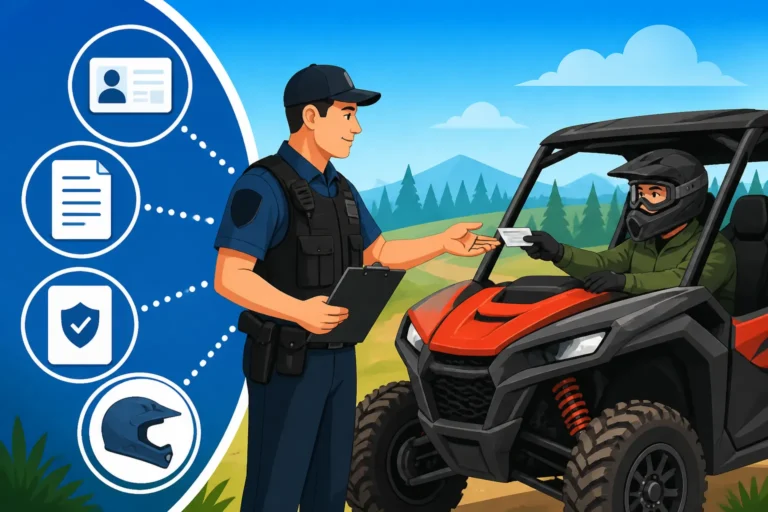
Law enforcement officers in Alberta have the right to ask for [Alberta Proof of Insurance on Demand]. If you're caught riding on public land without it, you can face significant penalties, including fines and potentially even having your vehicle seized. It's a serious matter, and frankly, it's there for your own protection. Make sure you always carry physical or digital proof of insurance with you when you ride. Many insurance providers offer specific OHV policies, so it's worth shopping around to find one that suits your needs and budget.
British Columbia's Insurance Realities
British Columbia's insurance landscape for OHVs can be a bit more complex due to the interplay of mandatory basic insurance through ICBC and private insurance providers. For any vehicle, including an OHV, that will be operated on a highway (even for a brief crossing) or in certain designated areas, mandatory basic insurance through ICBC is typically required. This provides a fundamental level of third-party liability coverage.
However, many riders in BC find that while ICBC covers the basics for some situations, it doesn't always provide comprehensive coverage for purely off-road riding, especially regarding damage to your own machine or enhanced liability coverage for trail incidents. For robust protection while exclusively riding off-road, many BC riders opt for additional insurance from private providers. This is where the distinction becomes crucial: your ICBC basic might cover a road crossing, but a private policy would cover your machine getting damaged on a remote trail. Always clarify with your insurer exactly what your policy covers and under what circumstances to ensure you're fully protected, whether you're on a multi-use trail or a designated ORV park.
Implications for Cross-Border Riders and New Residents
Whether you're an avid rider planning a multi-province adventure or someone making a permanent move, understanding how your OHV's registration and insurance are treated across provincial lines is crucial. Ignoring these details can lead to fines, hassles, or even legal trouble.
Visiting Alberta from BC
If you're a British Columbia resident visiting Alberta with your registered OHV, you generally benefit from a reciprocity agreement. This means your BC registration and plate are usually recognized in Alberta for a limited period. The key here is [Alberta's 30-Day Rule for Out-of-Province Machines]. As long as your visit is for 30 consecutive days or less, your BC registration should suffice. However, you must still comply with all other Alberta riding regulations, including the mandatory insurance requirement. So, ensure your BC insurance policy provides adequate third-party liability coverage for riding in Alberta and carry proof of it.
If you plan on staying longer than 30 consecutive days, or if you're considering a move to Alberta, you will need to register your machine in Alberta. [Alberta Registration for Visiting Riders] outlines that once you establish residency or exceed that 30-day window, your BC registration is no longer considered valid for use on Alberta's public lands. It's always best to be proactive and understand the rules before you hit the trails. An Alberta officer might ask [What an Alberta Officer Can Ask to See], and showing your valid BC registration and insurance (if within the 30 days) is key.
Visiting BC from Alberta
Similarly, if you're an Alberta rider heading west to explore British Columbia's trails, your Alberta registration and plate will generally be recognized for short visits. Just like BC visitors to Alberta, [Riding on Your Home Province's Plate as a Visitor] usually means your Alberta registration is accepted for temporary recreational use. However, you must adhere to all of BC's specific ORV laws, including any helmet laws, age restrictions, and rules about where you can and cannot ride, especially concerning designated ORV trails versus areas where ORVs are restricted.
Ensure your Alberta insurance policy extends to coverage in British Columbia, specifically for third-party liability. If your Alberta policy has geographical limits, you might need to adjust it or purchase supplementary coverage. It's a good idea to confirm with your insurance provider before you go. While your Alberta plate will get you across the border, understanding BC's nuances, particularly around designated riding areas, is vital to avoid any issues. This is especially true if you are registering [Alberta Registration for a Machine From BC] or if your machine was originally purchased there.
Moving Between Provinces
If you're making a permanent move and bringing your OHV with you, you'll need to re-register your machine in your new home province. This is a crucial step that often gets overlooked in the flurry of moving.
-
Moving to Alberta from BC: If you're becoming an Alberta resident with a BC-registered OHV, you'll need to undergo the [Alberta Registration for a New Resident] process. This involves presenting your BC registration, proof of ownership (like your bill of sale), and personal identification at an Alberta registry agent. Your machine will then be registered under Alberta's system, and you'll receive an Alberta OHV plate. Don't forget to also secure Alberta-compliant insurance.
-
Moving to BC from Alberta: Conversely, if you're moving to British Columbia with an Alberta-registered OHV, you'll need to register it under BC's Off-Road Vehicle Act. This means presenting your Alberta registration, bill of sale, and ID to ICBC or an authorized agent. You'll receive a BC ORV plate and decal. You'll also need to ensure you have BC-compliant insurance, which, as discussed, might involve a combination of ICBC basic coverage and private off-road insurance.
The key takeaway for any cross-border or new resident situation is always to check the current rules. Provincial regulations can change, and being informed is your best defense against unexpected fines or complications.
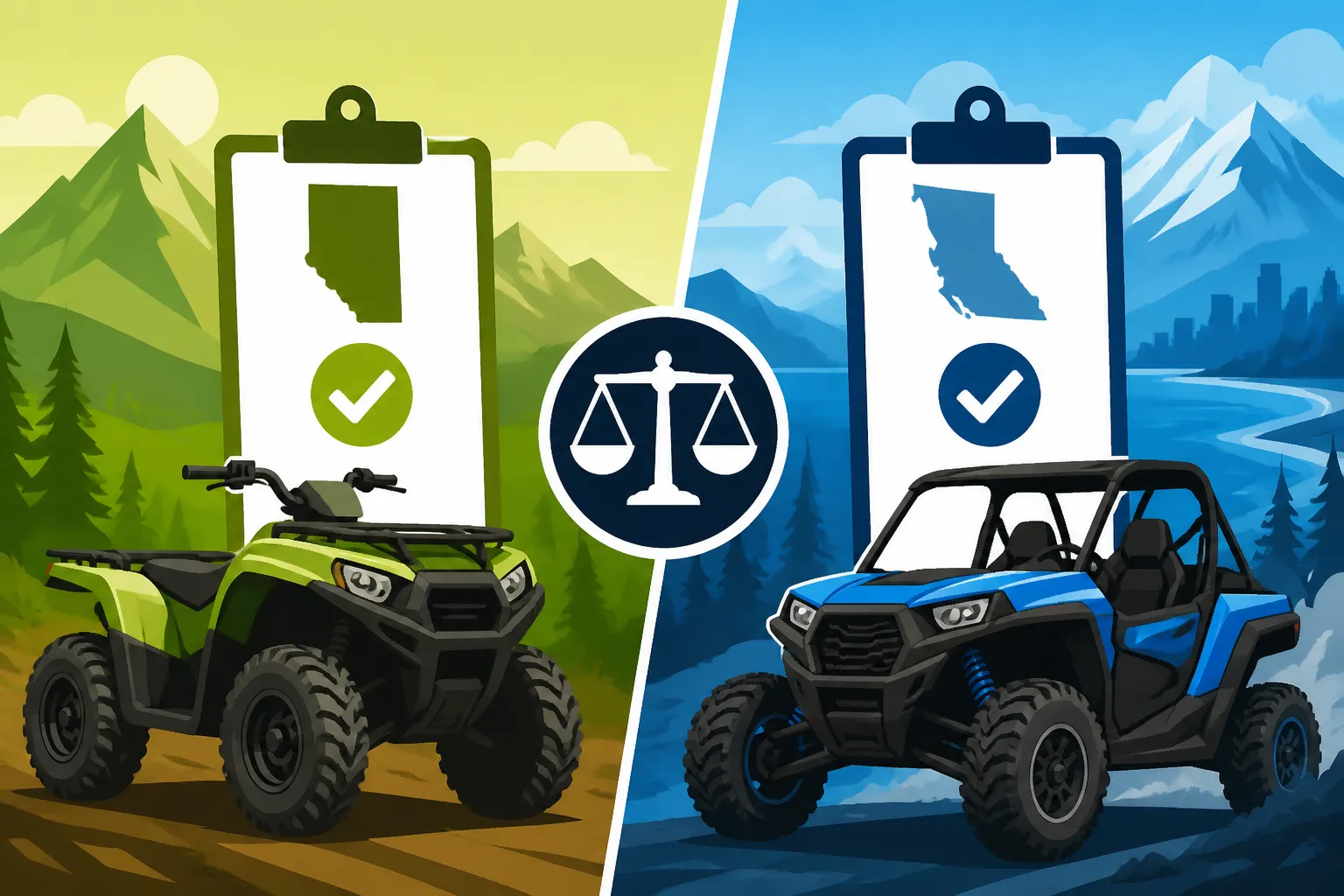
Here's a quick comparison of the key registration aspects between Alberta and British Columbia:
| Feature | Alberta Off-Highway Vehicle Registration (OHV) | British Columbia Off-Road Vehicle Act (ORVA) |
|---|---|---|
| Registrar | Authorized Private Registry Agents | Insurance Corporation of British Columbia (ICBC) / Authorized Agents |
| Registration Mandatory | Yes, for all public land use | Yes, for all public land use and designated ORV trails |
| Physical ID | Plate (no sticker since 2021) | Plate and annual decal |
| Proof of Ownership | Bill of sale, MSO (new machines) | Bill of sale, NVIS (new machines), previous registration |
| Insurance Requirement | Mandatory third-party liability for public land use | Mandatory basic ICBC for highway crossing/some designated areas; private for comprehensive off-road |
| Safety Course | Not mandatory for registration | Not mandatory for registration, but recommended |
| Public Land Access | Registration is the trigger for legal public land use | Registration and compliance with specific ORV trail designations |
| Vehicle Inspection | Generally not required for registration | Generally not required for registration, unless imported |
| Reciprocity for Visitors | Up to 30 consecutive days from out-of-province | Generally recognized for short visits from out-of-province |
Ultimately, whether you're an Alberta rider or a BC enthusiast, understanding the nuances of each province's OHV regulations is paramount for safe, legal, and enjoyable riding. While both aim for responsible use, their administrative pathways and specific mandates differ. Always confirm the latest requirements with the respective provincial authorities before you ride or move.
Disclaimer
This article is for general informational purposes only and does not constitute professional advice. Laws, prices and regulations vary by location and change over time. Consult a qualified professional for guidance on your specific situation.