Printing a Certificate Before You Ride
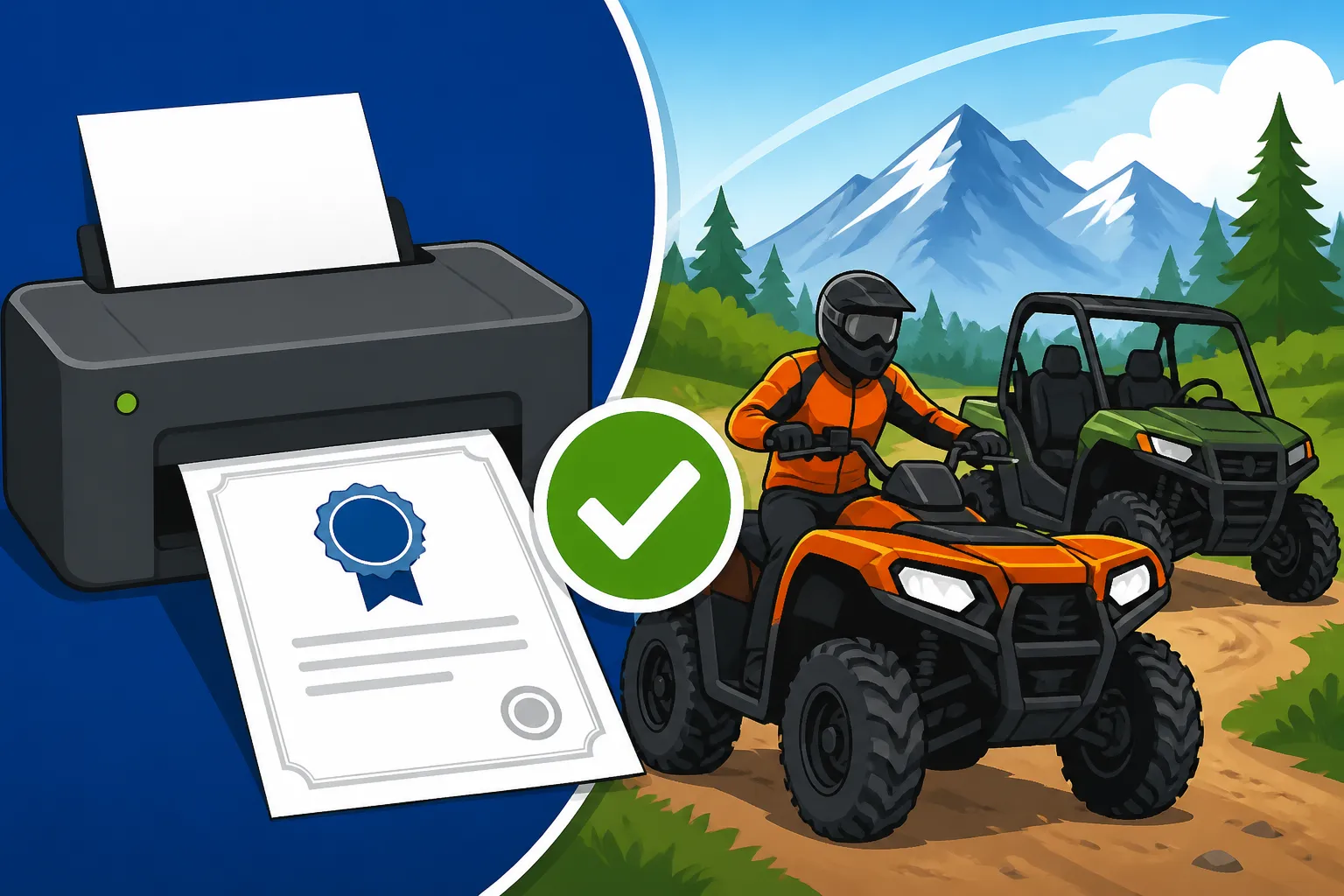
It's a familiar scenario: you've just registered your off-highway vehicle (OHV) in Alberta, maybe even renewed it online, and you think you're all set. Then, the nagging question hits—do you really need a physical copy of that registration certificate, or is a digital version on your phone good enough? Many riders face the frustration of not knowing the definitive answer, especially when planning a long weekend out in the backcountry. This guide will walk you through why having a printed copy of your Alberta OHV registration certificate is not just a good idea, but often a critical one, and how to ensure you're always prepared.
Why a Printed Certificate Matters for Alberta OHV Riders
Riding an OHV in Alberta means enjoying incredible landscapes, but it also comes with responsibilities, especially when it comes to paperwork. While technology makes many things convenient, relying solely on your phone for proof of registration can leave you vulnerable.
The Law and Physical Proof
Imagine you're deep in the Kananaskis, enjoying a beautiful day on the trails, and an enforcement officer pulls you over for a routine check. You confidently pull out your phone, ready to display your digital registration. But what if your phone battery dies? Or the screen cracks? Or, as is often the case in remote areas, you simply have no cell signal to even retrieve the document from an email? These aren't hypothetical scenarios; they happen all the time.
While Alberta does offer digital certificates, the expectation from law enforcement is usually for readily verifiable proof. An officer needs to confirm your machine is registered and that you are the registered owner, or at least operating it with permission. A clear, printed document streamlines this process for everyone. It demonstrates proactive compliance and can save you a lot of time and potential hassle during a stop. The Traffic Safety Act, which governs OHVs in Alberta, doesn't specifically ban digital, but it places the onus on you to provide proof. When an officer asks to see your papers, a physical document removes all doubt and technical hurdles. It’s part of [What an Alberta Officer Can Ask to See], and being able to produce it without fumbling through a dead phone is a huge advantage.
Beyond the Screen: Reliability in Remote Areas
Let's face it, our phones are amazing, but they aren't infallible, especially in the rugged environments where we often ride our OHVs. Signal drops are common outside of major towns and cities. You might be out in the Ghost PLUZ or near Rocky Mountain House, far from any cell towers, when you need to show your registration. A dead phone battery, a muddy screen that's impossible to read, or even just the glare of the sun can render your digital certificate useless.
A printed certificate, tucked safely away, doesn't care if your battery is at 1% or if you're in a cellular dead zone. It’s a reliable backup that ensures you always have the necessary proof, regardless of technological glitches or environmental factors. It's about preparedness for the realities of backcountry riding. You wouldn't head out without extra fuel or a first-aid kit, and your printed registration should be viewed with the same level of essential reliability.
How to Access and Print Your Alberta OHV Registration Certificate
Getting your hands on a physical copy of your registration certificate is usually quite straightforward, whether you prefer to handle things online or in person.
Online Portal Navigation
If you've registered your OHV recently, or renewed it, you likely did so through an Alberta Registry Agent's online portal. These portals are designed to make accessing your documents relatively easy. Typically, after completing your registration or renewal, you'll receive an email with a link to download your digital certificate as a PDF file. Even if you don't get an immediate email, most registry agent websites have a "My Vehicles" or "My Registrations" section once you log in.
Here's a general process you can expect:
- Log In: Go to the website of the Alberta Registry Agent you used (or any registry agent that offers online services) and log into your account.
- Locate Your Records: Navigate to the section related to your registered vehicles. It might be called "Vehicle Services," "My Registrations," or something similar.
- Find Your OHV: Select the specific OHV you need the certificate for.
- Download or Print: You should see an option to download a PDF copy of your registration certificate. Once downloaded, you can open it on your computer and print it.
Remember, sometimes these emails can end up in your spam folder, so always check there if you don't see it immediately. It’s a convenient way to get your paperwork sorted after you've completed something like [Registering an ATV in Alberta Online]. Just be sure to actually hit that print button! While Alberta makes [Alberta Digital Certificates Must Be Printed] easy to download, the crucial final step is getting that ink on paper.
Registry Agent Assistance
For some, navigating online portals can be a bit tricky, or maybe you registered in person and just never thought to get a printed copy. No worries! Alberta Registry Agents are there to help. You can simply walk into any registry agent location across the province.
When you go, make sure you bring a piece of government-issued photo identification (like your driver's license) and any existing vehicle information you have (like the plate number or VIN). They can look up your registration on their system and print out a fresh copy for you. There might be a small counter fee for this service, as is common for many registry transactions, but it's a small price to pay for peace of mind. Registry agents are used to these requests and can often help you on the spot. If you’re ever unsure about anything related to your OHV's paperwork, visiting a registry agent is always a solid choice. They can answer questions about [Alberta Registry Counter Fees] and other services.
Essential Details to Verify on Your Printed Certificate
Once you have that printed certificate in your hands, don't just shove it into a waterproof bag without a quick review. A moment spent verifying the details can prevent headaches down the trail.
Accuracy of Personal and Machine Information
It might seem obvious, but mistakes happen. Always double-check that your full name and current residential address are accurate on the certificate. Also, scrutinize the details of your OHV: the Vehicle Identification Number (VIN), make, model, and year. An incorrect VIN, even by one digit, can make your registration invalid in the eyes of an enforcement officer. Imagine trying to explain away a VIN mismatch when you're already being questioned!
If you find any discrepancies, big or small, it's crucial to get them corrected immediately. Contact the registry agent where you processed your registration. They can guide you through the amendment process, which might involve bringing in supporting documents like a bill of sale or proof of address. Services like LawDepot can be useful for ensuring your underlying purchase agreements or bills of sale are legally sound and accurately reflect your information, which then directly impacts the accuracy of your registration certificate. Don't let a simple typo lead to a roadside penalty. Ensuring your details are correct is just as important as having the certificate itself, especially after a recent move that would trigger an [Alberta Registration Address Change].
Expiry Dates and Terms
Another critical piece of information to verify is the expiry date of your registration. When you register an OHV in Alberta, you generally have the option for a one-year or two-year term. It’s easy to forget which option you chose, especially if a year or more has passed since you first registered.
Make a habit of checking this date. Riding with an expired registration is the same as riding unregistered, and that can lead to significant fines and even potential vehicle seizure. If you realize your registration is expiring soon, plan to renew it well in advance. Setting a reminder on your phone or marking it on a calendar can be a lifesaver. Knowing [When an Alberta OHV Registration Expires] can save you from a very inconvenient surprise out on the trails. Always confirm if you opted for [Alberta Registration Terms of One or Two Years] so you know exactly when to renew.
Understanding Your "Class 3" Designation
On your registration certificate, you'll see a vehicle classification, and for most OHVs, this will be "Class 3 Off-Highway Vehicle." It's important to understand what this means. This classification confirms that your machine is legally recognized as an off-highway vehicle under Alberta's Traffic Safety Act.
This designation clarifies the type of vehicle you are operating and the regulations that apply to it. For example, it differentiates your quad or side-by-side from a passenger car or a heavy truck. While it might seem like just a bureaucratic detail, an enforcement officer will quickly confirm this class during a stop to ensure your machine fits the OHV regulations they are enforcing. It’s a fundamental part of your machine's legal identity, confirming [A Class 3 Vehicle on Your Certificate].
Best Practices for Carrying and Storing Your Printed Certificate
Having a printed copy is only half the battle. How you carry and store it can make all the difference in its usability when you actually need it.
Protection from the Elements
The Alberta outdoors is beautiful, but it can be rough on paper. Mud, rain, snow, sweat, and dust are constant companions on the trails. A simple piece of paper can quickly become a soggy, illegible mess or tear into confetti if not protected. This is why thinking ahead about elemental protection is paramount.
Consider laminating your certificate. This creates a durable, waterproof, and tear-resistant barrier that will withstand almost anything the trail throws at it. If laminating isn't an option, a heavy-duty, sealable waterproof bag (like a Ziploc or a specialized dry bag) is the next best thing. Place the certificate inside the bag, perhaps even with a secondary layer of protection like a small rigid plastic envelope, to prevent creasing or tearing. This small effort will ensure your registration is always readable and presentable when required. It's vital for [Carrying Papers on a Long Alberta Ride].
Accessible but Secure Placement
Where you store your certificate on your machine or person is a strategic decision. You want it to be easily accessible if an officer asks for it, but also secure enough that it won't fall out, get lost, or be damaged during your ride.
Many OHVs have small, watertight storage compartments, often under the seat, in a glove box (for side-by-sides), or in a dedicated cargo box. These are ideal spots. Make sure the compartment latches securely and is indeed waterproof. If you prefer to carry it on your person, a waterproof pouch worn around your neck, in a fanny pack, or a secure pocket in your riding jacket are good options. Avoid putting it in an easily lost item like a wallet that might slip out of a loose pocket. The goal is to retrieve it smoothly and confidently, without having to dig through a backpack full of gear or worry about it being exposed to the elements.
What if You Can't Print or Lose Your Certificate?
Life happens. Sometimes, despite your best intentions, you might find yourself without a printed copy or discover your copy has gone missing. Don't panic; there are still steps you can take.
Temporary Solutions and Digital Alternatives (with caveats)
If you're already out on the trails and realize you don't have a physical copy, your phone might be your only immediate option. While we strongly recommend a printed version, a clear, easily accessible digital copy on your phone is better than nothing. Many enforcement officers understand the digital age, but they will still expect you to produce it without significant delay or technical difficulty.
Important Caveats:
- Battery Life: Ensure your phone is charged. Consider carrying a portable power bank, especially on longer rides.
- Screen Visibility: A small, cracked, or muddy screen can make verification difficult. Keep your phone clean and protected.
- Signal: As mentioned, remote areas often lack cell service. Download your PDF certificate to your phone's local storage before you leave home, so you don't need data to access it.
Even with these precautions, remember that a printed copy is the most reliable option. If an officer encounters issues with your digital proof, they might still ask you to produce a physical copy later, or even issue a ticket if they cannot verify your registration to their satisfaction. It's good to know [Does a Printed Registration Certificate Count on the Trail?], but also to understand its limitations.
Obtaining a Replacement or New Copy
If you've lost your printed certificate, it's easy enough to get a replacement. The process is the same as printing your initial copy:
- Online: Log back into the online portal of your Alberta Registry Agent and download the PDF again. Then, print it out. This is usually the quickest and easiest method.
- In Person: Visit any Alberta Registry Agent location. Provide your identification and OHV details, and they can print a duplicate certificate for you, likely for a small fee.
It’s always a good idea to have at least one backup copy stored securely at home, perhaps with other important documents. This way, if your trail copy gets damaged or lost, you're not starting from scratch. When organizing all your important papers, whether for your OHV or other assets, services like LawDepot can assist you in creating legally sound documents like bills of sale, agreements, or other vital records that complement your official registration certificate, ensuring all your machine's documentation is orderly and accessible. Don't wait until you need it on the trail to discover you don't have it. Proactively replace a lost or damaged copy, just as you would handle [Alberta Plate Replacement If Lost].
Common Misconceptions About OHV Registration Proof in Alberta
There are a few persistent myths floating around among riders about what constitutes acceptable proof of OHV registration in Alberta. Clearing these up can help you avoid potential issues.
"My Plate Is Enough"
This is a common misconception. While your Alberta OHV plate proves that a registration exists for that specific machine, it doesn't confirm that you are the current, legitimate registered owner, nor does it confirm the registration is valid and current. Think of it like a license plate on your car – it shows the car is registered, but you still need to carry your driver's license and vehicle registration document to prove ownership and validity.
An enforcement officer needs to see more than just a plate. They need to verify that the person operating the machine is linked to the registration and that all the details are accurate and up-to-date. Without a separate certificate, there's no immediate way to confirm this information roadside. This is why [Alberta Issues a Plate, Not a Sticker] for OHVs, and it doesn't negate the need for the certificate. The plate is one piece of the puzzle, but not the whole picture.
"It's All Digital Now"
While many provinces and services are moving towards digital-first solutions, and Alberta does provide digital certificates, it's a mistake to assume that a physical, printed copy is entirely obsolete for OHVs. As we've discussed, the practicalities of remote riding, coupled with the potential for technical issues with digital devices, make a physical copy invaluable.
For OHVs, which are often used in conditions where cell service is non-existent and electronics are vulnerable, the robust nature of a printed document simply makes more sense. Until a universally reliable and legally mandated digital system is fully implemented and supported by all enforcement agencies, always err on the side of caution and carry a printed copy. The convenience of a digital download is fantastic, but the reliability of paper when you're far from civilization is unmatched. Always remember, [Alberta Digital Certificates Must Be Printed] is the strong recommendation for good reason.
Digital vs. Printed OHV Registration Certificate
Here's a quick comparison to help you weigh the pros and cons:
| Feature | Digital Certificate (on phone) | Printed Certificate |
|---|---|---|
| Accessibility | Instant, always with you (if you have your phone) | Requires printing, can be forgotten |
| Reliability | Dependent on battery, signal, screen condition | Not dependent on power, signal; weather resistant if protected |
| Proof of Validity | Clear if readable, but can be questioned by officers | Clear, tangible proof; universally accepted by enforcement |
| Durability | Phone itself is fragile; screen can get damaged | Can be laminated for extreme durability |
| Security | Tied to your phone (can be password protected) | Can be lost, but less risk of data breach |
| Best Use Case | Quick check at home, temporary solution | Primary method for trail riding, peace of mind |
Disclaimer
This article is for general informational purposes only and does not constitute professional advice. Laws, prices and regulations vary by location and change over time. Consult a qualified professional for guidance on your specific situation.