Alberta’s Class 3 Off-Highway Vehicle Registration
Oh, the world of off-highway vehicles in Alberta can feel like a tangled web of rules and regulations, especially when you're trying to figure out what exactly a "Class 3" machine is and what it needs to be legally ridden. Many riders get frustrated trying to decipher the specifics for their side-by-sides or UTVs, often wondering if the rules are different from a regular quad. This comprehensive guide is here to clear up all that confusion, walking you through everything you need to know about registering your Class 3 off-highway vehicle in Alberta, from paperwork to plates and beyond.
Demystifying Off-Highway Vehicle Classifications in Alberta
When you first dive into the world of OHVs, you quickly realize it's not a one-size-fits-all situation. Alberta, like many jurisdictions, categorizes these machines, and understanding where your ride fits is the very first step toward legal and hassle-free enjoyment. For many side-by-side owners, this means getting acquainted with the Class 3 designation.
What Exactly is a Class 3 OHV?
Let's cut right to it. In Alberta, the term "Class 3 Off-Highway Vehicle" primarily refers to what many of us commonly call a side-by-side or a UTV (Utility Task Vehicle). These are distinct from traditional ATVs (quads) or dirt bikes. Think about it: a side-by-side typically features a steering wheel instead of handlebars, foot pedals like a car, and side-by-side seating for the operator and at least one passenger. They often come with roll-over protective structures (ROPS) and seatbelts, offering a different kind of riding experience and often a higher payload or towing capacity than a standard ATV.
What makes them Class 3, specifically? It's their design: they're multi-wheeled, equipped with a steering wheel and bucket or bench seating, and are generally built for utility and recreation rather than just sport. This classification is critical because it dictates specific safety equipment requirements, rider age limits, and, of course, registration procedures. If your machine fits this description – like a Polaris RANGER, Can-Am Defender, or a Yamaha Wolverine – you're almost certainly dealing with a Class 3 OHV.
The Importance of Knowing Your Machine's Class
You might be thinking, "What's the big deal? It's just an OHV." But here's the thing: misunderstanding your machine's classification can lead to a heap of headaches, from incorrect registration to unwittingly violating safety laws. For example, while all OHVs need registration for public land use, specific rules for helmets or passenger capacity might vary subtly between a Class 1 ATV and a Class 3 side-by-side. Your machine's manufacturer's statement of origin (MSO) or VIN plate should clearly state its type and often its class or key characteristics that define it.
Knowing your machine's class is like knowing its official name; it ensures you're applying the right set of rules to your particular vehicle. It impacts everything from the type of insurance you need to specific equipment requirements, like whether seatbelts are mandatory in addition to helmets, or if your ROPS cage meets the necessary standards. It’s not just bureaucratic red tape; it's about ensuring you're legally prepared for the trail and that your machine meets the safety expectations tied to its design. A small mistake here could mean a big fine or, worse, an unsafe situation for you and your passengers.
Why Class 3 Registration is Non-Negotiable on Public Land
Okay, so you've got your awesome Class 3 side-by-side, you know it's a Class 3, and now you're itching to hit some trails. But before you even think about loading it onto the trailer, let's talk about registration. This isn't just a suggestion; it's a fundamental legal requirement in Alberta if your tires are going to touch anything beyond your own private property.
Crown Land and Designated OHV Zones
If you plan on exploring Alberta's vast and beautiful public lands, whether that's the sprawling trails of McLean Creek, the rugged terrain of the Ghost Public Land Use Zone (PLUZ), or simply a forestry road leading to your favorite fishing spot, your Class 3 OHV absolutely must be registered. These areas, managed by the provincial government, are considered "public land," and the Traffic Safety Act is pretty clear that any OHV operating on such land needs to be registered and display a valid license plate.
Riding an unregistered side-by-side on these lands isn't just a minor infraction; it can lead to significant consequences. Enforcement officers, whether they're RCMP, Fish and Wildlife officers, or Parks officials, routinely check for valid registration and insurance at staging areas and on trails. If you're caught, you could face hefty fines, and in some cases, your machine could even be seized. It's simply not worth the risk. Think of it as your machine's passport for adventure; you wouldn't travel internationally without one, so don't hit the trails without your OHV's registration. For more on the consequences, check out [Alberta Penalties for Riding Unregistered].
Ditches, Alleys, and the "Highway" Definition
Here's where many riders get tripped up, and it's particularly important for Class 3 owners who might assume they're only on "public land" when deep in a PLUZ. In Alberta, the legal definition of a "highway" is far broader than just paved roads. It includes everything from public roads and streets to alleys, sidewalks, road allowances, and yes, even those seemingly innocuous ditches that run alongside rural roads.
This means that if you're taking your side-by-side for a quick spin down the ditch to a friend's place, or if you're just cutting across a gravel road allowance, you are legally operating on a "highway." And if you're on a highway, your Class 3 OHV needs to be registered. It's a common misconception that if you're not on asphalt, you're exempt. That couldn't be further from the truth. Many a rider has found themselves in hot water with law enforcement for not understanding this critical distinction. For a deeper dive into this confusing but crucial definition, read [Why a Highway Ditch Counts as Public Land]. Always assume that if you're not on private land you own or have explicit permission to be on, you need to be registered and insured.
The Step-by-Step Process for Registering a Class 3 OHV
Registering your Class 3 off-highway vehicle in Alberta doesn't have to be a bewildering ordeal. Like many administrative tasks, it boils down to having the right paperwork, knowing where to go, and understanding the few choices you have to make. Let's walk through it, step by step.
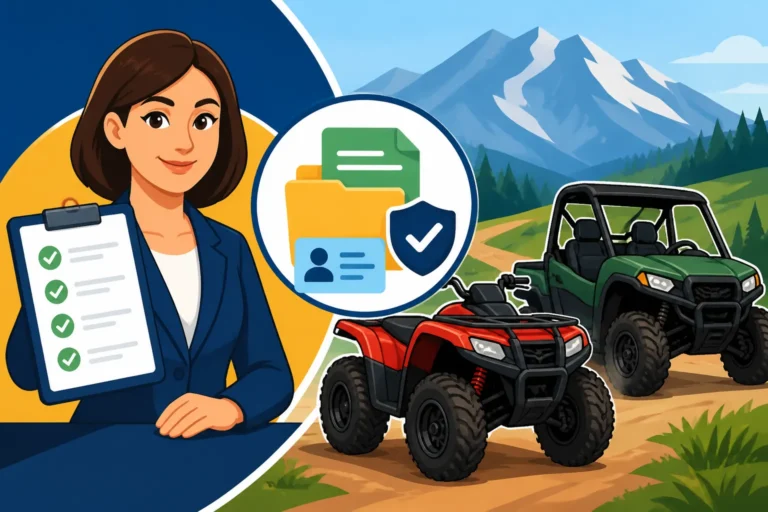
Gathering Your Essential Paperwork
Before you even set foot in an Alberta Registry Agent office, the key is preparation. Having all your ducks in a row with the necessary documents will make the process smooth and quick.
First, you'll need proof of ownership. If you bought your Class 3 machine new from a dealer, this will typically be the Manufacturer's Statement of Origin (MSO) and the bill of sale. If you bought it used from a private seller, you'll need a clear and comprehensive bill of sale that includes the VIN, make, model, year, purchase price, and contact information for both buyer and seller. A solid bill of sale is crucial, especially for private transactions. For those buying or selling privately, resources like LawDepot can help you draft a legally sound bill of sale, ensuring all necessary details are included and protecting both parties.
Next, you'll need personal identification. This means a valid driver's license or another government-issued ID. They need to confirm who you are. You'll also need proof of Alberta residency. This could be your driver's license if it shows an Alberta address, or a utility bill, bank statement, or rental agreement in your name with your current Alberta address. If the OHV is for a business, you'll need appropriate business registration documents.
Finally, while not directly for registration at the registry, remember that you'll need proof of valid liability insurance before you take your machine out on public land. It's a separate requirement, but so intertwined with legal riding that it's worth preparing for simultaneously. For a handy guide, check out [Alberta Registration Paperwork Checklist].
Visiting an Alberta Registry Agent
Once your paperwork is organized, your next stop is an Alberta Registry Agent office. These privately operated but government-authorized service centres are where all vehicle registrations happen in Alberta. You can't just mail in your forms; you need to go in person (or send someone with your authorization and specific documentation). For more details on what these agents handle, see [Alberta Registry Agents and OHV Paperwork].
When you arrive, a friendly agent will guide you through the process. They'll review your ownership documents, verify your identity and residency, and input all the details of your Class 3 OHV into the system. You'll pay the applicable registration fees, which include a base government fee and a small counter fee charged by the registry agent for their services. These fees are usually payable by debit, credit, or cash, though specific payment options can vary by location. They'll issue you a license plate immediately and a printed registration certificate. Remember, while Alberta no longer issues physical plate stickers, you will receive a registration certificate that acts as proof. For an idea of the fees involved, consult [Alberta Registry Counter Fees].
Understanding the Registration Term and Renewal
One choice you'll make during registration is whether to register your Class 3 OHV for one year or two years. Opting for two years can save you a bit of hassle by reducing the frequency of renewals. Your registration will have an expiry date, and it's critical to know when that is. Alberta now issues registration certificates that are valid from the date of issue until the last day of the month one or two years later, depending on your choice. For a detailed look at your options, check out [Alberta Registration Terms of One or Two Years].
When it comes time to renew, the process is generally simpler than the initial registration. If your information hasn't changed, you can often renew your OHV registration online. This is a convenient option for many riders, saving a trip to the registry. You'll still need proof of insurance, but the system often verifies this electronically. Just ensure you print your new digital certificate once renewed, as this is your official proof of current registration. Find out more about this process at [Alberta ATV Registration Renewal Online]. Keep an eye on that expiry date to avoid any lapsing and potential tickets!
Costs Involved in Class 3 OHV Registration
Let's be real: nobody likes unexpected costs. When you're budgeting for your Class 3 side-by-side, it's not just the purchase price, the accessories, and the fuel you need to factor in. There are specific fees associated with getting your machine properly registered and legal for Alberta's trails. Understanding these costs upfront helps you avoid any nasty surprises.
Breaking Down the Base Fees
The core of your registration cost for a Class 3 OHV will be the provincial registration fee itself. This is a standard fee set by the government for all off-highway vehicles, regardless of their class. On top of this government fee, you'll also pay a small service charge to the Alberta Registry Agent. Remember, these agents are private businesses providing a government service, so they charge for their administrative work.
While specific figures can fluctuate and are always best checked directly with a registry agent, you can expect the cost to be structured in this way: a set annual government fee for the registration, plus the agent's processing fee. If you choose a two-year registration term, you'll pay the government fee twice, plus a single agent fee for that transaction. It's usually a more economical choice over the long run than renewing annually, simply because you save on the second agent fee. To get a current understanding of these charges, look at [Alberta OHV Registration Cost]. Keep in mind that these fees are typically non-refundable, even if you decide to sell your machine before the registration term ends.
Other Potential Costs and Considerations
Beyond the registration fee itself, there are other financial considerations that are absolutely critical for anyone operating a Class 3 OHV in Alberta.
The most significant "other cost" is insurance. It's not paid directly at the registry for registration purposes, but it is mandatory for any OHV operating on public land in Alberta. You need to have valid third-party liability insurance, at a minimum, before you even consider hitting the trails or ditches. This protects you in case you're involved in an accident and cause damage or injury to others. The cost of insurance will vary widely depending on your machine, your riding history, where you live, and the coverage you choose. It's wise to get several quotes. Without it, you're not just risking financial ruin in an accident, but also vehicle seizure and hefty fines if caught. For more on this, see [Alberta Requires Insurance on Public Land].
Another financial point for new machine purchases is GST. While Alberta famously has no provincial sales tax, you will still pay the federal Goods and Services Tax on any new Class 3 OHV you buy from a dealer. This applies to the purchase price of the machine itself. Used machines bought privately are generally not subject to GST, but it's always something to be aware of if you're buying new. For those moving to Alberta with a machine, customs paperwork and any associated fees for importing from outside Canada would also be a factor, though that's a more specialized scenario. If you ever lose your plate, there will also be a small fee to get a replacement, as outlined in [Alberta Plate Replacement If Lost].
Specific Scenarios and Exemptions for Class 3 OHVs
The general rules for OHV registration apply to most riders, but there are always nuances and specific situations that can either grant an exemption or require slightly different steps. Class 3 owners, particularly those using their machines for work or just visiting Alberta, need to be aware of these.
Farm and Ranch Exemptions
If you operate a farm or ranch in Alberta, you might be wondering if your Class 3 side-by-side needs registration, especially if it's strictly used for agricultural purposes. The good news is that there is an exemption under Alberta's legislation for off-highway vehicles used solely for farming or ranching operations. This means if your side-by-side never leaves your private property or designated farm/ranch land and is exclusively used for work like moving feed, checking fences, or hauling tools, it may not need to be registered.
However, and this is a big caveat, the moment that machine touches public land – even just the ditch alongside your property, or a public road allowance to get from one field to another – the exemption generally no longer applies. It must be registered and insured. This is where many farmers get caught; a quick trip to the neighbour's farm via the road can turn into an expensive ticket if the machine isn't registered. It's a strict interpretation, but one that officers enforce. If there's any chance your Class 3 OHV will leave private land, it's always safer and wiser to register it. Delve deeper into this at [Alberta's Farm Exemption From Registration].
Visiting Riders and Out-of-Province Machines
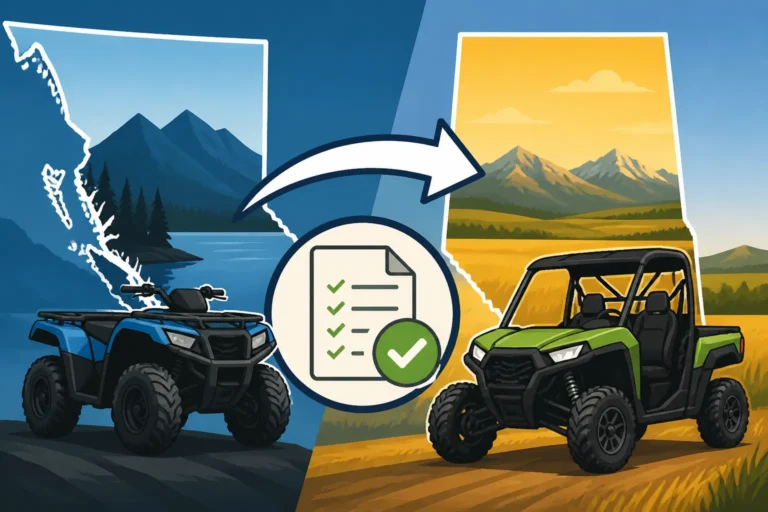
Alberta welcomes visitors, and that includes those who want to bring their Class 3 OHVs to enjoy our stunning landscapes. If you're visiting Alberta from another Canadian province or even from the United States, and your machine is properly registered and insured in your home jurisdiction, you generally don't need to register it in Alberta immediately. This is thanks to reciprocity agreements. For details on how this applies to various visitors, check out [Alberta Registration for Visiting Riders].
However, there's a critical time limit: the "30-day rule." If your Class 3 OHV will be in Alberta for more than 30 consecutive days, you are then required to register it in Alberta. This rule is designed for new residents or those on extended stays, ensuring that vehicles habitually operating within the province are regulated by Alberta laws. If you're planning a longer adventure or a move to Alberta, be mindful of this deadline. You'll also need to be able to provide proof of residency for visitors, such as your out-of-province driver's license or other government-issued ID, if asked by an officer. Learn more about the specific timeframe at [Alberta's 30-Day Rule for Out-of-Province Machines].
Transferring or Inheriting a Class 3 Machine
Life happens, and sometimes a Class 3 OHV changes hands due to a sale or, sadly, an inheritance. The registration process for these scenarios is a bit different than registering a brand-new machine.
If you've bought a used Class 3 OHV from a private seller, you'll need to transfer the existing registration into your name. The seller should provide you with a properly completed bill of sale, and you'll take this, along with your identification and proof of Alberta residency, to an Alberta Registry Agent. The agent will process the transfer, update the ownership records, and issue you a new registration certificate. It's crucial that the bill of sale is accurate and complete; using a template from a service like LawDepot can ensure all necessary fields are covered. This process is detailed further in [Alberta Registration Transfer After a Sale].
In the unfortunate event that you inherit a Class 3 OHV after the owner passes away, the process involves additional legal documentation. You'll typically need a copy of the death certificate, the will (if one exists), and possibly probate documents or a sworn statement of ownership. This ensures that the machine is legally transferred from the deceased's estate to you. Registry agents are familiar with these situations and can guide you through the specific requirements. For a more detailed look, see [Alberta Registration for an Inherited Machine]. In all cases, make sure the VIN on the machine matches the paperwork exactly to avoid any discrepancies.
What Happens After Registration: Plates, Proof, and Responsibilities
Congratulations, you've registered your Class 3 OHV! You've got your plate, your certificate, and you're ready to roll. But the journey doesn't end there. There are crucial post-registration responsibilities that ensure you remain compliant with Alberta's laws, protect your investment, and contribute to safe riding for everyone.
Proper Plate Placement and Display
One of the first things you'll need to do after registering your Class 3 machine is properly affix the license plate. In Alberta, your OHV plate must be securely mounted on the rear of the machine, clearly visible, and free from any obstructions that would prevent it from being easily read. This means no mud, snow, or accessories covering it up. The plate should also be lit if you're riding at night or in low-light conditions.
For side-by-sides, this often means mounting it on the rear bumper, roll cage, or a dedicated plate bracket. It's not just about aesthetics; it's a legal requirement. A plate that's obscured or improperly mounted can lead to a ticket. Moreover, a poorly secured plate can easily get lost on bumpy trails, leading to the hassle and cost of replacement. Take the time to mount it securely with sturdy bolts, not just zip ties. For more guidance on optimal placement, check out [Alberta Plate Placement on a Machine] and [Mounting an OHV Plate So It Stays Readable].
Carrying Your Registration and Insurance Proof
While you'll have a physical license plate on your Class 3 OHV, the actual proof of registration is your certificate. And even though Alberta has moved to digital certificates for renewals, it is a legal requirement to carry a printed copy of your current registration certificate with you whenever you're operating your machine on public land. Relying solely on a digital version on your phone might not cut it, especially if you're in an area with no cell service or your phone battery dies. Print it out, laminate it, and keep it in a waterproof bag on your machine. For clarity on printing digital certificates, see [Alberta Digital Certificates Must Be Printed].
Equally important is carrying proof of your valid liability insurance. Just like with registration, you need to be able to produce this documentation upon demand by a peace officer. Keep your insurance pink card (or a clear copy) alongside your registration certificate. Being unable to provide either of these documents can lead to immediate fines and potential further action. Don't let a simple oversight turn your ride into a legal headache. Be prepared, always. More on this crucial point can be found in [Producing Insurance on Demand].
Ongoing Responsibilities as a Registered Owner
Beyond the initial setup, being a registered owner of a Class 3 OHV in Alberta carries ongoing responsibilities. These aren't just about avoiding tickets; they're about safe and responsible riding.
Firstly, your machine needs to meet certain equipment standards. This includes having working head and tail lights if you're operating at dusk, night, or in low visibility conditions. These aren't just for your vision; they ensure other riders and officials can see you. You also need a functioning spark arrestor on your exhaust system to prevent wildfires, a critical concern in Alberta's dry seasons. Ensure your muffler isn't excessively loud or illegally modified, as this can lead to noise complaints and tickets, as detailed in [Alberta Bans Modified Exhausts]. Your machine should be well-maintained, ensuring brakes, tires, and steering are in good working order. For specific equipment requirements, read [Alberta Requires Working Head and Tail Lights] and [Alberta Requires a Spark Arrestor].
Secondly, as a registered owner, you're responsible for knowing and adhering to all public land use regulations. This includes understanding where you can and cannot ride, respecting trail closures, avoiding sensitive environmental areas, and following any specific bylaws that might apply to the area you're riding in. Ignorance of the law is never an excuse. Staying informed ensures that you can continue to enjoy Alberta's fantastic OHV opportunities for years to come.
Common Pitfalls and How to Avoid Them
Even with the best intentions, it's easy to fall into common traps when it comes to OHV registration and operation in Alberta. For Class 3 owners, given the size and utility of these machines, some specific misunderstandings can lead to unexpected trouble. Let's shine a light on these pitfalls so you can steer clear of them.
Riding Without Proper Documentation
This is perhaps the biggest and most easily avoidable mistake: hitting public land without your Class 3 OHV being properly registered or without carrying the required proof. It's a surprisingly common scenario. Maybe you just bought the machine and thought you had a grace period. Perhaps you forgot your renewal notice, or you simply didn't realize that the "back forty" you were riding on was technically Crown land.
The consequences can range from an inconvenient and costly fine to the much more severe penalty of having your vehicle seized. Law enforcement officers have the authority to impound unregistered or uninsured OHVs on the spot. Imagine your side-by-side being towed away, leaving you stranded, and then facing impound fees on top of the ticket. It's a nightmare nobody wants. Always, always verify your registration is current, and always carry a printed copy of your certificate and proof of insurance. It takes minutes to check and seconds to grab your papers, but it can save you hours of grief and hundreds, if not thousands, of dollars. For a stark reminder of the penalties, refer to [Alberta Penalties for Riding Unregistered].
Not Understanding the "Highway" Definition
We touched on this earlier, but it's worth reiterating because it's such a pervasive pitfall. The Alberta definition of "highway" for OHV purposes is not intuitive. It encompasses virtually any road, road allowance, ditch, or public access way that isn't explicitly private land. This means that a quick drive in the ditch to access a field, or riding an alleyway in a rural community, can legally be considered operating on a highway.
Many Class 3 owners, especially those who use their machines for property maintenance or accessing rural cabins, might genuinely believe they're "off-road" when in fact they're technically on a "highway." This accidental violation can lead to tickets for unregistered operation, uninsured operation, or even improper operation on a highway. It's not just about the provincial laws; individual municipalities and counties also have bylaws that dictate where OHVs can and cannot be ridden, particularly on their local roads. Always investigate local bylaws before venturing out, as some areas may have specific exemptions or prohibitions. Understanding [Alberta ATV Road Rules: Bylaws Decide] is critical. When in doubt, assume it's a highway and ensure your Class 3 is registered, insured, and operated according to all regulations.
Forgetting About Insurance Requirements
While registration gets your Class 3 OHV its legal identity, insurance is its safety net, and it's absolutely mandatory for public land use in Alberta. This isn't optional; it's a non-negotiable requirement under the Traffic Safety Act. Many riders mistakenly believe that if they only ride on trails, they don't need insurance, or that their vehicle insurance covers their OHV. This is rarely the case, and you need a dedicated OHV liability policy.
Riding your Class 3 side-by-side on public land without valid third-party liability insurance is a serious offense. If you're involved in an accident and don't have insurance, you could be personally responsible for hundreds of thousands of dollars in damages or medical costs. Beyond that, if you're caught by law enforcement without proof of insurance, your machine can be immediately seized, and you'll face substantial fines. The cost of insurance, while an upfront expense, is negligible compared to the financial and legal ramifications of riding uninsured. Make sure your policy is active, and always carry that proof. For more on the consequences of riding uninsured, including vehicle seizure, check out [Alberta Vehicle Seizure for No Insurance]. It's a risk simply not worth taking.
Document Checklist for Class 3 OHV Registration
| Document Type | New Machine (Dealer Purchase) | Used Machine (Private Sale) | Inheritance (Owner Deceased) | Required Information/Notes |
|---|---|---|---|---|
| Proof of Ownership | Manufacturer's Statement of Origin (MSO) & Bill of Sale | Comprehensive Bill of Sale | Death Certificate, Will/Probate, or Sworn Statement | VIN, Make, Model, Year, Purchase Price, Seller/Buyer Details |
| Personal Identification | Valid Driver's License or Government ID | Valid Driver's License or Government ID | Valid Driver's License or Government ID | To verify your identity. |
| Proof of Alberta Residency | Alberta Driver's License, Utility Bill, Bank Statement | Alberta Driver's License, Utility Bill, Bank Statement | Alberta Driver's License, Utility Bill, Bank Statement | Must show your current Alberta address. |
| Proof of Insurance | Valid Third-Party Liability Insurance Pink Card | Valid Third-Party Liability Insurance Pink Card | Valid Third-Party Liability Insurance Pink Card | Mandatory for public land use; often verified electronically by registry. |
| Payment for Fees | Cash, Debit, Credit (check specific registry) | Cash, Debit, Credit (check specific registry) | Cash, Debit, Credit (check specific registry) | Government registration fee + registry agent service fee. |
Disclaimer
This article is for general informational purposes only and does not constitute professional advice. Laws, prices and regulations vary by location and change over time. Consult a qualified professional for guidance on your specific situation.