Where to Buy a Kananaskis Conservation Pass
If you’re heading to Kananaskis for an ATV or UTV day, it’s easy to mix up the pass for your riding machine with the pass for the truck that gets it there. This guide explains where to buy a Kananaskis Conservation Pass, how to connect it to the right vehicle, and what to check before you leave home.
Where to buy a Kananaskis Conservation Pass
Buy online through Alberta’s official pass service
The most straightforward option is to buy the pass online through the official Alberta government Kananaskis Conservation Pass service. Start from Alberta.ca and follow its link to the purchase page. That way, you can confirm you’re using the official service rather than a third-party page that may simply be repeating information or charging for help with the transaction.
Before you begin, have the vehicle’s licence plate details handy. The pass is associated with a vehicle’s plate, so take care to enter the correct one. If you’re driving a truck with an ATV on a trailer, you’ll generally be dealing with the truck’s plate for the pass purchase, not the ATV’s registration plate. If another vehicle is going to the same trailhead, check whether it needs its own pass rather than assuming one purchase covers the whole group.
Choose the pass option that fits your plans and read the conditions shown during checkout. Pay attention to the start date, validity period, eligible vehicle details and any instructions for changing a plate or vehicle. Save the confirmation and receipt somewhere accessible. The pass is generally checked against the vehicle’s plate, but keeping the purchase confirmation can help if you need to look up your order or resolve an entry error.
Check current in-person options before you drive
Some visitors prefer buying in person, especially if they’re already travelling through the area or would rather ask a question before paying. However, participating locations and services can change. Check the official Alberta pass page for the current list of in-person purchase options, their locations and any restrictions before making a special trip.
This matters if your route takes you through Canmore, the Kananaskis Village area or another community near your destination. A visitor information centre or other local outlet may be convenient, but don’t assume every shop or park facility sells passes. A quick check before leaving can spare you an unnecessary detour, especially if you’re towing a trailer or arriving close to your planned ride time.
If you’re unsure which vehicle to register, ask before completing the purchase. Explain whether you’re bringing a truck, a car, a motorcycle or an ATV, and where you expect to park. For the difference between this pass and requirements connected to riding on public land, see [Buying a Public Lands Pass Through the Licence System]. The Kananaskis Conservation Pass and a public lands camping pass serve different purposes, so one should not be treated as a substitute for the other.
Avoid relying on an old pass or an old screenshot
A screenshot of a previous purchase is useful for your records, but it doesn’t prove that a new vehicle or a different plate is covered. If you’ve changed vehicles, replaced a plate, borrowed a family member’s truck or moved your ATV to a new tow vehicle, check the pass terms and update or repurchase as required by the official service.
It’s also wise to check the pass details after checkout rather than closing the page immediately. Confirm that the plate characters are correct and that the selected pass dates match your trip. A mistaken letter or number can be hard to spot on a small phone screen, yet it may mean the pass cannot be matched to the vehicle parked at the trailhead.
Which vehicle needs the pass for an ATV or UTV trip
The tow vehicle is the detail riders often overlook
For many ATV and UTV outings, the pass question concerns the vehicle carrying the machine. You might unload at a staging area, park the truck and trailer, and spend the day riding the quad. In that situation, don’t assume that because the ATV is off-highway, the truck automatically falls outside the pass rules. Check the pass boundary and rules for the place where the truck will be parked.
A common planning mistake is to focus on the machine and forget the vehicle left behind. For example, a group may bring two trucks, each with a trailer, but purchase a pass for only one plate. Before setting out, make a list of the motor vehicles that will be parked in the pass area and confirm which ones need coverage. Details and exceptions are explained in [Alberta Kananaskis Pass Rules] and [Alberta Kananaskis Pass Exemptions].
The distinction between a road vehicle and an off-highway vehicle can be confusing, particularly when both are part of the same trip. For a closer look at how the rule applies to the riding machine itself, read [Why a Quad Does Not Need the Conservation Pass]. Then separately verify what applies to the truck, car or other vehicle you use to reach the staging area.
Check the location, not just the trail name
“Kananaskis” is used casually to describe a broad region, but the pass applies to designated areas rather than every place someone might call Kananaskis. A trailhead, campground, parking lot or staging area may sit inside or outside the pass area, and the name used in a social post or directions app may not settle the question.
Before travelling, identify the actual parking location and compare it with the official pass information. This is particularly helpful if your plan includes more than one stop—for instance, unloading at a staging site, visiting a campground and then parking at a day-use area. Each location should be checked on its own rather than assuming the rules are identical across the whole day.
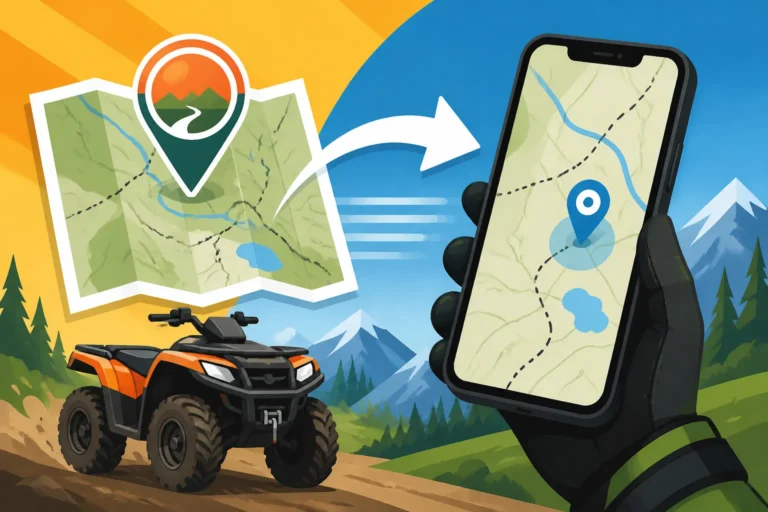
An offline map can make it easier to keep track of the planned route and meeting points when mobile service is unreliable. Some riders use onX Offroad to organize route notes and find their way back to a trailhead, but use the official pass information to determine whether a particular parking location is covered. A navigation app can support trip planning; it shouldn’t replace checking the rules for the actual site.
Use the official rule when maps or signs seem unclear
Third-party maps, older trip reports and forum posts can be useful for finding a general area, but information can become outdated or refer to a nearby parking lot rather than the one you intend to use. If a map label and a sign appear to disagree, don’t guess. Confirm the location and current requirement through the official Alberta pass information or ask the relevant visitor information contact before relying on that parking plan.
The same caution applies when a riding group shares a pin or says, “We’ve never needed one there.” They may have parked somewhere else, travelled in a different vehicle or visited under different circumstances. The safest habit is to confirm the exact vehicle and the exact parking place for your own trip.
| Trip situation | What to check before departure |
|---|---|
| Truck carrying an ATV on a trailer | Whether the truck needs a pass where it will be parked |
| Two trucks travelling together | Whether each plate needs its own coverage |
| Borrowed or recently replaced vehicle | Whether the pass is associated with the correct plate |
| Parking at multiple locations | Whether each location falls within the pass area |
| Unsure whether the ATV itself needs a pass | Check the official rule for off-highway vehicles and the truck separately |
How to buy the pass without last-minute confusion
Prepare the plate and trip details first
Before opening the purchase page, note the plate number of the vehicle you expect to take. If you’re renting or borrowing a truck, get its plate details from the owner or rental operator rather than entering the plate of your own vehicle out of habit. For a group ride, confirm who is driving each vehicle and which plates will be parked at the destination.
Next, identify where you’ll park. A route may include a staging area, a picnic stop or an overnight stay, and the pass question can depend on those locations. If you are still choosing a trailhead, browse the official area information alongside a reliable route-planning map. onX Offroad may help you keep track of an intended route or saved trail area, while Alberta’s official information remains the place to confirm pass rules and boundaries.
Finally, select the pass type that fits the trip as described on the official service. Read the displayed conditions rather than relying on a friend’s memory of what they purchased last season. Options, eligibility and terms can differ, and the checkout page is where you should confirm the details that apply to your particular vehicle.
Review the confirmation before you leave
Once the transaction is complete, check the receipt or confirmation for the plate, dates and pass details. Save a copy to your phone and, if you like, email it to yourself or the other driver. You may not need to display a pass document on the dashboard, but having the confirmation available is useful if you need to verify a purchase or contact support.
If you notice that the plate is wrong, address it before travelling. Don’t assume the system will infer the intended vehicle from your account or payment details. Follow the official instructions for correcting an order or ask the pass service what to do. This is much less stressful at home, where you have time to look up the transaction, than in a crowded staging lot when your group is ready to unload.
For a broader picture of where checks happen, see [Where a Kananaskis Pass Actually Gets Checked]. Riders planning their first visit may also find it useful to review [Alberta Kananaskis Pass Cost] and [Alberta’s Kananaskis Conservation Pass Prices] for the current options and costs shown by the official provider. Always use that provider’s page for the purchase details that apply to your trip.
Keep the pass and the ride paperwork separate
A conservation pass does not replace the documents or equipment requirements that may apply to riding an ATV or UTV. Registration, insurance, helmet rules, access permissions and local trail restrictions are separate matters. Sorting out the parking pass is one piece of your preparation, not a sign that every requirement for riding has been met.
Make a quick pre-trip checklist: the pass is linked to the correct vehicle, the parking location is within the area you checked, the machine is ready for the route, and you have the required riding documents. If you’re planning to ride public land, review [Alberta's Kananaskis Pass Exemptions] alongside the rules that apply to your specific machine and destination. A little checking before loading can prevent an avoidable interruption after you arrive.
A simple pass-planning routine for your next ride
The evening before
Confirm the address or map pin for the staging area and check whether it lies inside the pass area. Make sure the pass is associated with the plate of the vehicle that will actually be parked there. If a friend is joining in another truck, ask them to check their own vehicle rather than assuming your pass covers the whole group.
Save the official purchase confirmation and the relevant location information to your phone. If your route crosses areas with limited reception, save map information for navigation before leaving home. onX Offroad can be one tool for organizing route details, but download or save what you need in advance and follow posted closures and official land-use information.
At the staging area
Park in the designated space and follow posted instructions. Don’t assume that a pass for one vehicle transfers to another just because the drivers arrived together. If the group changes vehicles at the last minute, pause to check the pass terms instead of treating the original purchase as a group-wide permit.
If you see signage that raises a question, read it carefully and contact the appropriate information source when possible. The right answer depends on the vehicle, location and current rules—not simply on whether you’re riding an ATV or UTV that day.
Before a longer trip
For a weekend or multi-stop ride, plan the pass question along with fuel, trailer parking, riding access and overnight arrangements. A useful area map can help you avoid missing a turn or meeting point, while official information helps you verify the pass requirement. Riders comparing potential destinations can also consult [Alberta Trail Maps Worth Downloading] and check each chosen staging location directly.
The easiest purchase is the one you make after you’ve confirmed the vehicle and parking location. Start with Alberta’s official pass service, enter the plate carefully, review the confirmation and check any location-specific questions before you tow out. That small routine keeps the pass from becoming a trailhead surprise—and lets you focus on the ride you came for.
Disclaimer
This article is for general informational purposes only and does not constitute professional advice. Laws, prices and regulations vary by location and change over time. Consult a qualified professional for guidance on your specific situation.