Staying on the Trail Tread
A trail can look like a shortcut when the tread is muddy, rutted, or blocked by a puddle, but riding around it can widen the route and damage the ground beside it. This guide explains what staying on the trail tread means in Alberta, how to handle common obstacles, and how to check that the route you’re following is open and appropriate for your machine.
What staying on the trail tread means
The tread is the route, not just the easiest line
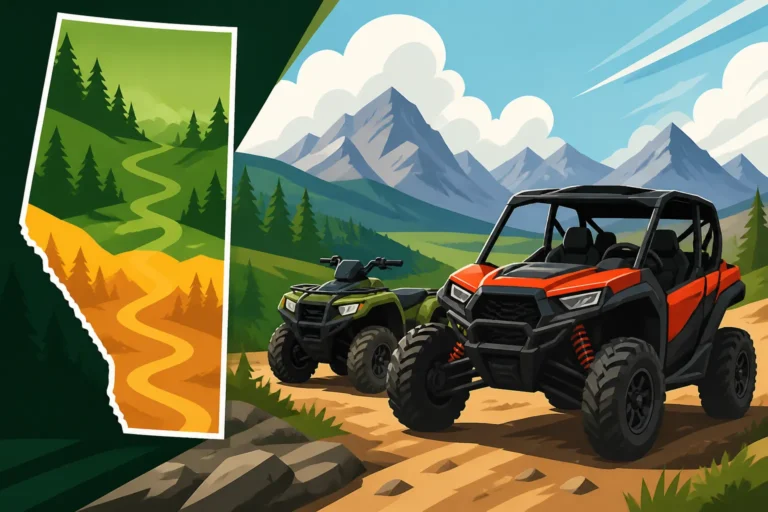
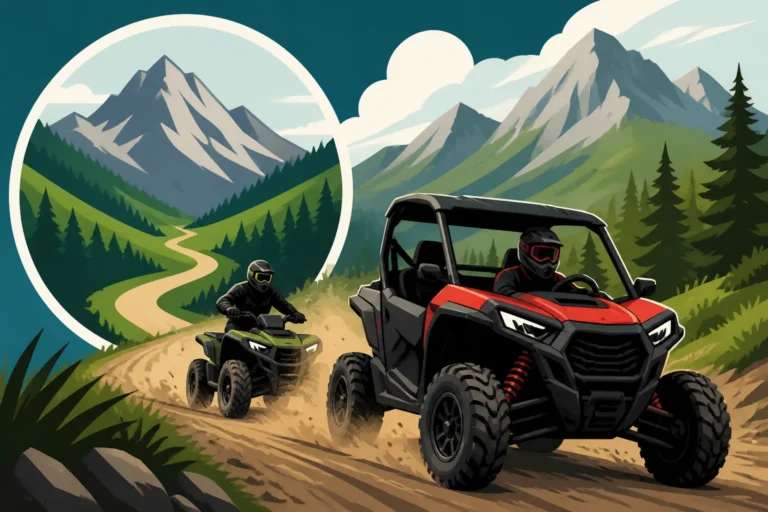
The trail tread is the established, travelled surface of a trail: the part riders are meant to use. It may be a narrow path through trees, a worn track across a hillside, or a broader route with visible edges. Staying on the tread means keeping your ATV or UTV on that established surface rather than creating a new line beside it, through nearby vegetation, or across an undisturbed slope.
That distinction matters even when the detour seems small. A single ride around a wet patch can leave tracks on the shoulder. The next rider may follow them, and soon the trail has two lines instead of one. On a hillside, a few metres of widening can cut into vegetation and leave bare soil exposed to rain and runoff.
The tread isn’t always obvious. Grass may partly cover a lightly used trail, or several worn lines may appear where riders have passed around an obstacle over time. If you’re unsure, slow down and look for signs, map information, and the most clearly established route. Don’t treat every visible tire mark as proof that a path is open or appropriate to ride.
Why a trail has a defined route
A designated trail concentrates vehicle use in places selected or managed for that purpose. Keeping riders on the intended tread helps reduce the spread of disturbance and makes routes easier to maintain. It also helps protect sensitive ground, including steep slopes, wet areas, stream edges, and alpine or subalpine vegetation that may take a long time to recover.
A trail’s shape often reflects the land. A gradual bend may avoid a steep grade; a raised section may keep tires away from a wet hollow; and a switchback may make a climb manageable without cutting straight up the hill. Leaving the route to avoid a difficult spot can defeat that design and create a steeper, less stable line.
For broader context on Alberta’s trail networks and the land-use areas they cross, see [Alberta OHV Trails: Riding Public Land] and [Alberta's Public Land Use Zones Explained]. Those topics are especially useful when planning a ride in places such as the Ghost Public Land Use Zone, McLean Creek, or the Eastern Slopes, where rules, route designations, and conditions can vary by area.
Why riding off the tread causes problems
Soil, vegetation, and erosion
Tires compress soil and can break through its protective surface. On dry, firm ground, the impact may not be easy to see at first. On wet ground, tires can dig into the tread, push soil into ridges, and leave ruts that channel water. Once water begins following a rut downhill, it can carry soil away and deepen the damage.
Vegetation beside a trail matters too. Plants help hold soil in place, and low-growing ground cover may take a long time to return after being crushed or torn up. A detour around a puddle can therefore do more than leave a temporary mark: it may turn a narrow wet spot into a wider disturbed area that persists after the trail dries.
This is one reason to avoid turning a muddy patch into a personal route choice. If the established tread is wet, ride through only when conditions and the route make it reasonable to do so. If it looks deep enough to bog your machine, damage the trail, or put you at risk, the better decision may be to turn around or choose another confirmed route—not to create a bypass.
Wildlife, water, and other trail users
A track that leaves the tread can enter places riders may not notice from the seat: a small drainage, a stream edge, an animal travel area, or a patch of sensitive vegetation. Even when you don’t see wildlife, keeping to the established trail helps avoid spreading disturbance into nearby habitat. Around water, extra tire tracks can also increase the chance of sediment being carried into a creek or wetland.
Off-trail detours can make the experience worse for other people using the area. A widened trail can create confusing route choices, while fresh tracks may give later riders the impression that a new line is acceptable. Hikers, horseback riders, hunters, and other recreationists may also be using the same landscape, so predictable riding on the intended route helps everyone understand where vehicles are travelling.
The effects are not limited to the individual ride. Trail maintenance groups and land managers may have to address erosion, drainage problems, or unauthorized routes after repeated use. Staying on the tread is a simple way to reduce the chance that an enjoyable ride leaves a repair job behind.
How to ride the tread responsibly
Approach obstacles slowly and deliberately
Before entering a muddy, rocky, or rutted section, reduce speed and assess the route. Look for the established line, check whether water is moving across or along it, and consider whether your machine can pass without spinning tires or becoming stuck. In a group, leave enough space to avoid riding into the dust or splash from the vehicle ahead, and don’t crowd a rider who is working through a difficult section.
Use smooth, measured throttle rather than sudden acceleration. Spinning tires can dig into soft ground, making the obstacle worse for the next person. If a line requires forceful wheelspin or a risky manoeuvre, it may be a sign that the conditions are unsuitable for your machine or skill level. Turn around where you can do so safely instead of widening the trail to find an easier route.
A practical decision table can help when the tread gets challenging:
| Trail condition | More responsible choice | Avoid |
|---|---|---|
| Shallow puddle on a firm, established tread | Slow down and use the established route if it is safe for your machine | Riding around the edge and creating a second line |
| Deep mud or a boggy section | Assess carefully; turn back if passage risks damage or getting stuck | Repeated attempts with spinning tires |
| Fallen tree or other blockage | Stop and check for an official detour or safe turnaround | Making a new route through vegetation |
| Loose, steep hillside | Use the established line only if it is within your ability and conditions allow | Cutting straight up or down the slope |
| Unclear track or junction | Pause and check maps, signs, and route information | Assuming fresh tracks mean the route is open |
Manage groups and passing without widening the route
Group riding can make tread damage more likely when everyone follows too closely or tries to pass in a narrow section. Keep a sensible gap, wait for a suitable place to pull over, and make sure the whole group understands where to stop. A line of machines should not fan out across the shoulder just to give someone room to pass.
If a vehicle ahead is stuck, avoid immediately driving around it. First consider whether there is a safe way to help from the established tread, and whether continuing would cause further damage or create a hazard. A winch or recovery strap can be useful when used appropriately, but recovery choices should not pull a machine into trees, wetlands, or an unauthorized side route.
When meeting other users, slow down and communicate clearly. Give people and animals room, and avoid pulling off the tread onto fragile ground just because a wide shoulder is not available. If you need to stop, use a durable, established spot where possible, keep the group together, and move on without leaving litter or new tire marks.
Plan around maps, closures, and changing conditions
Confirm that the route is designated and open
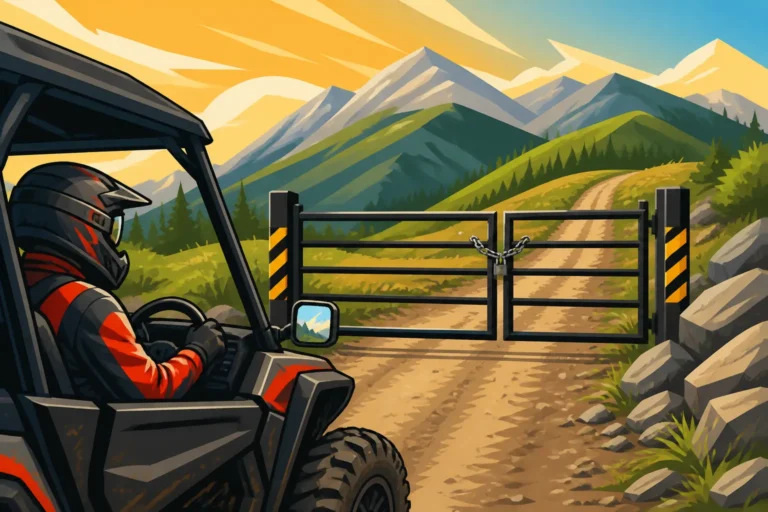
A visible trail is not necessarily an authorized route. Old tracks, cutlines, and informal shortcuts can appear on the ground even when they are not meant for vehicle use. Before leaving home, check the land-use information for your destination and confirm which routes are open to your type of machine. Look for current signs or closure notices when you arrive, too.
This is particularly important in large riding areas where conditions and access can change. A route shown on a general-purpose map may not reflect a temporary closure, seasonal restriction, or local designation. Use official area information as the basis for your decision, and treat a mapping app as a planning aid rather than permission to ride anywhere it displays a line.
For route-planning basics, [Alberta Trail Maps Worth Downloading] and [Checking a Zone Before You Go] are useful companion topics. In the Ghost, for example, a route can pass through terrain where designated trails and seasonal restrictions matter. At McLean Creek, the established trail network is also the route to follow rather than a prompt to explore adjacent ground.
Download maps and prepare for weak service
Cell reception can disappear in foothills and backcountry riding areas. Download the map information you need before you leave service, and make sure you know how to read it offline. onX Offroad can help riders review routes and keep map information available on a phone, but it should be cross-checked with official land-use maps, signage, and closure notices. A displayed track alone does not establish that a route is currently open.
Carry a backup plan for navigation. That may mean a second charged phone, a power bank, or another map source suitable for the ride. Let someone know where you plan to go and when you expect to return, especially if you’re riding in a remote area. Keep your device secured and protected from water, dust, and vibration.
Plan for the route you actually intend to ride, not the longest line you can find on a map. Note likely turnarounds, staging areas, and points where your group can stop without blocking the trail. If a closure or poor condition changes your plan, be ready to choose a different confirmed route or head back rather than improvising a shortcut.
Handle common trail situations without creating a new route
Mud, puddles, and spring thaw
Wet conditions make the tread especially vulnerable. A puddle may cover a firm surface, or it may conceal soft ground that will swallow a tire. If you can’t tell what is underneath, don’t assume that the edge is safer. The shoulder may be softer than the trail and more damaging to cross.
Spring thaw can be a particularly frustrating time to ride: a route may look open and passable at the staging area, then become wet and rutted farther in. If tires begin to sink or spin, stop before repeated attempts deepen the damage. Turning back can feel disappointing when you’ve driven a long way to ride, but it is usually a better choice than turning one wet section into a lasting scar.
Check local conditions before setting out and be prepared to change plans after rain or rapid snowmelt. [Alberta Riding in Spring Melt] and [Alberta Riding After Heavy Rain] cover conditions that can make a familiar trail much more fragile. If the ground is saturated, choose a more suitable route or save the ride for another day.
Blocked trails and unclear detours
A fallen tree, washout, or other blockage can leave riders wondering whether to squeeze past. First stop and check for signs, a marked detour, or information from the relevant land manager or trail group. If a detour is clearly designated, follow it as marked. Don’t assume that a rough track around the obstacle is an approved bypass simply because other tires have used it.
If there is no clear detour and the blockage cannot be passed safely on the tread, turn around where it is safe to do so. Avoid pushing through brush, crossing a drainage to get around the obstruction, or cutting a new line up a slope. Those choices can create fresh damage and may take you into an area that is not open to vehicles.
You can also report a significant obstruction through an appropriate local trail or land-management contact, if one is available. A clear description of the location and the problem is more helpful than moving the obstacle yourself, especially if it is large, hazardous, or near a watercourse. Keep your group stopped in a safe spot while you decide what to do.
Build good tread habits into every ride
Make the group agreement before unloading
A quick conversation at the staging area can prevent awkward decisions later. Agree that everyone will stay on the established tread, respect closures, avoid shortcuts, and turn back if the route becomes unsafe or too soft. This matters in mixed-skill groups, where a confident rider may be comfortable with terrain that is beyond another rider’s experience.
It also helps to decide how the group will handle stops and turnarounds. Pick a lead rider and a sweep, agree on a pace that keeps the group together, and identify a signal for stopping. When riders know the plan, they are less likely to scatter at a junction or follow the wrong line because they are trying to catch up.
Choose routes that fit the least experienced rider and the machines in the group. A wide, capable UTV and a smaller ATV may handle the same obstacle differently. If the tread becomes unsuitable for one vehicle, don’t pressure that rider into attempting it or encourage the group to create a bypass. A shorter ride that everyone can complete responsibly is better than a longer outing that leaves people stranded or the trail damaged.
Leave the trail ready for the next rider
Before moving on, look back at the area where you stopped or worked through an obstacle. Did anyone pull off into vegetation? Did a tire spin and create a deeper rut? If there’s an easy, safe way to tidy up a minor impact without leaving the tread or damaging the area further, do so. Otherwise, note the location and report significant damage through an appropriate channel.
Carry out everything you brought in, including food wrappers, broken straps, and small pieces of equipment. Avoid riding over vegetation for a better photo or parking in a sensitive spot for a break. Small choices add up when many riders use the same area over a season.
Respecting the tread is not about making every ride slow or overly cautious. It’s about reading the ground, understanding when conditions have changed, and resisting the tempting shortcut that turns one rider’s convenience into a wider trail problem. For more on low-impact trail habits, see [Staying on the Trail Tread] and [Alberta Trail Etiquette Locals Expect].
Disclaimer
This article is for general informational purposes only and does not constitute professional advice. Laws, prices and regulations vary by location and change over time. Consult a qualified professional for guidance on your specific situation.