What the Traffic Safety Act Requires of Alberta OHVs
It’s a common misconception among off-highway vehicle (OHV) enthusiasts that the rules of the road stop applying the moment you leave the pavement. Many riders in Alberta mistakenly believe that once they hit a trail, a ditch, or even a backcountry path, they're free from the regulations that govern vehicles on highways. This couldn't be further from the truth, and misunderstanding these nuances can lead to hefty fines, vehicle seizure, and even serious accidents. This guide is here to untangle the complexities of what Alberta's Traffic Safety Act (TSA) truly requires of OHV operators, ensuring you can ride legally and safely.
Understanding the Traffic Safety Act's Reach for OHVs
When we talk about the Traffic Safety Act in Alberta, most people immediately think of cars, trucks, and paved roads. However, this foundational piece of legislation has a surprisingly broad reach, extending its authority to how off-highway vehicles are operated, equipped, and registered, even when they're far from urban centres. It's not just about what happens on the Trans-Canada Highway; it's also about what happens on that gravel road leading to your favourite staging area, the ditch alongside it, and even certain types of public land. Ignorance of this fact is one of the biggest pitfalls for OHV riders.
Defining "Highway" for OHVs: It's Broader Than You Think
One of the most crucial elements to grasp in the Traffic Safety Act is its definition of "highway." For OHV riders, this term is far more expansive than just a paved road. In Alberta law, a "highway" includes "any thoroughfare, street, road, trail, avenue, parkway, driveway, viaduct, lane, alley, square, bridge, causeway, trestleway or any other place or way, whether publicly or privately owned, that the public is ordinarily entitled or permitted to use for the passage or parking of vehicles."
This broad definition means that many places you might consider "off-road" actually fall under the purview of the Act. A gravel road that leads to a campground, the ditch beside a municipal road, an alley in a rural hamlet, or even some dedicated OHV trails that are considered "publicly owned" or where the "public is ordinarily entitled…to use" them, can be legally classified as a highway. This is why you often hear about riders getting tickets for things like not wearing a helmet or not having their machine registered while riding in what they thought was a "back-forty" situation. It's not just about crossing a paved road; it's about the very ground you're riding on. Understanding this expanded definition is the first step to staying on the right side of the law.
How the Act Regulates OHVs Beyond Paved Roads
The Traffic Safety Act, coupled with the Off-Highway Vehicle Regulation (319/2002), sets the baseline for OHV operation across the province. While specific rules for designated OHV zones or Crown land might be outlined in other regulations or land use plans, the TSA provides the fundamental legal framework. This means that even if you're on a forestry road deep in the mountains or exploring a cutline, many of the core requirements around equipment, registration, and operator conduct still apply.
For example, the Act mandates certain safety equipment, like helmets, when riding on any "highway" – which, as discussed, is a very broad term. It also dictates that your machine must be registered and plated if you're operating it on public land or a highway. These aren't just suggestions; they are legal requirements enforceable by peace officers, RCMP, and provincial park rangers. This consistent application ensures a baseline of safety and accountability, no matter where your adventures take you. The Act provides the legislative "bones" that specialized OHV regulations then flesh out with more specific details.
The Intersection with the Off-Highway Vehicle Regulation (319/2002)
While the Traffic Safety Act provides the overarching legal umbrella, much of the specific detail concerning OHVs is found in the Off-Highway Vehicle Regulation 319/2002. Think of the TSA as the big boss setting the general rules for all vehicles, and the OHV Regulation as the specialized manager writing the specific guidelines for quads, side-by-sides, dirt bikes, and snowmobiles. This regulation covers everything from equipment standards to age restrictions for operators.
For instance, while the TSA might broadly state that vehicles need proper lighting, the OHV Regulation will detail the types of lights required for an OHV. It will also specify things like mandatory spark arrestors, the illegality of modified exhausts, and the minimum age requirements for operating an OHV on public land. These two pieces of legislation work hand-in-hand. An officer issuing a ticket will often refer to specific sections of the OHV Regulation, which itself is empowered by the broader Traffic Safety Act. It's essential for any serious rider to be familiar with both, as they collectively dictate the legal parameters of off-highway vehicle use in Alberta.
Mandatory Registration and Plates for Alberta OHVs
One of the most fundamental requirements for any OHV operator in Alberta, rooted firmly in the Traffic Safety Act and its accompanying regulations, is the need for proper registration and display of a license plate. This isn't just a bureaucratic hurdle; it's a critical component of accountability and identification, especially when issues like accidents or property damage arise. Many riders lament the process, but it's a non-negotiable part of riding on public lands.
The Core Requirement: Why You Need to Register
If you plan to ride your ATV, side-by-side, dirt bike, or snowmobile on any public land in Alberta, including those areas defined as a "highway," your machine must be registered with Alberta’s motor vehicle registry. This includes Crown land, forestry roads, designated OHV trails, and even the ditches alongside municipal roads. The only significant exception to this rule is when an OHV is operated exclusively on private property with the landowner's permission, such as a farm quad that never leaves the fields.
The purpose of registration is straightforward: it provides a legal identity for your machine and links it to an owner. This helps in cases of theft, accident investigation, and ensures that operators can be held accountable for their actions. Without registration, your machine is essentially invisible to the authorities, making it impossible to trace if something goes wrong. Failing to register your OHV before riding on public land can result in significant fines and, as we'll discuss later, potential seizure of your vehicle. Don't risk it; getting your machine registered is a relatively simple process at any [Alberta Registry Agents and OHV Paperwork] location.
Displaying Your Plate Correctly
Once your OHV is registered, you'll be issued a small, distinct license plate. Unlike cars, [Alberta Issues a Plate, Not a Sticker] for OHVs, and it’s crucial that this plate is properly affixed and visible on your machine. The Traffic Safety Act and the OHV Regulation are quite specific about this. Your plate must be mounted in a position that is clearly visible from the rear of the machine, free from dirt, ice, or any obstruction that might obscure it.
For quads and side-by-sides, this usually means mounting it securely to the rear rack or a designated plate bracket. For dirt bikes, it might be on the rear fender. The key is that it must be readable. An officer needs to be able to clearly identify your machine by its plate number. If your plate is dangling precariously, covered in mud, or hidden under a bag, you could still face a ticket for improper display, even if your machine is technically registered. Taking the time to ensure proper [Alberta Plate Placement on a Machine] can save you a lot of hassle.
Proof of Registration on Demand
It’s not enough to just have your OHV registered and the plate displayed; you also need to be able to prove it. The Traffic Safety Act empowers peace officers to request proof of registration (and insurance, which we'll cover later) at any time while you are operating your OHV on a highway or public land. This means carrying a copy of your registration certificate with you while you ride.
While most people carry a physical copy, the law generally recognizes digital proof on your phone, though a printed copy is always recommended in case of dead batteries or no signal. The point is, you must be able to produce this document when requested. An officer isn't going to just take your word for it. Imagine getting pulled over after a long day of riding, tired and muddy, only to realize your registration certificate is sitting on your kitchen counter. That's a quick way to turn a pleasant outing into a frustrating and expensive one. Always make a habit of checking your essential paperwork before you head out.
Essential Equipment Requirements Under the Act
Beyond registration, the Traffic Safety Act and its accompanying Off-Highway Vehicle Regulation stipulate several key equipment requirements designed to ensure safety and minimize environmental impact. These aren't just recommendations from trail associations; they are legal mandates that all OHV operators on public land must adhere to. Ignoring these rules isn't just about being a "bad rider"; it's about breaking the law.
Lighting Up the Trail: Headlights and Taillights
Whether you're riding at dusk, dawn, or under overcast skies, proper lighting on your OHV is non-negotiable when operating on public land or a highway. The Traffic Safety Act requires that OHVs be equipped with both a working headlight and a working taillight. These lights must be visible from a specified distance, ensuring that other riders, pedestrians, or even wildlife can see you coming and going.
This isn't just for riding at night. Even during the day, visibility can be poor due to weather conditions, dust, or dense forest cover. Having your lights on helps to make your presence known. It's a simple safety measure that prevents collisions and ensures you comply with the law. Before every ride, it’s a good habit to quickly check that your [Alberta Requires Working Head and Tail Lights] are fully functional. A burned-out bulb might seem minor, but it's a ticketable offense under the Act.
Controlling Noise and Sparks: Mufflers and Spark Arrestors
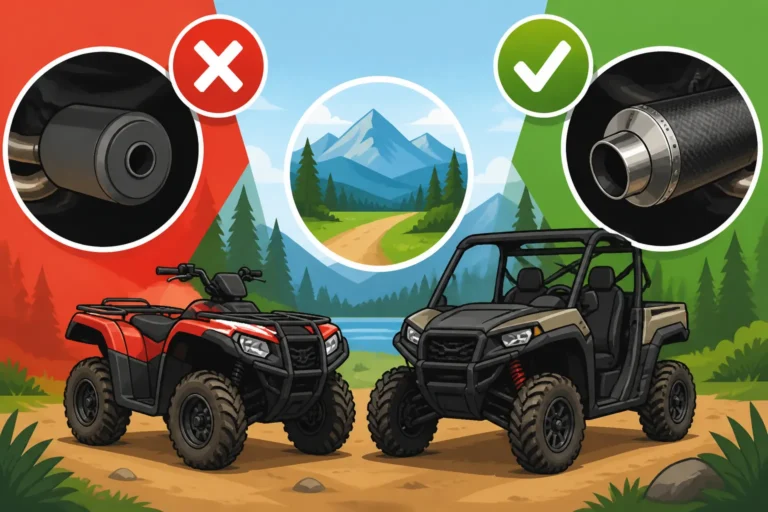
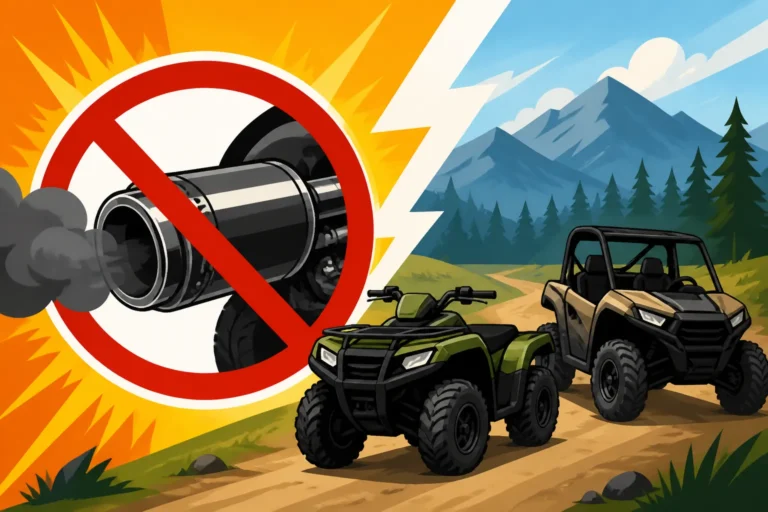
The environmental and noise impact of OHVs is a significant concern, and the Traffic Safety Act addresses this directly through regulations concerning mufflers and spark arrestors. All OHVs operating on public land or a highway must be equipped with an adequate muffler that is in good working order and prevents excessive or unusual noise. This means no straight pipes, no removed baffles, and no aftermarket exhausts that exceed acceptable noise limits. [Alberta Bans Modified Exhausts] for a reason – they disturb wildlife, other users, and nearby residents, and they will get you a ticket.
Equally important is the spark arrestor. This is a device fitted to the exhaust system that prevents glowing carbon particles from exiting the muffler and potentially starting a wildfire. Given Alberta's susceptibility to wildfires, this is a critical safety component. Every OHV operating on public land or a highway must have a functioning spark arrestor. [Alberta Requires a Spark Arrestor], and it must be maintained properly. Officers routinely check for both proper mufflers and functioning spark arrestors, especially in drier seasons. These checks are not just about compliance; they are about protecting Alberta's natural environment and preventing devastating fires.
The Non-Negotiable Helmet Law
Perhaps one of the most widely known, yet sometimes ignored, equipment requirements for OHVs under the Traffic Safety Act is the helmet law. Since May 15, 2017, it has been mandatory for all OHV operators and passengers to wear an approved helmet when riding on public land or any area defined as a highway. There are very few specific exemptions, such as for those operating a machine with factory-installed rollover protection and seatbelts (like some side-by-sides), or for certain religious or occupational situations.
This isn't a suggestion for your own good; it's a legal requirement designed to save lives and prevent serious head injuries. An approved helmet typically means one that meets a recognized safety standard such as CSA, DOT, or ECE. Wearing a bicycle helmet or a non-certified hard hat won't cut it. The fines for not wearing an approved helmet are significant. For anyone who thinks they're "just going for a quick spin" or "not going fast," remember that accidents can happen at any speed, and a helmet is your best protection. Understanding [Alberta Helmet Law on Public Land] is vital for every rider.
Operator and Passenger Rules
The Traffic Safety Act doesn't just regulate the machine itself; it also sets crucial rules for who can operate an OHV and who can ride as a passenger. These regulations are primarily aimed at ensuring the safety of riders, especially youth, and preventing situations where machines are operated beyond their intended design limits.
Age Restrictions and Supervision for Young Riders
Alberta has clear age restrictions for operating OHVs on public land or a highway, as outlined in the Traffic Safety Act and the Off-Highway Vehicle Regulation. Generally, a person must be 14 years of age or older to operate an OHV on public land without direct adult supervision. Riders under the age of 14 are permitted to operate an OHV on public land only if they are under the direct supervision of an adult who is at least 18 years old. This adult must also be operating an OHV and riding in a position to effectively supervise the younger rider.
There are no minimum age restrictions for riding on private land with the owner's permission. However, even on private land, it is strongly recommended that parents adhere to manufacturer's age guidelines for specific machines and always supervise young riders closely. The goal of these laws is to prevent inexperienced and potentially impulsive young riders from putting themselves or others at risk. It’s important for parents and guardians to be aware of [Alberta's Minimum Age of 14 on Public Land] and the associated supervision requirements.
Passenger Limits: Riding Safely and Legally
Many OHVs, particularly ATVs, are designed for a single rider. Carrying passengers on a single-rider ATV is not only dangerous but often illegal under the Traffic Safety Act when operating on public land or a highway. The law stipulates that an OHV may only carry as many passengers as it was designed and equipped to carry by the manufacturer. This usually means if your ATV only has one seat, it's a one-person machine.
Side-by-sides (UTVs) are typically designed to carry multiple passengers, with factory-installed seats and seatbelts. These machines are generally permissible for carrying passengers up to their designated capacity. Overloading an OHV or carrying passengers in an unsafe manner (e.g., on the fenders of an ATV) is a serious violation. It compromises the machine's stability, handling, and braking, significantly increasing the risk of an accident. Always respect the manufacturer's design and the law when it comes to [Alberta Passenger Rules on an OHV]. Safety should always be the priority, and crowding a machine puts everyone at risk.
Who Needs a Driver's Licence for an OHV?
Here's a common point of confusion: do you need a driver's licence to operate an OHV in Alberta? The simple answer is no, not in the same way you need one for a car. The Traffic Safety Act does not require an operator to hold a valid driver's licence to operate an OHV on public land or designated trails. This is a significant difference compared to operating a registered vehicle on a paved public road.
However, there's a crucial caveat: if you are operating an OHV on a public road or in a ditch or alley that falls under the broad definition of a "highway," and that public road has been opened to OHV use by a municipal bylaw or ministerial order, then you may be required to hold a valid driver's licence, depending on the specifics of that bylaw. Furthermore, while a licence isn't generally required for off-road use, you must still be of legal age to operate the machine unsupervised, as per the age restrictions mentioned earlier. And regardless of a licence, if you are caught operating an OHV while impaired by alcohol or drugs, you will face severe penalties under the Criminal Code, just as if you were driving a car.
Where You Can and Cannot Ride Legally
One of the most frequent sources of trouble for OHV riders in Alberta stems from misunderstanding where they are legally allowed to ride. The Traffic Safety Act and local bylaws play a huge role in defining these boundaries, and venturing into unauthorized areas can lead to tickets, vehicle seizure, and even charges of trespassing.
Navigating Ditches, Alleys, and Unpaved Roads
As established earlier, the Traffic Safety Act's definition of a "highway" is very broad, encompassing not just paved roads but also ditches, alleys, and many unpaved roads. This means that merely because an area isn't paved doesn't automatically make it open season for OHVs. In Alberta, riding an OHV in a highway ditch is generally prohibited unless a specific municipal bylaw has opened that ditch to OHV use. And here’s the kicker: these bylaws are not universal. What’s allowed in one county might be strictly forbidden just across the border in the next.
This creates a patchwork of rules that can be incredibly frustrating for riders trying to navigate from one trail system to another or simply get to their cabin. It's a common misconception that ditches are fair game. In reality, [Alberta Ditch Riding Is Not Automatic], and if you're caught in a prohibited ditch, you'll be ticketed. The same goes for alleys and unpaved county roads. Always check local municipal bylaws before you ride. A quick call to the county office or a look at their website can save you a lot of grief.
Riding on Private Land and Lease Roads
Operating your OHV exclusively on private property with the landowner's permission is generally outside the direct registration requirements of the Traffic Safety Act. However, this doesn't mean no rules apply. The moment you leave that private property and enter a ditch, road allowance, or any other public land, the requirements of the Act for registration, equipment, and operator conduct immediately kick in.
For lease roads, which are common across Alberta's vast oil and gas sectors, the rules can be a bit more complex. Many lease roads are technically privately owned or managed, but public access may be granted or implied. However, these roads are not necessarily "open" to OHV recreation. Often, access is restricted to authorized personnel or for specific purposes. Always seek explicit permission from the leaseholder or company before riding on these roads. Trespassing laws still apply, and a landowner has the right to refuse access or press charges. If you're involved in a private sale, documentation like a bill of sale can be important proof of ownership, and services like LawDepot can help ensure you have clear and legally sound documents for such transactions.
The Role of Municipal Bylaws and Designated Zones
While the Traffic Safety Act sets the provincial baseline, municipal bylaws and designated Public Land Use Zones (PLUZs) are crucial in determining the specific "where" of OHV riding. Local municipalities (counties, MDs, towns, and villages) have the authority to create bylaws that either open or close certain roads, ditches, or undeveloped areas within their jurisdiction to OHV use. This is why you'll see such variation in rules from one region to the next. Some counties have embraced OHV use and opened specific routes, while others maintain strict prohibitions.
Beyond municipal bylaws, Alberta's Crown land is managed through Public Land Use Zones (PLUZs), which often have their own specific rules for OHV access. Some PLUZs have designated trail systems, while others prohibit OHV use entirely or limit it to specific types of machines or seasons. Riding in a prohibited PLUZ or off-trail in a designated zone can result in fines under provincial land laws, in addition to any Traffic Safety Act violations. Always research the specific rules for any area you plan to ride, whether it's by checking municipal websites or consulting maps and regulations for [Alberta Registration Before Riding Crown Land] or specific PLUZs like McLean Creek or Ghost PLUZ.
Penalties and Enforcement: What Happens When You Don't Comply
Ignoring the requirements of the Traffic Safety Act and the Off-Highway Vehicle Regulation for OHVs isn't just a slap on the wrist. Enforcement officers in Alberta, including RCMP, local police, and provincial park rangers, are empowered to issue significant penalties that can quickly turn a fun day of riding into a very expensive headache.
Fines and Tickets for Violations
The most common consequence for non-compliance with the Traffic Safety Act's OHV requirements is a ticket and an associated fine. These fines can range significantly depending on the nature and severity of the offense. For instance, being caught riding an unregistered OHV on public land will result in a fine. Similarly, not wearing an approved helmet, having a modified exhaust, or operating an OHV without a spark arrestor all carry specific fines.
These aren't minor penalties; they are designed to deter non-compliance and ensure rider safety and environmental protection. Multiple violations can quickly add up, turning a single outing into hundreds or even thousands of dollars in fines. Furthermore, these tickets can sometimes impact your insurance rates or even lead to demerit points if the violation occurs on a provincially regulated highway where a driver's licence is required for that specific OHV use. Familiarize yourself with common tickets and [Alberta Penalties for Riding Unregistered] to avoid these costly mistakes.
Vehicle Seizure: A Serious Consequence
For more serious violations, or for repeat offenses, officers have the authority under the Traffic Safety Act to seize your off-highway vehicle. This is a far more severe consequence than a fine, as it means your machine will be impounded, and you will be responsible for all towing and storage fees, which can quickly accumulate. Common reasons for vehicle seizure include operating an OHV without valid insurance on public land (which is a mandatory requirement under the Act, just like for cars), or operating a machine while impaired.
If your vehicle is seized, retrieving it can be a lengthy and expensive process. You'll not only have to pay the initial fines but also all associated impoundment costs. In some cases, if you fail to pay these fees, your vehicle could eventually be sold to cover the costs. This serves as a stark reminder that the rules of the road (and the trail) are taken very seriously, especially concerning insurance and impairment. Don't let your machine be subjected to [Alberta Vehicle Seizure for No Insurance].
Why Officers Are Checking More Than Just Registration
It's a common misconception that officers are only looking for registration and insurance. While these are certainly high-priority checks, enforcement goes much deeper. Officers are trained to look for a range of compliance issues under the Traffic Safety Act and the Off-Highway Vehicle Regulation. This includes:
- Helmet compliance: Is it approved? Is it worn correctly?
- Equipment integrity: Are headlights and taillights working? Is the muffler stock and quiet? Does it have a spark arrestor?
- Operator conduct: Are you riding safely? Are you impaired? Are you adhering to age and supervision rules for youth?
- Passenger limits: Is the machine overloaded or carrying passengers unsafely?
- Location of operation: Are you riding in an area where OHVs are prohibited?
Officers will often conduct checks at popular staging areas, trailheads, or during patrols of Crown land and municipal rights-of-way. They are not just out to ruin your fun; they are ensuring public safety, environmental protection, and compliance with the laws designed to keep everyone safe. Being prepared means not just having your registration and insurance, but also ensuring your machine and your riding habits comply with all aspects of the Act. For private sales or to properly document ownership, consider using resources like LawDepot to draft your bill of sale and ensure all details are legally sound, giving you one less thing to worry about if an officer queries ownership.
Key OHV Requirements Under Alberta's Traffic Safety Act
Here’s a quick overview of some essential requirements for OHV operators on public land or a highway in Alberta:
| Requirement | Description | Common Enforcement Focus |
|---|---|---|
| Registration | All OHVs on public land/highway must be registered with Alberta Motor Vehicles. | [Alberta ATV Registration Renewal Online], [Alberta Penalties for Riding Unregistered] |
| License Plate | Must be clearly displayed from the rear, clean, and unobscured. | [Alberta Plate Placement on a Machine], [Alberta Issues a Plate, Not a Sticker] |
| Insurance | Mandatory liability insurance when operating on public land/highway. | [Alberta Proof of Insurance on Demand], [Alberta Vehicle Seizure for No Insurance] |
| Helmet | Approved helmet (CSA, DOT, ECE) required for all operators and passengers. | [Alberta Helmet Law on Public Land] |
| Head/Tail Lights | Must be working and visible from specified distances. | [Alberta Requires Working Head and Tail Lights] |
| Spark Arrestor | Mandatory for all OHVs to prevent wildfires. | [Alberta Requires a Spark Arrestor] |
| Muffler | Must be in good working order, prevent excessive noise; modified exhausts are prohibited. | [Alberta Bans Modified Exhausts] |
| Age Restrictions | 14+ unsupervised; under 14 requires direct adult supervision (18+). | [Alberta's Minimum Age of 14 on Public Land] |
| Passenger Limits | Only carry passengers if the machine is designed by manufacturer for more than one (e.g., side-by-sides). | [Alberta Passenger Rules on an OHV] |
| Riding Areas | Restricted to private land (with permission), designated trails, or areas opened by municipal bylaw. | [Alberta Ditch Riding Is Not Automatic], [Alberta Registration Before Riding Crown Land] |
This table provides a quick glance, but remember to delve deeper into each specific regulation to ensure full compliance. For instance, if you're buying or selling a used OHV, ensuring you have a proper bill of sale is crucial for future registration, and tools like LawDepot can assist in generating these legal documents easily.
Disclaimer
This article is for general informational purposes only and does not constitute professional advice. Laws, prices and regulations vary by location and change over time. Consult a qualified professional for guidance on your specific situation.