Alberta Requires a Spark Arrestor
When you're out enjoying Alberta's incredible backcountry on your ATV or side-by-side, the last thing you want is a preventable issue turning your adventure into a headache, or worse, a disaster. One crucial piece of equipment that often gets overlooked, but is absolutely vital for safe and legal riding, is the spark arrestor. This guide will help you understand exactly what a spark arrestor is, why Alberta mandates it, and how to ensure your machine is compliant, protecting both your ride and our precious natural environment.
What Exactly is a Spark Arrestor and Why Does Alberta Care So Much?
It might sound like a highly technical term, but at its heart, a spark arrestor is quite simple in its function. It's a critical component of your OHV's exhaust system, designed with one very important job: to prevent hot, incandescent particles from escaping the muffler and potentially igniting dry vegetation. Given Alberta's vast wildlands and the ever-present risk of wildfires, this seemingly small device plays an enormous role in environmental protection and public safety.
The Core Function of a Spark Arrestor
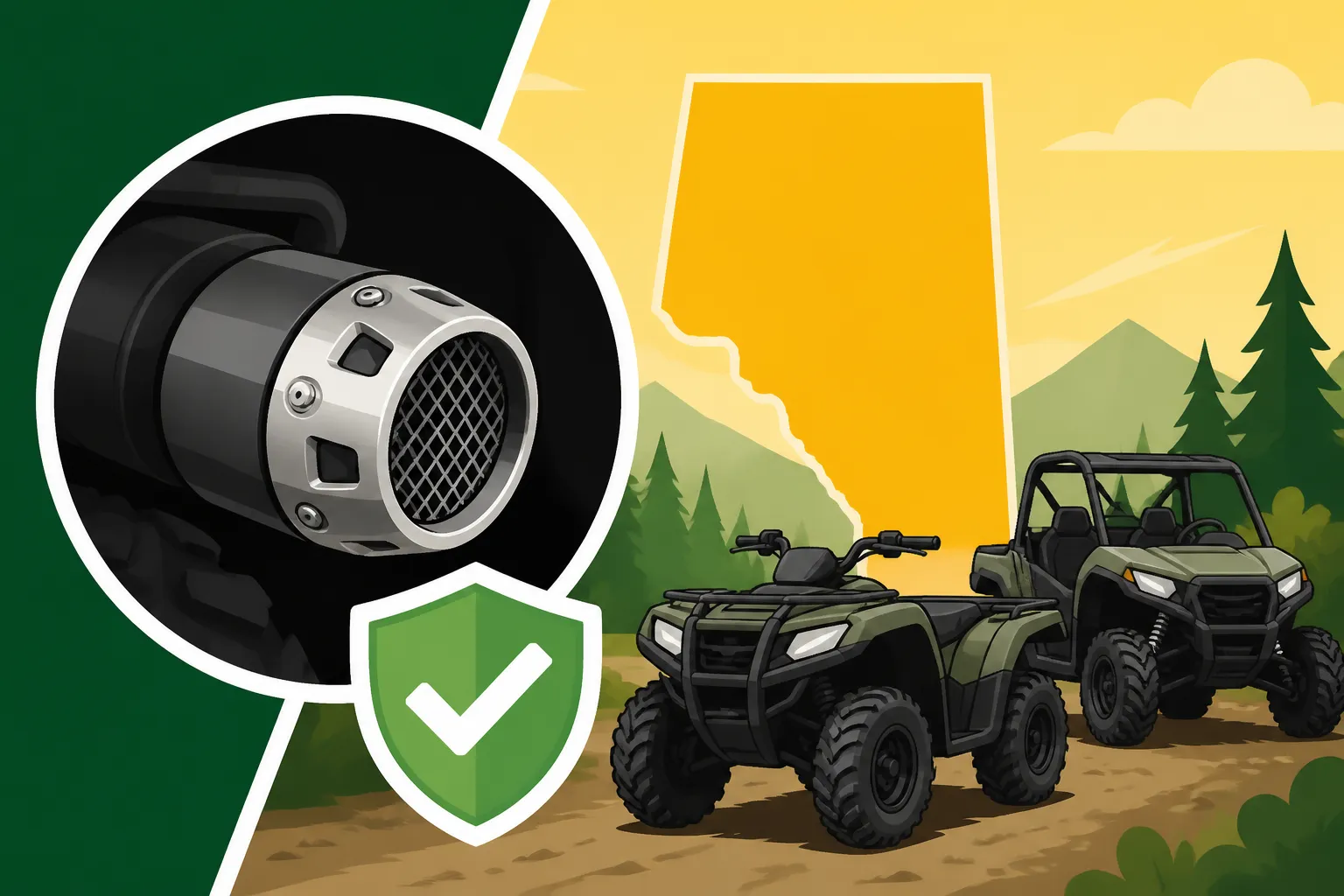
Think of a spark arrestor as a specialized filter. Inside your muffler, it typically consists of a fine mesh screen or a series of baffles that create a tortuous path for exhaust gases. As these gases pass through, any superheated carbon particles – the "sparks" – are cooled and trapped. Without this device, these tiny embers, expelled at high velocity and temperature, could easily land on dry grass, leaves, or pine needles, especially during hot, dry periods. You might not even see them, but they can smolder and quickly erupt into a full-blown wildfire, especially when you're riding through remote areas where help is far away.
Alberta is blessed with incredible natural beauty, from vast forests to sprawling prairies, and much of it is susceptible to fire. We've all seen the devastating impacts of wildfires in our province, and the provincial government, along with local communities, takes every precaution to prevent them. This isn't just a bureaucratic hurdle; it's a fundamental part of responsible land stewardship and a way to protect homes, livelihoods, and the very trails we love to ride. Ensuring your machine has a properly functioning spark arrestor is one of the easiest and most effective ways we can all contribute to keeping our wilderness safe for generations to come.
Historical Context: Why the Rule Exists
The requirement for spark arrestors isn't a new whim; it's born from years of experience and unfortunate incidents. Historically, a significant number of wildfires in forested and wildland areas have been attributed to human activity, and off-highway vehicles, without proper spark suppression, have regrettably played a role in some of these starts. Imagine the frustration and despair of seeing a beloved riding area closed indefinitely due to a fire that started from a single, avoidable spark.
The regulations in Alberta, and indeed across much of North America where OHV use is popular in wildland settings, are a direct response to these risks. They are a proactive measure, part of a broader framework of fire prevention strategies aimed at reducing ignition sources. It's about minimizing the chance that your recreational activity inadvertently causes widespread damage. The rule also reflects a collective understanding that enjoying public lands comes with a responsibility to protect them. Every rider has a part to play in this, and checking that spark arrestor is a simple, yet profoundly important, step in that commitment. You'll find similar requirements echoed in guidelines for [Alberta Rules for Riding Crown Land] and any [Alberta Public Land Use Zones Explained].
The Legal Lowdown: Alberta's Specific Spark Arrestor Requirements
Navigating the rules and regulations for OHVs in Alberta can sometimes feel like trying to find your way through a maze, but when it comes to spark arrestors, the guidelines are quite clear and strictly enforced. Understanding these specific requirements isn't just about avoiding a ticket; it's about being a responsible steward of our shared environment.
Where the Rule Applies: Public vs. Private Land
In Alberta, the requirement for a spark arrestor primarily applies when you are operating your off-highway vehicle on public land. This includes a vast array of areas: Crown land, forestry roads, designated OHV trails within Public Land Use Zones (PLUZ), and even highway ditches, which are legally considered part of the highway system in Alberta. Essentially, if you are not on land that you privately own or have explicit permission to ride on, your machine needs a compliant spark arrestor.
The distinction between public and private land is crucial. If you're riding exclusively on your own farm property, for instance, the provincial spark arrestor regulation typically doesn't apply. However, the moment your wheels touch public access points, even just a rural road allowance or a cutline that is open to the public, the rules kick in. It’s always best to assume you need a spark arrestor unless you are absolutely certain you are on private property with no public access. If you're riding on a grazing lease or oilfield lease, it gets a bit more complex, but generally, if the land is publicly owned, the spark arrestor rule applies. This aligns with broader [Alberta Equipment Required on Public Land] directives.
What Makes a Spark Arrestor "Legal" in Alberta
For a spark arrestor to be considered compliant in Alberta, it must meet specific criteria designed to ensure its effectiveness. The gold standard is usually a device that is USDA Forest Service approved. This approval signifies that the arrestor has been tested and certified to trap at least 80% of carbon particles larger than 0.023 inches in diameter. When you purchase a new ATV or side-by-side, it will typically come with a factory-installed, compliant spark arrestor. If you're buying an aftermarket exhaust, you must ensure it explicitly states that it includes a USDA Forest Service approved spark arrestor.
Beyond the initial approval, the spark arrestor must be properly maintained and in good working order. This means it shouldn't be damaged, heavily clogged with carbon buildup, or removed. A damaged screen with holes, for example, renders the device ineffective and therefore non-compliant. Officers conducting roadside or trailside inspections are trained to look for these details. They'll check for the physical presence of the arrestor, often looking for the USDA stamp, and visually inspect its condition. If you've modified your exhaust system, especially by removing the original muffler or installing one without a certified arrestor, you're not just risking a ticket; you're significantly increasing the fire hazard. This is why discussions around [Alberta Bans Modified Exhausts] often go hand-in-hand with spark arrestor requirements.
The Risks and Realities of Non-Compliance
It's tempting to think of regulations as just bothersome red tape, especially when you're just trying to enjoy a ride. But when it comes to spark arrestors, non-compliance carries serious repercussions that extend far beyond a simple fine. These risks impact the environment, public safety, and your wallet directly.
The Environmental and Safety Hazards
The most significant danger of not having a compliant spark arrestor is the catastrophic potential for wildfires. Alberta's landscape, particularly during dry seasons, is highly flammable. A single spark from an unarrested exhaust system can quickly ignite dry grass, leaves, or forest debris, leading to a blaze that can devastate hundreds, if not thousands, of acres. The impact of such fires is immense: destruction of forests and wildlife habitats, displacement of animal populations, and significant air quality issues from smoke.
Beyond the environmental toll, wildfires pose an immediate threat to human life and property. Communities can be evacuated, homes can be lost, and the firefighters who bravely battle these blazes are put in immense danger. For riders, getting caught in a rapidly spreading wildfire in a remote area can be a terrifying and life-threatening experience. It's not just your machine at risk; it's your life, the lives of your riding partners, and the very landscape you cherish. This is particularly relevant when you consider the impact of [Alberta Fire Bans and Riding] where the risk is already elevated.
Fines, Penalties, and Machine Seizure
Law enforcement and public lands officers in Alberta take spark arrestor compliance very seriously, particularly during periods of high fire risk. If you're caught operating an OHV on public land without a compliant spark arrestor, you can expect to face significant penalties. These typically start with a substantial fine, which can be compounded by additional court costs if the matter goes before a judge. The exact amount of the fine can vary, but it's designed to be a deterrent and reflect the gravity of the potential harm. These aren't just minor infractions; they're seen as a direct threat to public safety and natural resources.
In more severe cases, especially during heightened fire bans or if there's evidence of intentional disregard for the rules, officers have the authority to issue more stringent penalties. This could include impoundment or even seizure of your off-highway vehicle. Losing access to your machine, incurring towing and storage fees, and potentially having to navigate a legal process to get it back is a costly and incredibly frustrating ordeal. It's a clear signal from the authorities that these regulations are non-negotiable for the safety of everyone. So, while you might worry about [Alberta Ticket Costs for a Riding Violation], the bigger picture involves potential loss of your machine and much more.
Practical Advice for Riders: Ensuring Your Machine is Compliant
Taking responsibility for your machine's compliance is straightforward and doesn't require a mechanic's degree. A little vigilance and routine maintenance can save you a lot of grief and ensure you're always riding safely and legally. It’s all about knowing what to look for and how to maintain it.
Checking Your Exhaust System for Compliance
The first step is to identify whether your machine has a spark arrestor and if it's the correct type. For most factory-new ATVs and side-by-sides, the stock exhaust system will come with an integrated, USDA Forest Service approved spark arrestor. You can often find a small stamp or label on the muffler itself, explicitly stating "USDA Forest Service Approved" or similar. If you have an aftermarket exhaust, this is where you need to be particularly diligent. Many performance exhausts are designed for closed-course racing and do not include a spark arrestor, or they use a non-approved type. Always check the manufacturer's specifications for any aftermarket system you install.
Beyond simply having one, you need to ensure it's in good working order. Over time, carbon deposits from combustion can build up on the screen or baffles of the spark arrestor, gradually reducing its effectiveness and potentially restricting exhaust flow. A clogged arrestor can lead to poorer engine performance and, more importantly, could still allow larger, hotter sparks to escape. Regularly inspect your exhaust system, looking for the presence of the arrestor, any damage to the screen, or excessive carbon buildup. This proactive approach will help you avoid issues when an officer performs one of their routine [Alberta Spark Arrestor Checks].
Maintenance and Replacement Tips
Maintaining your spark arrestor is generally a simple process. Many models allow for easy removal of the screen for cleaning. Here’s a basic approach:
- Locate and Remove: Consult your owner's manual for specific instructions on how to access and remove the spark arrestor screen from your muffler. It often involves removing a few bolts or a retaining clip.
- Inspect and Clean: Once removed, visually inspect the screen for any holes, tears, or damage. If it's damaged, it needs to be replaced. If it's just clogged, use a wire brush or scraper to remove carbon buildup. You can often soak it in a carbon-dissolving cleaner to help loosen stubborn deposits.
- Reinstall: Ensure the screen is completely dry and then carefully reinstall it, making sure it's securely seated and all fasteners are tightened according to your manual's specifications.
How often you need to clean it depends on your riding habits, fuel quality, and machine type, but a good rule of thumb is to check it a couple of times a season or after particularly heavy use. If your spark arrestor is integrated into a non-removable muffler or is severely damaged, you might need to replace the entire muffler or find an approved replacement spark arrestor insert. Always ensure any replacement part is USDA Forest Service approved.
Here’s a quick overview of common spark arrestor issues and their straightforward solutions:
| Issue | Description | Solution |
|---|---|---|
| Clogged Screen | Carbon buildup from exhaust gases reduces effectiveness and engine performance. | Regular cleaning (remove, brush/scrape carbon deposits). |
| Damaged Screen | Holes, tears, or significant corrosion allow sparks to escape. | Replace the entire spark arrestor screen or assembly. |
| Missing Arrestor | Removed intentionally or accidentally, or never installed on aftermarket exhaust. | Install an approved spark arrestor; replace exhaust with compliant one if necessary. |
| Non-Approved Type | Aftermarket arrestor lacking USDA Forest Service certification. | Replace with a certified and approved spark arrestor. |
| Loose Fit | Vibrations can loosen mounting, creating gaps for sparks to escape. | Inspect and tighten all mounting hardware regularly. |
Beyond the Basics: Spark Arrestors and the Bigger Picture
A spark arrestor isn't just an isolated component; it's a vital part of a much larger ecosystem of rules, responsibilities, and practices that govern off-highway vehicle use in Alberta. Understanding its place in this broader context helps us appreciate why it's so important and encourages truly responsible riding.
The Connection to Fire Bans and Riding Restrictions
The requirement for a spark arrestor takes on even greater significance during periods of heightened fire risk. Alberta's dry summers and warm, windy springs can turn vast tracts of land into tinderboxes, making every potential spark a serious threat. When fire bans or restrictions are in place, the authorities are particularly vigilant about OHV compliance, and for good reason. A non-compliant machine during a fire ban isn't just an infraction; it's a profound risk to public safety and the environment.
In some extreme cases, during severe fire bans or when fire danger ratings are at their highest, entire Public Land Use Zones or specific areas may be closed to OHV use altogether. This isn't done lightly; it's a last resort to protect lives and property. Ensuring your spark arrestor is always in top condition is a baseline expectation, but riders must also stay informed about current fire bans and restrictions in their intended riding areas. Websites like the provincial fire ban map are invaluable resources. Your personal responsibility extends to knowing when and where it's safe to ride, and sometimes, that means staying home if conditions are too dangerous, even if your machine is fully compliant. This falls under the critical information related to [Alberta Fire Restrictions in Dry Summers] and [Alberta Off-Highway Vehicle Bans in Fire Season].
The Role of Rider Etiquette and Education
Ultimately, a spark arrestor is a piece of equipment, and while essential, it's just one part of being a responsible rider. True stewardship of Alberta's backcountry involves a commitment to overall safe and ethical riding practices. This means riding on designated trails, respecting private property, keeping noise levels down, and packing out everything you pack in. It also means educating yourself and others about the rules and regulations, not just for spark arrestors, but for speed limits, age restrictions, helmet laws, and environmental protection.
Joining a local OHV club or participating in rider education courses can be a fantastic way to deepen your understanding of these responsibilities and connect with other like-minded riders. These groups often advocate for trail maintenance, host safety clinics, and provide valuable information about local riding conditions and rules. By actively engaging in responsible riding, you not only protect the environment but also help ensure that Alberta's incredible OHV trails remain open and accessible for everyone to enjoy for years to come.
Disclaimer
This article is for general informational purposes only and does not constitute professional advice. Laws, prices and regulations vary by location and change over time. Consult a qualified professional for guidance on your specific situation.